






























Netflix’s Dandelion is a seven-episode anime series adapted from a 2002 one-shot manga by Hideaki Sorachi. Its version of the afterlife runs through the Japanese Angel Federation, where angels work like salaried bureaucrats in a corporate office.
They process the dead with clerical routine, far from any image of serene heavenly figures. The Send-Off Department takes charge of spirits who refuse to leave the living world, and inside that system sits the 21st Division, better known as the Dandelion Squad.
They hold the worst success rate in the building. While other squads chase speed and clean numbers, this team spends its time trying to settle lingering regrets. Emotional closure matters to them. Efficiency matters to everyone above them. That clash gives the series its pulse. Death comes wrapped in paperwork, and the paperwork keeps running into pain that refuses to fit the form.
Spreadsheets and Spirits: The Quota Conflict
This afterlife runs with the sterile discipline of a middling insurance company. Angels show up, punch the clock, and treat salvation like office administration. The pressure tightens when Councillor Yuichi Kyoga and the Board of Directors push for higher output through a hard quota system that puts workers’ livelihoods on the line. Miss the target, lose pay. Simple management logic, grim spiritual consequences. Passing on starts to look like assembly-line labor, and the series gets plenty of mileage out of that ugly idea.
The Dandelion Squad rejects that mindset because they know wandering spirits carry real danger. These souls are curses in motion, and their refusal to move on can injure the living in concrete ways. One episode builds this idea around an elderly man who stays behind after an argument over pudding. Petty cause, serious fallout. His refusal triggers a chain reaction that pulls his wife’s soul from her body. It is a sharp little example of how the series turns absurd comedy into emotional risk with barely a pause to catch its breath.
The angels are armed, and force is part of the job when situations spiral. Office work can turn into a brawl fast. That shift from bureaucracy to violence gives the show a useful snap and keeps the conflict from feeling purely theoretical. It also sharpens the divide between management’s cold arithmetic and the empathy practiced by the central team. The Federation’s greed turns psychopomp duty into deadline warfare, and the show knows exactly how bleakly funny that sounds.
Mad Dogs and Purple Whirlwinds
Tetsuo Tanba leads this mess with a permanent scowl and the nickname Mad Dog, which tells you plenty before he says a word. He carries his boredom like armor, yet buried under that rough posture is a real ability to hear what the dead are saying. He treats spirits as people, not paperwork. That alone makes him stand out in this office.

His partner and squad leader, Misaki Kurogane, looks like a small girl with purple hair and moves through scenes like a storm that has misplaced its weather report. She brings explosive momentum to every encounter, filling space Tetsuo would probably leave empty if given the chance. Their back-and-forth lands with the timing of a tried-and-true odd-couple setup. One grumbles, one detonates, and the rhythm works.
Chikahiro Kobayashi and Megumi Han ground these big personalities in the Japanese cast, giving the characters weight without flattening their comic edge. Netflix’s multiple language tracks are handled with strong synchronization across the different voice performances, which helps the characters keep their shape from version to version.
Tetsuo and Misaki click as an underdog pairing because the show gives their friction a steady emotional current. Misaki, in particular, carries hints of a knottier past behind the bratty front. Their connection holds the series together. Two damaged workers trying to function inside a machine built to sand down anything human. That idea gives the show far more staying power than the premise alone would suggest.
Nostalgic Art and Comedic Timing
The show’s visuals lean into a nostalgic style with clean, straightforward art that leaves plenty of room for performance and timing. It skips the glossy, overworked finish seen in many current productions, and that choice pays off. The humor needs clarity, speed, and expressive movement, and the visual design gives it exactly that.
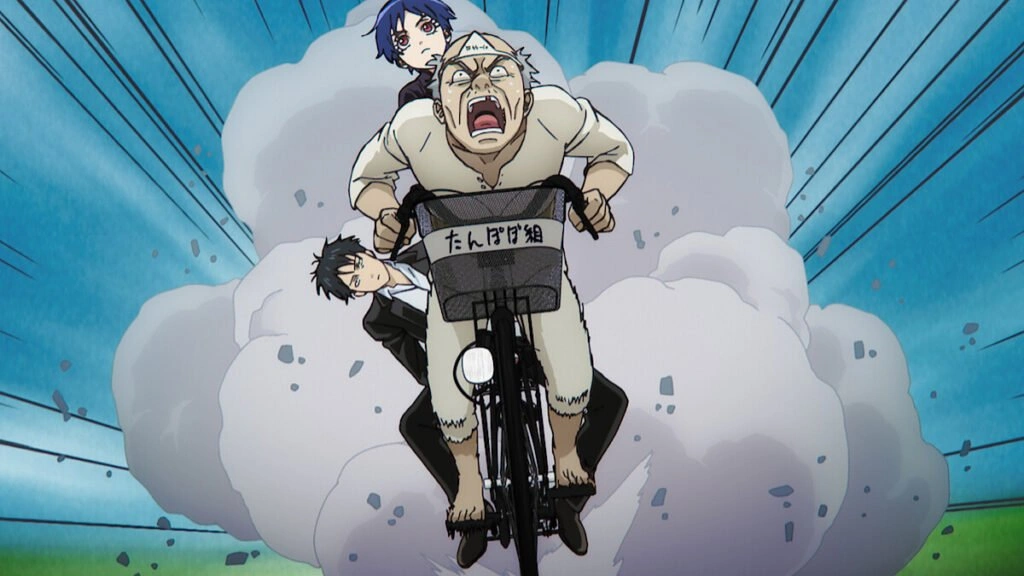
The comedy often arrives through loud, escalating arguments, played with an almost musical sense of build. Scenes can spiral into chaos, then suddenly settle into something sad and sincere. That swing is a tough one to land. Dandelion handles it well. The reunion involving the elderly couple shows how gently the series can approach grief and finality once the noise drops away. The show trusts softness when it needs it.
Yuki Hayashi’s score adds muscle through hard guitar riffs that drive the action scenes forward, and the ending theme delivers a dance sequence memorable for its fluid animation. The pacing stays quick for most of the run, though a few scenes spend too long explaining the mechanics of this world. The screaming-comedy mode will land differently from viewer to viewer.
Taste still gets a vote. Yet the series keeps its footing by pairing manic energy with genuine feeling, and that balance gives the seven-episode run a satisfying shape. It also makes the show an easy entry point for viewers with no background in the creator’s earlier work. Seven episodes, one complete ride, and a final question hanging in the air: how much room does any corporate system leave for a soul?
Dandelion premiered on April 16, 2026. This seven episode series follows the efforts of the Japanese Angel Federation as they track wandering spirits in a bureaucratic version of the afterlife. You can find the show available for streaming on Netflix right now. It takes inspiration from a short manga story written by the creator of Gintama.
Where to Watch Dandelion Online


Full Credits
Title: Dandelion
Distributor: Netflix
Release date: April 16, 2026
Rating: TV-MA
Running time: 25 minutes
Director: Daisuke Mataga
Writers: Hideaki Sorachi, Yōsuke Suzuki
Producers and Executive Producers: Daichi Nagatomi, Yasuo Suda
Cast: Chikahiro Kobayashi, Megumi Han, Mamoru Miyano, Kazuhiko Inoue, Kenshō Ono, Yūki Ono, Tomokazu Sugita, Shin’ichirō Miki, Fumihiko Tachiki, Susumu Chiba, Satoshi Hino, Rie Kugimiya, Daisuke Sakaguchi, Kikuko Inoue, Kujira
Director of Photography (Cinematographer): Tsubasa Takagi
Editors: Yoshiaki Kimura
Composer: Yūki Hayashi
The Review
Dandelion
Dandelion transforms a dry bureaucratic premise into a touching exploration of human regret. It finds a sweet spot between manic, high-decibel comedy and quiet, heartbreaking sincerity. The seven-episode length ensures the story stays lean and impactful. While the humor is loud and the exposition occasionally drags, the chemistry between the Mad Dog and his chaotic leader carries the show. It is a refreshing, bite-sized supernatural drama that treats death with both a smirk and a tear.
PROS
- Fresh take on a workplace comedy set in the afterlife.
- Deeply moving emotional payoff in episodic stories.
- Strong chemistry between the two lead characters.
- Nostalgic and clean animation style.
- Short, accessible length for a quick weekend watch.
CONS
- Clunky dialogue during moments of heavy explanation.
- Abrasive humor style that relies on shouting.
- Sudden shifts between silliness and sadness.
- Inconsistent pacing in the middle episodes.