
















![Kingdom Hearts Collection [I-III] Review](https://gazettely.com/wp-content/uploads/2026/10/Kingdom-Hearts-Collection-I-III-1-360x180.webp "Kingdom Hearts Collection [I-III] Review: KHII Holds Steady as Newer Entries Fluctuate 37")

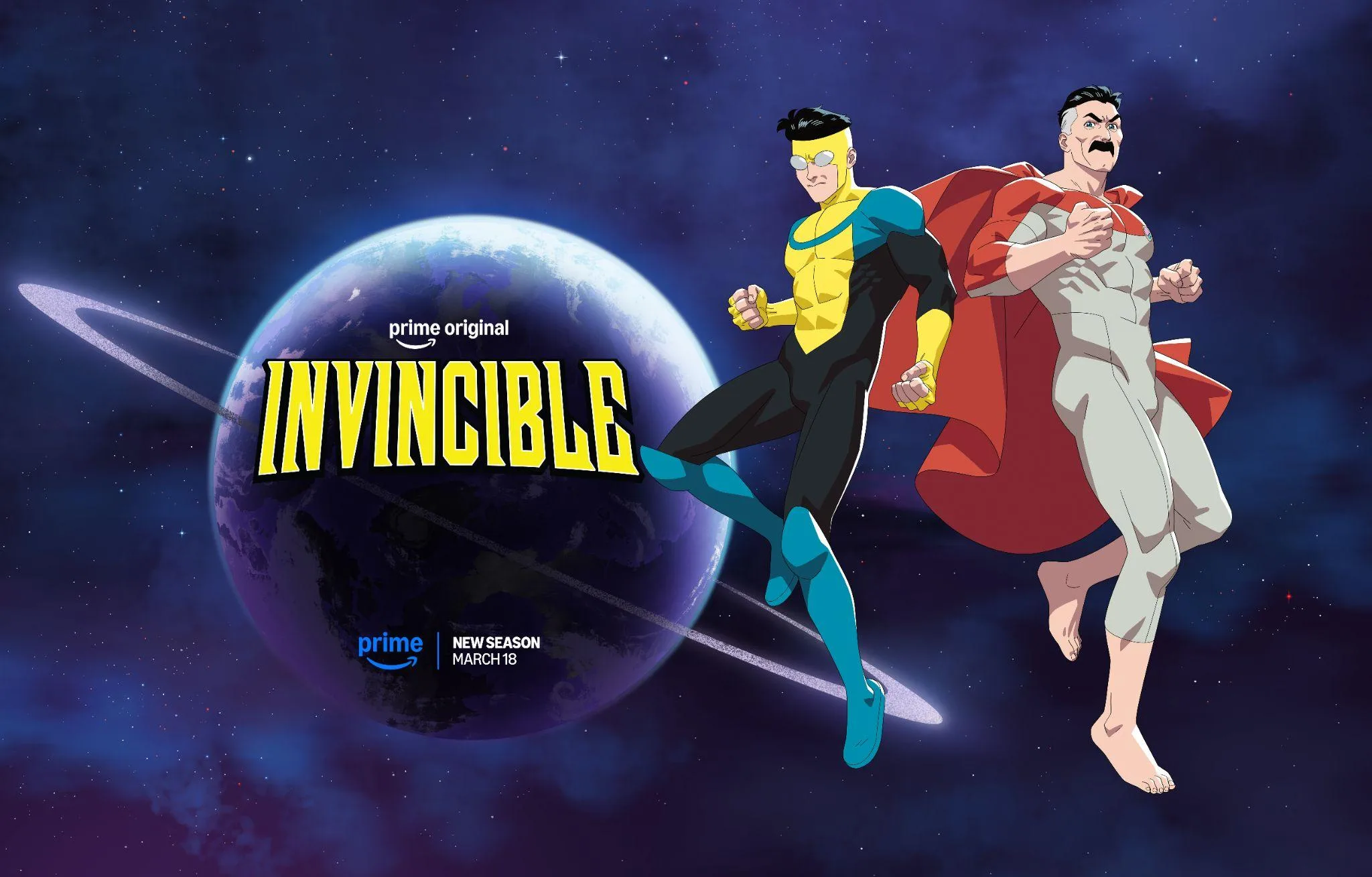

Invincible arrived on Prime Video in 2021 with something to prove. Robert Kirkman’s comic series had long been celebrated for doing to superhero mythology what a freight train does to a paper wall, and the animated adaptation needed to carry that same destructive honesty into a new medium. Three seasons later, it has done exactly that.
Mark Grayson, voiced by Steven Yeun, sits at the heart of the series: a half-Viltrumite teenager turned reluctant guardian of Earth, whose coming-of-age story has been perpetually interrupted by catastrophe. The show built its reputation through extreme violence, emotional sincerity, and a commitment to letting its characters carry real psychological weight across seasons.
Season 4 arrives at a turning point. The Viltrumite War, teased and deferred across earlier chapters, is no longer a looming abstraction. It is here. The show trades the sprawling, occasionally digressive energy of Seasons 2 and 3 for something more purposeful and concentrated, expanding its cosmic scale while keeping its domestic roots firmly intact.
The Bill Comes Due
Season 4 opens without sentiment for its audience’s nerves. Earth is still fractured from the events that closed Season 3, and Mark Grayson walks back into frame carrying guilt that has already begun reshaping him. The show wastes no time on soft resets; the damage is structural, and the season treats it accordingly.
The moral weight driving the narrative is specific: at the end of Season 3, Mark vowed to kill future villains rather than risk another Angstrom Levy situation. That decision, made under duress and with understandable logic, becomes Season 4’s central pressure point. Every confrontation Mark enters is now filtered through that vow, and the show is smart enough to resist making the answer easy. There are moments when his approach seems proportionate. There are moments when it looks like something darker taking hold.
Seasons 2 and 3, for all their strengths, carried a habit of deferring the series’ most significant conflict. The Viltrum Empire was always out there, always coming, always pushed back by one crisis or another. Season 4 ends that pattern. Thragg, voiced by Lee Pace, arrives as the definitive antagonist, and his presence immediately distinguishes him from prior villains. Where past threats operated on chaos and aggression, Thragg is calm, ideological, and methodical. His violence feels like policy rather than fury, which makes it considerably more unsettling.
The Coalition of Planets subplot, built around Nolan, Allen the Alien, Thaedus, and Telia, gives the cosmic conflict a structural foundation it previously lacked. For the first time, the Viltrumite War feels organised on both sides, raising the stakes considerably.
Episodically, the season manages its pacing with care. The opening episodes rebuild tension steadily, balancing domestic and superhero pressures simultaneously. Episode 4 functions as an intentional tonal detour: Mark is summoned to the UnderRealm, where he encounters Satan voiced by Bruce Campbell, and the episode delivers philosophical weight through dark comedy. Mark’s persistent refusal to bow becomes a running joke that also captures something true about his character.
Episodes 5 and 6 escalate sharply, delivering action sequences that rival the Season 1 Nolan/Mark confrontation in visceral impact. Episode 7 carries the season’s most quietly devastating moment: Mark recording a video message to Eve before entering the war, unaware she is pregnant. The scene’s power lies entirely in what Mark does not know.
The season does leave some threads unresolved. Universa and Dinosaurus appear in the premiere and then effectively vanish. It reads less as deliberate mystery and more as incomplete architecture, one of the few structural weaknesses in an otherwise focused season.
What Violence Leaves Behind
Mark Grayson has spent three seasons proving himself. Season 4 asks a harder question: what does he become once that proving is done?
The psychological portrait the show constructs this season is its most demanding yet. Mark is no longer fighting to establish his credibility as a hero; he is struggling to define what heroism means when the rules he grew up with no longer seem adequate. His vow to kill villains reshapes every battle he enters. Initially it reads as hardened pragmatism, a strategic choice born from painful experience. As the season progresses, the pragmatism begins to feel like rationalisation. Each violent act lands with a flash of shame, and the intervals between shame and the next act grow shorter. Steven Yeun’s voice performance tracks this deterioration with precision; the change is physical in the voice, a deepening, a restraint beginning to crack.
Nolan’s return as a series centrepiece, after a reduced presence in Seasons 2 and 3, is one of Season 4’s most significant structural choices. The cold open of Episode 2, tracing how the Viltrumites nearly went extinct, reframes everything Nolan has done without redeeming it. He occupies a genuine grey area this season, shaped by an ideology he can no longer fully serve and pulled toward a family he catastrophically damaged. Every scene between Nolan and Mark carries the weight of that history. The conversations are not resolutions; they are negotiations with inherited violence.
Atom Eve’s arc this season is the richest she has been given. Her powers are malfunctioning; she is carrying a pregnancy she is managing alone while Mark prepares for war. Gillian Jacobs has been consistently good across the series, and Season 4 finally gives her material to match her range. Eve’s trajectory runs counter to Mark’s: where he moves toward controlled destruction, she searches for ways to remain constructive. The contrast avoids being didactic; it is simply honest about two people responding differently to the same pressures.
Debbie Grayson, voiced by Sandra Oh, earns some of the season’s warmest moments. Her relationship with Paul and her growing independence provide genuine emotional counterweight to the larger cosmic drama. Debbie has endured tremendous loss, and watching the season allow her some actual happiness, earned and unforced, is quietly satisfying.
The supporting cast deepens accordingly. Oliver’s teenage resentment and his complicated proximity to Nolan add texture to the family dynamics. Allen the Alien continues to provide comic relief the show genuinely needs. Robot’s leadership ambitions and tensions with Cecil give the Guardians of the Globe subplot an organisational friction that mirrors the larger power struggles playing out in space.
Carnage With Consequence
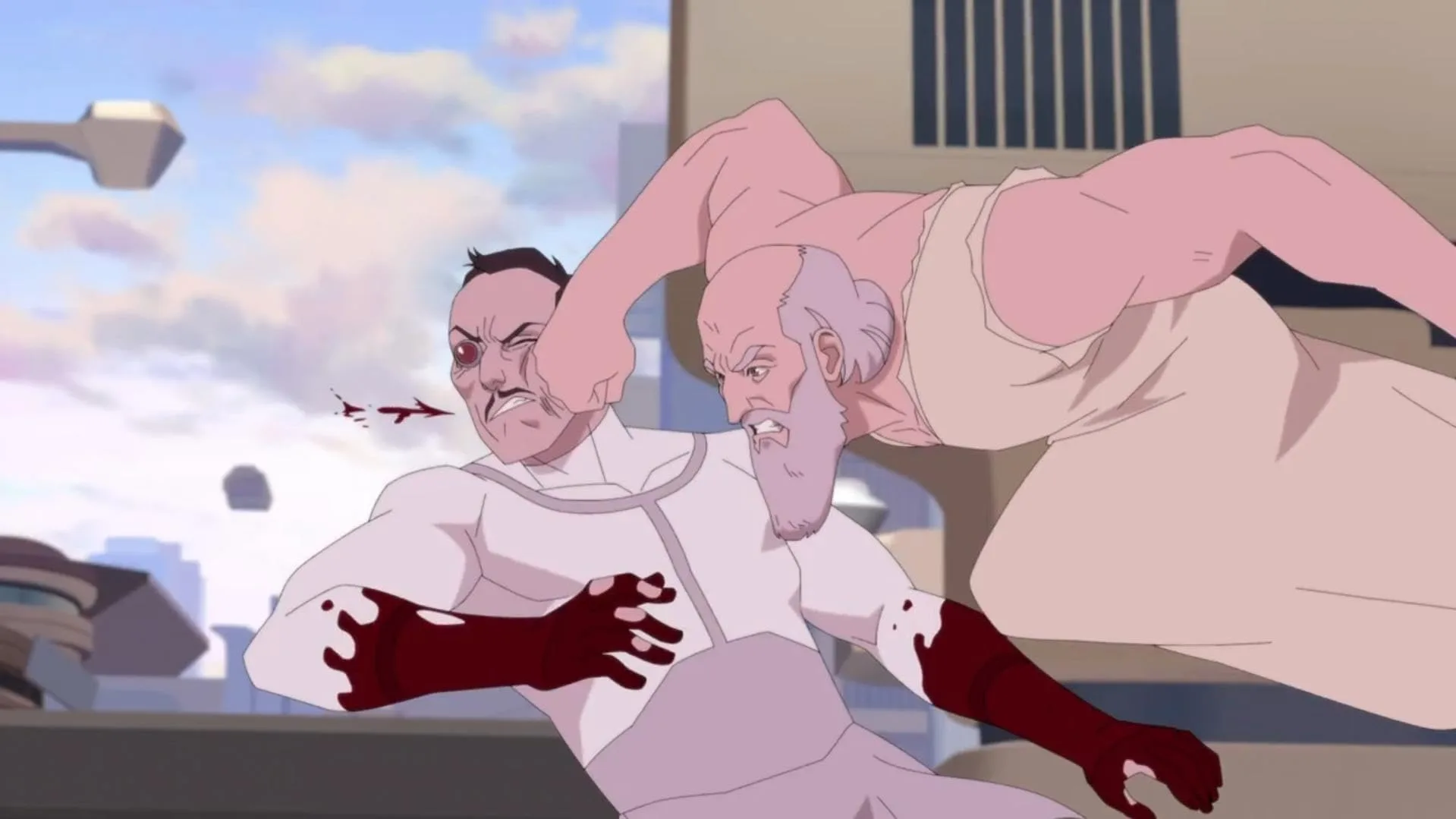
Invincible has never flinched from depicting violence in ways that carry genuine physical weight, and Season 4 continues that tradition with its most technically ambitious sequences yet. Episodes 5 and 6 contain fight choreography that surpasses anything the show has previously attempted. The Viltrumite-on-Viltrumite combat is brutal and precise, with the animation communicating the scale of what these bodies are capable of doing to each other. The gore is not decorative; it reinforces the season’s central argument that every act of violence produces something that cannot be undone.
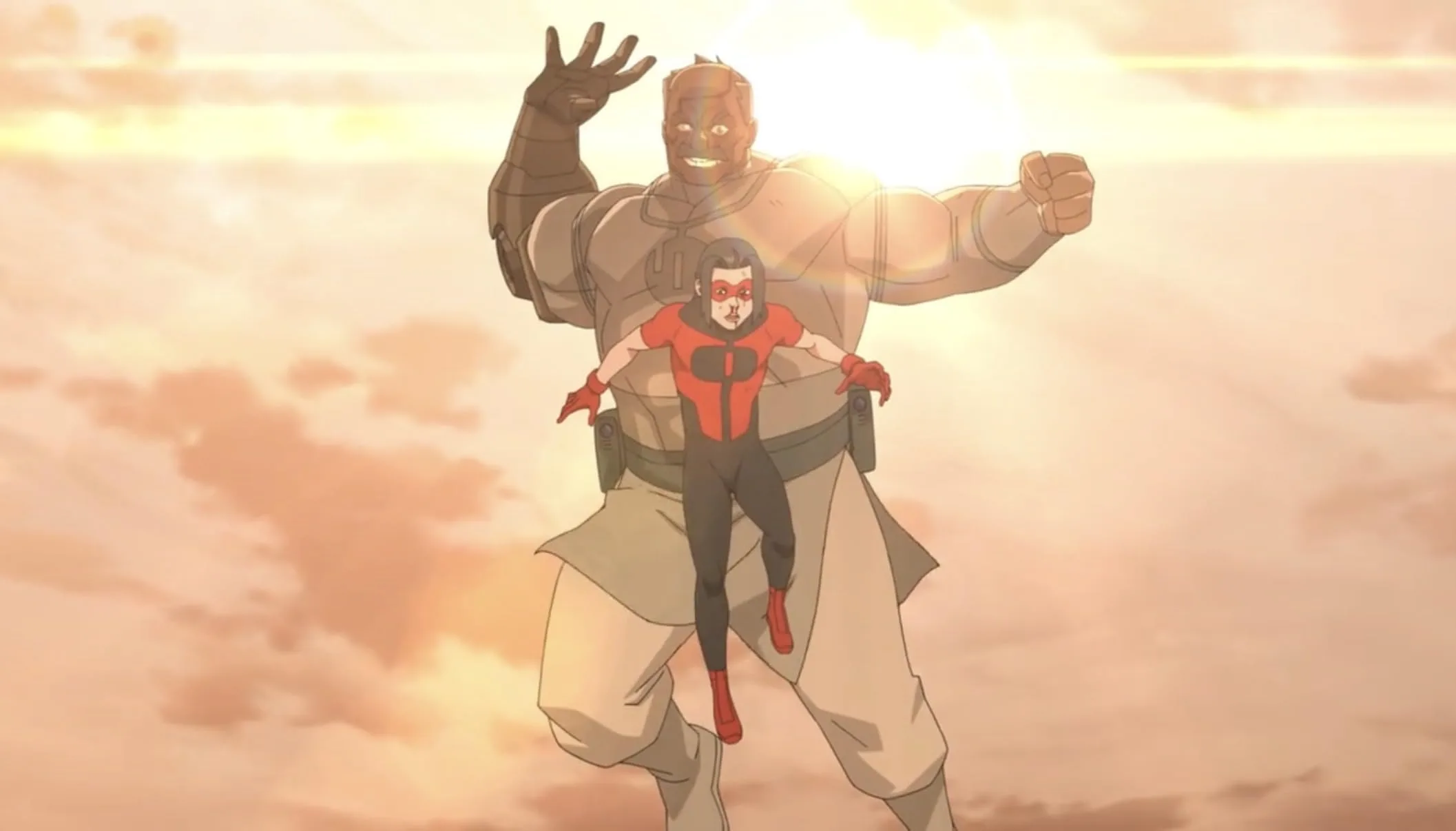
The cosmic scope of Season 4 shifts the show’s visual register considerably. Sections of it feel closer to Star Wars or Star Trek than to the superhero genre the show has always affectionately parodied. The show itself seems conscious of this; there is a self-aware quality to how these sequences are framed, as if the animation is winking at its own ambitions.
Character faces are expressive enough to carry psychological states that the script then builds upon, which matters enormously in a season where the most significant drama is internal. The battle sequences are fluid and legible, a balance that is harder to strike than it appears.
Tonally, Season 4 does not abandon the dark comedy and meta-commentary that have always distinguished the series. The UnderRealm episode demonstrates this discipline clearly: Bruce Campbell’s Satan is played for maximum absurdity, and the episode’s comic engine runs on Mark’s refusal to perform deference to hell’s bureaucracy. The levity is functional; it gives the audience room to breathe before the final episodes tighten the pressure again.
The Weight of What Gets Passed Down
The question Season 4 keeps returning to does not resolve neatly: is violence something a person inherits, or something they choose? Invincible frames this through multiple generations of the Grayson family simultaneously. Nolan was shaped by a civilisation built entirely around conquest and domination. Mark grew up watching his father enact that ideology and now carries the fear that the same instincts live in him. Oliver, younger and still forming, watches both of them.
The show refuses a clean answer. Mark’s anger worsens across the season. He holds it together, mostly, but the seams show. The shame that follows each violent act is real, and so is the rationalisation that follows the shame. It is a cycle the show depicts without glamour or easy escape.
The cost of heroism is treated with similar honesty. Mark’s decision to kill rather than capture is tested from multiple angles without being fully endorsed or condemned. Eve’s arc runs alongside this as a quiet counterargument, her commitment to constructive problem-solving presented as an alternative path rather than a judgment on Mark’s choices.
Season 4’s most significant structural achievement is its refusal to let scale swallow intimacy. The pregnancy, Debbie’s relationship, Oliver’s adolescence, all remain in frame even as an intergalactic war demands attention. Mark’s recorded message to Eve before battle functions as the season’s emotional anchor: a small, private act of love inside an enormous conflict.
The Show Has Been Waiting for This
Across its first three seasons, Invincible built something rare in animated television: a sustained, escalating narrative where consequences accumulate and nothing resets cleanly. Season 4 is where that discipline pays off.
Long-deferred payoffs arrive with genuine force. Story threads carried across multiple years reach fruition without feeling rushed or unearned. The Viltrumite War arc, drawn from Kirkman’s source material and shaped around the show’s own dramatic priorities, signals that the series is entering its most ambitious phase. Season 4 resolves enough to feel complete while simultaneously making clear that the largest confrontations are still ahead.
The finale does not offer relief. It expands the conflict, repositions every character, and raises the ceiling on what the final chapters of this story might look like. For viewers who have followed Mark from his days flipping burgers and discovering his powers for the first time, that expansion carries real emotional weight.
Invincible continues to distinguish itself from the superhero landscape by prioritising consequence over spectacle. Season 4 holds that discipline firmly, even as it operates at a scale the show has never previously attempted. The refusal to let action sequences substitute for emotional honesty is what keeps the series relevant and serious, and what makes it, four seasons in, one of the most consistently rewarding animated dramas on any streaming platform.
The fourth season of the critically acclaimed animated superhero series Invincible premiered on March 18, 2026, on Amazon Prime Video. Continuing the epic saga of Mark Grayson, the season debuted with a three-episode drop, followed by weekly releases leading up to the finale in late April. This installment adapts the intense Viltrumite War and the introduction of the formidable villain Thragg. Fans can watch all episodes exclusively on the Prime Video streaming platform, where it maintains its reputation for high-stakes action and emotional storytelling.
Where to Watch Invincible Season 4 Online




Full Credits
Title: Invincible Season 4
Distributor: Amazon Prime Video
Release date: March 18, 2026 (Season 4 Premiere)
Rating: TV-MA
Running time: 45–50 minutes per episode
Director: Sol Choi, Jason Zurek, Stephanie Gonzaga
Writers: Robert Kirkman, Simon Racioppa, Helen Leigh, Ross Stracke
Producers and Executive Producers: Robert Kirkman, Simon Racioppa, David Alpert, Catherine Winder, Seth Rogen, Evan Goldberg, Sandra Oh, Steven Yeun
Cast: Steven Yeun, J.K. Simmons, Sandra Oh, Gillian Jacobs, Walton Goggins, Seth Rogen, Zazie Beetz, Grey Griffin, Ross Marquand, Lee Pace, Christian Convery, Andrew Rannells, Mark Hamill
Director of Photography (Cinematographer): Stephen P. Neary (Supervising Director)
Editors: Matthew Sipple, Erika Gonzales
Composer: John Paesano
The Review
Invincible Season 4
Season 4 is Invincible at its most focused and fearless. It delivers the Viltrumite War with genuine dramatic weight, deepens every major character, and refuses to let its expanding cosmic scale crowd out the human stories underneath. Minor loose threads aside, this is the season the show has been building toward. The animation is sharper, the performances more raw, and the thematic ambition more sustained than anything the series has previously attempted.
PROS
- Mark's psychological arc is the series' most complex yet
- Thragg is a genuinely menacing and distinctive villain
- Emotional intimacy survives the show's biggest scale expansion
- Steven Yeun and Sandra Oh deliver career-best voice performances
- Pacing is disciplined and purposeful across most episodes
- The UnderRealm episode balances humour and philosophy effectively
CONS
- Universa and Dinosaurus introduced then abandoned without payoff
- Episode 4 temporarily disrupts the season's forward momentum
- Some secondary subplots feel compressed given the episode count