

























![Kingdom Hearts Collection [I-III] Review](https://gazettely.com/wp-content/uploads/2026/10/Kingdom-Hearts-Collection-I-III-1-360x180.webp "Kingdom Hearts Collection [I-III] Review: KHII Holds Steady as Newer Entries Fluctuate 37")





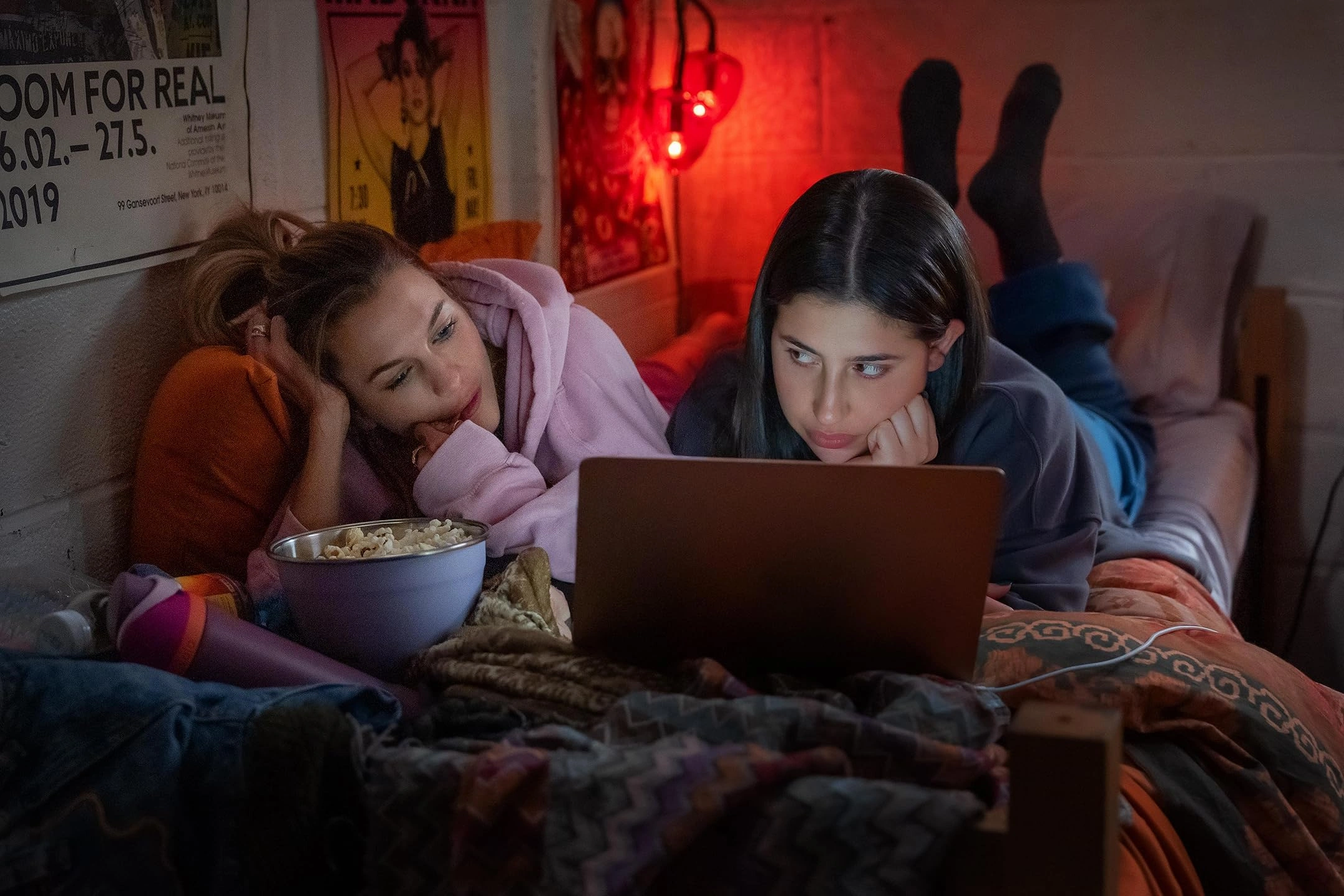
Director Chandler Levack brings a distinct perspective to Roommates, a college comedy produced through the Happy Madison banner. The narrative centers on Devon, a focused student whose first year at university is driven by the desire for a meaningful connection. This bond appears in the form of Celeste, an extroverted peer who suggests they live together.
What begins as a seemingly powerful sisterhood, forged in social events and intimate exchanges, quickly turns into a battleground of friction. The film dissects how young women form and unravel friendships, capturing the chaos of freshman year and the pressure of carving out an identity in a new social setting.
Framed by a narrator who delivers the story as a lesson to others, the film traces the evolving relationship of the two leads over the course of the academic year. The script offers a close examination of student life, from social rituals to the dynamics of female friendship, moving beyond the common tropes of the genre.
Polarity and Performance
Sadie Sandler’s portrayal of Devon captures the raw edges of academic ambition. Devon is a character who seeks solace in structure and strives for validation through success, yet she struggles to gain the social acceptance she craves. She remains the kind of person who might be overlooked in a room, a trait that fuels her yearning for a best friend. Chloe East, in contrast, brings Celeste to life with chaotic magnetism and effortless charisma.
The relationship between the two becomes an exploration of power dynamics, where one gives and the other takes. East unveils moments of vulnerability beneath Celeste’s seemingly perfect exterior. The chemistry between Sandler and East gives the film its emotional depth, making the eventual unraveling of their bond feel earned.
Devon overlooks early signs of trouble, driven by her desperation for connection. She becomes an eager participant in her own life, yearning for someone as captivating as Celeste to acknowledge her. Celeste, with her social ease, both assists Devon and creates further complications.
The film reveals how a person can embody buoyancy while simultaneously carrying instability. Both actors maintain an authentic realism, keeping the more dramatic moments of the film grounded. East portrays Celeste as a character entangled in hidden grief or perhaps battling deeper instability. Sandler shows Devon’s shift from passive observer to active participant in a revenge-driven mission, an arc that reveals the simmering resentment beneath her people-pleasing demeanor.
The Mechanics of a Fading Proximity
The script examines contemporary issues such as the awkwardness of unpaid digital transactions and the unspoken anxiety of sending a Venmo request. Social media serves as a platform for subtle aggression and growing stress. Academic dishonesty emerges when Devon starts completing assignments for Celeste, treating the act as if it were a normal facet of friendship.

Their differing financial backgrounds provide a constant undercurrent of tension. While one student enjoys financial stability, the other faces more precarious circumstances. Seemingly minor irritations—late-night noise and misplaced clothes—escalate into larger conflicts over time. The film captures the suffocating nature of two people becoming too quickly entangled in the confines of a shared living space.
A failure to communicate transforms what was once a supportive relationship into one marked by bitterness. Celeste pushes boundaries by inviting strangers into their space, ignoring her roommate’s needs. Tension builds through passive-aggressive notes and unmet expectations. The narrative illustrates how a borrowed sweater or a piece of shared furniture can ignite a full-blown confrontation.
The transition from friends to rivals occurs naturally, with each incident adding to the growing strain, rather than relying on an abrupt shift. The film exposes the unhealthy dependency that forms when students leave home and latch onto the first available peer, emphasizing how easily a relationship can devolve in such an environment. The characters’ intelligence is acknowledged, but so is their inability to communicate their needs directly, an essential flaw that leads to the slow deterioration of their connection.
The Domestic Perimeter
Nick Kroll and Natasha Lyonne portray Devon’s parents with a grounded, believable energy. They represent a supportive yet demanding backdrop that shaped Devon’s worldview. Their portrayal avoids the typical clichés often found in teen comedies, offering a more nuanced depiction.
Aidan Langford plays Alex, Devon’s younger brother, who acts as an emotional anchor for her. Their sibling relationship gives the audience a window into Devon’s life before university, revealing a dynamic that is both protective and teasing. Billy Bryk plays a teaching assistant who adds a layer of romantic tension to Devon’s life.
These supporting characters offer a glimpse into the world outside the dorm, providing a stark contrast to the central conflict. The disparity between Devon’s stable upbringing and Celeste’s mysterious family life resurfaces throughout the story. Devon’s family extends kindness to Celeste during school breaks, an act of generosity that only deepens the eventual sense of betrayal.
Each family member possesses their own distinct motivations, with Alex’s subplot paralleling Devon’s in a way that feels natural. The relationships outside the dorm room clarify why Devon holds onto a difficult situation for so long—she is trying to recreate the stability of home in a place where it cannot exist. These domestic interludes offer a vital reprieve from the stifling atmosphere of the college dorm, adding weight to the stakes of Devon’s social struggle.
From Satire to Shadow
The film employs a framing device with Sarah Sherman as a university official, who narrates the story as a cautionary tale. The visual style adheres to the clean, polished aesthetic typical of contemporary streaming content.
The story’s tone shifts as it moves into darker territory, evolving from a grounded drama to a black comedy. The physical comedy in the final act, involving a holiday accident, is buoyed by the seasoned presence of Carol Kane. Charli XCX’s music underscores the tumultuous emotions of young adulthood. As the central feud escalates, the film takes on a more competitive, hostile tone.
Chandler Levack balances humor with emotional depth throughout the film. The movie avoids categorizing its two protagonists as either heroes or villains, instead examining how the college environment can amplify small personality flaws into major conflicts. The resolution demands that both characters confront their role in the breakdown of their relationship.
The film targets a younger demographic that recognizes these social dynamics, adopting a rhythm that mirrors the pace of a university semester. As the friendship deteriorates, lighting and color choices shift, reflecting the darker tone.
The script uses sharp wit to explore the harsher aspects of social competition, particularly how young women can turn cruel in the name of friendship. This exploration of morality within social dynamics makes the film more than just a comedy—it becomes a cultural commentary on the complexities of modern friendships.
Roommates premiered at the Egyptian Theatre Hollywood on April 13, 2026, before its global streaming release on Netflix on April 17, 2026. Directed by Chandler Levack and produced by Adam Sandler’s Happy Madison Productions, the film follows the shifting dynamics of two college freshmen whose initial bond quickly transforms into a passive-aggressive dorm war. The comedy is currently available to stream exclusively on Netflix.
Where to Watch Roommates (2026) Online


Full Credits
Title: Roommates
Distributor: Netflix
Release date: April 17, 2026
Rating: R
Running time: 107 minutes
Director: Chandler Levack
Writers: Jimmy Fowlie, Ceara O’Sullivan
Producers and Executive Producers: Adam Sandler, Tim Herlihy, Allen Covert, Brian Kavanaugh-Jones, Judit Maull, Kevin Grady, Jackie Shenoo
Cast: Sadie Sandler, Chloe East, Sarah Sherman, Natasha Lyonne, Nick Kroll, Storm Reid, Billy Bryk, Ivy Wolk, Aidan Langford, Janeane Garofalo, Carol Kane, Josh Segarra, Bailee Madison, Martin Herlihy, Bella Murphy, Jaya Harper, Steve Buscemi
Director of Photography (Cinematographer): Maria Rusche
Editors: Tom Costain, Brian Robinson
Composer: Ryan Holladay, Hays Holladay
The Review
Roommates
Roommates captures the friction of forced intimacy with a sharp eye for the digital age. Sadie Sandler and Chloe East provide a grounding realism that helps the material rise above standard genre tropes. The shift into black comedy feels abrupt. Still, the focus on the social anxieties of early adulthood remains effective. It is a cynical yet insightful look at the cost of finding a best friend.
PROS
- Authentic lead performances.
- Specific social media and financial observations.
- Grounded supporting roles.
- Honest depiction of toxic dynamics.
CONS
- Inconsistent tonal shifts.
- An unnecessary framing device.
- Loss of precision in the final act.







