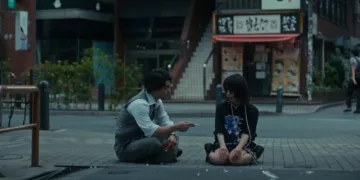




























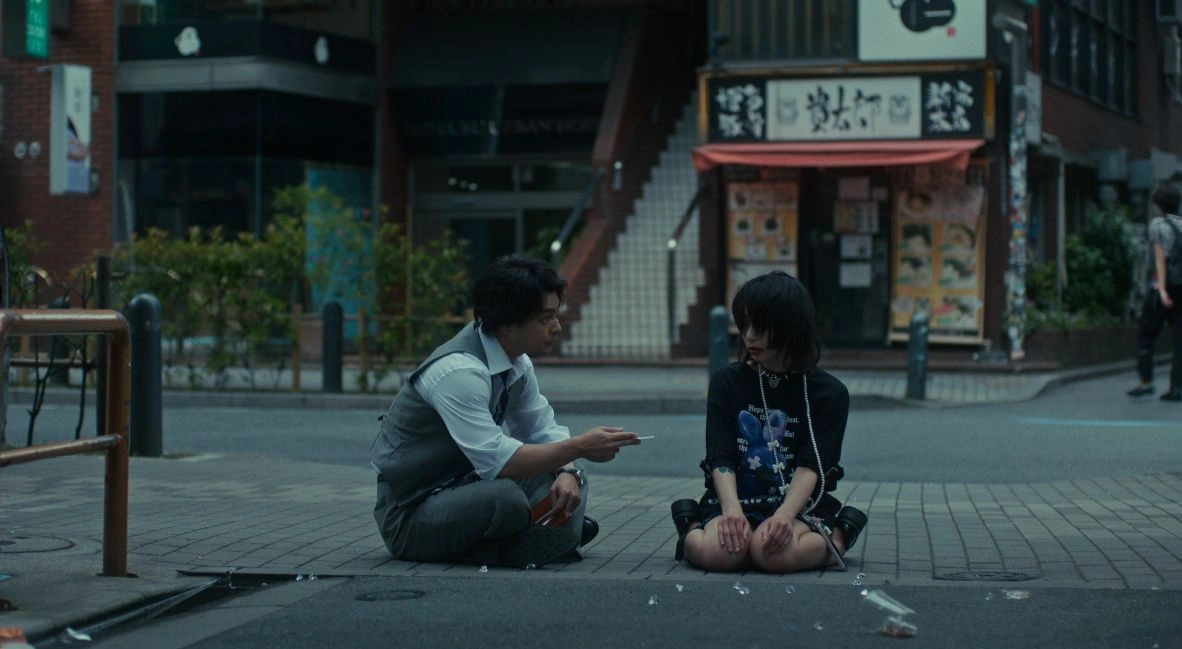

A blue tent crowns an ordinary building on a corner of Tokyo, and that image does a great deal of work before the plot fully settles in. It is the home and office of Taiza Kujo, and Netflix’s adaptation of Shohei Manabe’s manga, Kujo no Taizai, opens its legal drama from a place stripped of polish. I’m always drawn to stories that can pull feeling from plain spaces, and this rooftop office against a cold skyline has real force. Kujo, played by Yuya Yagira, is a defense attorney who takes the cases other lawyers avoid.
His clients come from the city’s darker edges, including small-time thugs and yakuza members. He treats the law like a working machine. Moral weight does not guide him. The text of the statute does. His belief is simple: every person deserves a legal shield. That belief puts him at odds with a city shaped by social order.
The arrival of Shinji Karasuma, an idealistic graduate of the University of Tokyo, gives the series its main tension. Karasuma enters the rooftop firm hoping to see justice carried out. He quickly finds himself beside a man who puts justice in second place. Their cases expose a grim view of modern life, and the show finds its identity in that uneasy space.
The Logic of the Mask
Kujo moves through the series with a stillness that feels almost mechanical. He wears a breathing strip on his nose, and that small detail hints at a past the show reveals piece by piece. He is hard to read. His reputation for having a nasty personality arrives before he does.
Karasuma becomes the audience’s way into that mystery, watching Kujo with curiosity and horror in equal measure. He comes from elite academic training and wants to know what stands in front of him. Is Kujo a brilliant legal thinker? Is he a man with no conscience? The series lets that question hang for a long time.
The tension between them gains weight from their shared history, which reaches back twenty years. A trial from their youth set both men on the paths they now follow, and that connection gives their conversations an old bruise. The firm is shaped by two other figures who sharpen the drama from different sides.
Hitomi Yakushimae, played by Elaiza Ikeda, works as a social worker and brings a human view into the room. She sees victims clearly. She sees poverty clearly. Kengo Mibu pushes in the opposite direction. He runs an auto shop, has deep ties to the criminal underworld, and sends clients to Kujo for his own gain.
What keeps Kujo from becoming a flat symbol is the way the show lets small acts slip through his professional shell. He hides behind legal jargon, yet glimpses of kindness keep appearing. He rescues a dog facing abandonment. He offers quiet help to people who cannot protect themselves.
None of this arrives with fanfare. The restraint matters. It suggests a private moral life that he refuses to explain aloud. Karasuma keeps searching for the truth inside that cold exterior, and the relationship between them develops with patience. It feels earned because the series gives both men room to study each other.
Ethics in the Shadows
The show lives in the meeting point between the law and the street, and it argues that legality and morality belong to different systems. Kujo is committed to the client in front of him. He uses technicalities to win lighter sentences or full exonerations. 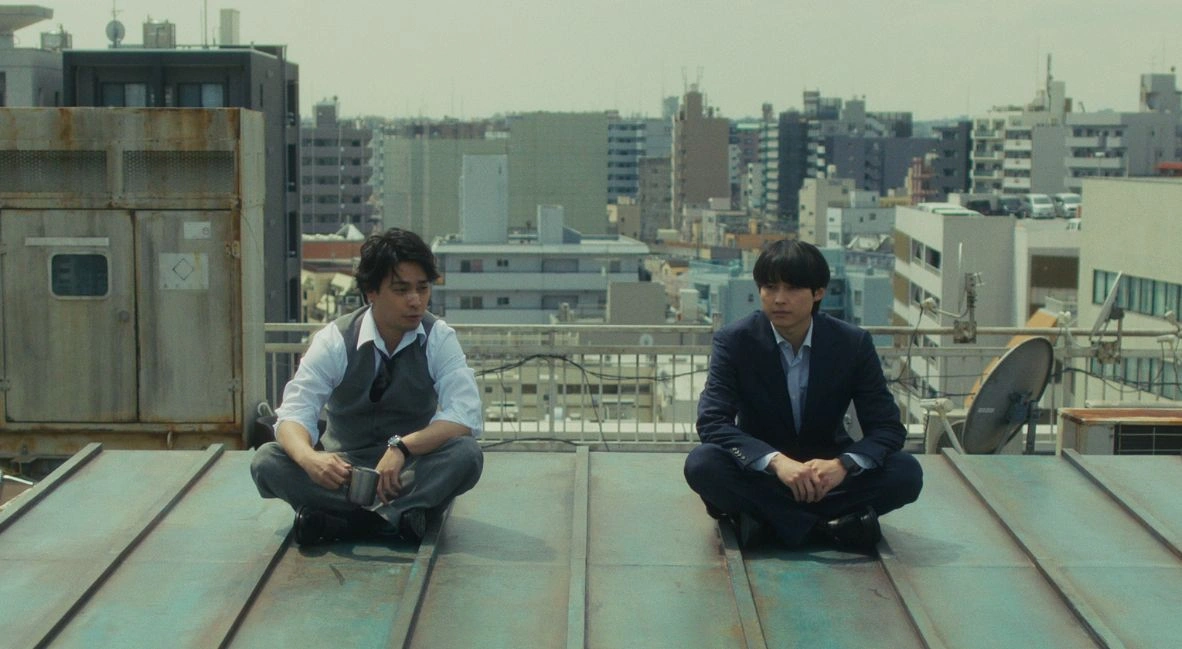
That method brings the weakness of the Japanese justice system into view. The series presents class and gender as forces that shape legal outcomes. Money and status tilt the field. Many of the people who pass through these stories are already at a disadvantage, facing debt, exploitation, or both.
Kujo works as an anti-hero within that structure. He stays inside a broken system and searches for any path available to his clients. In a quiet way, he also protects victims as he defends the accused. That friction gives the drama its bite.
The viewer is pushed to test personal ideas about guilt, innocence, and fairness. Nobody here is cleanly defined. A victim may carry guilt of their own. A criminal may reveal a streak of honor. The series has no interest in a clear hero, and that choice speaks to a deeper anxiety about institutional power and its fairness.
Kujo never chases public approval. He accepts his place inside a cold system and seems fully aware of the cost. The story keeps returning to one hard truth: personal circumstances shape a person’s view of justice. Kujo stays grounded in that truth.
He does not over-explain himself to Karasuma because he sees the law as a machine, and a machine has no feelings. That idea gives the series a sharp cultural relevance. It looks toward the lives of people pushed to society’s edge and asks what kind of protection actually exists for them. In that sense, each case carries a social charge without turning into a lecture.
A Visual Contrast to the Concrete
The season uses a procedural structure, with cases that usually wrap up in one or two episodes. Beneath those stories, a larger yakuza plot keeps moving. That design gives the show space to examine a range of social pressures without losing its long-form momentum.
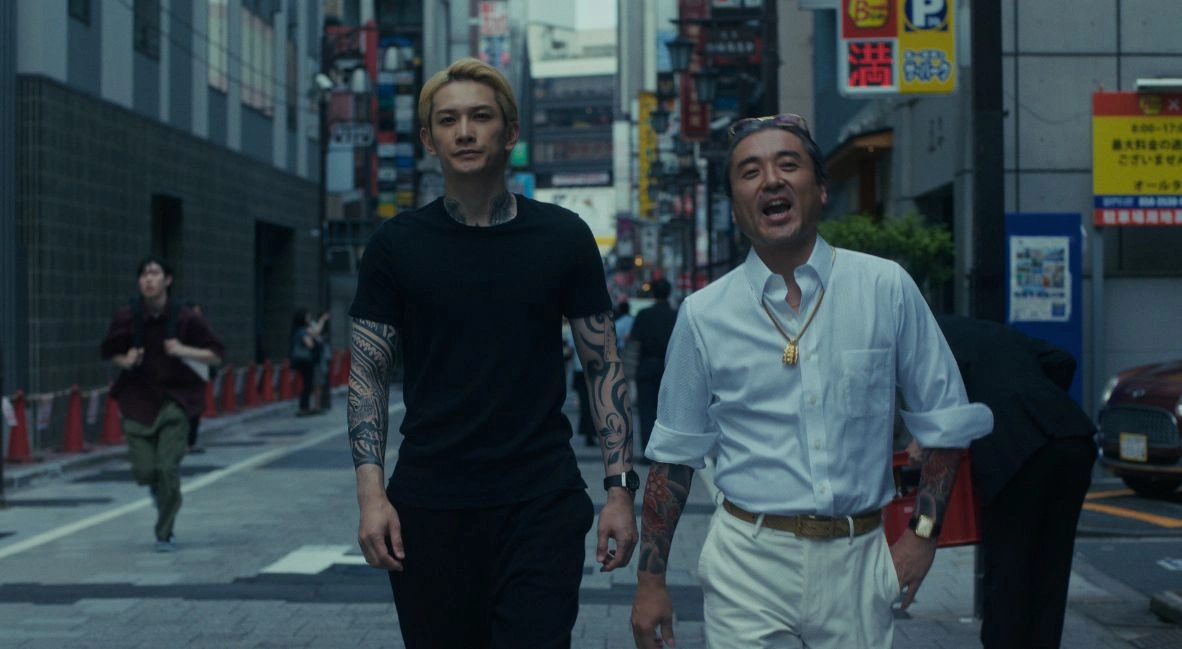
The visual style also helps it stand apart. The cinematography leans into warm tones, which sit in striking tension with the ugliness of the crimes. Bright lighting gives the series a distinctive texture for a legal drama. Courtroom scenes are rare. The story spends most of its time in the streets and inside the rooftop tent, which keeps the focus on investigation and on the people caught inside each case.
The middle stretch moves at a slow pace. The writers take time with the world and the characters, and the yakuza conflict stays in the background for much of the season. Near the end of the ten episodes, that thread takes a stronger hold on the narrative.
Yuya Yagira gives Kujo a grounded presence that makes all of the character’s contradictions feel believable. Hokuto Matsumura brings authenticity to Karasuma and captures the frustration of a young man learning hard truths about the law. The season closes with many open questions, and it plays like an introduction to a bigger story.
What I appreciated most is the series’ faith in mood, place, and patience. It subverts the expectations of a typical television drama through atmosphere and city texture. The focus stays on Tokyo, on that rooftop office, and on the people who pass through Kujo’s orbit. I found that slow-burn commitment to character study refreshing next to the speed that defines so many mainstream hits.
Sins of Kujo (also known as Kujō no Taizai) is a Japanese legal crime drama that made its global premiere on April 2, 2026. Based on the acclaimed manga by Shohei Manabe, the series consists of ten episodes and explores the moral complexities of the justice system through the eyes of a lawyer who defends the most “reprehensible” members of society. You can currently watch the entire first season exclusively on Netflix, where it is streaming in multiple languages worldwide.
Where to Watch Sins of Kujo Online


Full Credits
Title: Sins of Kujo
Distributor: Netflix
Release date: April 2, 2026
Rating: TV-MA
Running time: 45 minutes
Director: Nobuhiro Doi, Takeyoshi Yamamoto, Hiroshi Adachi
Writers: Nonji Nemoto, Shohei Manabe
Producers and Executive Producers: Atsushi Nasuda, Kaori Sugiyama, Shinichi Takahashi
Cast: Yuya Yagira, Hokuto Matsumura, Elaiza Ikeda, Keita Machida, Takuma Otoo, Tsuyoshi Muro, Takenori Goto, Kaito Yoshimura, Rintaro Mizusawa, Shunsuke Tanaka, Kodai Kurosaki, Makiko Watanabe, Akiko Kikuchi, Ken Mitsuishi, Yuu Kashii, Shinobu Hasegawa, Nobuko Sendo, Toma Ikuta
Director of Photography (Cinematographer): Hajime Kanda
Editors: Hiroaki Hosono
Composer: O.N.O
The Review
Sins of Kujo
Sins of Kujo stands as a grounded look at the friction between legal statutes and human morality. It avoids the flash of typical courtroom dramas. The show focuses on the quiet desperation of Tokyo's fringes. Yuya Yagira provides a steady performance that anchors the slow burn of the plot. The thematic depth makes it a sharp reflection of how institutional systems fail the vulnerable. While the pacing feels uneven, the series succeeds as a realistic adaptation of its source material.
PROS
- Authentic lead performance by Yuya Yagira.
- Realistic setting away from city glamour.
- Strong thematic focus on social class.
- Fresh visual palette for a legal drama.
CONS
- Uneven pacing in later episodes.
- Slow development of the primary antagonist.
- Unfinished narrative threads.