















Stranger Things spent five seasons as one of Netflix’s defining cultural phenomena, building a devoted global fanbase around Hawkins, Indiana, its ensemble of young protagonists, and its particular blend of 1980s nostalgia with supernatural horror. The original series has concluded. Netflix, as ever, has other ideas.
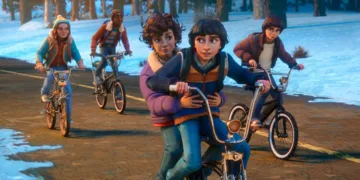
Tales from ’85 is the franchise’s first animated TV spin-off, produced by Flying Bark Productions, showrun by Eric Robles, and executive produced by the Duffer Brothers. It is set in January 1985, positioned between the Season 2 and Season 3 finales of the original series, inside a fixed pocket of established mythology with all the creative latitude that implies.
The familiar central group returns: Eleven, Mike, Will, Dustin, Lucas, and Max, all voiced by a new cast. A new character, Nikki Baxter, joins them. A fresh threat materializes via spores released by a creature killed in the opening scene. What a spin-off with a replaced cast, animated aesthetics, and a pre-resolved mythology can genuinely offer a franchise that has already said its goodbyes is the question that hangs over every episode.
Bright Colors, Familiar Faces, and the Road Not Taken
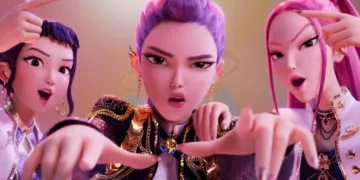
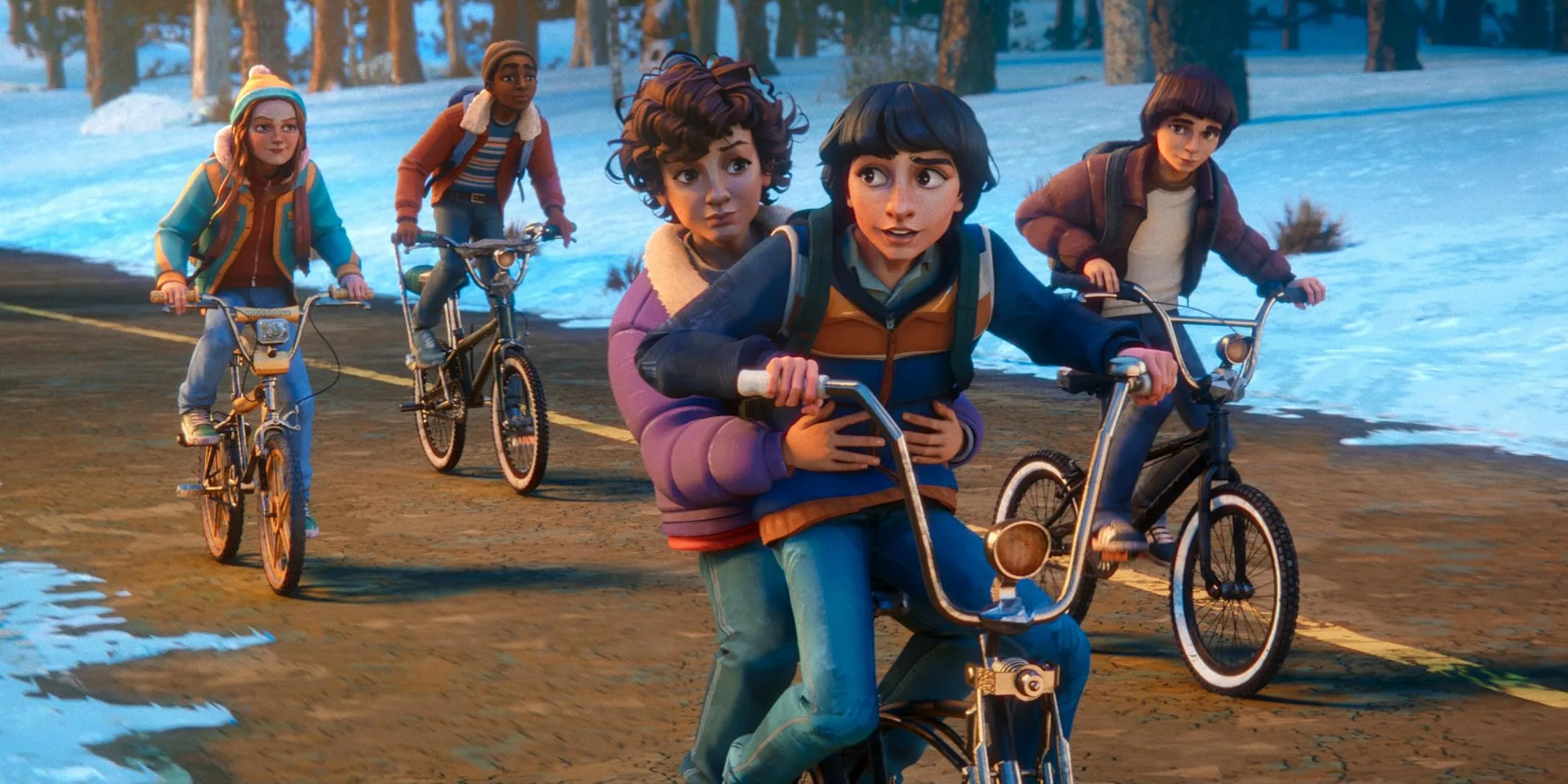
Flying Bark Productions handles the animation, and the results are, to be direct about it, competent. The studio opts for modern CGI over any retro hand-drawn style, a decision that is curious given the show’s setting in the golden era of Saturday-morning cartoons. Transformers, He-Man, and their neon-soaked peers defined the visual grammar of 1985 for a generation of children. Tales from ’85 gestures toward that era in its color palette without fully committing to its aesthetic logic, which leaves the visual identity feeling pulled between audiences and satisfying neither completely.
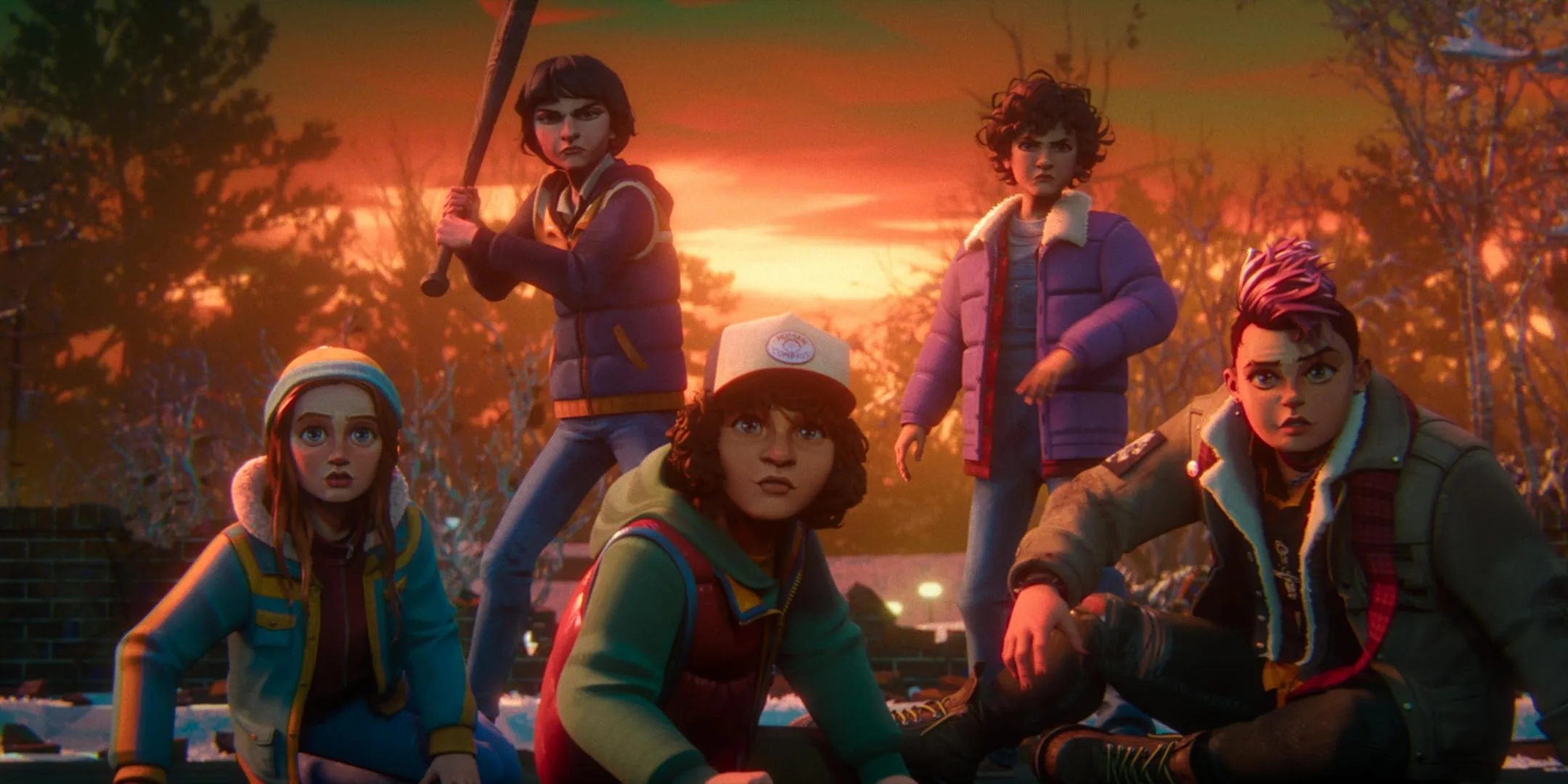
Where the show excels is in reproduction. The Palace Arcade, the Wheeler home, and other Hawkins landmarks are faithfully recreated with genuine care. Costume design lifts details directly from Season 2: Dustin’s trucker hat, Lucas’ red corduroy jacket, Hopper’s police uniform. These touches register with warm recognition for anyone who has spent time in the original series.
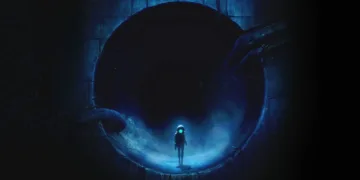
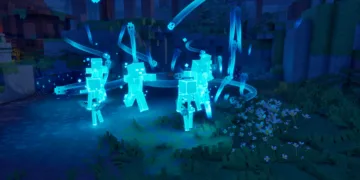
Creature design is a genuine high point. The “snow shark” monsters carry a Tron-like neon quality, their bodies threaded with luminous tubing that suits both the winter setting and the show’s brighter palette. Backgrounds throughout are detailed and atmospheric; individual frames occasionally approach the quality of a production still worth framing. The retrospective use of “demo-vision” (the hivemind visual style first introduced in Season 5 of the original) is inventive, enriching the show’s relationship to its own mythology in ways that reward attentive viewers.
Action sequences, where an animation format should arguably earn its keep most convincingly, disappoint. Fight choreography lacks kinetic urgency, and the blocking is functional rather than expressive. The show looks polished but rarely looks alive.
The visual identity sits in a peculiar middle ground: nostalgic in content, modern in execution, and fully committed to neither.
A Story Set in Amber
The season opens precisely. January 1985. Eleven has closed the gate to the Upside Down. A figure in a yellow hazmat suit kills an unknown creature, releasing spores into the Hawkins air. The threat is established cleanly. What follows is less clean.
Setting a spin-off inside a fixed canonical window carries an inherent dramatic cost that Tales from ’85 never quite resolves. Audiences already know who survives, who attends what school, and what emotional state each character occupies at the start of Season 3. The show cannot kill its leads, cannot alter its central relationships, and cannot produce any consequence that leaves a visible trace on the season that follows it. Real jeopardy, under these conditions, is structurally unavailable.
The mystery is organized around Dustin’s newly formed Hawkins Investigators Club, or H.I.C., a Scooby-Doo-style investigative unit with a mildly awkward relationship to the group’s canonical identity (the Hellfire Club already existed, and was presumably not dissolved for the winter). The suspect pool is narrow, limited to the newly introduced characters, which makes the mystery less a puzzle than a brief wait. The explanation, when it arrives, relies heavily on exposition rather than dramatic revelation.
Each episode closes on a cliffhanger, maintaining enough forward momentum to sustain viewing across its ten-episode run. The stakes, though, remain modest. The show’s tonal identity is the deeper problem. Tales from ’85 is too steeped in franchise continuity and original-series callbacks to function as a genuine entry point for younger viewers unfamiliar with Hawkins, yet too defanged in its horror and consequences to offer weight to fans who came expecting something with teeth. References to Season 2 events, Starcourt Mall billboards, and Scoops Ahoy branding reward those who know where the story leads, while the creature threat is kept cartoonish enough for those who don’t. The show occupies a tonal no man’s land familiar to any franchise caught between its past audience and its hoped-for future one.
Ten episodes is too many. Episode 5 sags noticeably, functioning as connective tissue the season didn’t need. Episode 4, built around Dustin and Steve, is the season’s best by a comfortable margin, suggesting the show is sharpest when it trusts its character relationships over creature mechanics. The finale revisits the structural beats of the Season 2 climax and arrives at the same destination without the earned emotional charge of the original.
The story is engineered to leave no mark, which is both its safety net and its limitation.
Old Voices, New Mouths, and One Canonical Headache
Replacing the entire original cast is the spin-off’s highest-risk creative decision, and the new voice actors, in large part, meet the challenge with skill.
Braxton Quinney’s Dustin is the standout. His performance occupies the precise register the show needs: close enough to Gaten Matarazzo’s original to feel continuous rather than imitative, and genuinely funny on its own terms. Jolie Hoang-Rappaport brings Max’s sarcasm and physical defiance through voice work alone, and the Lucas-Max dynamic is handled with warmth throughout, giving the pair a depth they were occasionally denied in the live-action series. Brooklyn Davey Norstedt carries Eleven’s quiet intensity effectively. A small scene where Eleven tries cheese fries for the first time lands with unexpected sweetness, hitting harder still for viewers who already know how her story ends.
Brett Gipson’s Hopper is the most noticeably divergent performance. The gap between Gipson’s work and David Harbour’s iconic interpretation is the widest in the cast, and it is felt. This is less a criticism of Gipson, who performs capably, than a reflection of how completely Harbour defined that role through physicality as much as through voice.
The adult ensemble appears peripherally. Nancy gets a handful of scenes, Steve is present but underused, and Jonathan is reduced to a brief mention of mixtapes. The Dustin-Steve friendship, one of the original series’ genuinely great relationships, gets too little room. Given that Tales from ’85 is freed from the logistical constraints of a live-action production schedule, the decision to keep Steve at the margins is a puzzling one.
Nikki Baxter (voiced by Odessa A’zion) arrives in Hawkins with a pink mohawk, a flying jacket, and a scientific curiosity that makes her an immediately functional member of the group. Her mother, Anna Baxter (Janeane Garofalo), works as a substitute science teacher, providing a plausible conduit between the kids’ investigations and adult knowledge. Nikki integrates into the ensemble convincingly and brings an energy the group benefits from.
The canonical problem is harder to ignore. She is too significant a presence to disappear quietly between Season 2 and Season 3 without explanation. The show offers none, leaving her existence in an awkward liminal space that strains the franchise’s internal logic at the precise moment it can least afford to.
The Recursive Loop of Nostalgia
Stranger Things built much of its emotional identity around music, and Tales from ’85 honors that instinct with the franchise’s most dependable tool: the needle drop. The selections are well-chosen and period-appropriate. Black Sabbath features memorably; Billy Idol’s “Rebel Yell” accompanies a sequence that is a direct homage to the race-home finale of Ferris Bueller’s Day Off, and the show wears its cinematic affections openly throughout. A glancing reference to Kate Bush acknowledges the cultural moment the wider franchise has occupied since the original series made “Running Up That Hill” inescapable.
The original Kyle Dixon and Michael Stein score from the live-action series is absent, replaced by something competent that lacks its atmospheric weight. The synth textures that gave Hawkins its specific sense of dread are gone, and their replacement is pleasant without being memorable. The new theme music echoes the original before pivoting to its own identity, a reasonable creative decision that will need time to justify itself.
The nostalgia architecture of Tales from ’85 is worth pausing on. The original Stranger Things was built on nostalgia for 1980s American childhood. Tales from ’85 then invites nostalgia for the earlier, simpler seasons of Stranger Things itself (a recursive loop with measurably diminishing returns that the streaming era has made almost its own art form). The show positions itself at the franchise’s most uncomplicated moment, before the plotting became unwieldy and the scale overwhelming. Starcourt Mall signage and Scoops Ahoy branding function as warm Easter eggs for fans rather than meaningful plot threads.
The animation format, freed from the constraints of ageing actors, signals Netflix’s clear intention to mine this property indefinitely. This is commercially rational. The creative sustainability of that approach is a question Tales from ’85, in its current form, raises without answering.
Stranger Things: Tales from ’85 is an animated science fiction television series and a spin-off of the hit Netflix series Stranger Things. Premiering on Netflix on April 23, 2026, the series is set in the winter of 1985, bridging the narrative gap between the second and third seasons of the original live-action show. The story follows the beloved core group of kids—Eleven, Mike, Will, Lucas, Dustin, and Max—as they investigate new supernatural threats and unravel a paranormal mystery involving “pumpkin zombies” and vine-monsters in Hawkins. While the original characters return, the series features a brand-new voice cast and introduces new characters like Nikki Baxter. Viewers can watch the entire first season exclusively on Netflix.
Where to Watch Stranger Things: Tales from ’85 Online


Full Credits
Title: Stranger Things: Tales from ’85
Distributor: Netflix
Release date: April 23, 2026
Rating: TV-MA
Running time: 27–32 minutes
Director: Eric Robles, Sarah Jean Partington, JJ Conway, Philip J. Allora, Ben Choi, Ashe Jacobson
Writers: Jennifer Muro, Eric Robles, Chad Quandt, Dan Milano, Joshua Pruett, Ray Utarnachitt, Jennifer Bardekoff, Alexis Quasarano
Producers and Executive Producers: Matt Duffer, Ross Duffer, Shawn Levy, Dan Cohen, Hilary Leavitt, Eric Robles
Cast: Brooklyn Davey Norstedt, Luca Diaz, Braxton Quinney, Elisha Williams, Benjamin Plessala, Jolie Hoang-Rappaport, Odessa A’zion, Brett Gipson, Jeremy Jordan, Janeane Garofalo, Alessandra Antonelli, Robert Englund
The Review
Stranger Things: Tales from '85
Tales from '85 is a show that plays it safe at every turn, and safety, for a franchise built on dread and surprise, is its own kind of failure. The animation is polished, the voice cast largely impressive, and the soundtrack reliably strong. The canonical constraints strangle any real dramatic ambition, leaving a series that feels preserved rather than alive. Enjoyable in stretches, frustrating in its timidity.
PROS
- Strong voice performances, particularly Braxton Quinney as Dustin
- Faithful, detailed recreation of Hawkins locations and costumes
- Excellent soundtrack and needle drops
- Nikki Baxter is a welcome addition
- Lucas-Max dynamic is well-handled
CONS
- Fixed timeline removes genuine dramatic stakes
- Tonal identity crisis between younger and existing audiences
- Ten episodes is two or three too many
- Nikki's canonical fate left unresolved
- Action choreography lacks urgency
- Adult characters are largely wasted