






















Ui-yeong handles a shipment of cod meant for a UK ambassador with the calm accuracy of someone born for high-pressure coordination. As an assistant manager at The Hills, she treats hotel management like a field of daily tactical decisions, where one missed detail can ruin the whole operation.
https://www.youtube.com/watch?v=DMRPjCZ6rdIHer mother sees her as anti-relationship because her career absorbs so much of her attention. Ui-yeong believes her last romance ended four months ago, then discovers the gap has lasted four years. That realization lands with quiet force. Work has given her structure, status, and purpose, while silently covering the way time has moved around her.
The series uses that professional setting with a sharp eye for cultural detail. Ui-yeong’s life speaks to a specific experience faced by single professional women in Korea as they approach their thirties. Her days are scheduled, measured, and managed, which makes her personal stagnation feel even more painful. Her decision to enter formal blind dates signals a shift from passive hope to active planning.
She applies the same tenacity she brings to her purchasing team to a part of life she has neglected. Love becomes a goal shaped by strategy, timing, and social pressure. The show builds a world where romance carries the weight of expectation in a fast-moving society, then places Ui-yeong between the comfort of routine and the unease of scheduled intimacy.
The Emotional Reckoning of the Tea Fields
Her past with Kang Do-hyun creates the first fracture in her professional armor. Years earlier, he was a younger student who offered her flowers and devotion. She turned him down because school and work came first. Now he has become the successful in-house counsel who drives a red car, and his confidence unsettles her. Ui-yeong assumes their old dynamic can be revived, a belief that collapses during a business trip to the Boseong tea fields.
The tea-field sequence works because the visuals do emotional heavy lifting. The camera lingers on the green slopes, using their scale to make her sudden loneliness feel visible. Do-hyun admits he wants to confess his feelings to Sae-byeok, another colleague, and asks Ui-yeong for advice on winning her over. The request bruises her ego because it shows how much her role in his life has changed. She is left crying alone in the tea fields, facing the cost of chances she allowed to pass.
Also Read





That rejection becomes the real trigger for her dating request. The pressure from hotel managers who question her single status has already been building, yet the tea-field incident gives the decision an emotional urgency. Ui-yeong chooses to outsource her search for a partner because she wants control after a public moment of vulnerability.
A natural encounter no longer feels dependable to her. A system she can measure and manage does. The shift reflects a cultural moment where romance begins to resemble professional discipline, complete with process, evaluation, and targets.
Stability and the Spark of Spontaneity
The series presents two suitors who represent different ideas of connection. Song Tae-seop is a woodworker who values honesty, and he brings up marriage on the first date. That directness creates immediate tension. Their meeting is marked by an accident in which soy sauce stains her white dress, a small comic disaster that becomes a neat image for the messiness of adult dating. Dating at this age often carries the strange mix of practical concerns and emotional exposure, and the stain captures that without overexplaining it.
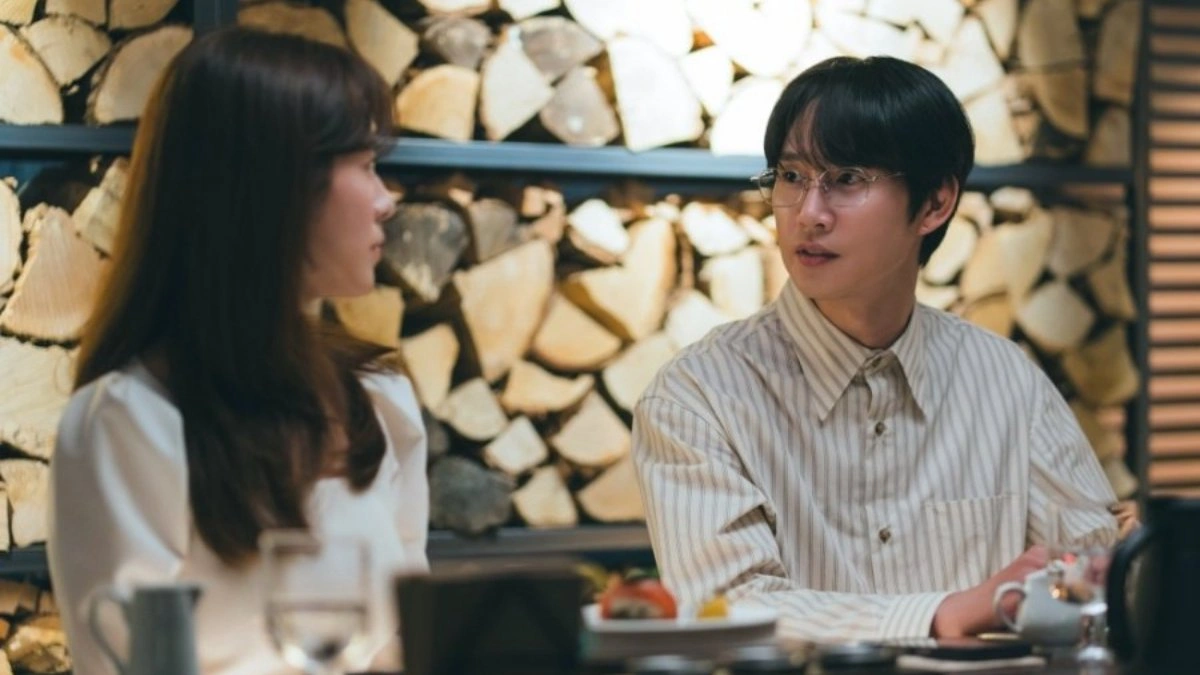
Tae-seop’s life also raises questions. He is often unavailable because of business trips and social gatherings. Friends suspect he may be car poor because his luxury vehicle might be his only major asset. That detail sharpens the show’s attention to material anxiety, where romance becomes tangled with financial signals and social performance.
Lee Jeong-woo brings a different charge. He is a younger substitute date, lighter in manner and less serious than Tae-seop. His appeal comes through playfulness. He spins Ui-yeong on a playground roundabout until she feels dizzy, and the scene has the loose, physical spark of an encounter that escapes calculation for a moment. I know that feeling from conversations that suddenly turn into games, where the mood shifts before either person can name it.
The choice between the men becomes a choice between safety and risk. Tae-seop offers the possibility of a settled life. Jeong-woo gives her access to the thrill of youth. The script treats this as a meaningful question for women in their thirties: does she want a partner who fits her future, or someone who wakes up her present? The writing gives both paths room to breathe, which helps the story avoid easy cliche.
The Logistics of Modern Connection
The series treats the search for a partner as a chain of tactical decisions. Blind dates function as practical tools for a busy professional, and the show finds its rhythm in small social frictions. It avoids oversized romantic drama and pays attention to awkward silences, especially in the bar scene where two dates collide. Ui-yeong ends up drinking with one man while the other watches, a cleanly staged moment that captures the pressure of modern choice.
As Ui-yeong begins treating dating like another project to master, the visual style follows her change in mindset. Her department store visit to buy new clothes becomes a clear image of self-renewal. She invests in herself before placing her hopes in another person. The clean lines of the store and her focused movement through that space turn shopping into a statement of agency. The editing gives the scene a sense of forward motion, like she is reorganizing the frame of her own life.
The second episode closes with a montage of her phone screen filling with dating requests. That image captures the digital bombardment of current romance with impressive economy. Ui-yeong has stopped waiting for chance. She is now handling a high volume of possible connections, filtering attention the way she filters problems at work. The series respects the pragmatism required to seek love in a fast-paced society. It frames partnership as something shaped through effort, choice, and resourcefulness.
The story mirrors how technology now filters private desire, turning longing into profiles, messages, schedules, and options. Yet it keeps returning to the fragile human need underneath the system. Ui-yeong can manage the process, measure the responses, and organize the possibilities. Her heart still wants one connection that feels unmistakably alive.
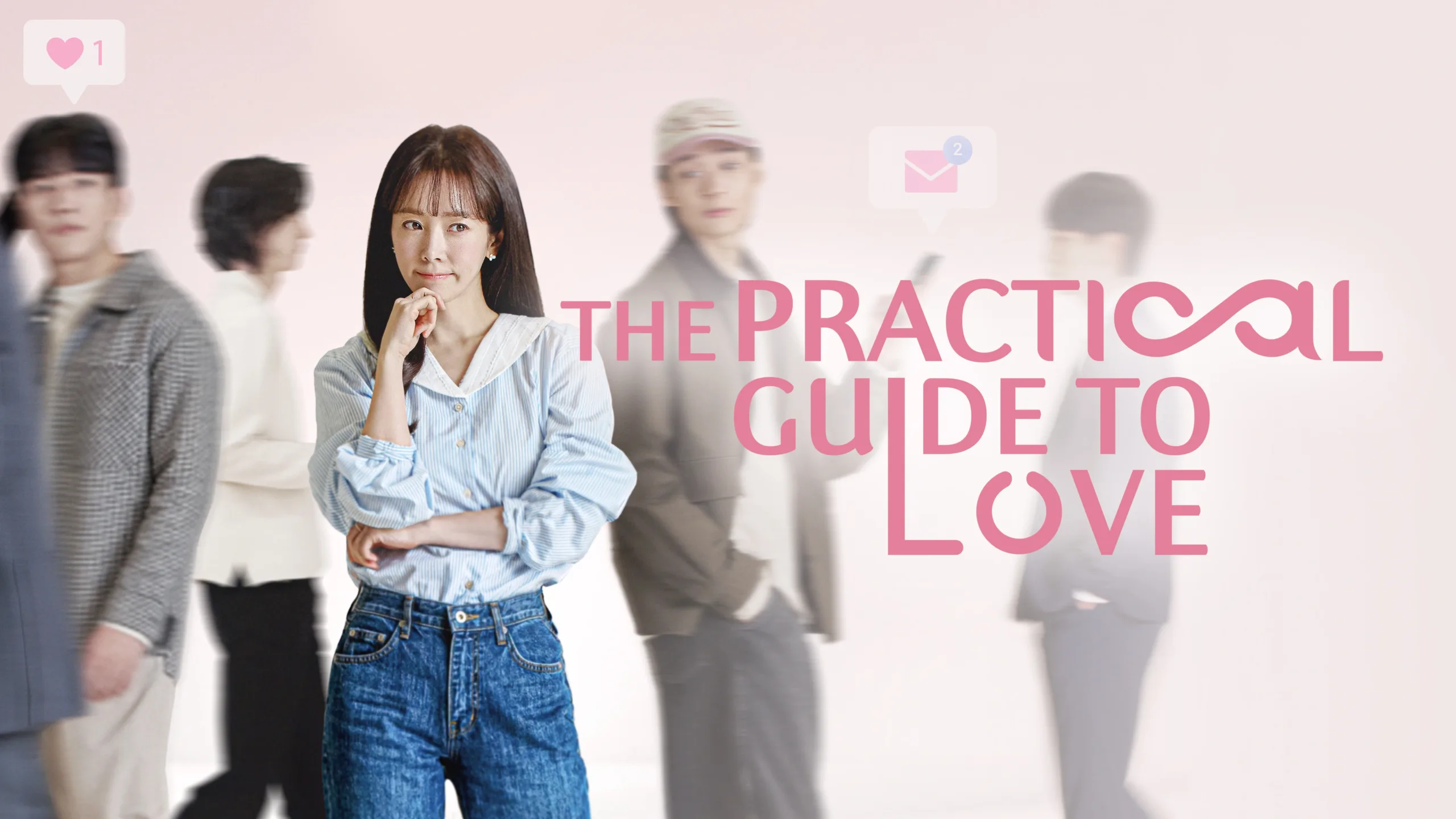
The Practical Guide to Love is a 2026 South Korean romantic comedy series that premiered on the JTBC network on February 28, 2026. Based on the popular Naver webtoon Efficient Dating for Singles by Tari, the series quickly became a favorite for its grounded and relatable take on modern relationships. It concluded its 12-episode run on April 5, 2026, and is currently available for streaming globally on platforms such as Rakuten Viki and HBO Max. The story follows a professional woman in her thirties who, after a long period of romantic stagnation, uses the same resourcefulness she applies to her hotel career to navigate a series of blind dates, ultimately finding herself torn between two very different suitors.
Where to Watch The Practical Guide to Love Online

Full Credits
Title: The Practical Guide to Love
Distributor: JTBC, SLL, Rakuten Viki, HBO Max
Release date: February 28, 2026
Rating: TV-14
Running time: 70 minutes
Director: Lee Jae-hoon
Writers: Lee Yi-jin
Producers and Executive Producers: SLL, Park Jun-seo, Kim Ji-yeon
Cast: Han Ji-min, Park Sung-hoon, Lee Ki-taek, Jung Hye-sung, Kim So-hye, Lee Mi-do, Shin Jae-ha, Kim Won-hae
Director of Photography (Cinematographer): Kim Sung-hoon
Editors: Lee Myung-sook
Composer: Hwang Chan-hee
The Review
The Practical Guide to Love
The series succeeds by treating romance as a logistical challenge rather than a fairy tale. It offers a grounded look at the pressures facing single professionals in their thirties. The pacing occasionally slows, but the performances and the focus on pragmatism provide a refreshing change of pace for the genre. It captures the modern anxiety of choice with sharp precision. I appreciate how it balances emotional stakes with technical competence.
PROS
- Honest portrayal of modern social rituals and professional pressures.
- Strong chemistry between the lead actors that feels earned.
- Visual use of the Boseong tea fields to reflect a specific emotional state.
- Scripting that avoids traditional genre cliches in favor of realism.
CONS
- Occasional slowdown in narrative speed during the second act.
- Repetitive character reactions regarding the initial rejection.