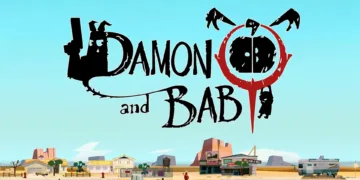


























The story opens with a demon whose glory days have clearly expired. Damon once held a high-ranking position among the lords of hell, yet his current form carries a softer build and an enormous dad bod. His fall came from a failed contract with a dying priest. Damon expected a soul.
He received a curse that bound him permanently to a human infant. That bond erased his infernal standing and made him vulnerable in ways he clearly never planned for. The narrative objective is clean and easy to follow. Damon has to escort this mysterious child across a dangerous world and reach the gates of heaven. He believes that delivering the girl will clear his debt and break the curse.
The writing leans hard into comedy. The game often breaks the fourth wall, using direct commentary to underline the absurdity of Damon’s situation. The supporting cast adds plenty of personality to the setting. Tinatana stands out immediately.
She works as an angel for the Ministry of Health while also serving as a subcontractor for Hell Insurance. That combination of heavenly administration and demonic paperwork gives the world a sharp comic identity, turning the afterlife into a workplace where cosmic power still has to deal with forms, departments, and bad contracts.
Interconnected Hellscapes and Souls-Like Safety
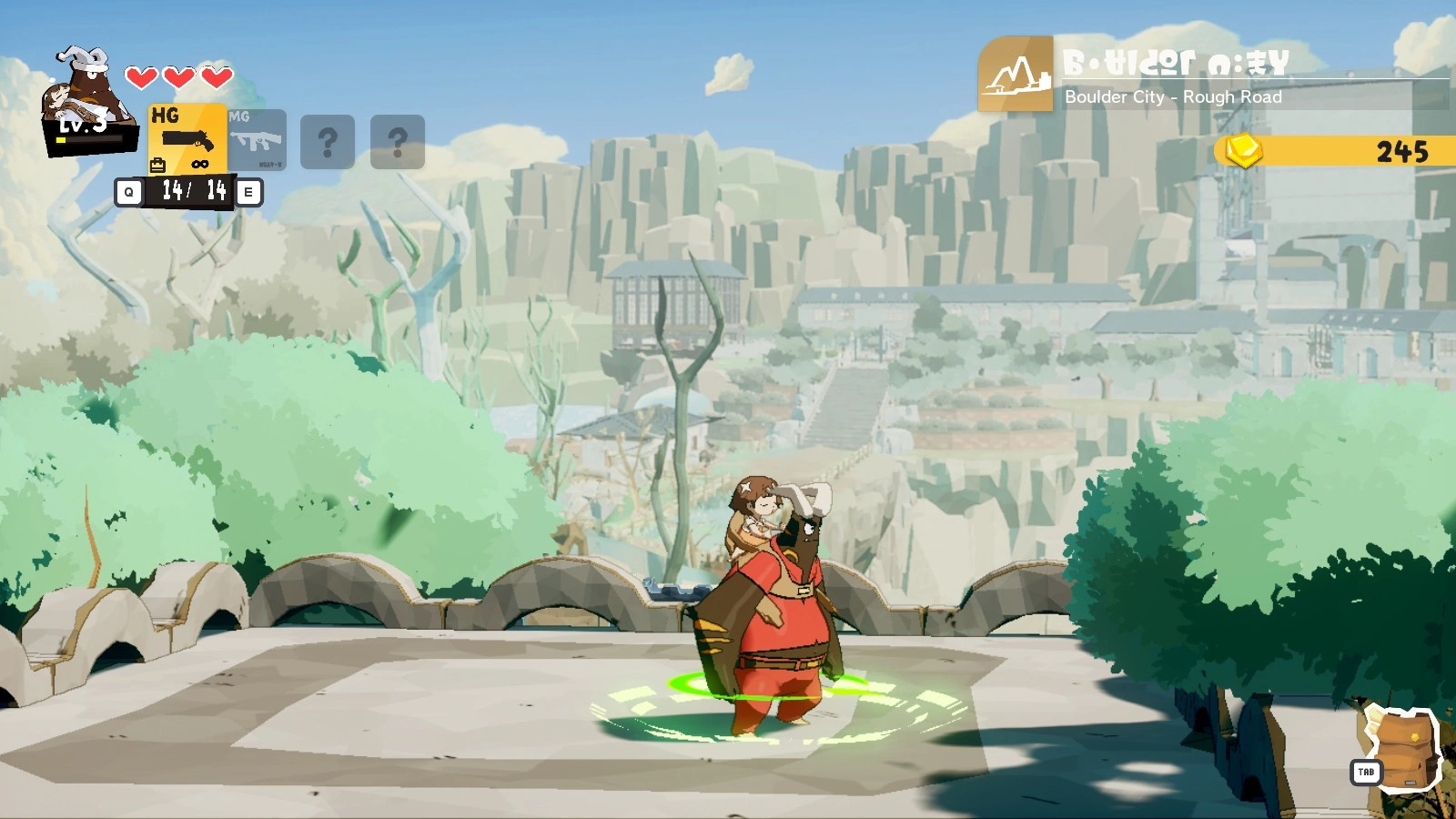
The world of DAMON and BABY uses an isometric viewpoint and builds its spaces with layered, multi-tiered environments. Exploration matters at nearly every step. Players move across varied biomes, including harsh deserts, ancient ruins, and quiet towns. The layout recalls classic adventure games such as The Legend of Zelda, with interconnected maps, hidden routes, and secrets tucked into corners that reward careful searching.
Progression depends on abilities that expand Damon’s movement options. He eventually gains skills such as double jumping and wall jumping, which let him reach ledges and passages that were previously out of reach. This creates a familiar Metroidvania rhythm. You see a path, realize you lack the tool for it, then return later with the right ability. The loop gives the map a satisfying sense of memory, since earlier obstacles become future opportunities.
The save system takes clear inspiration from the Souls series. Specific benches let players record progress and restore health. Resting also brings defeated enemies in the region back into play. That choice gives safety a cost. A bench can save your run, yet it can also refill the area with threats you already fought through once.
Safe rooms offer a short break from that pressure. Inside them, players can visit shops for new outfits and cook meals for the next stretch of the road. Fast travel connects these hubs, though each point requires a fee to unlock. That small financial layer adds another decision to exploration. The maps feel large, carefully planned, and vertically expressive, which helps them stand apart from flatter action layouts.
Twin-Stick Tactics and the Art of Baby Teleportation
Combat plays like a top-down twin-stick shooter. Damon uses firearms to deal with enemy hordes, beginning with a handgun that has infinite ammunition. That pistol works as a dependable backup whenever stronger options run dry or feel too risky to waste. Exploration leads to higher-tier weapons, including shotguns and tommy guns. Each gun has its own damage profile, which encourages players to keep looting and testing new equipment.
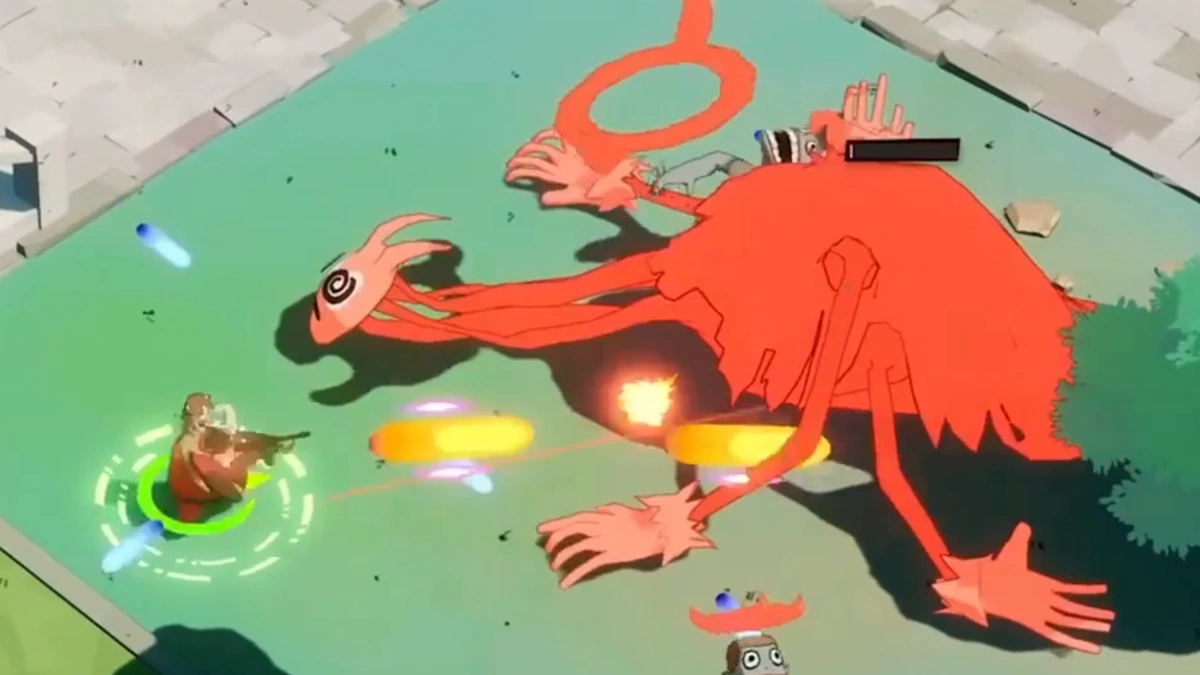
The game also adds a melee system. Damon an strike enemies at close range to damage them and create a lock-on. Once a target is locked, his shooting becomes much more accurate. That interaction gives melee attacks a practical role beyond emergency defense. It pushes players to close distance, tag a foe, and then use gunfire with greater precision.
The baby mechanic is the game’s most inventive combat and movement idea. Damon can throw the child across the screen and teleport instantly to her position. This creates quick escapes from enemy fire and lets him cross wide gaps. It also makes positioning feel active. The player has to think about where the baby lands, what dangers surround that spot, and how the teleport can shift the fight. The mechanic gives the action a tactical hook that fits the game’s strange premise.
Enemy variety keeps those systems busy. Sand golems require specific tactics to stop their healing. Samurai wolves demand careful timing during intense boss encounters. The pace is slower than games like Hades or Enter the Gungeon, so the combat favors measured movement and deliberate attacks.
Experience points gained from fighting can increase Damon’s maximum health and other physical stats. That RPG growth helps smooth out early difficulty spikes. Some weapons could use stronger audio feedback. A shotgun blast lacks the weight its visual role suggests. Even with that issue, the system remains practical, readable, and rewarding.
Resource Management and the Canine Companion
The game includes several survival systems with real mechanical weight. Inventory management uses a grid design similar to Resident Evil. Items occupy different amounts of space based on size, so organization becomes a constant concern. Players have to decide between carrying a stronger weapon or leaving room for healing supplies. That pressure gives the inventory screen a strategic role, since each slot can affect the next fight or exploration run.
Cooking adds another useful layer. Damon collects ingredients and recipes during his travels, then prepares meals that restore health. This system gives players a clear reason to search the environment carefully. A hidden ingredient or recipe can matter later, especially before a difficult area or boss fight. The loop supports the game’s exploration focus by making small discoveries feel practical.
Couch co-op lets a second player join as a large dog named Sir Bloodedge. The mode has limits. The dog cannot perform complex attacks, and its main purpose is helping carry items. That makes the feature useful in a narrow sense, though its mechanical depth stays shallow compared with Damon’s main toolset.
Some technical problems appear during play. Certain enemies fire projectiles through solid walls, which makes cover feel unreliable in those moments. Damon’s movement can also feel stiff during tight platforming sections. The visual presentation helps soften those frustrations.
The art style is polished and bright, giving the hellish environments a lively energy. Characters look expressive and carefully designed. That charm gives the game a strong visual identity, while the technical foundation remains solid enough to carry the adventure through its rougher edges.
The Review
DAMON and BABY
DAMON and BABY serves as a fascinating experiment from a studio stepping outside its comfort zone. The charm of the characters and the creative teleportation mechanic provide a strong hook. The mixture of survival management and twin-stick action feels slightly cluttered. The humorous writing maintains interest throughout the experience. Some technical flaws and stiff movement prevent it from reaching the highest tier of the genre. It remains a worthwhile experience for those who appreciate eccentric storytelling and deliberate combat.
PROS
- Humorous and self-referential writing
- Creative teleportation-based combat mechanic
- Colorful and polished art style
- Satisfying character progression
CONS
- Stiff movement and floaty jumping
- Technical bugs like projectiles clipping through walls
- Limited and occasionally frustrating inventory space
- Weak audio feedback for weapons