

























![Kingdom Hearts Collection [I-III] Review](https://gazettely.com/wp-content/uploads/2026/10/Kingdom-Hearts-Collection-I-III-1-360x180.webp "Kingdom Hearts Collection [I-III] Review: KHII Holds Steady as Newer Entries Fluctuate 37")



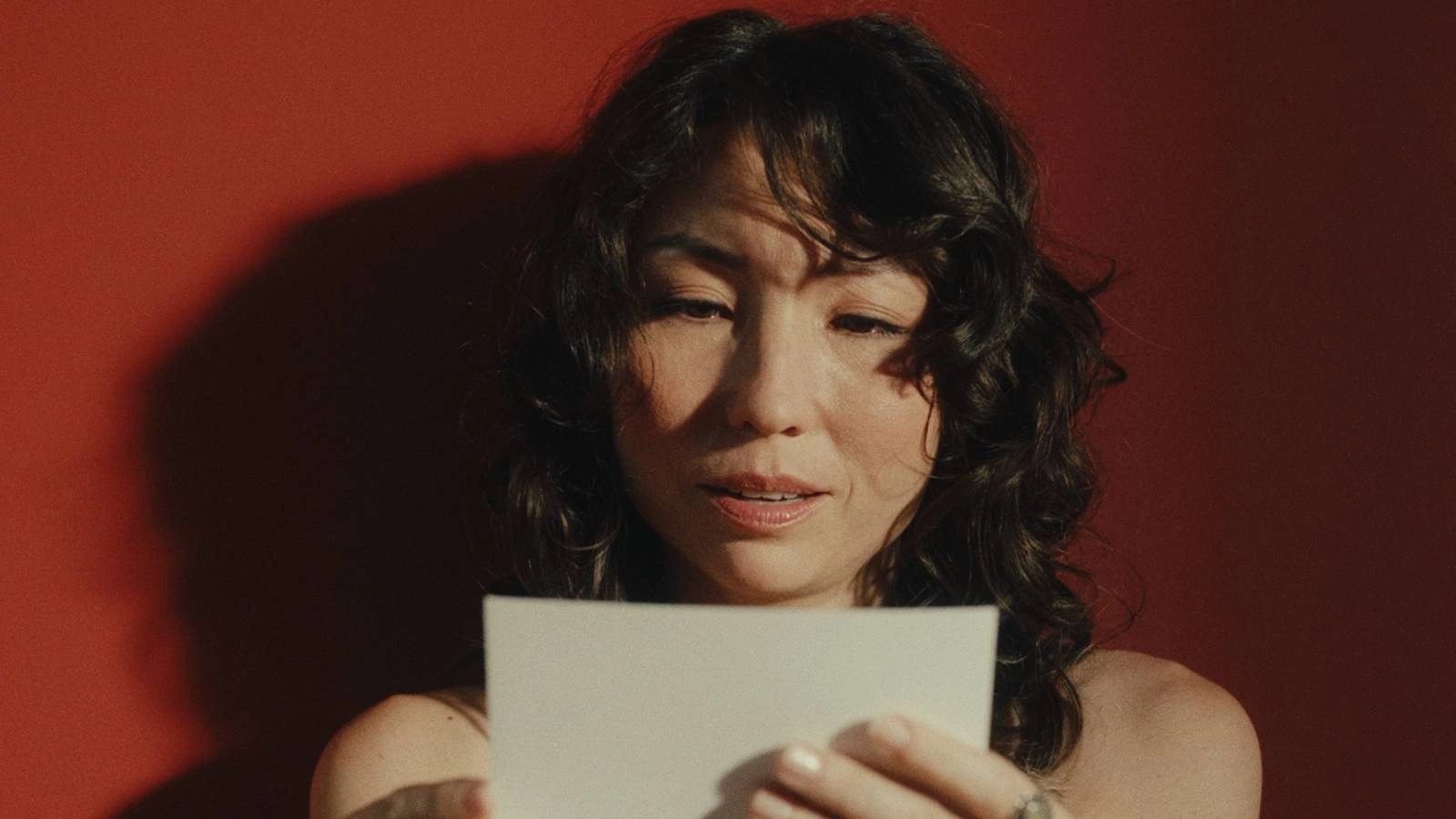

The historical wounds of the May 1998 Jakarta riots give Sebastien Tobler’s intimate feature its ghostly opening charge. That period of civil unrest cuts short the adolescent bond between Colin Lang and Laela Sagan, who leave a fracturing country with an unfinished goodbye.
Two decades of silence follow. A chance meeting in a Los Angeles record store places them face to face again, with time already pressing against the reunion. Colin is set to move to the East Coast the next morning, leaving eighteen hours for them to face the history they share.
Tobler treats this meeting with restraint and atmospheric realism. The film moves through layered conversation and patient observation, drawing from an independent drama tradition that values inner life and emotional residue. The limited time frame gives the story its pressure. Colin and Laela must look at the lives they built after displacement and recognize the strange intimacy of being near someone who is familiar, distant, and emotionally unfinished.
Domestic Reality and Lost Potential
Ken Kirby plays Colin as a man who has exchanged youthful spontaneity for quiet stability. He is a husband and a father, and that domestic fact gives the encounter its moral tension. His family life stands against the pull of memory, creating a conflict the film handles with quiet seriousness.
Leila Perry gives Laela a restless charge. She is an artist, and her sculptures become a silent way of working through memory. Her nomadic temperament sits far from Colin’s settled path. Their scenes carry an unvarnished quality, closer to independent cinema than studio-shaped romance. The chemistry grows from shared trauma, cultural shorthand, and the half-buried language of a past neither has fully escaped.
Their bond depends on recognition. Colin and Laela understand the particular weight of growing up in Jakarta and leaving it under violent historical pressure. The film frames their reunion as an encounter with a former self. Closure becomes a difficult question. They ask, through conversation and hesitation, if they want renewal or a cleaner shape for the broken edges of their separation. The emotional work lies in bridging twenty three years of change, regret, and memory.
The Aesthetics of a Fleeting Sunset
Tobler adopts a rhythm linked to the walk-and-talk mode of international independent cinema. The film builds its visual identity through the sunlit streets of Pasadena and Los Angeles. Garrett O’Brien’s cinematography uses soft gold and amber tones, giving the images a passing warmth that suits the story’s narrow window of time.
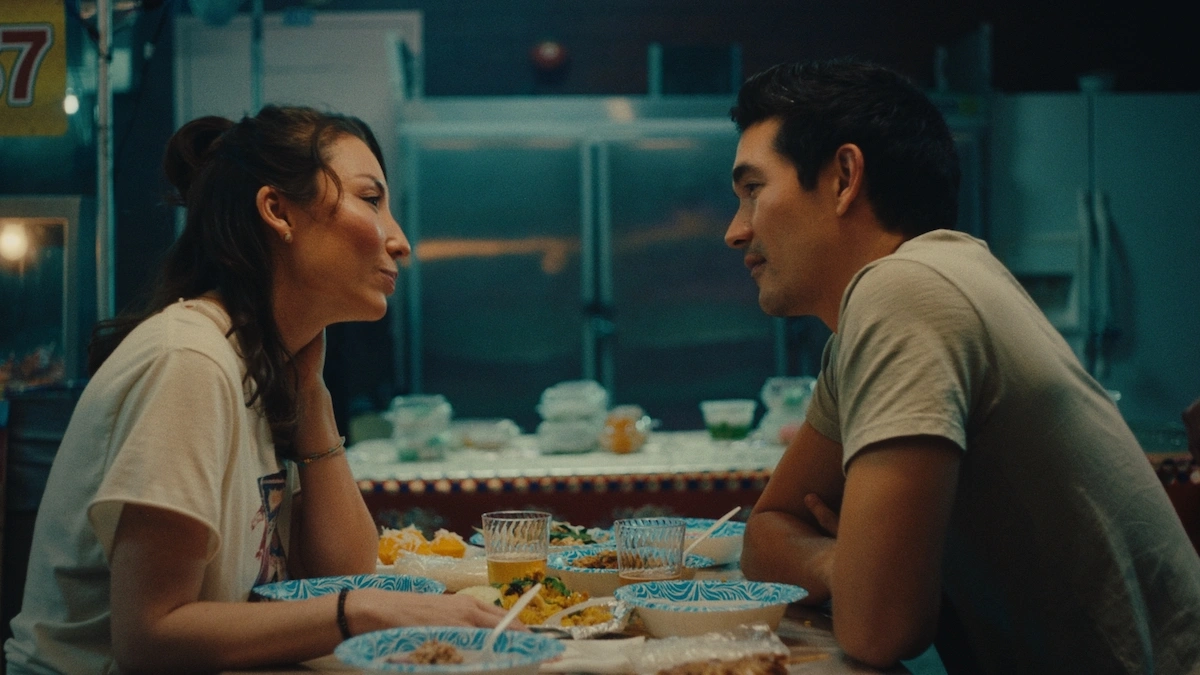
Long takes let the actors remain inside the spaces and conversations. The editing stays calm, reinforcing the naturalistic tone. A dinner scene uses step printing, blurring the world around the protagonists and giving the crowded room a private, suspended feeling.
The technique clearly nods to the style associated with Wong Kar-wai. It also recalls experimental Indian features that privilege emotional texture and mood over strict visual clarity. The image holds Colin and Laela in a space shaped by memory, desire, and time.
The soundscape is equally precise. The soundtrack reaches back to the 1990s era of their youth, making music a carrier of personal history. One striking moment places old tape recordings through a projector, casting younger faces onto the actors’ present selves. The effect turns memory into a visible layer across their bodies. Tobler handles these choices with care, and the film’s technical control feels notable given its modest production scale.
The Architecture of Nostalgia
The film studies the third culture kid experience through Colin and Laela. They are mixed race individuals shaped by expat circles, carrying a lasting ache for a lost home. This theme of displacement connects the film to diaspora narratives often explored in Indian Parallel Cinema, where characters frequently live between languages, places, and inherited histories.
The 1998 riots remain a quiet force in their lives. Colin and Laela rarely speak directly about the violence tied to their departure, and that silence feels truthful to the nature of suppressed historical trauma. Their connection is shaped by nostalgia and present responsibility. Laela’s sculpture, along with her search for a specific Jakarta restaurant, reveals her need for cultural continuity. Colin’s early reluctance to revisit the past shows another survival strategy. He treats memory as a force that could disturb the life he has built.
Small objects carry emotional and cultural weight. The rare concert shirt Laela finds becomes a physical link to a precise moment in time. These details give the film its sense of cultural authenticity. Tobler treats belonging as something carried through shared history and mutual recognition. Some memories resist easy placement inside a new life. The ending accepts that certain parts of the past remain most honest as reflections, giving the film a sober view of what can be recovered and what stays lost.
This Time premiered at the Los Angeles Asian Pacific Film Festival in June 2023 and received a wider digital and video-on-demand release in the United States on April 16, 2024. As of today, May 3, 2026, the film is primarily available to watch on major streaming platforms for rent or purchase, including Apple TV, Amazon Prime Video, and Fandango at Home.
Where to Watch This Time (2023) Online






Full Credits
Title: This Time
Distributor: 1091 Pictures
Release date: June 10, 2023 (Los Angeles Asian Pacific Film Festival), April 16, 2024 (United States)
Running time: 83 minutes
Director: Sebastien Tobler
Writers: Sebastien Tobler
Producers and Executive Producers: Theresa Chin, Sebastien Tobler
Cast: Ken Kirby, Leila Perry, Carlos Carrasco, Diane Robin, Earl Baylon, Marc Forget, Mitch Narito, Leialani Nicol
Director of Photography (Cinematographer): Garrett O’Brien
Editors: Sebastien Tobler
Composer: Sebastien Tobler
The Review
This Time
This Time is a thoughtful exploration of displacement and the persistent pull of the past. Sebastien Tobler eschews typical romantic tropes to focus on the specific, often painful friction of cultural and personal reunion. While the pacing is deliberate and the stakes remain internal, the film finds its strength in the authentic chemistry between Ken Kirby and Leila Perry. It effectively captures the "third-culture kid" experience, offering a sober reflection on how history shapes identity. It is a quiet, visually evocative study of the lives we leave behind.
PROS
- Natural, lived-in performances by the lead actors.
- Evocative cinematography and effective use of the step-printing technique.
- Authentic representation of the Indonesian expat experience and historical trauma.
- Subtle, atmospheric soundtrack that enhances the nostalgic tone.
CONS
- The dialogue-heavy, "walk and talk" pacing may feel slow to some viewers.
- Specific historical contexts, such as the 1998 riots, could be integrated more deeply into the narrative.
- Occasional audio quality issues in later scenes.







