
























![Kingdom Hearts Collection [I-III] Review](https://gazettely.com/wp-content/uploads/2026/10/Kingdom-Hearts-Collection-I-III-1-360x180.webp "Kingdom Hearts Collection [I-III] Review: KHII Holds Steady as Newer Entries Fluctuate 37")



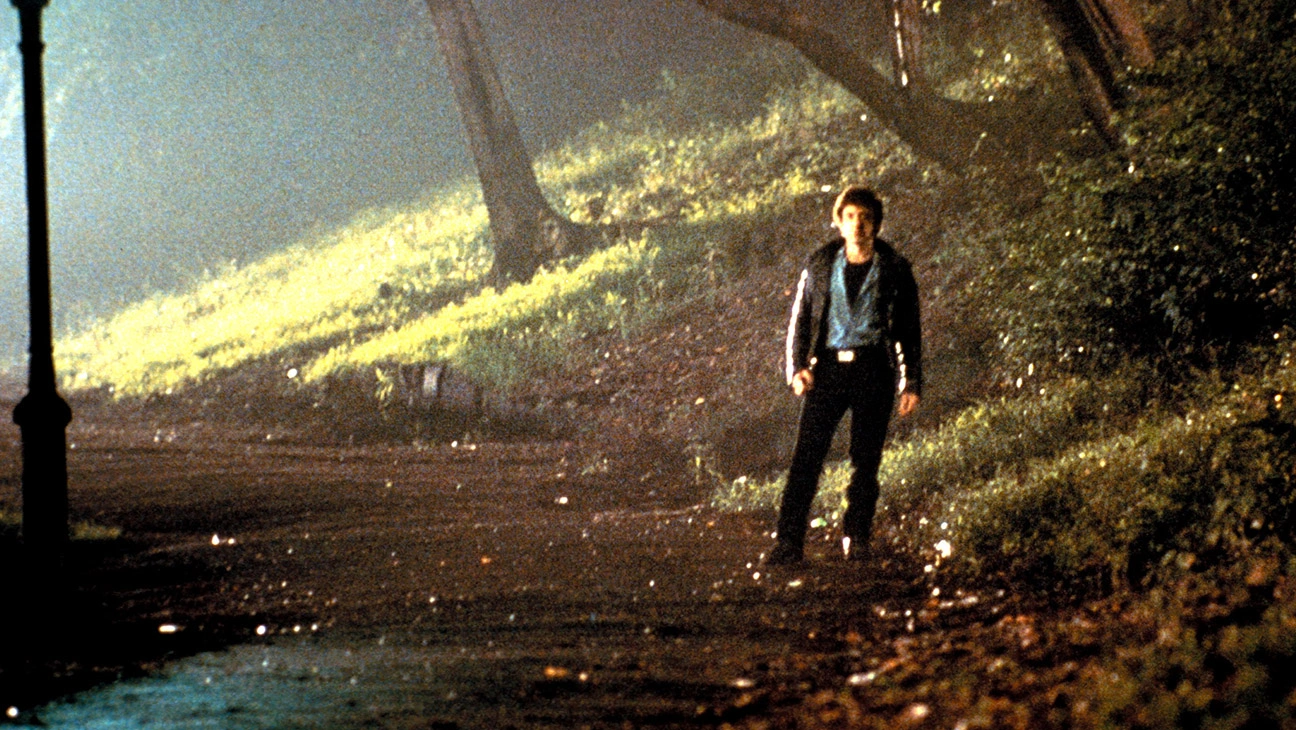

Mineshaft: The Cruising Murders immerses the viewer in Jeffrey Schwarz’s meticulous reconstruction of the fraught environment surrounding William Friedkin’s 1980 thriller Cruising. Schwarz threads together three intertwined narratives: the brutal murder of Variety writer Addison Verrill, the making of Cruising itself, and the vocal protests of the queer community that shadowed the production.
The film situates itself in late-1970s New York, where leather bars, BDSM clubs, and coded public spaces like the Mineshaft, Hellfire Club, and the piers of the Meatpacking District functioned as both sanctuary and stage for risk.
Cinematography and archival footage establish a chiaroscuro of exhilaration and menace, capturing narrow corridors, shadowed interiors, and fleeting glimpses of urban freedom tempered by societal threat. Schwarz highlights a moment when sexual liberation coexisted with fear, violence, and emerging homophobia.
The documentary emphasizes cultural memory and representation, exploring how trauma and subcultural expression intersect on screen and in real life. It avoids the sensationalized tropes of typical true-crime narratives, focusing instead on the ethics of storytelling, the ownership of history, and the moral weight of portraying communities at the margins of visibility. Viewers are invited to confront how cinema amplifies, distorts, and memorializes a vanished world of erotic freedom, coded spaces, and moral ambiguity.
The Murder Case and the Human Cost Behind the Myth
At the center of Schwarz’s inquiry lies the death of Addison Verrill, whose encounter with Paul Bateson led to fatal consequences in 1977. Verrill, a 36-year-old Variety writer, represents a fragile intersection of intimacy, anonymity, and queer desire. Bateson, a radiological technician, emerges as both perpetrator and emblem of a city’s hidden psychologies.
Schwarz presents the events with clinical precision, eschewing lurid dramatization in favor of measured exposition. Bob Geary, Verrill’s former partner, recounts shared moments of romance and clandestine nightlife, while Pamela Verrill Walker, the victim’s sister, provides a poignant lens of grief and inquiry.
The film briefly situates these personal tragedies within the broader canvas of the Bag Murders, a series of dismembered bodies discovered in the Hudson River, often linked to men from the leather scene. Bateson’s suspected involvement adds layers of uncertainty and dread, underscoring the peril inherent in coded sexual subcultures.
Schwarz’s approach transforms anxiety into narrative texture: anonymity is a double-edged sword, granting freedom while exposing one to unpredictable violence. Through measured framing, interviews, and subdued lighting in contemporary interviews, the documentary evokes the tension of the era. Verrill becomes more than a narrative catalyst; he is a prism through which Schwarz interrogates memory, desire, and ethical responsibility.
Cruising, Protest, and the Fight Over Representation
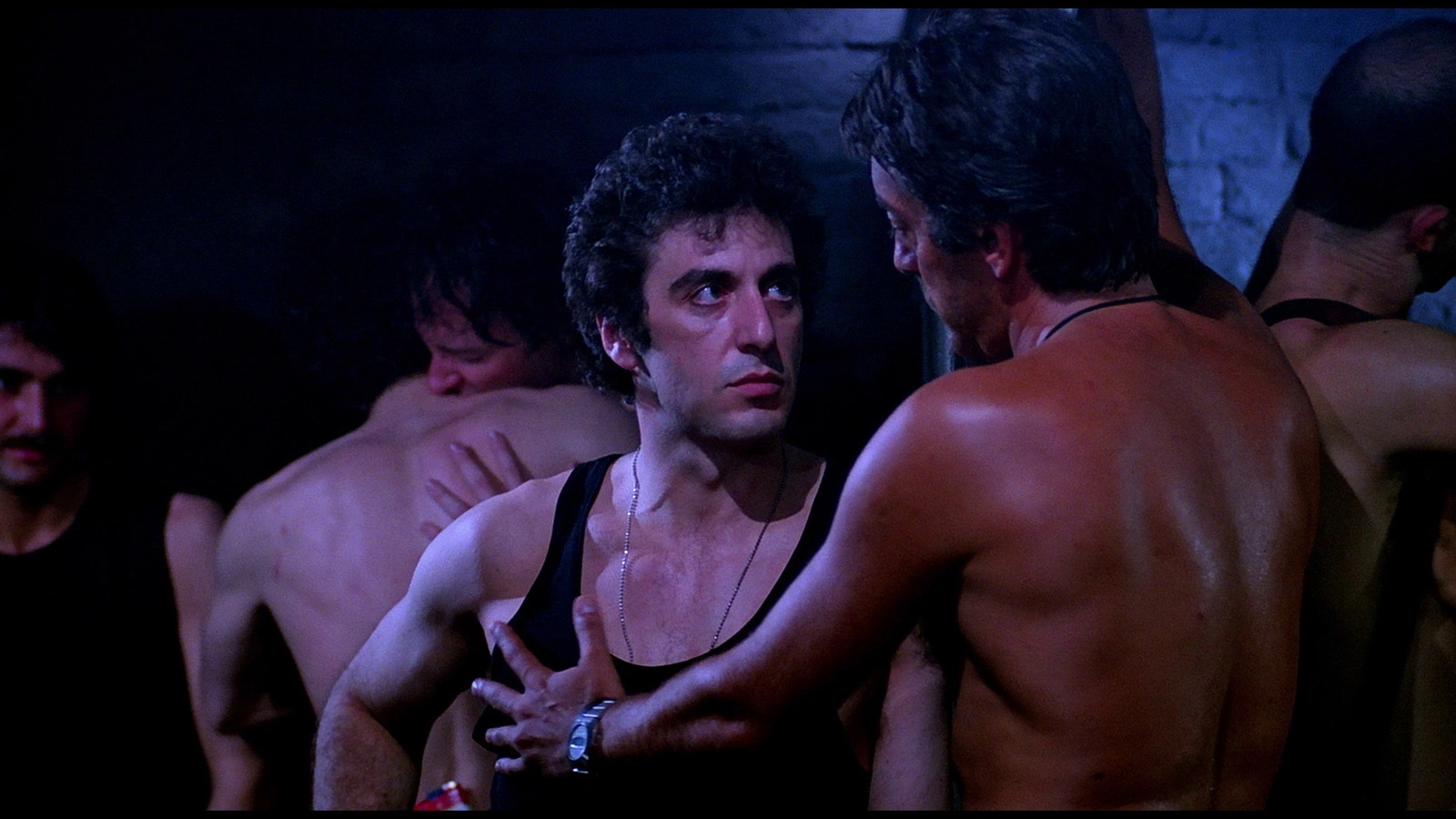
The documentary transitions into the making of Friedkin’s Cruising, revealing a director fascinated with subcultures defined by rules, rituals, and secrecy. Schwarz examines Friedkin’s process: the adaptation of a real murder, casting choices involving leather community figures and adult performers, and the director’s immersion into coded worlds that balanced allure with menace. Expressionistic framing, low-key lighting, and tight compositions mirror the claustrophobic milieu, reinforcing the tension between visibility and concealment.
Queer activists challenged the production, fearing the conflation of homosexuality with depravity. Arthur Bell’s Village Voice columns catalyzed public protest, while on-location demonstrations transformed filming into a theatrical confrontation of societal power structures.
Schwarz juxtaposes these protests with Friedkin’s defense: the film depicts a subculture, not an entire community. Yet Pacino’s mainstream star power and the studio’s reach ensured Cruising carried symbolic weight, intensifying audience perception and moral scrutiny.
The recreated Mineshaft, archival footage, and reconstructed interiors immerse the viewer in a world of drinking, drugs, and ritualized eroticism. Schwarz does not condemn these choices outright; instead, he positions them within a dialectic of visibility, artistic ambition, and ethical responsibility.
The audience witnesses a negotiation of representation, where aesthetic decisions intersect with social consequence. This section emphasizes the documentary’s interrogation of authorship, power, and the ethics of storytelling under surveillance and moral pressure.
Structure, Style, and the Documentary’s Uneven Power
Schwarz structures the documentary under 90 minutes, interweaving archival material, interviews, and a synth-driven score by Makeup and Vanity Set. The rhythmic editing maintains a pulse of tension, echoing the neo-noir roots of Friedkin’s original work while evoking temporal displacement: 1970s Manhattan appears both vibrant and spectral. Lighting and composition across interviews reflect chiaroscuro sensibilities, casting faces in soft shadows that hint at moral and existential ambiguity.
The documentary’s ambition occasionally overwhelms its runtime. Transitions between crime, cinematic history, activist testimony, and the looming specter of AIDS can feel abrupt, yet the compression mirrors the unpredictability of the period it depicts. Schwarz allows tonal shifts—from the kinetic thrill of nightlife to somber reflection on mortality and disease—without smoothing the edges, acknowledging the dissonance inherent in lived experience.
Through sound design, pacing, and visual rhythm, Schwarz manipulates audience perception, inviting empathy while maintaining analytical distance. The AIDS crisis is an unspoken counterpoint, coloring the narrative with foreshadowed mortality. The result is a documentary that is dense but vivid, structurally ambitious, and ethically interrogative, preserving a complex moment in queer history with both rigor and cinematic sensitivity.
Mineshaft: The Cruising Murders is an American feature-length documentary film that celebrated its world premiere at the SVA Theater during the Tribeca Festival on June 6, 2026. Directed by veteran LGBTQ+ historian Jeffrey Schwarz, the film explores the historical uproar surrounding William Friedkin’s 1980 psychological thriller Cruising alongside the brutal real-life Manhattan murders that inspired it. Following its successful festival premiere in New York, the documentary is scheduled to continue its run across international film circuits, including upcoming presentations at Frameline and the Provincetown International Film Festival, while formal theatrical and residential streaming platform distribution details are being finalized.
Where to Watch Mineshaft: The Cruising Murders (2026) Online
Full Credits
Title: Mineshaft: The Cruising Murders
Distributor: Automat Pictures, The Film Collaborative
Release date: June 6, 2026
Running time: 84 minutes
Director: Jeffrey Schwarz
Writers: Jeffrey Schwarz
Producers and Executive Producers: Jeffrey Schwarz, John Boccardo, Ron Nyswaner, Robbie Rogers, Alan Eichler, Gerald Herman, Aimée Flaherty
Cast: Dan Savage, Michael Musto, Randy Jurgensen, Don Scardino, Robert Geary, Pamela Verrill Walker, Andy Humm, Charles Kaiser, William Friedkin
Director of Photography (Cinematographer): Brian Wengrofsky, Jesse Dana
Editors: Jeffrey Schwarz
Composer: Makeup and Vanity Set
The Review
Mineshaft: The Cruising Murders
Mineshaft: The Cruising Murders is a tightly crafted yet dense exploration of a vanished queer New York, Friedkin’s controversial film, and the real-life violence that intersected with it. Schwarz balances archival investigation, interviews, and immersive recreation to illuminate the stakes of representation, subcultural secrecy, and ethical storytelling. While its compressed runtime occasionally strains transitions, the documentary’s attention to mood, moral ambiguity, and historical specificity makes it compelling and intellectually stimulating.
PROS
- Deep, nuanced exploration of queer history and cinematic ethics
- Compelling human dimension through interviews with Geary and Verrill’s sister
- Effective use of lighting, archival footage, and score to evoke period tension
- Insightful dissection of activism, protest, and representation
- Engaging neo-noir aesthetic and rhythmic pacing
CONS
- Runtime under 90 minutes feels restrictive for complex material
- Abrupt transitions between crime, film history, and activism
- Some narrative threads, such as the Bag Murders, receive only cursory treatment







