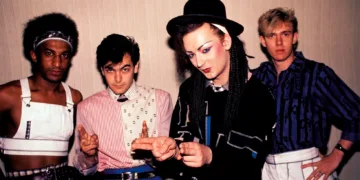






















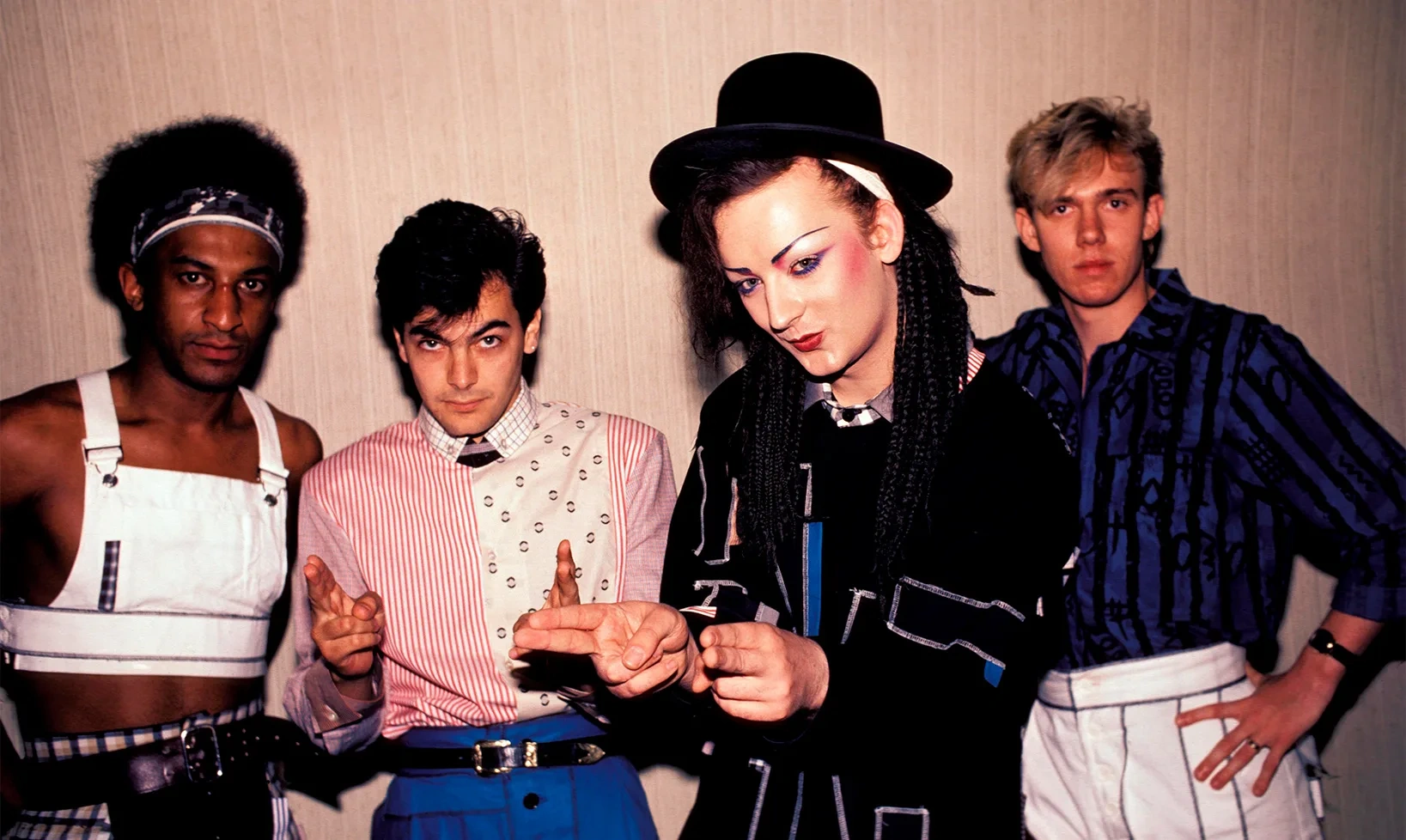

Alison Ellwood’s Boy George & Culture Club transports viewers to early 1980s Britain, a period defined by the interplay of Thatcher-era conservatism and the flamboyant energy of the New Romantic scene. At the center is George O’Dowd, better known as Boy George, whose wide-brimmed hats, dramatic makeup, and Technicolor muumuus made him a magnetic figure, both onstage and in the public imagination.
George dominates the spotlight, but the documentary carefully situates him within the broader band: Jon Moss on drums, Roy Hay handling guitar and keyboards, and Mikey Craig on bass. Their differing backgrounds—George’s Irish and queer identity, Craig’s Black British heritage with Caribbean roots, Hay’s English upbringing, and Moss’s Jewish punk lineage—justify the moniker “Culture Club.”
The film chronicles the band’s meteoric rise in the MTV era, from their first chart-topping singles to global stardom. Iconic tracks such as Do You Really Want to Hurt Me and Karma Chameleon punctuate the narrative, with archival footage and concert performances providing context for their cultural imprint.
Present-day interviews with all four members add candid reflection, revealing personal and professional tensions alongside triumphs. Themes of fame, sexuality, and collaboration thread through the story, hinting at both the exhilaration and volatility that came with instant celebrity.
Ellwood balances nostalgia with insight, framing Culture Club as a phenomenon that was both of its time and ahead of it, allowing viewers to appreciate the band’s artistry, personality, and enduring influence.
Formation, Early Career, and Musical Chemistry
Culture Club’s origins emerge as a mix of intention and serendipity. Mikey Craig recruited George O’Dowd after George parted ways with Bow Wow Wow, Jon Moss joined on drums, and Roy Hay completed the lineup on guitar and keyboards.
Also Read





Each member brought distinct influences: reggae, Motown, calypso, blue-eyed soul, and punk collided in the studio. George assumed the role of lyricist, but the music was the product of genuine collaboration, a creative alchemy that produced the band’s unmistakable sound.
Early success was improbable. Two members had never played in a band, and George was a novice songwriter. Their initial albums nevertheless yielded hit after hit, demonstrating a capacity to turn raw talent into pop precision. George’s flamboyant persona drew attention, accelerating the band’s visibility but also creating tension as the media fixated on him at the expense of the other members.
The documentary illustrates the cultural impact of their music videos, from the Mississippi riverboat for Karma Chameleon to visually inventive promotional clips, which reinforced George’s persona and highlighted the performative aspects of the band. Concert footage, TV appearances, and archival press coverage evoke the 1980s music scene, giving the audience a sense of the energy and spectacle that defined Culture Club’s early years.
Internal Dynamics and Personal Challenges
The narrative turns inward to explore relationships and conflicts. Boy George and Jon Moss’s romantic involvement surfaces as a driving tension, described by both as “love at first sight.” Their secrecy shaped band dynamics, influencing both collaboration and friction. Media obsession with George amplified the strain, leaving Roy Hay and Mikey Craig feeling overshadowed, a sentiment echoed in candid interviews.
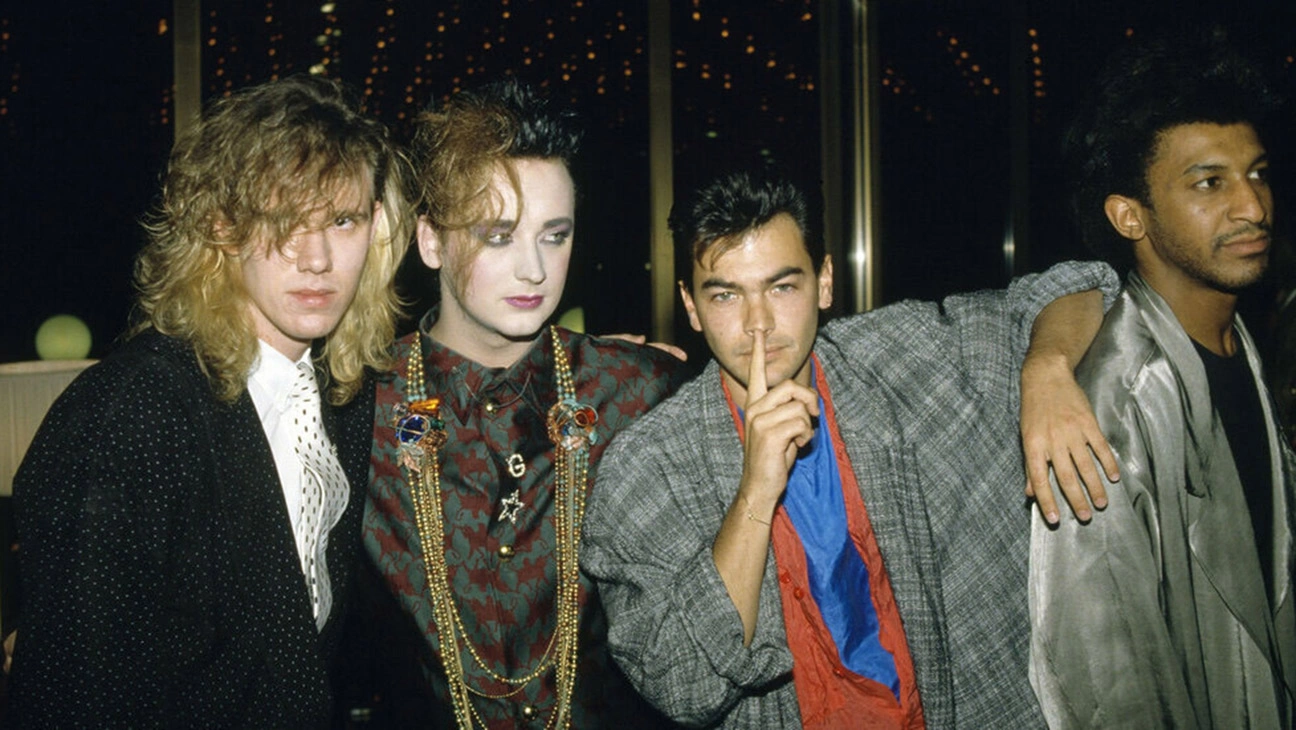
George’s drug use introduces another layer of complexity. Early cannabis use escalated to heroin, tabloid scrutiny intensified the stakes, and the personal toll rippled across the group. Missed opportunities, such as Live Aid participation and collaborative recording exclusions, illustrate how celebrity culture compounded existing pressures. Yet the interviews maintain levity alongside revelation, capturing humor, regret, and reflection in equal measure.
Societal context looms in the background. The fascination with George’s sexuality and public homophobic reactions highlight the constraints of the era. Ellwood’s method—separating interviews and intercutting archival materials—creates intimacy without sensationalism, showing the band members as resilient, self-aware artists navigating fame, desire, and creative ambition.
Visuals, Performances, and Cultural Resonance
Ellwood’s documentary excels in blending aesthetic flair with historical documentation. Archival footage, including concerts, music videos, and TV appearances, pulsates with energy and nostalgia. The editing juxtaposes interviews with performance clips, often enhanced by candy-colored graphics reminiscent of Culture Club’s album art.
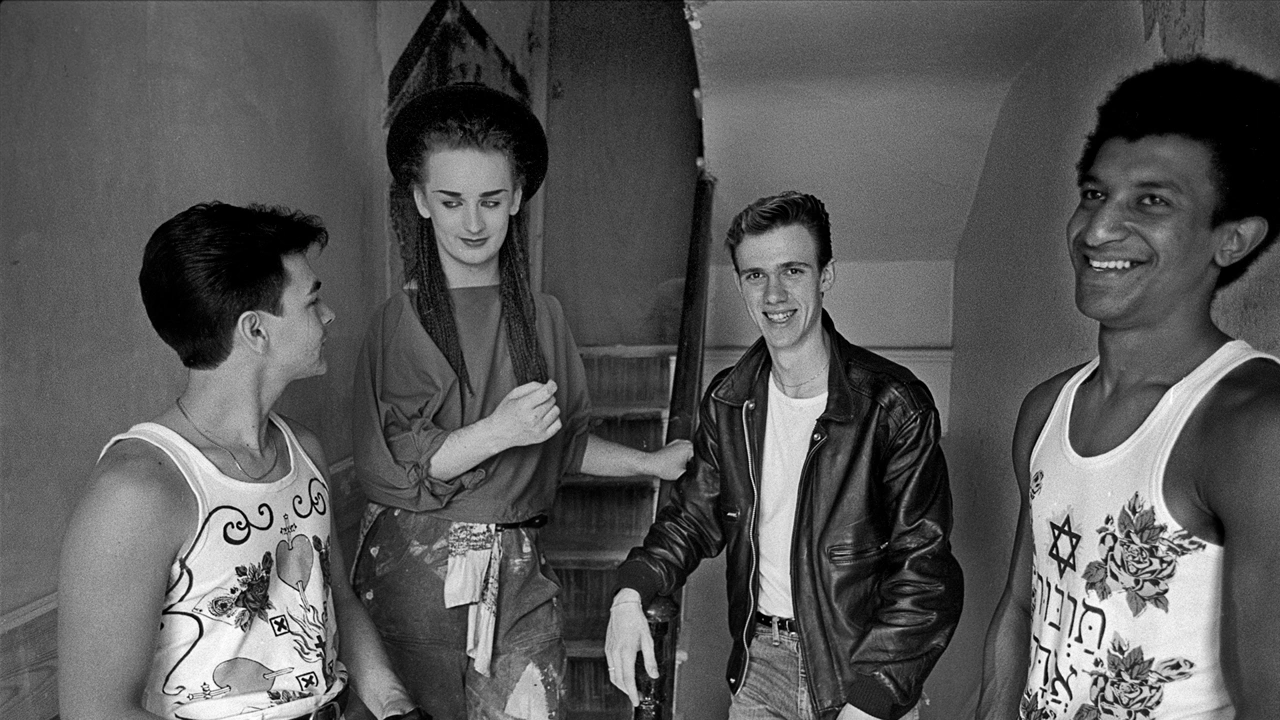
Performances reveal versatility, ranging from reggae-infused pop to soulful ballads, with backing vocals from Helen Terry and intricate instrumental arrangements reinforcing the band’s craft. George’s visual impact onstage elevates their music, while his theatricality underscores Culture Club’s brand. Moments of humor emerge through George reflecting on absurd press coverage or the performative antics in videos, balancing reverence with irony.
The band’s diversity shines through. Caribbean reggae, British punk, and pop sensibilities merge seamlessly, reflecting a cross-cultural creative synthesis. Audience reactions in concert footage convey the scale of the band’s popularity and the emotional resonance of their songs. The documentary situates Culture Club within the broader landscape of 1980s pop, illustrating the symbiotic relationship between visual spectacle, media, and music in cementing their legacy.
Boy George & Culture Club is an intimate music biography documentary film that made its world premiere at the Tribeca Festival in June 2025 before traveling across international festivals and landing a domestic distribution release with Vantage. Directed by veteran documentary filmmaker Alison Ellwood, the project blends archival performance tapes with brutally candid new individual interviews with all four original band members. The narrative explores their meteoric rise as a multi-racial, sexually liberated group in 1980s Britain, zeroing in on the intense, secret romance between Boy George and drummer Jon Moss that fueled both their creative brilliance and their eventual destructive split. Audiences can follow the latest distribution rollout updates or look for regional streaming availability on independent digital festival portals and major pay-per-view networks.
Where to Watch Boy George & Culture Club (2026) Online



Full Credits
Title: Boy George & Culture Club
Distributor: Fine Point Films, Polygram Entertainment, Vantage (U.S. Release)
Release date: June 2025 (Tribeca Festival world premiere)
Rating: 15
Running time: 96 minutes
Director: Alison Ellwood
Writers: Alison Ellwood
Producers and Executive Producers: Trevor Birney, Andrew Tully, Andrew D. Corkin, Ben Silverman, Howard T. Owens, Natalia Nastaskin, Lawrence Mestel, David Blackman, Eimhear O’Neill, James Packer
Cast: George O’Dowd (aka Boy George), Jon Moss, Mikey Craig, Roy Hay
Director of Photography (Cinematographer): Michelle McCabe, Mark Garrett
Editors: Paul Carlin
The Review
Boy George & Culture Club
Boy George & Culture Club offers an affectionate, vivid portrait of one of the 1980s’ most iconic bands. Alison Ellwood captures the flamboyance, musical ingenuity, and interpersonal complexities that defined Culture Club, balancing nostalgia with insight. While the documentary occasionally skirts deeper analysis of internal tensions and societal context, it remains engaging, entertaining, and illuminating for both longtime fans and newcomers.
PROS
- Engaging archival footage and concert performances
- Candid, entertaining interviews with all four band members
- Strong depiction of Boy George’s charisma and visual impact
- Highlights the band’s musical versatility and creative chemistry
- Balances humor, nostalgia, and emotional depth
CONS
- Limited exploration of internal conflicts and post-1980s developments
- Surface-level treatment of social issues like LGBTQ representation and homophobia
- Narrative occasionally glosses over the darker periods of the band’s history