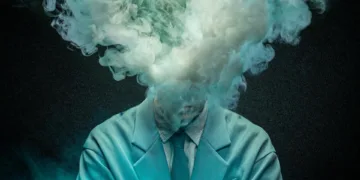

























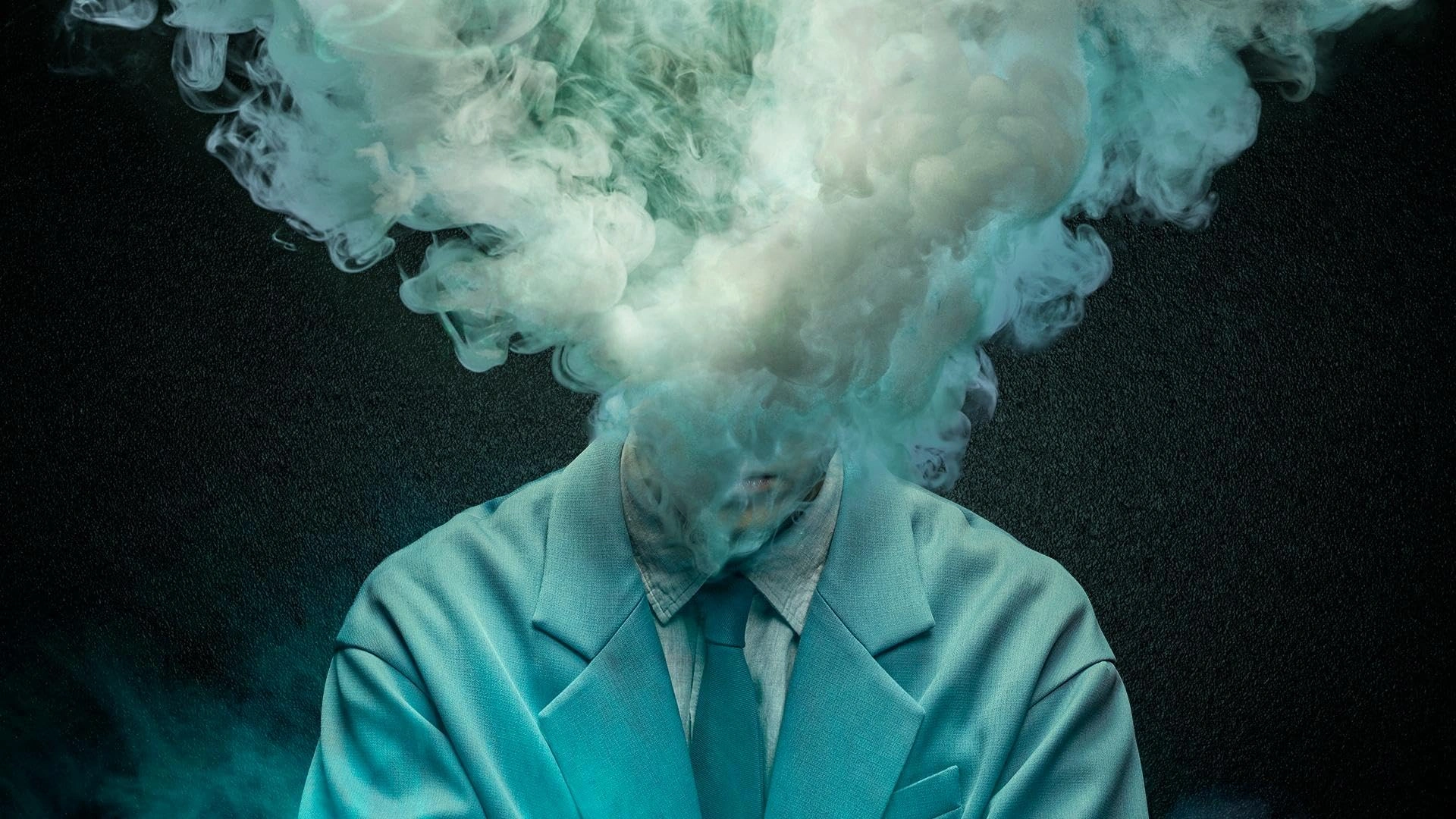

Public terror travels faster when it has footage. Human Vapor understands that before it understands everything else. Its first murder happens during a televised interview, with environmental energy expert Professor Sano suspended by a mysterious gas before his body bursts across the studio. The image is grotesque, yes, but its real function is civic. A private act of violence becomes national programming before anyone in the room can process what they have seen.
Netflix and Toho’s eight-episode reworking of Ishiro Honda and Takeshi Kimura’s 1960 tokusatsu film takes the old premise of a man who can turn into gas and moves it into a culture built around broadcast panic, livestream speculation, and institutional distrust.
The killer sends a message to Tokyo’s news agencies, calls himself the Human Vapor, and promises more deaths. The police chase a body without fixed form. The media chases a story without safe distance. The public, naturally, gets the worst seat in the house and the best view.
A Cult Monster Enters the Streaming Machine
The 1960 film used its vaporous man as a tragic science-fiction figure, a mutant criminal shaped by experiment and desire. This version keeps the names and the gaseous conceit, then rebuilds the architecture around revenge, discarded test subjects, yakuza money, government secrecy, and the old reliable streaming phrase nobody says aloud: scalable trauma.
Yeon Sang-ho and Ryu Yong-jae know how to turn supernatural premises into social accusation, and Human Vapor is strongest when its monster feels like evidence. The attacks are announced in advance because the killer wants an audience for his grievance. His ability to pass through barriers turns the usual police procedural into a study of institutional helplessness.
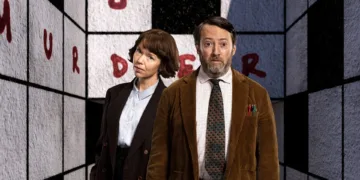
Detective Kenji Okamoto can inspect broadcast footage from every angle, but a room means little when the suspect can enter as smoke. Reporter Kyoko Kono can follow the clue of an empty box sent to her newsroom, but journalism becomes dangerous when the source can materialize inside the interview itself.
The show’s conspiracy widens with care. Kaho and Fujita, sibling streamers chasing attention through an oddball conspiracy channel, first seem imported from a different series, one where reaction thumbnails count as character development.
Yet their arc sharpens once they stumble onto clues that trained investigators miss. They are not professionals, which is exactly the point. In a media ecosystem that rewards amateurs for noticing patterns, the show lets them be annoying, useful, scared, and occasionally correct.
The People Inside the Panic
Yu Aoi gives Kyoko the kind of watchfulness that keeps the series grounded when the plot threatens to float away. In the opening interview, she is not treated as a neutral witness to spectacle. Blood lands near her, the broadcast collapses around her, and the story she was there to conduct becomes an event that will define her. Later, when she tracks the Human Vapor’s message through the newsroom clue, Aoi plays curiosity and dread as two versions of the same professional instinct.

Shun Oguri’s Kenji is written in more familiar strokes: the suspended detective, the unfinished case, the old romance, the damaged career. His past investigation into Yasutoshi Mori gives the series a useful bridge into organized crime and high-level corruption, but the character works best in small procedural actions. Watch him study the televised killing for signs of tampering or gas leakage. The show needs him less as a tortured hero than as a man trained to believe that evidence still behaves rationally.
The romantic history between Kenji and Kyoko is less reliable. Some of their shared glances carry the fatigue of people who hurt each other before the series began. Other scenes lean into melodrama with the confidence of a platform trying to satisfy every known audience quadrant. Streaming has learned to call this tonal range. Sometimes it is padding with eye contact.
UTA, credited in the central role, makes the Human Vapor unsettling through restraint. His speech during the recorded threats is soft and slow, almost emptied of ordinary anger. His movements have the smoothness of someone trying to remember how a human body is supposed to behave. When his face dissolves into vapor, the effect gives visual form to what the performance already suggests: this is a person whose body has become an argument he can no longer withdraw.
Body Horror With a Civic Aftertaste
The effects are most persuasive when they make transformation look painful. The Human Vapor does not glide into his gaseous form like a superhero discovering a new trick. His face seems to lose its claim on solidity. His body becomes unstable matter. That choice matters because the series is not asking viewers to admire power. It is asking what kind of system produces a weapon, throws away the human being attached to it, then acts shocked when the weapon returns.
Some of the CGI falters. Sano’s levitation in the premiere has the faint artificiality of a visual effect still waiting for gravity to sign off on it. Certain smoke shots look closer to polished demonstration than physical threat. Katayama compensates by using ordinary vapor as a suspense device. Car exhaust, cigarette smoke, and campfire haze become suspect. A room no longer needs a monster in frame to feel occupied.
That is where Human Vapor finds its modern anxiety. Invisible danger has become one of television’s favored metaphors, from pandemics to misinformation to surveillance systems no one can touch but everyone can feel. Here, the metaphor has a body, then loses it. The show’s best scenes understand the political charge of that instability: a killer without borders moving through institutions that have spent years pretending walls were enough.
Eight Episodes, Six Hours of Momentum
Human Vapor has the familiar Netflix problem of being carefully made and slightly overextended. The first episode opens with force and ends with the killer stepping into the story as a public figure. Later chapters slow when explanations arrive in heavy blocks or when romantic subplots interrupt the investigative pressure. The show keeps insisting on its emotional scale, and some of that insistence works against the eerie simplicity of its premise.
Still, the production has texture. BeauDamian’s score reaches back toward Toho’s 1960 lineage with retro bombast, then folds it into modern thriller rhythms. Katayama moves between studio newsrooms, urban chases, quiet rural spaces, and criminal interiors without making Japan feel like a mere backdrop for genre business. The yakuza storyline around Mori and the Kurose-gumi gives the conspiracy a material shape, tying the supernatural threat to money, reputation, and old impunity.
Human Vapor is at its sharpest when it treats its monster as a public consequence. The live-TV explosion is not just a hook. It is the series’ theory of violence in the streaming age: harm becomes content, content becomes panic, panic becomes leverage, and every institution involved claims to be responding responsibly while quietly protecting itself.
The highly anticipated Japanese-South Korean sci-fi thriller series Human Vapor premiered globally on Netflix today, July 2, 2026. Audiences can stream all eight episodes of the freshman season exclusively on the platform with an active subscription. A modern, grounded television reimagining of Toho’s classic 1960 tokusatsu film, the story follows a suspended detective and an investigative reporter who desperately race to stop a mysterious killer capable of transforming his body into gas to execute high-profile, pre-announced murders.
Where to Watch Human Vapor Online


Full Credits
Title: Human Vapor
Distributor: Netflix
Release date: July 2, 2026
Rating: TV-MA
Running time: 50 minutes per episode
Director: Shinzo Katayama
Writers: Yeon Sang-ho, Ryu Yong-jae
Producers and Executive Producers: Yeon Sang-ho, Toho Studios Production Team, Wow Point Executives
Cast: Shun Oguri, Yu Aoi, Suzu Hirose, Kento Hayashi, Uta, Yutaka Takenouchi, Morley Robertson
Director of Photography (Cinematographer): Toho Cinematography Crew
Editors: Toho Editorial Team
Composer: Shirogumi Sound Department
The Review
Human Vapor
Human Vapor gives Netflix and Toho a strong argument for reviving old tokusatsu properties through modern serialized television. The live-TV explosion, Kyoko’s pursuit of the killer’s message, and UTA’s eerie stillness give the series real charge, while the secret-project conspiracy turns spectacle into institutional critique. The weaker romantic passages and uneven pacing reveal the usual streaming problem: eight episodes where six might have cut cleaner. Still, this is stylish, strange, and politically sharper than its vaporous monster premise suggests.
PROS
- Strong Toho revival concept
- Yu Aoi’s grounded performance
- Eerie vapor body horror
- Smart media-and-power conspiracy
- Memorable UTA villain presence
CONS
- Slow middle stretch
- Uneven romantic melodrama
- Some artificial CGI moments
- Streamer subplot starts awkwardly








A monster made of vapor would be defeated by a vacuum cleaner.