















The strangest punishment Ryan Craig receives is freedom. Prison, in Ross McClean’s Magilligan, has gates, corridors, fences, cells, and also a climate. Ryan can leave HMP Magilligan, at least for a while, yet the film keeps asking why the outside world feels so badly designed for a person trained by confinement. Call it carceral weather: the atmosphere of prison follows him into streets, family rooms, phone calls, and his own nervous system.
McClean first met Ryan while making the short Hydebank, and the feature carries the patience of a filmmaker who knows the danger of reducing his subject to a case study. Ryan is a convicted criminal with a violent past, drug addiction, and a family history marked by prison. His father, grandfather, and uncles have all been incarcerated. Ryan’s own phrase, “jail is in my DNA,” sounds like fatalism, family history, and self-protection arriving in one sentence.
The film does not soften what he has done. It does something harder. It refuses the viewer the cheap comfort of deciding that Ryan is either a monster or a redeemed soul waiting for the correct third-act music cue. Very inconsiderate of it, really.
The Body Remembers
Ryan’s most revealing dialogue is often his silence. McClean studies his posture, his guarded face, the way he listens to older cellmates talk about the dead and the old days. He often seems to be holding himself in reserve, as if any exposed feeling might be used against him. His tattoos and stern expression announce one kind of man; his pauses suggest another, less available one.
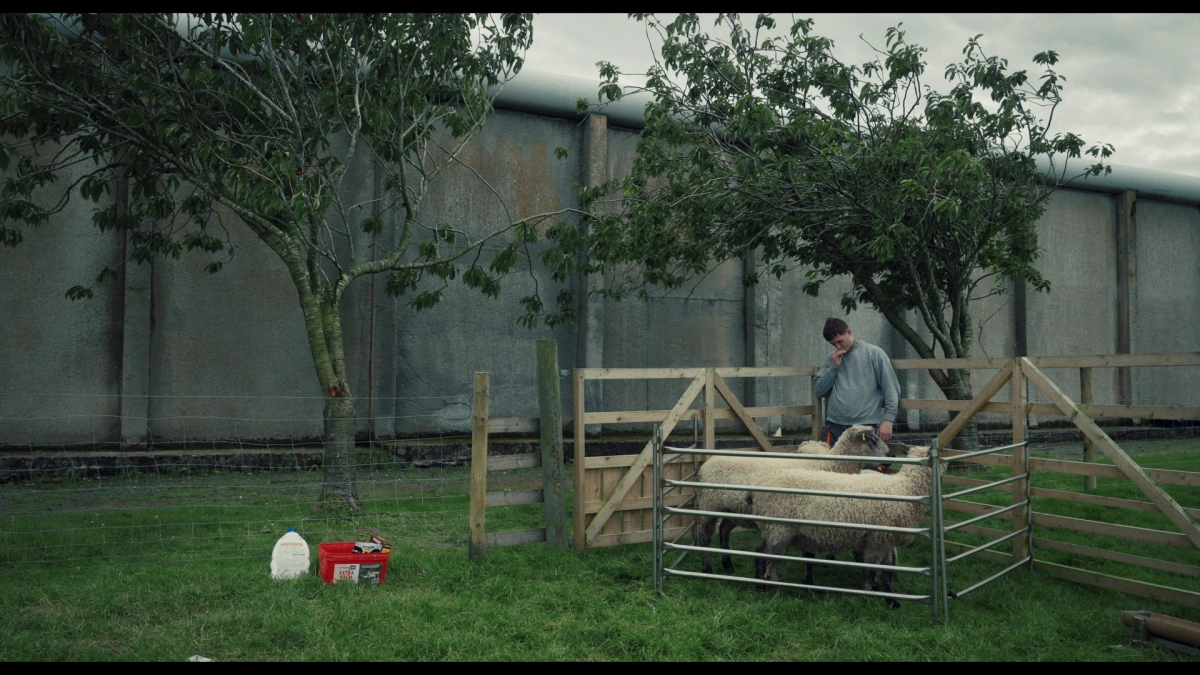
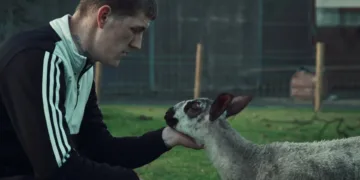
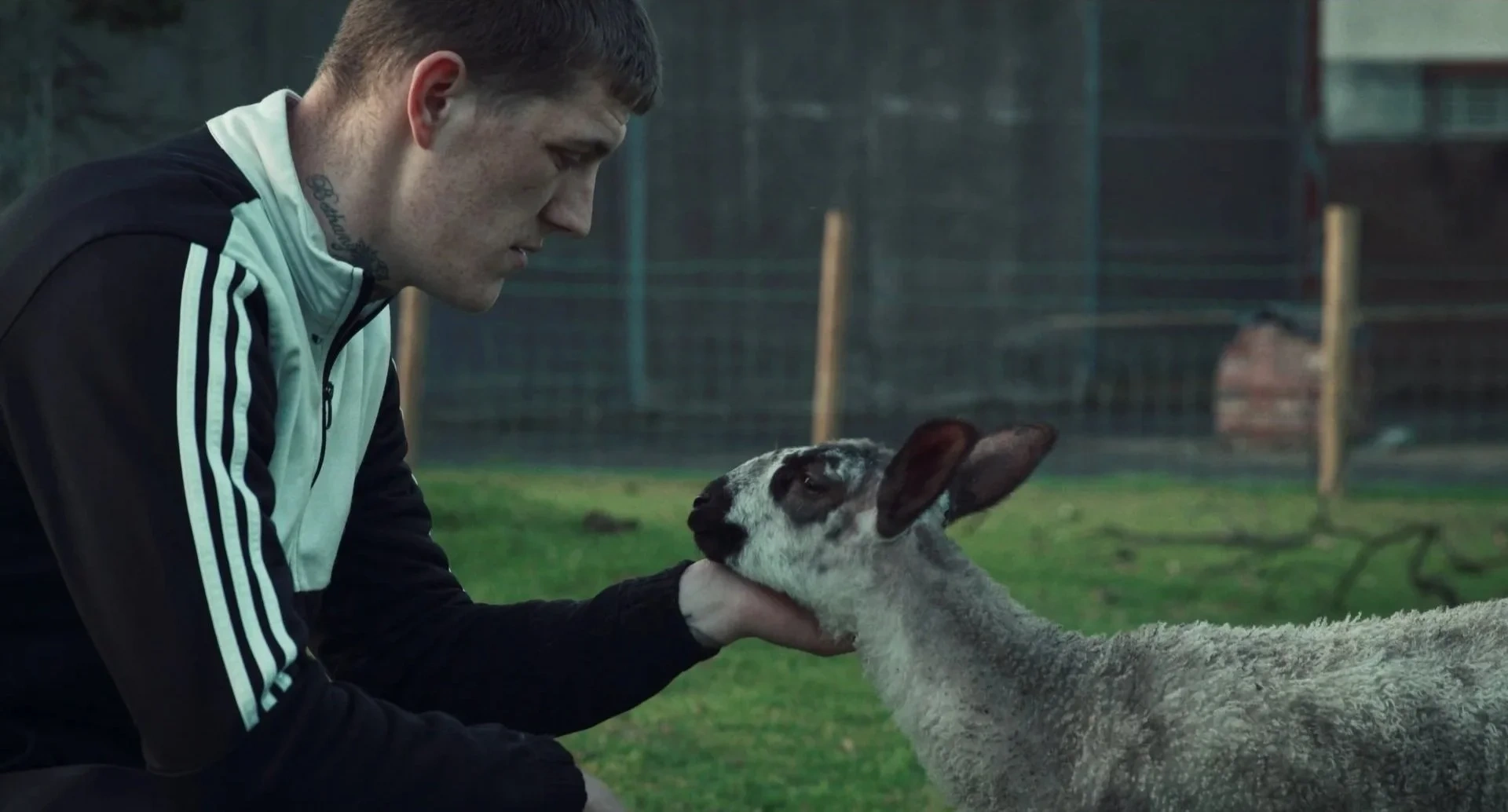
The sheep-farming scenes disturb that armour. Ryan tends the animals with a care that seems almost embarrassing to him, because tenderness has no obvious social currency in the world the film shows. His face relaxes around the flock. A rare smile appears. He knows their movements, worries about them, speaks about breeding them and getting them “skipping about the field.”
The film never turns this into therapy-poster sentiment. Other prisoners shout abuse at him while he works with lambs, a small reminder that gentleness can be punished by the culture around him before the law gets involved.
His father’s lesson, as Ryan describes it, was simple: stand up for yourself, never back down. There is a whole political theology hidden in that instruction. It belongs to the family, to masculinity, to sectarian loyalty, to the inherited grammar of “us” and “others.” Ryan’s violence is still his. McClean is careful there. Yet the film shows how a boy can be handed a survival code so narrow that every insult starts to look like a border crossing.
Inside Is a Place, Outside Is a Problem
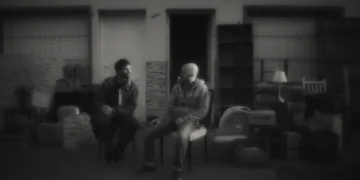
McClean’s camera treats HMP Magilligan as an architecture of compression. Locked doors, narrow corridors, cramped cells, high fences, barbed wire: the film returns to these details without turning them into decorative misery. Human bodies are frequently dwarfed by the institution, and Ryan’s daily life becomes a sequence of waiting, smoking, phone calls to his “mammy,” and parole decisions delivered at a distance.
The prison also gives him routine. This is one of the film’s more uncomfortable observations. Inside, Ryan has a bed, a schedule, work with animals, and a form of community, however bleak. When he is first refused early release, his reaction is almost numb. He says he is used to prison, “happy enough in here,” and the line lands with the force of a diagnosis. The institution has become awful and familiar, which may be the most dangerous combination available.
Release does not arrive as liberation. Ryan returns home as Uncle Ryan, but he has no secure job, no stable independent life, and addiction still presses on him. The outside world asks him to improvise a self he never had much chance to build. A city-centre scene, with Ryan watching people move around him, gives physical form to that problem. Everyone else seems to be going somewhere. He is publicly free and privately stranded.
Even threat behaves differently outside. At one point, Ryan is chased by paramilitaries and refuses to call the police. The choice is irrational if viewed through civic logic, perfectly legible if viewed through the rules of his community. Law exists, but loyalty, fear, and punishment have their own enforcement systems.
Care Against Inheritance
Magilligan is strongest when it locates politics inside gesture. The Orange marches, the language of loyalty, the demand to distinguish friend from enemy, all of it sits behind Ryan’s life without needing a lecture from the film. McClean’s restraint matters because a heavier hand would turn Ryan into a symbol, and symbols are usually where human beings go to die in documentaries.
The film’s real argument gathers around care. Ryan with sheep is not innocent Ryan. It is Ryan in contact with an ability that his environment has not fully destroyed. He can read vulnerability in an animal. He can respond to dependence without domination. He can imagine farm work as a possible fresh start. Then he can drift, relapse, harden, contradict himself, say he no longer likes sheep, and later soften again when he sees them.
That inconsistency is the film’s truth. Rehabilitation is often discussed as if it were a door. McClean films it as weather too: a break in cloud, a cold return, a glimpse of light over a field that may not last long enough to warm anyone. Ryan’s mother wonders if he will ever find peace of mind, and the film has the honesty not to answer for him.
There is a severe mercy in that refusal. Magilligan does not offer forgiveness as a product, punishment as satisfaction, or hope as décor. It offers attention. For Ryan Craig, attention may be the first form of freedom the film can honestly provide.
The observational feature documentary Magilligan celebrated its world premiere at the Visions du Réel film festival in April 2026 before traveling to prominent international non-fiction showcases like DOK.fest München and Docs Ireland. Audiences can currently view the independent production at specialized documentary film festivals and regional cinematic showcases as it continues its festival tour. The raw, intimate portrait follows a young Northern Irish man named Ryan Craig who serves a ten-year sentence at HM Prison Magilligan, exploring how he finds a fleeting sense of emotional tranquility tending sheep in a correctional rehabilitation program while facing a cycle of addiction, grief, and generational trauma awaiting him outside the facility walls.
Full Credits
Title: Magilligan
Distributor: Little Rose Films, Nightstaff, Here and Elsewhere Films
Release date: April 2026 (Visions du Réel World Premiere), May 2026 (DOK.fest München Screening), June 2026 (Docs Ireland Screening)
Running time: 74 minutes
Director: Ross McClean
Writers: Ross McClean, Bronte Stahl
Producers and Executive Producers: Bronte Stahl, Ross McClean, Roisín Geraghty
Cast: Ryan Craig
Director of Photography (Cinematographer): Ross McClean
Editors: Dragoș Apetri, Bronte Stahl
Composer: Irene Buckley
The Review
Magilligan
Magilligan is a patient, severe documentary about the prison that remains after the gates open. Ross McClean studies Ryan Craig without moral laundering or punitive gawking, which is rarer than it should be. The sheep-farming scenes could have become easy redemption material; instead, they become evidence of a fragile counter-instinct, care interrupting inherited violence. Call it carceral weather: Ryan carries the climate of prison into every supposedly free space. A hard, humane film.
PROS
- Humane observational approach
- Powerful sheep-farming scenes
- Strong visual sense of confinement
- Complex portrait of Ryan Craig
- No easy redemption arc
CONS
- Deliberate pacing may test viewers
- Limited direct exploration of Ryan’s father
- Sparse verbal access to Ryan
- Hope remains painfully narrow