


















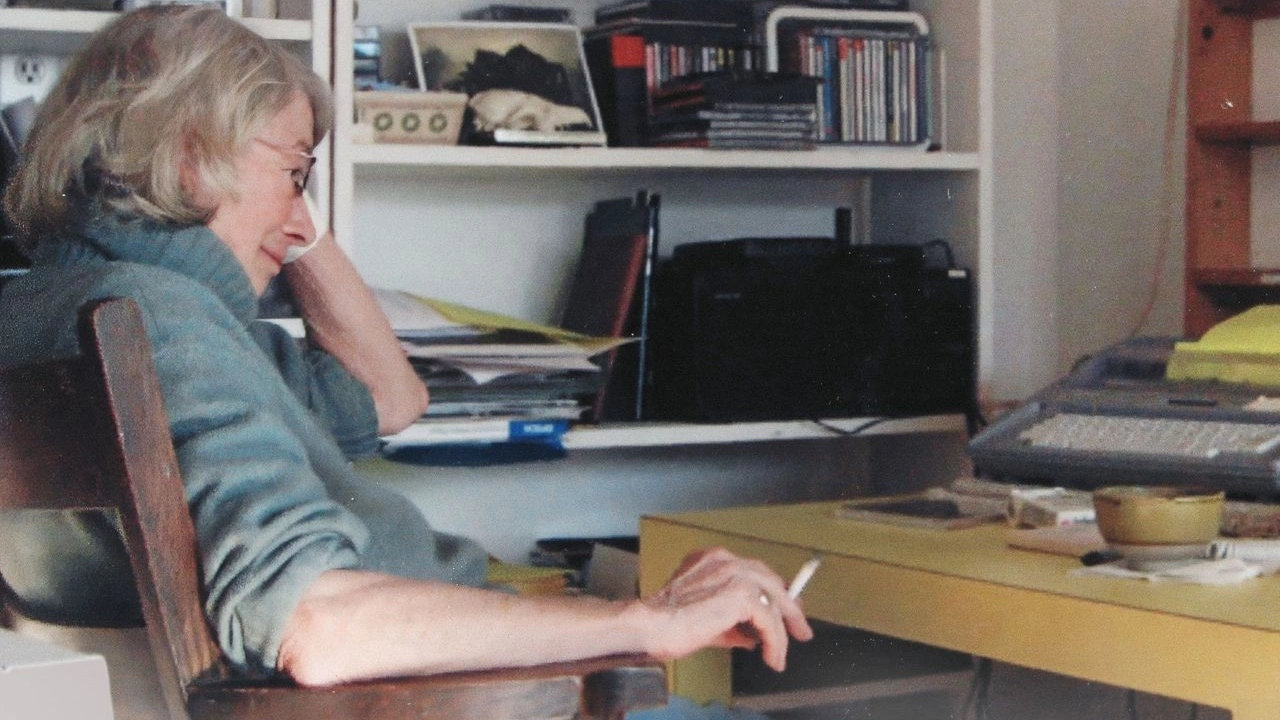

Privacy is not a gap in Sasha Waters’ documentary; it is the condition the film has to honor. Mary Oliver spent a lifetime writing poems that millions could enter, then guarded the rooms from which they came. Mary Oliver: Saved by the Beauty of the World understands that contradiction, which gives the film its tact. It does not pretend that access and intimacy are the same thing.
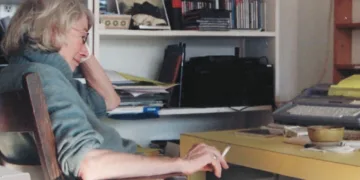
Waters builds the 91-minute portrait from archival footage, interviews, letters, public readings, and the Provincetown landscapes that shaped Oliver’s daily practice. The woods, dunes, beaches, gulls, and shorelines are not decorative inserts. They are the film’s grammar. Oliver’s art came from walking, looking, naming, and returning, and Waters’ camera treats those acts with unusual seriousness.
The familiar biographical route is present: childhood pain, literary ambition, financial struggle, major prizes, late public fame. Yet the film keeps resisting the flattened shape of triumph. Oliver’s work did not turn suffering into inspirational content. It turned attention into survival.
The Wound and the World
The title comes from Oliver’s own claim that the beauty of the world saved her, a statement the film treats with care rather than greeting-card softness. What she needed saving from is not left vague. Waters addresses Oliver’s traumatic childhood, including sexual abuse, and the way those early wounds sent her toward the natural world. A young Oliver running away from home and spending a week in the woods becomes one of the film’s defining incidents, not because it explains everything, but because it shows how refuge became method.
The documentary is at its best when it refuses to trap Oliver inside damage. Her alcoholism, depression, anger, poverty, and grief after Molly Malone Cook’s death in 2005 are given room, yet they do not become the film’s ownership claim over her.
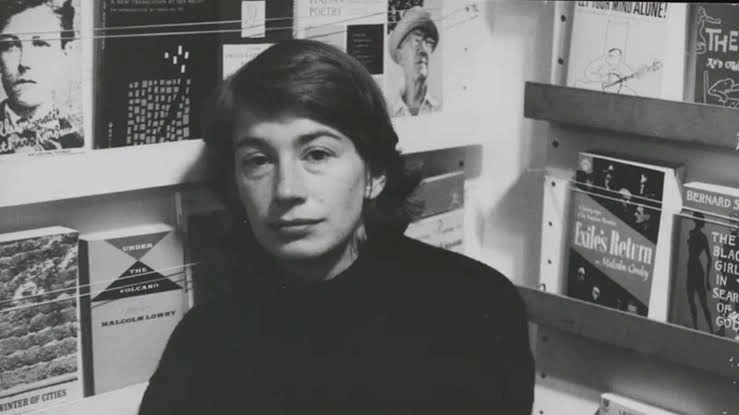
Cook, Oliver’s partner, photographer, and agent, emerges through the film as an anchor whose absence left Oliver badly unmoored. The story of that relationship gives the documentary its most human current: two women building a life around art, labor, secrecy, tenderness, and the practical terror of trying to live as artists.
Oliver is not softened into a saint. She could be cranky, withholding, severe, hard to reach. The film needs John Waters for this reason. His memories of Oliver, sharp and funny, cut through the reverent mist that surrounds many literary documentaries. When he speaks about her habits and temperament, the portrait gains oxygen. Reverence may be understandable. Irreverence is often more faithful.
Poems as Evidence
Waters makes a strong choice by treating the poems as the main record of Oliver’s life. The readings are not celebrity ornaments, though the names are certainly visible: Stephen Colbert, Oprah Winfrey, Helena Bonham Carter, Steve Buscemi, Ada Limón, Lucy Dacus.
Their presence works because the film keeps returning attention to the words themselves. Colbert choking up over “The Summer Day” could have been a sentimental trap. Instead, it becomes evidence of the peculiar force of Oliver’s plain speech. A grasshopper, a field, a question about a life. The poem does not raise its voice. It still breaks the room open.
Buscemi’s reading of “The Fish” is even more revealing. The poem moves from catching a fish to preparing it for food, placing beauty beside appetite, death beside gratitude. This is where the film’s defense of Oliver matters. Her reputation for accessible nature poetry has often encouraged lazy dismissal, as if clarity were a lack of thought.
Waters answers that charge through the poems rather than through argument. Blackberries, ponds, gulls, sunrises, and grasshoppers are never mere scenery in Oliver’s work. They are occasions for terror, hunger, mortality, prayer, and release.
One sequence involving Oliver’s care for an injured seagull captures the film’s method beautifully. The poem, the memory, and the footage do not merge into a neat lesson. They hover near each other. Care is practical. Language is inadequate. The bird remains a bird.
A Reverent Film With Necessary Edges
The documentary does have a protective quality. Many of the poets and admirers interviewed speak of Oliver with the hushed gratitude reserved for artists who arrived at the right time in a reader’s life. That tone can narrow the film’s range. There are moments when a harder question about Oliver’s contradictions, her control over her image, or the cultural packaging of her poetry might have given the portrait more friction.
Still, Waters’ restraint feels less like avoidance than ethics. A documentary about a private poet should not behave like a raid. The film’s conventional structure, built from interviews, readings, archival clips, and landscape images, rarely surprises on a formal level, but its patience has value. It mirrors the movement of Oliver’s poems: simple approach, quiet pressure, delayed depth.
The film also understands the cultural oddity of Oliver’s fame. A poet whose work is read at weddings, funerals, recovery meetings, classrooms, and private moments of despair will always be vulnerable to being mistaken for comfort alone. Waters keeps placing that comfort beside cost.
Oliver’s life contained abuse, addiction, rejection slips, money worries, grief, and a long discipline of solitude. The beauty she wrote about was not an escape from cruelty. It was the place where cruelty could be faced without giving it the final word.
Mary Oliver: Saved by the Beauty of the World is strongest when it lets the poems remain slightly beyond explanation. It gives enough biography to alter the reading of the work, enough Provincetown air to understand the shape of Oliver’s days, and enough shadow to keep the light honest.
The intimate biographical documentary Mary Oliver: Saved by the Beauty of the World made its debut at the True/False Film Festival on March 5, 2026, ahead of its scheduled theater premiere via Kino Lorber on July 17, 2026, and a subsequent nationwide television broadcast on PBS’s American Masters series on August 25, 2026. Audiences can look forward to watching it on local PBS channels, the PBS App, and video-on-demand networks like Apple TV. This delicate non-fiction feature relies on rare archival recordings, correspondences, and insights from cultural admirers to map the intensely private life, creative career, and enduring legacy of the Pulitzer Prize-winning poet.
Where to Watch Mary Oliver: Saved by the Beauty of the World (2026) Online








Full Credits
Title: Mary Oliver: Saved by the Beauty of the World
Distributor: Kino Lorber, PBS, American Masters Pictures
Release date: March 5, 2026 (True/False Film Festival Premiere), July 17, 2026 (United States Theatrical Release), August 25, 2026 (PBS Television Premiere)
Running time: 91 minutes
Director: Sasha Waters Freyer
Writers: Sasha Waters Freyer
Producers and Executive Producers: Sasha Waters Freyer, Michael Kantor, John Keith
Cast: Mary Oliver, John Waters, Stephen Colbert, Oprah Winfrey, Steve Buscemi, Helena Bonham Carter, Lucy Dacus, Josh Hamilton, Maria Shriver, Jesse Welles
Director of Photography (Cinematographer): Sasha Waters Freyer
Editors: Sasha Waters Freyer
Composer: Clare Manchon, Olivier Manchon
The Review
Mary Oliver: Saved by the Beauty of the World
Mary Oliver: Saved by the Beauty of the World understands that a poet’s life cannot be reduced to trauma, fame, or craft alone. Sasha Waters builds a careful portrait through poems, Provincetown landscapes, Molly Malone Cook’s presence, and the testimony of those Oliver marked. The film’s reverence sometimes softens its edges, yet its restraint feels ethically right for a subject who guarded her privacy so fiercely. It lets beauty remain difficult, wounded, and necessary.
PROS
- Sensitive handling of Oliver’s private life
- Strong use of poetry readings
- Molly Malone Cook thread adds intimacy
- John Waters brings needed irreverence
- Clear defense of Oliver’s accessibility
CONS
- Reverent tone can feel protected
- Limited pressure on Oliver’s contradictions
- Familiar documentary structure
- Stronger for existing admirers