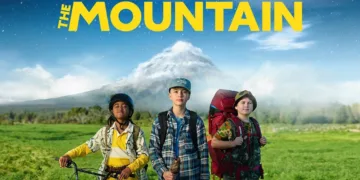






















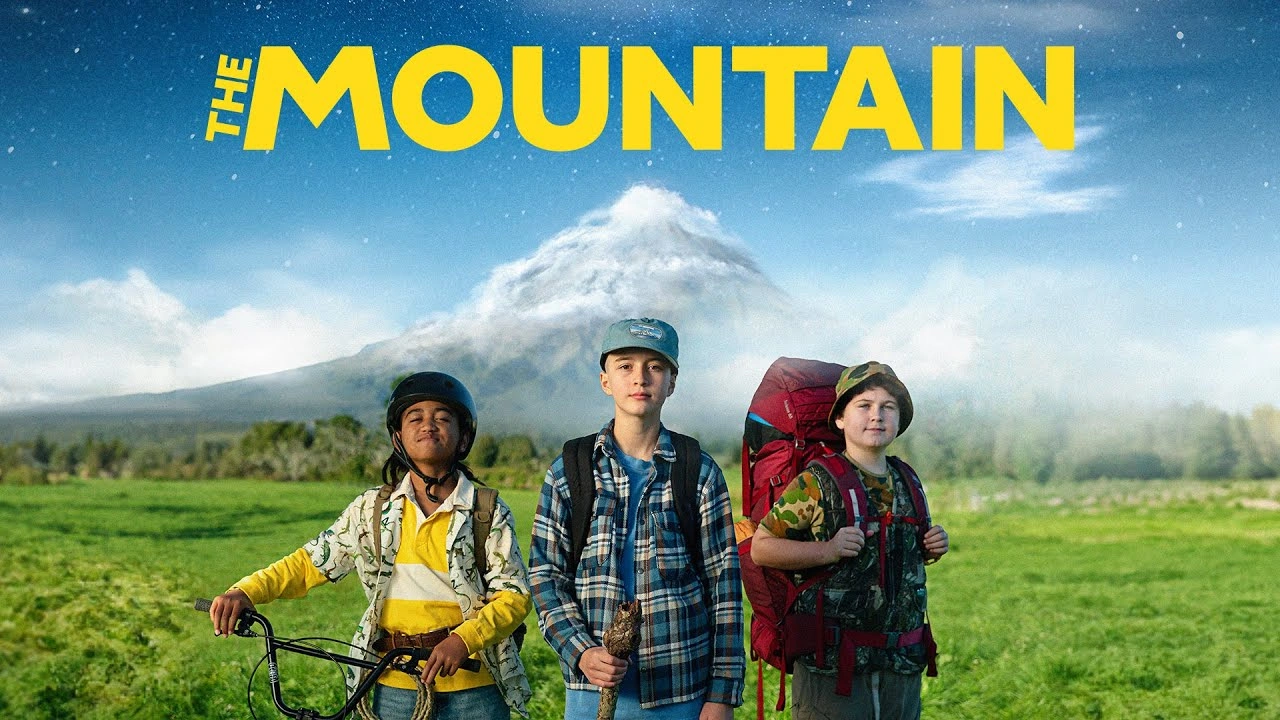

Rachel House keeps asking childhood to carry grief without losing its odd little jokes. The Mountain, her feature directing debut, sends an 11-year-old cancer patient out of the hospital and toward Taranaki Maunga, which could have turned into a neat lesson about courage very quickly. The film is better than that when it lets Sam be difficult.
Sam, played by Elizabeth Atkinson, has learned the geography of the hospital like a prisoner mapping a weak wall. With help from Peachy, a fellow young cancer survivor whose deadpan calm could freeze a nurse mid-sentence, she escapes after learning her cancer has returned. Her plan is not medically sensible, which is part of the ache. She believes Taranaki is her mountain, a living ancestor tied to the Māori father she never knew, and she wants to reach it so it can help her live.
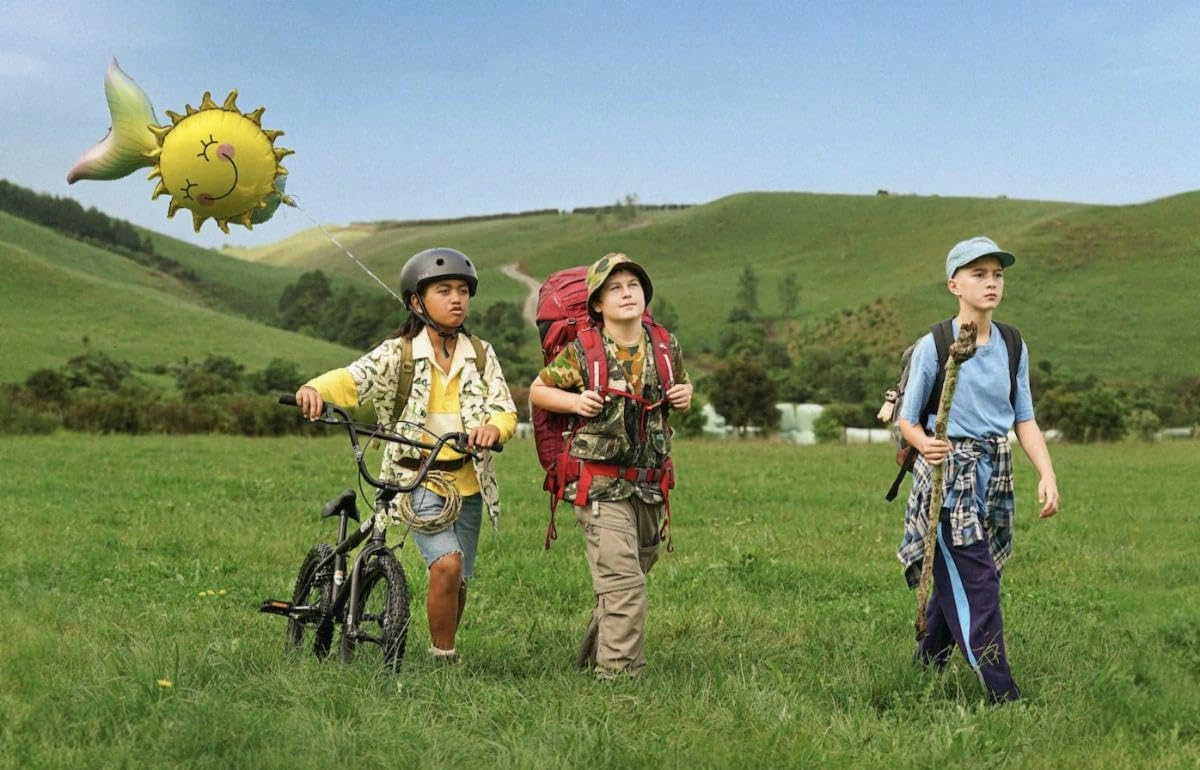
That belief gives the film its emotional engine. Sam releases balloons carrying her wish, “Let me live,” then heads for a climb she is not prepared to make. The image is tender, but House refuses to make Sam saintly. She is bossy, funny, reckless, and sometimes cruel, especially when she lies to Mallory about her mother dying of cancer. The lie hurts because Mallory’s mother really has died. Childhood pain does not always make children kind. Sometimes it makes them fast.
Three Kids on the Track
The best stretch of The Mountain comes from watching Sam, Mallory, and Bronco become friends before they know that is what is happening. Mallory, played by Reuben Francis, has moved to a new town with his father Hugh, who keeps trying to perform steadiness after his wife’s death. Mallory wants to climb Taranaki on his mother’s birthday because she always wanted to do it with the family. He joins Sam partly because she needs supplies, partly because his own grief has nowhere else to go.
Bronco, played by Terence Daniel, enters with a different energy. He has been collecting Sam’s balloons because they are polluting the land, and his anger has a clear moral shape. He misses his old home, resents his father Tux for being absent, and carries a spiritual knowledge that Sam envies. When Bronco speaks about the land, the film stops treating the mountain like a pretty backdrop. It becomes relation, memory, and responsibility.
The trio works because each child needs a different kind of permission. Sam needs to be seen as a kid, not a diagnosis. Mallory needs grief to become movement instead of a room he cannot leave. Bronco needs someone to notice that his confidence is covering loneliness. A small campfire scene does this gently: Mallory brings out the compass his mother gave him, and Bronco ties it around his neck so she can guide them. The gesture could be syrupy. It lands because the boys do not overexplain it.
Play beside Panic
The film’s hardest problem is tone. House fills the climb with childish gags, hiking montages, strange little arguments, and moments of physical comedy. Some of that is lovely. The children’s supply logic, which runs toward chocolate and marshmallows before survival gear, feels right. Their decision to touch parts of their bodies to an electric fence to fix what they dislike about themselves is ridiculous in the exact way unsupervised kids can be ridiculous.
It is also where the film sometimes strains. Sam is very sick, and the climb may be making her worse. Every time the story leans too far into cute adventure, the body underneath the joke pushes back. Atkinson’s performance keeps that tension alive. Sam’s face can harden into command, then go blank with exhaustion a few seconds later. The film does not need a speech about mortality when her breathing changes on the track.
Mallory and Bronco’s response to her illness is one of the film’s strongest choices. They do not treat Sam like glass. They argue with her, follow her, get annoyed by her, and only step in when her body makes denial impossible. That is what makes their friendship moving. They give her ordinary treatment in extraordinary circumstances. For Sam, that may be the kindest thing anyone offers.
Peachy also sharpens the adult side of the story. When Wendy realizes her daughter has gone, Peachy’s flat honesty cuts through the panic: Sam is still a child inside the illness. The line reframes the hospital escape without excusing it. Wendy’s fear is valid, but fear has started to swallow the daughter she is trying to protect.
The Mountain That Refuses Easy Answers
Taranaki Maunga is the film’s most expressive presence. Cinematographer Matt Henley gives the landscape scale, but House is careful to place small child details against it: balloons, a walking stick named Woodface, a compass, kids inventing meaning because adults have not given them enough. The mountain is huge, yet the film’s feeling often lives in tiny things.
The Māori stories around Taranaki give Sam’s quest a deeper pull. She is reaching for an identity that has been left partly blank by her absent father and by Wendy’s protective silence. Bronco’s knowledge does not solve that absence for her, but it gives her language for it. The clouds around the peak work beautifully because they can be read many ways: a sign, a refusal, a test, or just weather. Sam needs the mountain to answer. The film is wiser when it lets the answer stay uncertain.
The parents’ parallel search is less vivid than the children’s climb, but it has honest pressure. Hugh, Tux, and Wendy are all failing their children in different ways: Hugh by sinking inward, Tux by disappearing into work, Wendy by seeing illness before personhood. Their race toward the mountain is not the exciting part. The exciting part is realizing the kids have already named what the adults could not.
The Mountain is slight in plot, and some of its comedy lands too softly against the terror in Sam’s situation. Still, House finds a feeling many family films miss: children do not process fear in clean emotional beats. They make jokes, lie, run, dance, collect rubbish, invent rituals, and ask mountains for mercy. The film hurts most when it lets those things sit together without forcing one to cancel the other.
The heartwarming New Zealand comedy-drama The Mountain debuted in cinemas across Aotearoa on March 28, 2024, before making its international premiere at the Toronto International Film Festival later that September. Distributed by Madman Entertainment and Piki Films, the independent feature is available to watch digitally on select video-on-demand networks and streaming platforms like Kanopy. The story centers on an eleven-year-old girl named Sam who escapes a hospital ward and teams up with two local boys to climb Mount Taranaki, hoping that reconnecting with her Māori heritage and the sacred peak will cure her cancer.
Where to Watch The Mountain (2024) Online


Full Credits
Title: The Mountain
Distributor: Madman Entertainment, Piki Films
Release date: March 28, 2024 (New Zealand), September 2024 (Toronto International Film Festival Premiere)
Rating: PG
Running time: 89 minutes
Director: Rachel House
Writers: Rachel House, Tom Furniss
Producers and Executive Producers: Desray Armstrong, Morgan Waru, Carthew Neal, Taika Waititi, Paul Wiegard
Cast: Elizabeth Atkinson, Reuben Francis, Terence Daniel, Troy Kingi, Byron Coll, Fern Sutherland, Sukena Shah, Peachy Pallet
Director of Photography (Cinematographer): Matt Henley
Editors: Cushla Dillon, Carly Turner
Composer: Troy Kingi, Arli Liberman
The Review
The Mountain
The Mountain finds its strongest feeling in the space between childhood play and adult terror. Sam, Mallory, and Bronco make the climb feel funny, reckless, sacred, and painful, sometimes in the same scene. The lighter gags can soften the illness story too much, but Rachel House gives the children room to be strange, brave, scared, and unfinished. Taranaki Maunga becomes a place of longing rather than a cure, which is where the film hurts most honestly.
PROS
- Strong young cast
- Moving Taranaki Maunga presence
- Tender handling of grief
- Rich Māori cultural grounding
- Funny childlike details
CONS
- Tone sometimes feels evasive
- Some gags strain the illness story
- Slight plot structure
- Deadpan delivery can flatten emotion