




























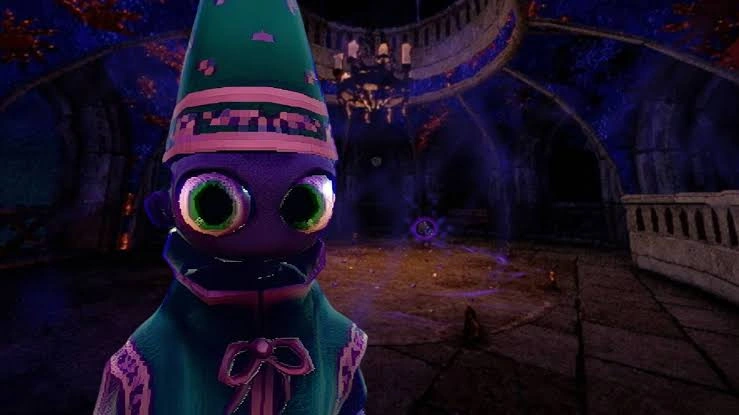

Someone on the team will say “Up-Dog” with complete seriousness, and that tells you almost everything about YAPYAP’s best idea. Maison Bap’s co-op action-horror game takes the broad shape of the post-Lethal Company “friendslop” wave, then swaps scrap collection for magical vandalism. You and your fellow minions are sent into a rival wizard’s tower by a moon-faced master, given a Chaos Quota, and told to make a mess before the timer runs out.
That change matters. R.E.P.O. turns physical objects into fragile assets, making players nervous about every bump and scrape. YAPYAP asks you to do the opposite. Smash the vase. Burn the bookcase. Ruin the dining room. If there is a rug, there is probably a spell rude enough to insult it.
The result is a co-op game whose identity arrives quickly. It does not need much story because the premise is already legible through action. You enter the tower, break property, cast spells by speaking into your microphone, panic when the extraction point moves, and blame your friends when everything falls apart. For a while, that is enough.
Breaking Things Beats Carrying Things
YAPYAP’s strongest design choice is its refusal to treat the tower like a warehouse full of valuables. Most games in this family build tension through preservation. You find something expensive, you protect it, and the monster becomes a threat to your payday. Here, the payday comes from destruction. The tower is a score counter wearing Gothic wallpaper.
The loop is simple in a useful way. Each run gives the team a Chaos target, and almost every room offers a way to push that number upward. Vases can be smashed. Books can be burned. Furniture can be turned into fish. The Grotesque Wand adds its own special kind of indignity, including spells that let you sneeze on enemies or urinate on objects. It is childish, yes, but the game commits to the bit with enough mechanical purpose that the joke becomes a system.
That system changes how players move. Instead of inching through rooms and protecting loot, a group tends to storm into spaces, identify anything breakable, and scatter. One player heads for the basement. Another tries to climb higher with wind magic. A third gets distracted by cups that need defiling for a quest board. The timer turns all of this into bad workplace management.
The tower helps because it is full of little opportunities for failure. Basements and side rooms can eat a player’s sense of direction. Warp points keep traversal from becoming too slow. Gargoyles can grab players and drop them somewhere dangerous, or, in one of the game’s funnier design accidents, place them close to an upper platform they were trying to reach anyway. YAPYAP is at its best when a mistake becomes a shortcut and nobody sounds entirely sure who deserves credit.
Death supports that mood too. Players can go down quickly, and revives are possible when the team keeps its head. If no one can reach the body, the dead player drifts around as a spectator, speaking through a separate channel the living team cannot hear. That small communication break is a smart co-op detail. It lets failure stay social without letting the dead player solve the run from beyond the grave.
Spellcasting Makes the Microphone Matter
The microphone is not decorative here. To cast spells, you hold the casting input and speak the incantation. “Aero” pushes enemies or friends back. “Ignis” sets things on fire. “Up-Dog” lifts you into the air. “Blink” can save a player in danger, assuming the game hears panic as language and not as a confession of defeat.
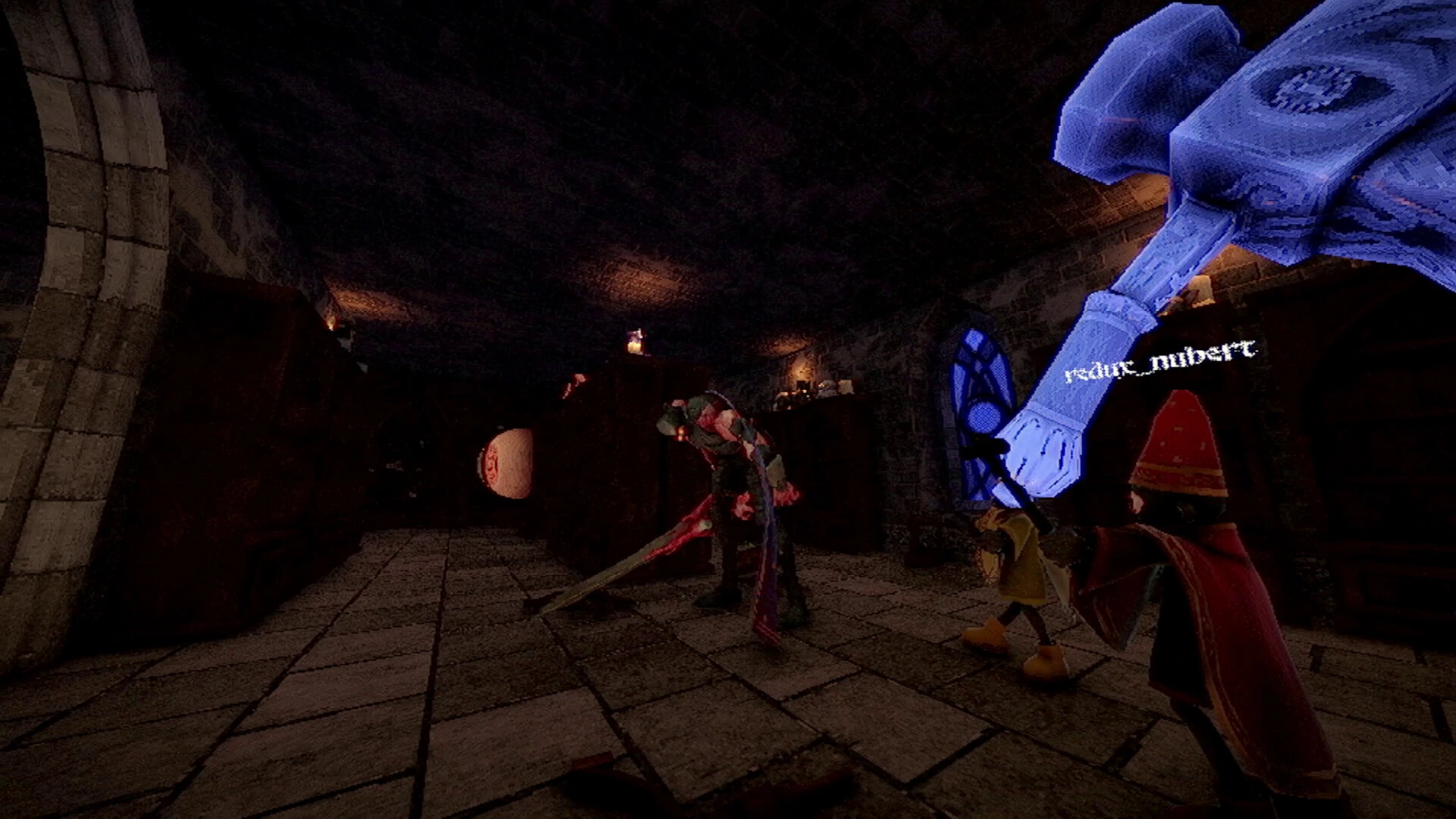
This is where YAPYAP separates itself from a lot of co-op horror imitators. Many of those games use proximity chat as a comedy engine, letting distance, panic, and muffled screaming produce the best moments. YAPYAP makes voice part of the verb set. You are not simply talking while playing. Talking is how you play.
When the recognition works, it gives basic actions a theatrical charge. A push spell would be ordinary on a hotbar. Saying “Aero” while an animated chair bears down on your teammate gives the same action a miniature performance. The spell feels clumsy in the right way, like amateur magic performed under awful conditions.
The failures can be just as important. A player yelling “Blink” again and again while a monster closes in is funny because the system has turned mechanical failure into social humiliation. Casual speech can trigger a spell by accident. A friend can be launched off a bridge because the game thinks ordinary conversation was an incantation. The best YAPYAP stories sound like bugs until you realize the mechanic was designed to invite them.
There are limits. Background noise can confuse the recognition. Strong accents may have a harder time getting clean spell reads. In a game built around last-second escapes, a missed command can feel harsher than a missed button press because the player did the strange thing the game asked them to do. YAPYAP mostly earns that risk, but its best feature still needs enough reliability to keep comedy from turning into resentment.
Wands, Quotas, and the Cost of Fun
The wand system gives the voice casting structure. You cannot say any spell at any time. Spells belong to wands, which means the team’s available magic depends on what it brings, buys, or finds. The starting Wind Wand gives basic mobility and push options. The Fire Wand turns destruction into a faster, more aggressive toolset. The Grotesque Wand provides the game’s strangest abilities, including fish transformation and bodily-fluid nonsense.
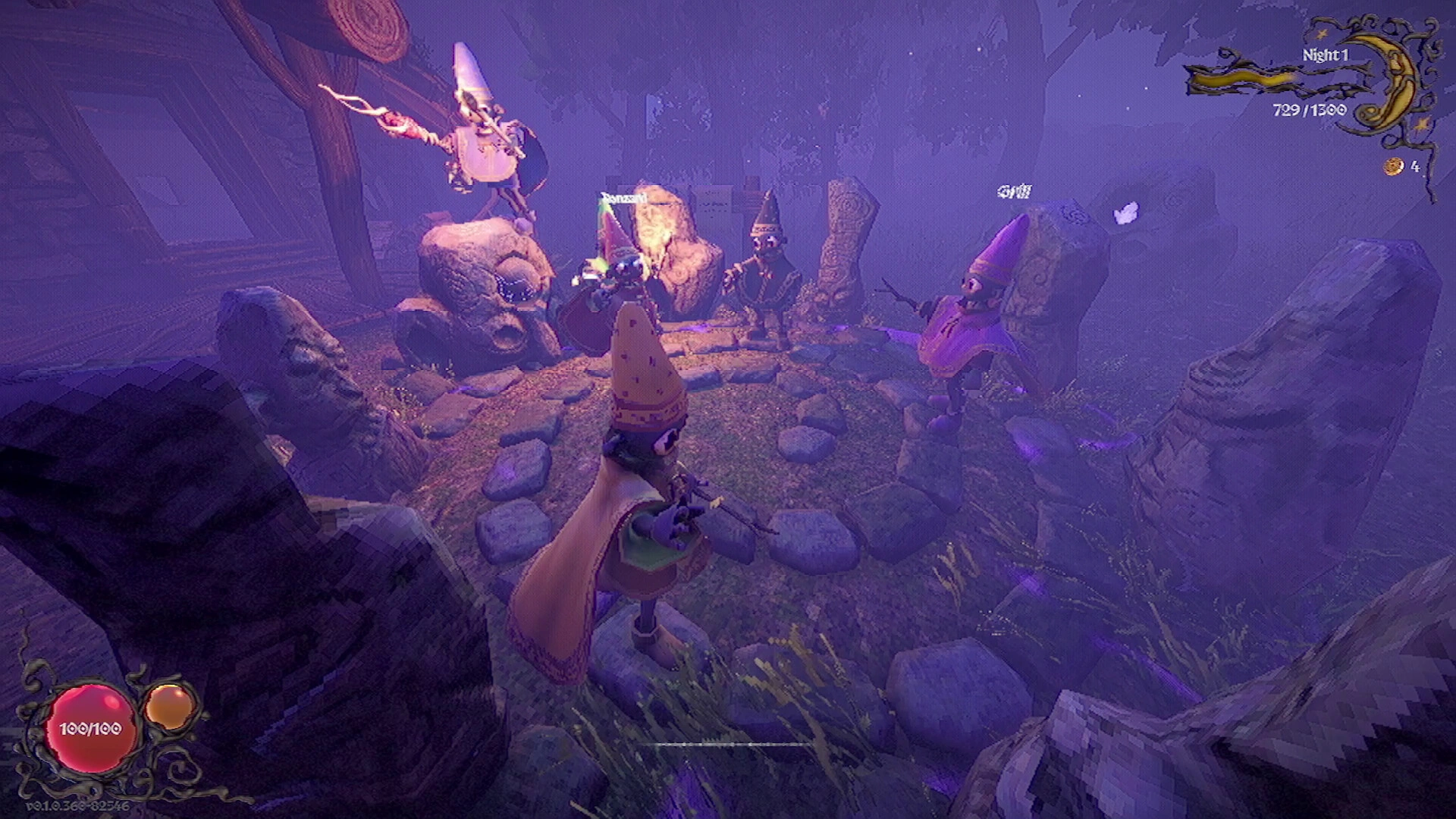
That division is easy to understand, and it gives the shop a purpose. It also exposes YAPYAP’s biggest design problem. Gold is scarce, shared, and slow to recover. A stronger wand can cost around 25 gold or higher, while a night’s haul may leave the team far short of equipping everyone. Losing a wand on death is normal for this kind of game, yet here the recovery cost can feel too steep for the amount of control players had over the loss.
The three-night structure should create a clean escalation. Hit the Chaos target, extract, spend money, return better prepared. In practice, one bad night can pull the whole team into a weak loop. The Wind Wand starts useful, then feels thin by the second quota. If the group cannot afford stronger gear, later runs become longer and riskier, which makes it harder to earn the money needed to fix the problem.
The extraction design adds pressure in a better way. Each night moves the exit, with a distant flaming tower acting as the clue. Finding that location while the timer drops creates the right kind of panic, especially when one player is lost in a basement and refuses to admit it. The issue is onboarding. Early runs can end because players do not realize they need to interact with a crystal ball to leave. Discovery can be satisfying, but this detail is too central to be hidden by silence.
Potions try to create another progression path. Ingredients can be found during raids and brewed back at the starting area, with effects that improve health, stamina, invisibility, flight, or sillier temporary traits. The idea fits a wizard game, and the basement brewing area gives downtime a useful ritual. The numbers do not support it strongly enough. Small stat boosts feel minor when the base values are already readable. Recipes need specific ingredients, and the temporary effects often fade before they reshape a run. Wands are the main course. Potions are currently garnish.
A Party Game Without a Party Finder
YAPYAP is built for friends so completely that solo play feels like the wrong door into the game. The enemies, economy, and comedy all assume a group. Alone, the tower becomes larger, the quota becomes slower, and the microphone starts to feel silly in a less flattering way. Speaking spell names into an empty room is funny once. After that, it becomes an audio test with monsters.
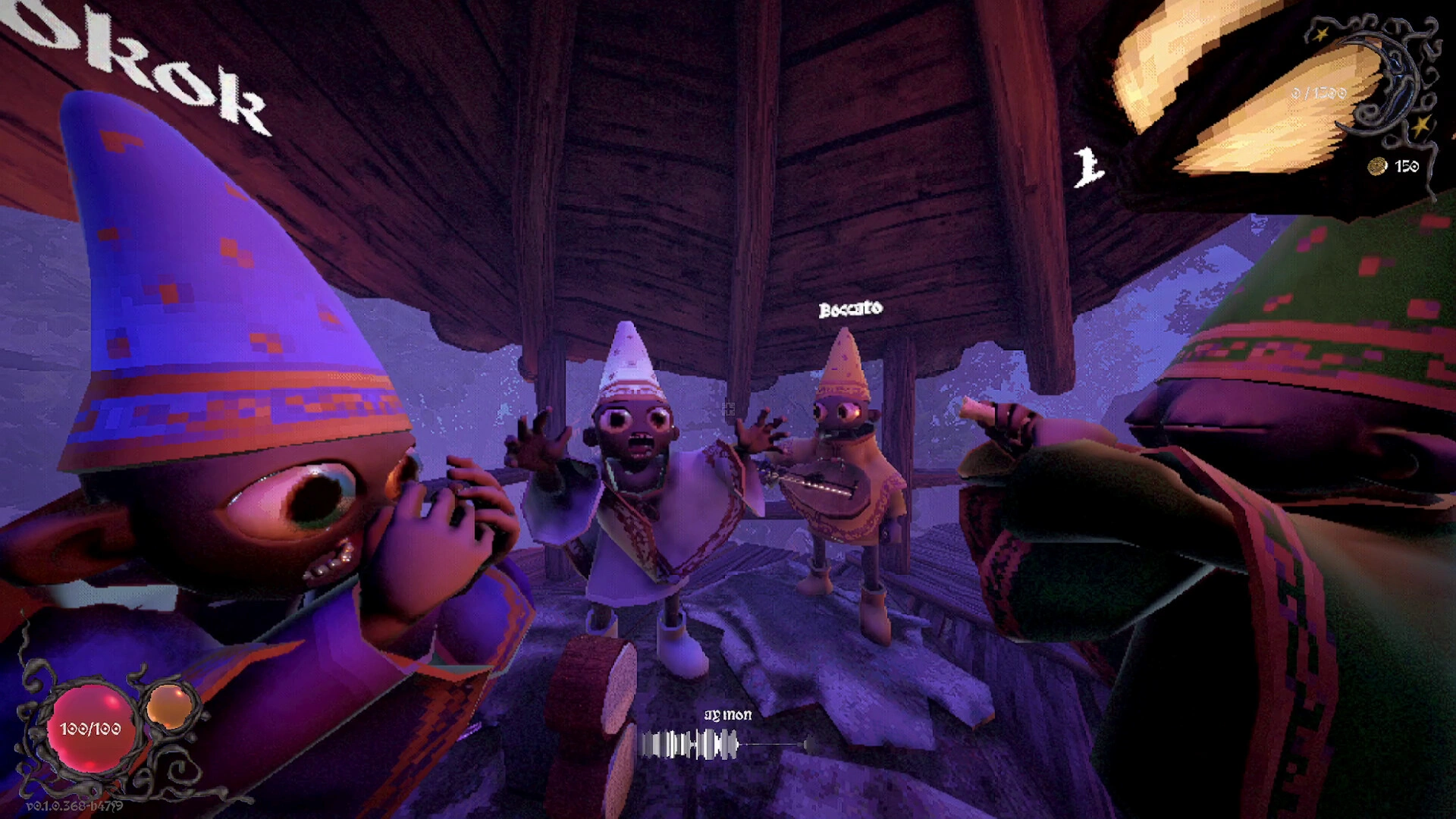
The lack of public matchmaking is a serious limitation for this genre. Lethal Company, R.E.P.O., and Content Warning all gain much of their power from the unpredictable chemistry of group play, yet a game still needs to help players reach that chemistry. YAPYAP asks buyers to arrive with their own squad ready. For some players, that is fine. For others, it makes the game feel locked from the start.
Enemy design has the same unevenness. Simple armored enemies can be kited and managed. Other creatures are harder to read, which is exciting when the confusion feels like mystery and irritating when it feels like missing information. The Jester is the clearest offender, capable of ending runs in ways that feel cheap when it attacks through walls or catches a player while their wand is on cooldown. A brutal monster can be good design. A monster that makes the player question collision rules is a different problem.
The game’s visual style helps soften some of this roughness. Its cursed PS1 look, chunky models, heavy pixel filtering, and old PC adventure flavor all fit the premise. The tower should feel ugly, unstable, and slightly wrong. Clean fantasy art would probably hurt it. A game where players scream “Up-Dog” while trying to urinate into cups does not need polished marble floors.
Still, there is charming jank and there is run-damaging jank. Falling through floors, wands clipping into the void, and crashes that wipe successful runs belong to the second category. YAPYAP can survive looking broken. It has a harder time surviving when its systems actually break.
The Magic Needs More Rooms
YAPYAP’s place in its own little family tree is easy to see. It borrows the social panic of Lethal Company, the object-focused chaos of R.E.P.O., and the clip-friendly absurdity of Content Warning, then finds its own angle through spoken spellcasting and destructive objectives. That angle is strong. It is strong enough that the first few sessions can feel like the start of something sticky, the kind of co-op game friends keep installed because every run produces one new story.
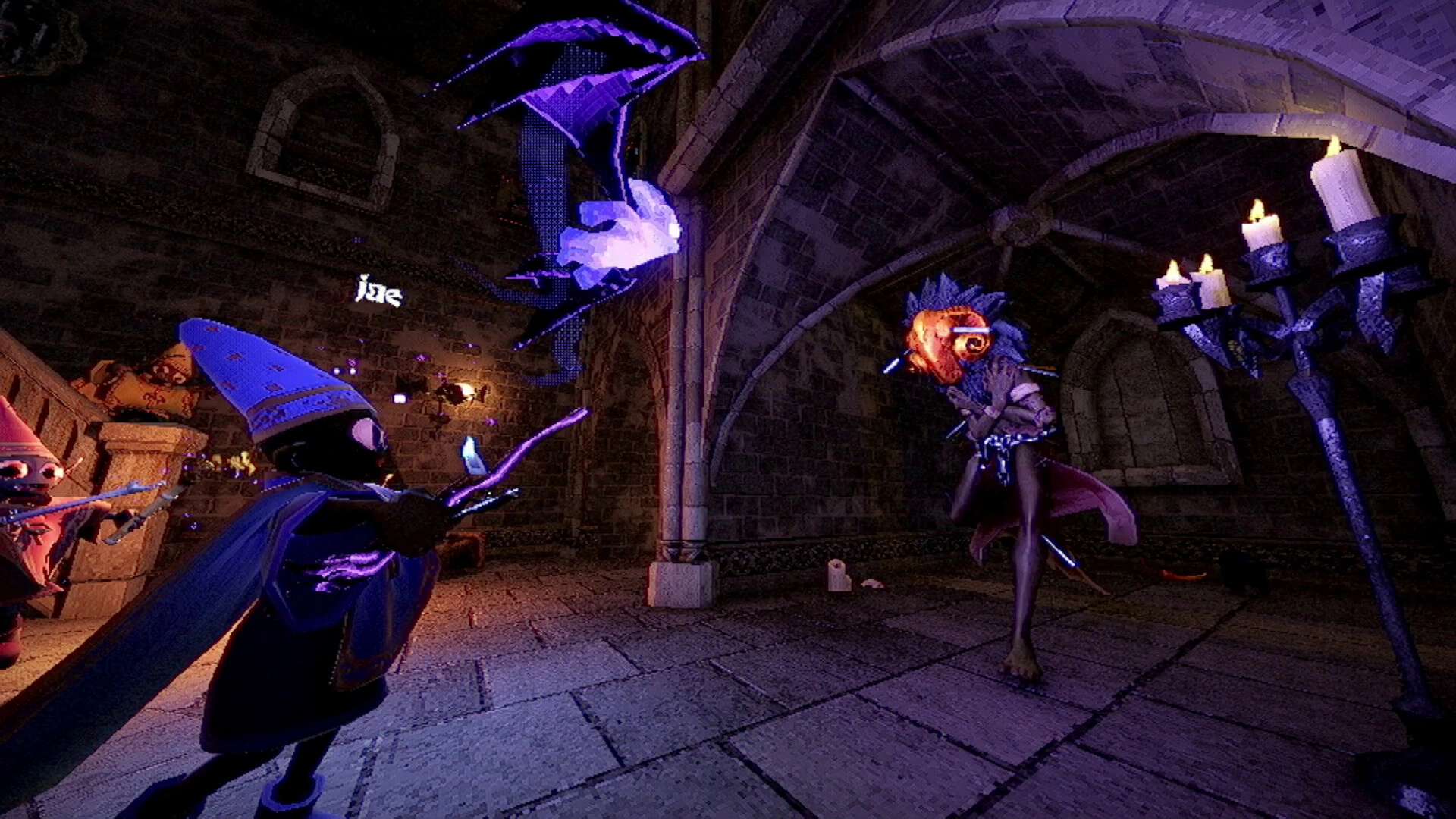
The content does not yet match that promise. The tower may shift names or layouts, but rooms begin to feel familiar quickly. Basements, routes, enemy patterns, wand options, potion ingredients, and unlockable areas cycle through too narrow a set of possibilities. Repetition is not fatal in a co-op game, since the players create much of the variation themselves. YAPYAP understands that. It just leans on the players a little too hard.
The funny part is that the central idea does not need a grand overhaul. More meaningful wand variety, better gold flow, clearer extraction teaching, fairer enemy rules, stronger potion effects, public matchmaking, and a few additional map identities would go a long way. The foundation is already there every time a group turns a room into a disaster while shouting spell names over each other.
YAPYAP is currently best approached as a cheap, chaotic co-op experiment for players who already have friends willing to tolerate bugs, imbalance, and repetition. In that setting, it can be genuinely hilarious. The voice system gives it a personality many cleaner games lack, and the vandalism loop is a clever answer to the extraction formula. It just needs to stop making players work so hard to reach the fun it already knows how to create.
The Review
YAPYAP
YAPYAP works best as a messy cousin to Lethal Company and R.E.P.O., swapping careful extraction for magical vandalism and microphone-based spell chaos. Its voice casting gives co-op play a real identity, especially when “Up-Dog” or “Blink” fails at the worst possible second. The issue is longevity: weak solo play, scarce gold, repeated tower layouts, and run-ending bugs make the fun thinner after the first few sessions. With friends, it can be hilarious. Without them, the spell breaks fast.
PROS
- Excellent voice spellcasting hook
- Funny co-op accidents
- Strong magical vandalism loop
- Fitting cursed PS1 look
- Fast, readable controls
CONS
- No public matchmaking
- Weak solo play
- Punishing gold economy
- Repetitive tower content
- Bugs can ruin runs