




























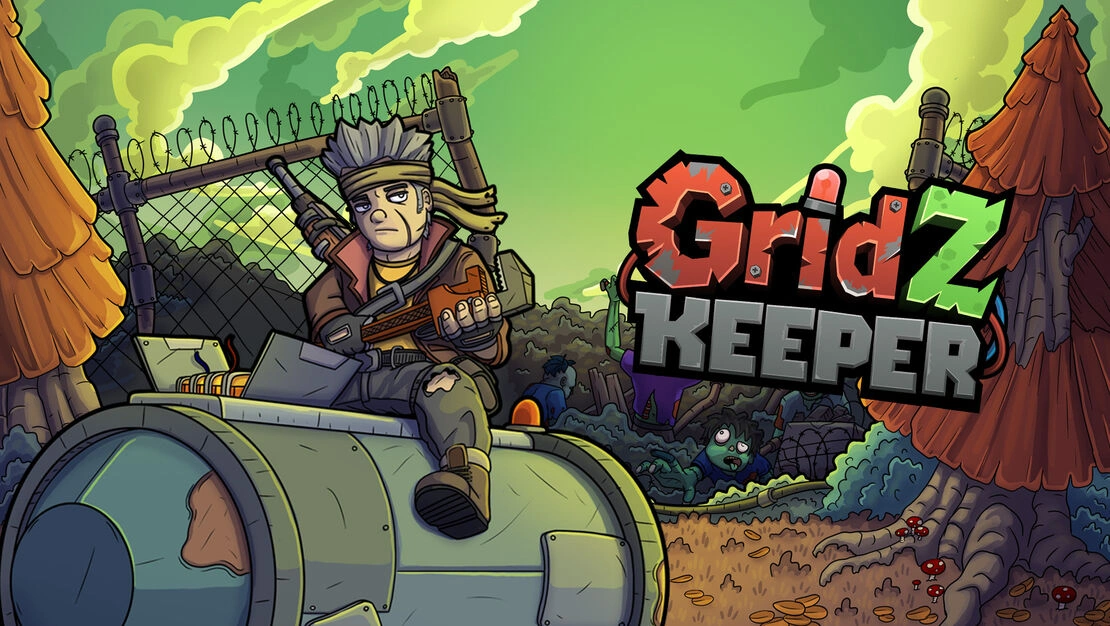

Every click in this fractured power grid should feel like a tiny act of rescue. The setup has a lovely small-scale hook: the world has fallen to zombies, the safe zones are running out of power, and the last repairman left alive is trying to keep the lights on. That is a sharper premise than many budget puzzlers get. It gives Gridz Keeper an immediate emotional shape before the first generator turns green.
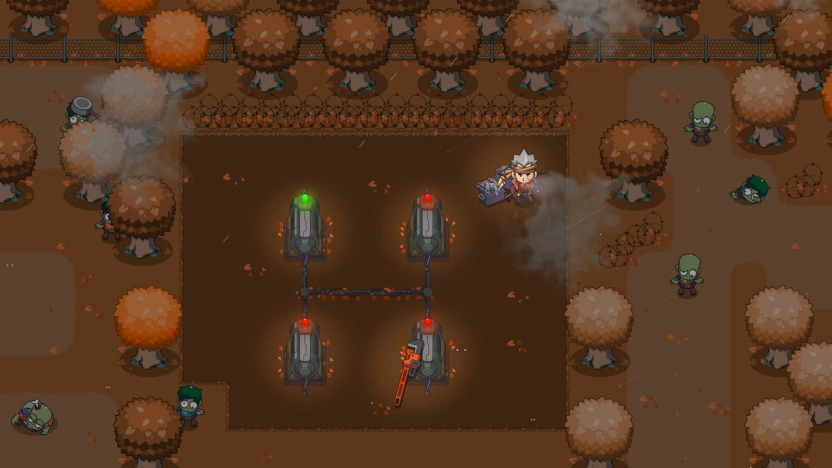
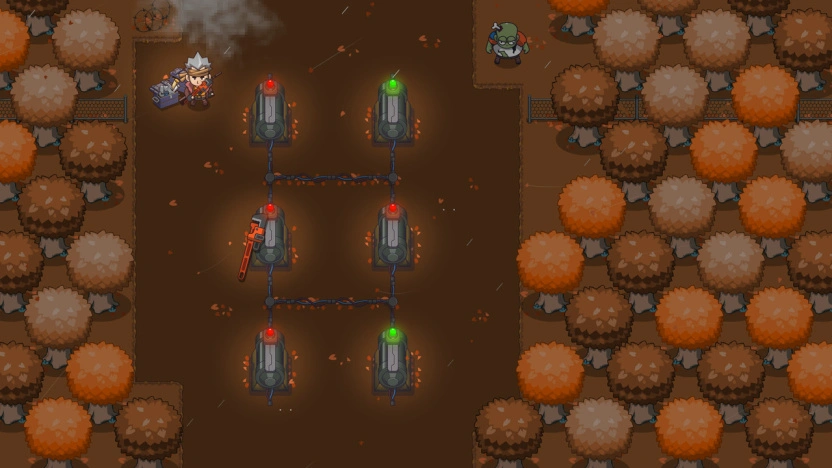
The game itself, developed by Double Mizzlee and published by eastasiasoft, keeps things far simpler than that premise suggests. This is a top-down logic puzzle game built around the familiar Lights Out idea, with 50 levels of generator switching and grid reading. You guide a large wrench-shaped cursor across each layout, press a button over a generator, and watch nearby generators change state. The target is always the same: make every generator glow green at once.
That clean goal is the reason the game works at all. There is no clutter between the player and the puzzle. No upgrade screen. No inventory. No combat arena pretending to be puzzle design. Just a grid, a button press, and the quiet pleasure of seeing the pattern settle into place.
The Puzzle Loop Knows Its Job
The core mechanic has survived for decades because it creates a clear mental rhythm. Press one generator, affect its neighbors, then mentally rewind the damage and benefit of that move before touching the next one. Gridz Keeper understands that rhythm well enough to make the early levels approachable. The first few grids teach you to stop looking at single tiles and start reading clusters. When a red generator sits between two green ones, you learn quickly that the obvious move may undo the progress beside it.
The tactile feedback helps. The generator “ding” gives each activation a tiny reward, and the green-red color language keeps the board readable. On a handheld screen, that matters. The game never asks you to squint at symbols or decode messy visual states, which makes it easy to settle into the loop for short sessions.
The disappointment is that the loop rarely grows. A larger grid changes the amount of information on screen, yet it does not change the kind of thinking required. Reused layouts with altered starting patterns give the game some variety, but they still ask the same question in nearly the same accent.
There are no broken cables that need two repairs, no batteries with limited charges, no generators that lock after activation, no zombie pressure forcing faster decisions. The rules stay clean, then stay still. For a game about keeping humanity alive through power restoration, the grid never feels unstable. It feels tidy.
Zombies at the Edge of the Board
The zombie-apocalypse framing is the part of Gridz Keeper that most clearly wants to matter and least often does. The idea of a lone repairman moving between failing safe zones gives the game a sweet, slightly melancholy identity. It could have turned each puzzle into a small survival vignette.
One district might need emergency lighting before a horde arrives. Another could require restoring power to a barricade, a clinic, or a radio tower. Even a single opening illustration or final image would have helped the repairman feel tied to the people he is saving.
Instead, the story mostly lives in the description. Once play begins, the game offers no dialogue, no cutscenes, no changing objective text, and no visible consequence for success beyond moving to the next board. Zombies appear around the environments, but they are static background pieces. They do not block paths, damage generators, interrupt the cursor, or change the puzzle state.
This matters because the theme has such an obvious mechanical invitation. A zombie puzzle game does not need combat to create tension. It could use countdowns, noise, spreading danger, or generators that attract enemies when activated. Gridz Keeper chooses the safest version of its own idea, which makes the apocalypse feel like wallpaper with teeth drawn on it.
Gentle to a Fault
For newcomers, the low difficulty may be a comfort. Children, casual players, or anyone new to Lights Out-style puzzles can treat Gridz Keeper as a friendly first step into grid logic. The controls are immediate, the rules are consistent, and most levels can be solved through observation without much frustration. There is real value in a puzzle game that does not treat accessibility like a flaw.
Puzzle veterans will feel the ceiling almost at once. Many stages collapse after a few experimental clicks, and some can be solved by pressing around the grid until the pattern happens to cooperate. That accidental progress weakens the satisfaction of solving, because the game rarely pushes you to understand a difficult board deeply. Across 50 levels, the challenge should begin to ask for sharper habits. Here, it mostly asks for the same habit again.
The short runtime sharpens that feeling. Finishing the full set in one sitting is easy, and once the credits roll, there is little reason to return unless you want the trophy path. On PlayStation, the Cross-Buy setup and separate PS4 and PS5 trophy lists make the package attractive for Platinum hunters, with rewards tied steadily to level completion. That audience will know exactly what it is getting.
Cute World, Repeated Too Often
The art style is bright, readable, and friendly in a way that suits the game’s gentle design. The repairman has a charming little look, and the generators are distinct enough that the board state stays clear. Nothing in the visual design gets in the player’s way.
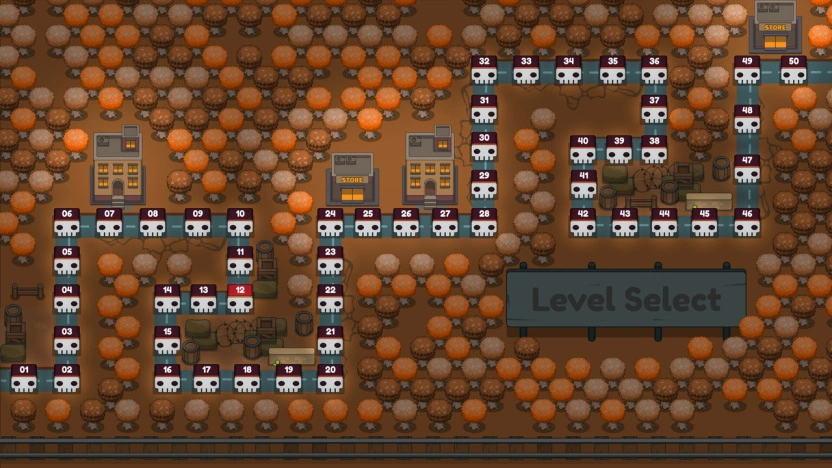
The scenery runs out of energy long before the grids do. Most levels sit in similar outdoor spaces with trees, grass, and the occasional zombie placed like a decoration in a shop window. A stronger environmental rotation could have carried the premise without adding new mechanics: rooftops, substations, dark streets, ruined hospitals, fenced safe zones. Those settings would have made the player feel like they were repairing a world, rather than clearing puzzle boards with grass around them.
The audio lands in the same modest space. The music sits comfortably in the background, then fades from memory. The switch effects are cleaner, especially the generator feedback, but the game misses chances for atmosphere. Distant groans, flickering electricity, or a low hum growing as the grid returns could have made each completed board feel warmer and stranger.
Gridz Keeper is pleasant in the way a small puzzle snack can be pleasant. Its best moments come from the instant a messy board suddenly makes sense and every generator clicks green. It needed a second spark after that, something to make its undead world push back.
The Review
Gridz Keeper
Gridz Keeper has the gentle satisfaction of a puzzle box that never asks too much from you. Turning every generator green gives the game a clean little rhythm, and the cute repairman setup makes the apocalypse feel oddly cozy. The disappointment comes from how little changes across its 50 levels. The zombies stay decorative, the grids rarely bite back, and the whole thing fades as soon as the credits roll. Pleasant for newcomers, thin for puzzle veterans.
PROS
- Clear puzzle rules
- Cute repairman design
- Accessible for younger players
- Satisfying generator feedback
- Easy trophy path
CONS
- Flat difficulty curve
- Underused zombie premise
- Very short runtime
- Repetitive environments
- Little replay value