
























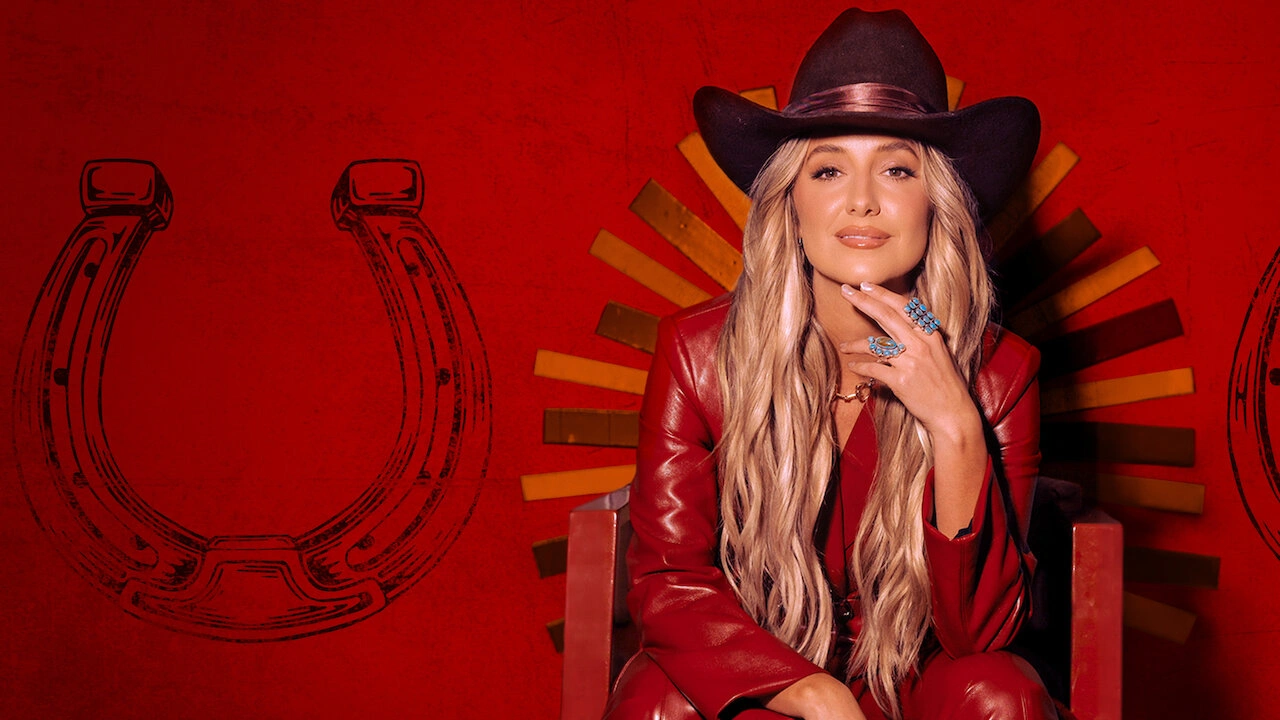

Country stardom is filmed here as a labor of polish: the hat angled right, the bell bottoms doing their mythic work, the tour bus waiting like a second bloodstream. Lainey Wilson: Keepin’ Country Cool, directed by Amy Scott, follows Lainey Wilson at a point where success has become both reward and obligation. Arena shows, brand work, acting visibility, songwriting sessions, social media presence, family access, and romance all move through the frame with a friendly glow.
The film is warm by design. Its lighting, literal and moral, rarely cuts across Wilson’s face with much suspicion. That is not a flaw by itself. A profile can be affectionate and still reveal something. Scott’s documentary finds its better material whenever Wilson talks about the cost of visibility, the strange economics of modern music, and the private discipline needed to turn personal life into songs without letting celebrity devour the life that feeds them. Its weakness is just as visible. Every time a darker corridor appears, the camera turns on another lamp.
The Myth of the Overnight Arrival
The childhood footage from Baskin, Louisiana, gives the film a sturdy spine. Wilson singing karaoke covers in the living room, studying Dolly Parton’s performance style, and treating music as a vocation long before the industry noticed her, creates a clear before-and-after pattern. The arena tour does not appear out of smoke. It arrives after years of small rooms, missed attention, and Nashville patience.
Scott places those early images against the present-day scale of Wilson’s career: a fleet of tour buses, a full-size pickup truck built into the stage show, crowd noise rolling over her like weather. The contrast is effective because the documentary does not pretend Wilson stumbled into spectacle.
Her certainty, expressed in interviews, can sound almost severe. She says she knew she would get here. In another film, that might read as self-mythologizing. Here, paired with family interviews and band memories of rougher gigs, it lands closer to professional stubbornness.
The longtime band members matter because they puncture the clean geometry of the success story. They remember the smaller stages before the lighting rigs grew expensive. Wilson’s parents, grandmother, sister, and nephews give the film a domestic counterweight, especially in the backyard trampoline material, where stage gear meets family chaos. It is a simple image, and Scott knows exactly how usable it is. Maybe too usable.
Sequins, Streams, and Survival
The strongest passage in Keepin’ Country Cool is not the arena footage. It is the discussion of money. Wilson and her manager Mandelyn Monchick talk about the economics of touring, songwriting, and streaming with a plainness that briefly sharpens the documentary’s edges.
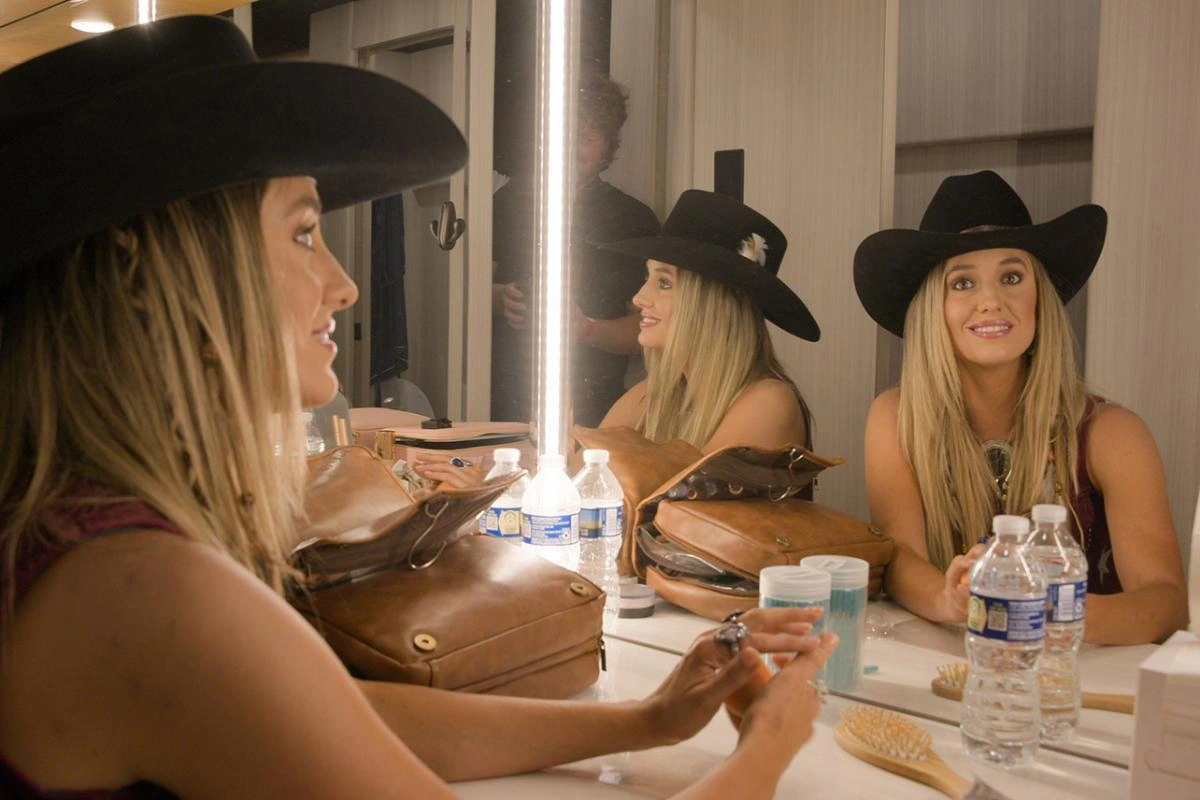
The glamorous frame starts to show its scaffolding. A modern country star cannot simply sing, write, record, tour, and go home. The job has metastasized into content, acting, partnerships, access, image maintenance, and constant audience contact.
This is where Wilson becomes most interesting as a subject. Her bell bottoms are not treated as costume trivia. They are a tactical solution to an industry problem. Wilson recalls realizing that being a decent female singer-songwriter was not enough to make people look.
She did not want to market herself through a version of sexuality that felt false to her, so the bell bottoms became identity, armor, silhouette, brand. In Marcusian lighting terms, they are a costume that knows where the spotlight lives.
Scott also links that image-making to the craft of songwriting. Wilson speaks of writing as a way of caring for her mind, and the film’s writing-session material gives that claim practical shape. The song about Devlin “Duck” Hodges, “Yesterday, All Day, Every Day,” works less as a romantic souvenir than as a study in how Wilson translates ordinary affection into marketable intimacy. She says she cannot keep writing about tour buses and flash. The line matters because it identifies the trap: the life of success offers plenty of scenery and very little soil.
Fans in the Front Light
The “Cowgirl of the Night” concert ritual gives the film its cleanest emotional charge. Wilson brings a young fan onstage and frames the moment around self-worth, especially for girls watching a country star who has made visibility feel handmade rather than inherited. The exchange is engineered, of course. Arena intimacy always is. Yet the gesture still works because the documentary has already shown how seriously Wilson understands being seen.
The fan material avoids cynicism without becoming syrup. Homemade signs for Hippie Mae, Wilson’s French bulldog, bring a funny side current to the fandom. The dog’s presence is a gift to the film, partly because animals have no respect for personal branding. They wander through mythology and leave paw prints on the floor.
Duck Hodges gives the documentary its soft romantic suspense. His separate interview with the engagement ring is sweet, and Wilson’s description of the relationship as healthy gives the film a personal milestone to track amid the professional machinery.
The material is charming, but it also shows the film’s caution. Romance here becomes another warm light, never a complication. The same happens with Wilson’s comments about anxiety, depression, and panic. The admission is meaningful, yet Scott does not stay with the emotional architecture long enough to locate its deeper shadows.
The Safe Angle
Scott has access to several harder films hiding inside this one: a documentary about gendered image construction in Nashville, a documentary about streaming-era labor, a documentary about country music’s recent cultural temperature, a documentary about anxiety inside mandatory approachability. Keepin’ Country Cool brushes against each of them, then returns to a more flattering composition.
That flattering composition still has value. Wilson comes across as funny, disciplined, candid, and sharper about her profession than many star portraits allow. The film’s craft is smooth, its pacing clean, its access generous. The problem is the angle. Too often, the frame protects its subject from the very pressures that make her worth filming. For fans, that protection may feel like respect. For a documentary, it is a dimmer switch where a blade should be.
The music documentary Lainey Wilson: Keepin’ Country Cool celebrated its world premiere at the SXSW Film & TV Festival on March 17, 2026, before launching globally for digital streaming on Netflix on Earth Day, April 22, 2026. Audiences can watch the feature-length film exclusively on the streaming platform. The intimate non-fiction portrait charts the personal journey, intense struggles, and eventual triumphs of the Grammy-winning singer-songwriter, showing how she has redefined what it means to be a modern country star by staying fiercely true to her roots while captivating massive audiences on stage across America.
Where to Watch Lainey Wilson: Keepin’ Country Cool (2026) Online


Full Credits
Title: Lainey Wilson: Keepin’ Country Cool
Distributor: Netflix
Release date: March 17, 2026 (SXSW Premiere), April 22, 2026 (Global Streaming Release)
Rating: TV-14
Running time: 83 minutes
Director: Amy Scott
Writers: Amy Scott Editorial Team
Producers and Executive Producers: Angus Wall, Terry Leonard, Kent Kubena, Thomas Tull, Jillian Share, Jason Owen, Jen Gorton, Katie Admire, Jillian Apfelbaum, Nicolas Gordon, Josh Miller, Mandelyn Monchick
Cast: Lainey Wilson
Director of Photography (Cinematographer): Makemake Cinematography Team
Editors: Makemake Post-Production Department
Composer: Heather McIntosh
The Review
Lainey Wilson: Keepin' Country Cool
Lainey Wilson: Keepin’ Country Cool keeps its key light warm and its shadows shallow. As a fan-facing portrait, it is sincere, grounded, and often charming, especially when Wilson talks songwriting, money, and the strange labor of staying visible. As a documentary, it rarely risks a harder angle. The film has access to anxiety, image-making, gender pressure, and country music’s modern machinery, then keeps choosing the flattering shot. Still, Wilson’s candor gives the polish some weight.
PROS
- Warm access to Wilson’s family life
- Strong songwriting material
- Honest music-business details
- Appealing fan interactions
- Sweet proposal thread
CONS
- Too safe dramatically
- Limited cultural excavation
- Familiar rise-to-fame structure
- Mental health material stays light
- Flattering framing dominates