





















The most persuasive argument in Orangutan is vertical. Mark Linfield and Vanessa Berlowitz keep returning to the distance between the forest floor and the branches where their subjects live, eat, sleep, learn, compete, and survive. That height gives the film its visual grammar. The canopy is home, school, kitchen, playground, and refuge; the ground is where hunger may force a bad decision and where a Sumatran tiger can turn one search for edible palms into a silent horror scene.
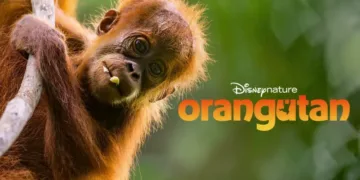
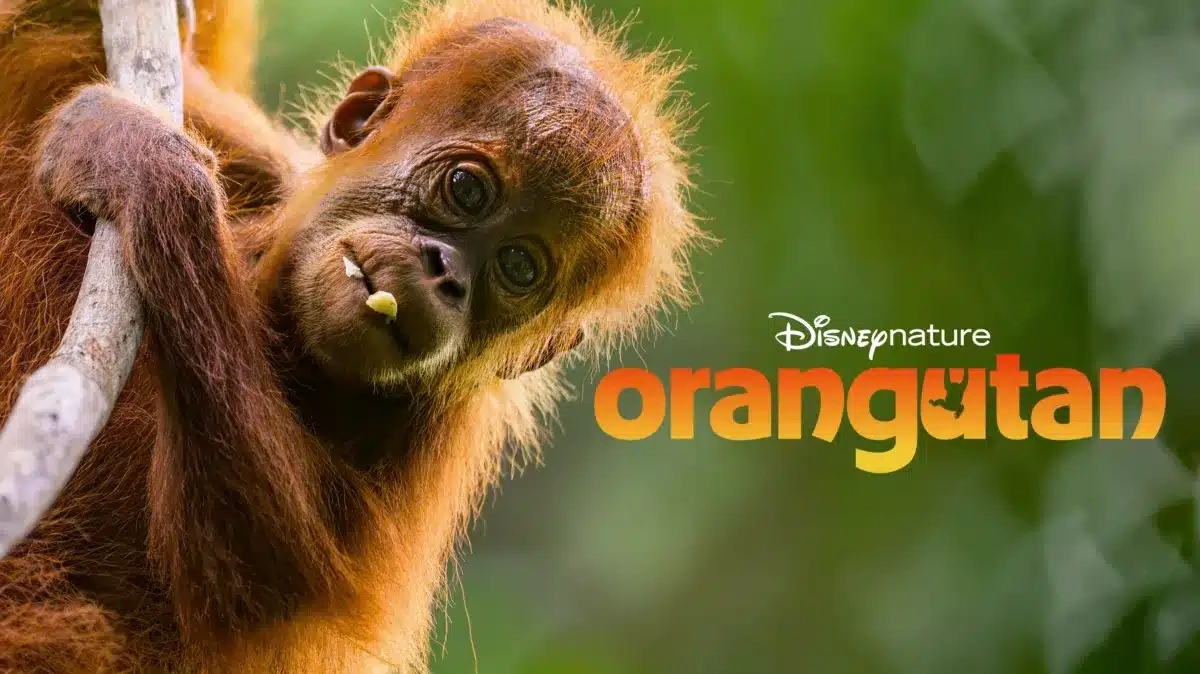
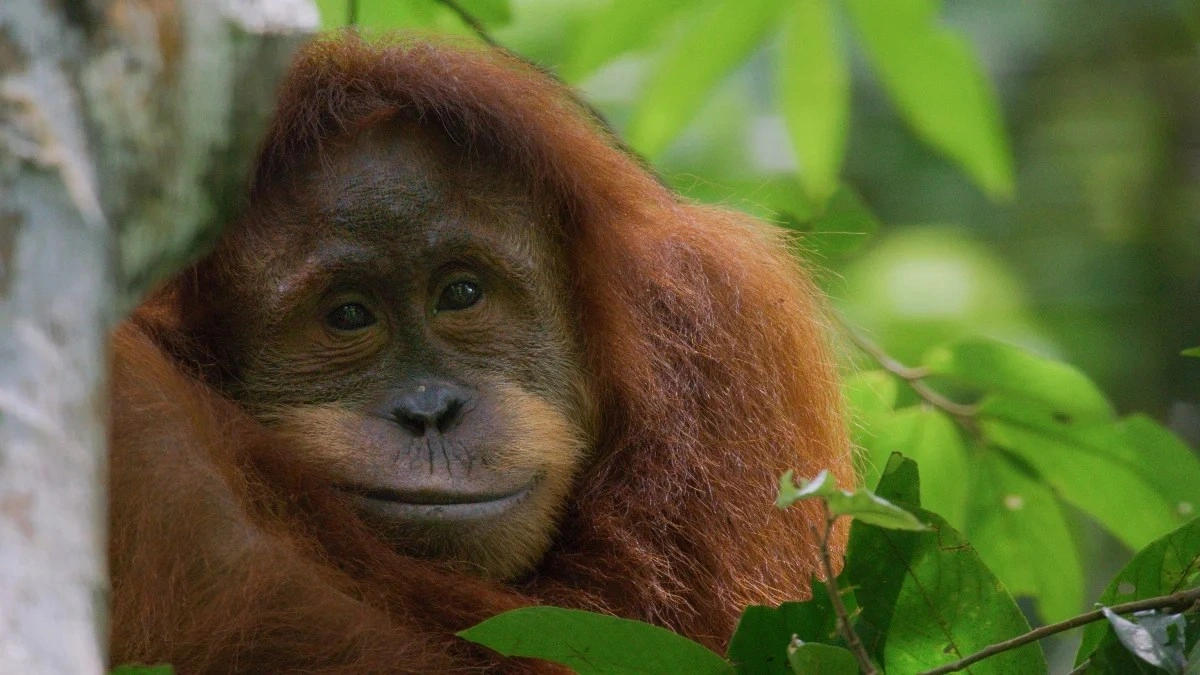
Disneynature’s latest Earth Day documentary, now on Disney+, follows Indah, a nine-year-old female orangutan in the rainforests of Borneo and Sumatra. She has spent most of her life close to her mother, Diann, which the film uses to explain one of the key facts of orangutan life: childhood lasts a long time because the forest is difficult to master.
Food has to be recognized, tools have to be shaped, nests have to be made, and danger has to be read before it announces itself. Indah’s younger brother Bimo changes the family balance. Diann’s attention moves toward the infant, and Indah is pressed toward independence before she seems fully ready for it.
Family Without Sentimentality
The film’s family story is built from observation, then polished by Disney into a clean coming-of-age arc. That shaping is visible, but it does not erase the intelligence of the footage. Indah’s separation from Diann has force because the camera has already shown how much survival knowledge lives in that maternal closeness. When Indah watches, waits, and copies, the film shows education without a classroom. A branch becomes a route. A nest becomes architecture. A feeding opportunity becomes a test of memory and timing.
Bimo could have been reduced to a cute baby brother, and there are moments when the narration nearly pushes him there. His function is sharper than that. He is the new claim on Diann’s body and time, the reason Indah’s adolescence suddenly has pressure. The film understands family as an ecology of limited attention. That is a more honest idea than the easy human lesson it sometimes tries to sell.
The social order among the orangutans gives the documentary some needed friction. Dominant males and food scarcity leave Indah, Diann, and Bimo in precarious positions, and the film does not fully sand down that discomfort. A fight between two alpha males briefly disrupts the gentle rhythm, reminding younger viewers that the canopy is not a plush kingdom of adorable red fur. It is a contested space.
The Rainforest Steals Scenes
The cinematography carries the film whenever the narration steps aside. Wide views above the treetops give the forest a strange, floating beauty, while close shots through leaves make the orangutans feel half-hidden, as if the camera is being allowed into a society that has no particular need for human approval. The best images are patient: hands testing bark, bodies stretching across gaps, infant limbs clinging to a mother’s fur.
The Sumatran tiger sequence is the film’s cleanest piece of suspense. Indah descends in search of food, and the predator’s movement through the foliage makes the forest floor feel suddenly wrong. The scene works because it does not need a speech about danger. Editing, distance, and silence do the work. Nitin Sawhney’s music tightens around the moment, then lets the natural sound return before the film loses its nerve.
The most memorable lesson in orangutan intelligence comes through the sun bear and the beehive. Indah watches the bear tear into the hive with claws she does not have. Then she takes a twig and uses it to reach honey and bee eggs left behind. The scene shows tool use, imitation, and problem-solving in one compact action. It also shows why this species makes lazy ideas about “instinct” look foolish. Indah is not moving through a program. She is studying.
The surrounding animals widen the film’s texture. Gibbons swing through the same aerial maze, jumping snakes bring a flash of weird menace, insects become food and obstacle, and the slow loris offers one of those facts children will repeat for days: a primate can be venomous. At times these side creatures are so vivid that the orangutans risk being outshone, especially when the film treats them as comic interruptions rather than neighbors in the same fragile system.
Disney’s Warm Hand
The choice to begin with “I Wan’na Be Like You” from The Jungle Book is cute, almost too cute, and completely revealing. Orangutan wants to be a wildlife film and a Disney inheritance object at once. It carries the old True-Life Adventure impulse into the streaming age, with named animal subjects, a clear emotional arc, polished family tension, soft jokes, and a conservation message tucked inside spectacle.
Josh Gad’s narration fits that design. His warmth helps the film stay accessible for children, and he is useful when explaining orangutan childhood, tool use, predator risk, and the social pressure around food. The problem comes when the voiceover treats silence as an empty space to fill. Some of the footage needs less commentary, not extra personality. A sun bear finding honey, Indah shaping a twig, or a tiger waiting in the leaves already contains drama. The film weakens when it behaves as if animal behavior must be translated into a punchline before it can be loved.
The Disneynature formula is familiar by now, especially after other primate-centered films such as Chimpanzee and Monkey Kingdom. Orangutan does not escape that pattern. It refines it. Its strongest passages replace manufactured charm with attention: Indah watching the bear, Diann managing Bimo, the canopy turning from playground to obstacle, the forest floor becoming threat. The conservation plea lands there, in the practical details of a life that has to be learned branch by branch.
The Disneynature wildlife documentary Orangutan premiered exclusively for digital streaming on Disney+ on Earth Day, April 22, 2026. Narrated by Josh Gad, the family-friendly film is available to watch on the platform globally. The nature documentary takes viewers high into the rainforest canopy of Sumatra, following an inquisitive adolescent orangutan named Indah as she faces the daily challenges of survival, learns to use tools, and navigates the treetops while preparing to leave her mother to venture out on her own.
Where to Watch Orangutan (2026) Online

Full Credits
Title: Orangutan
Distributor: Disney+
Release date: April 22, 2026
Rating: G
Running time: 81 minutes
Director: Mark Linfield, Vanessa Berlowitz
Writers: Mark Linfield, Vanessa Berlowitz
Producers and Executive Producers: Roy Conli, Mark Linfield, Vanessa Berlowitz
Cast: Josh Gad
Director of Photography (Cinematographer): Wildstar Films Production Crew
Editors: Disneynature Post-Production Team
Composer: Nitin Sawhney
The Review
Orangutan
Orangutan is at its strongest when it lets Indah’s movement through the canopy speak without Disney’s hand pressing too firmly on the lesson. The film’s family arc is familiar, and Josh Gad’s narration can soften scenes that have their own wild tension, but the footage of Indah learning, watching, and adapting gives the documentary a quiet force. Its conservation argument lands through hunger, height, danger, and a twig turned into a tool.
PROS
- Beautiful canopy photography
- Strong Indah coming-of-age arc
- Tense Sumatran tiger sequence
- Memorable tool-use scene
- Rich rainforest ecosystem detail
CONS
- Familiar Disneynature structure
- Narration can feel too cute
- Side animals sometimes outshine the orangutans
- Some emotional beats feel over-shaped