



























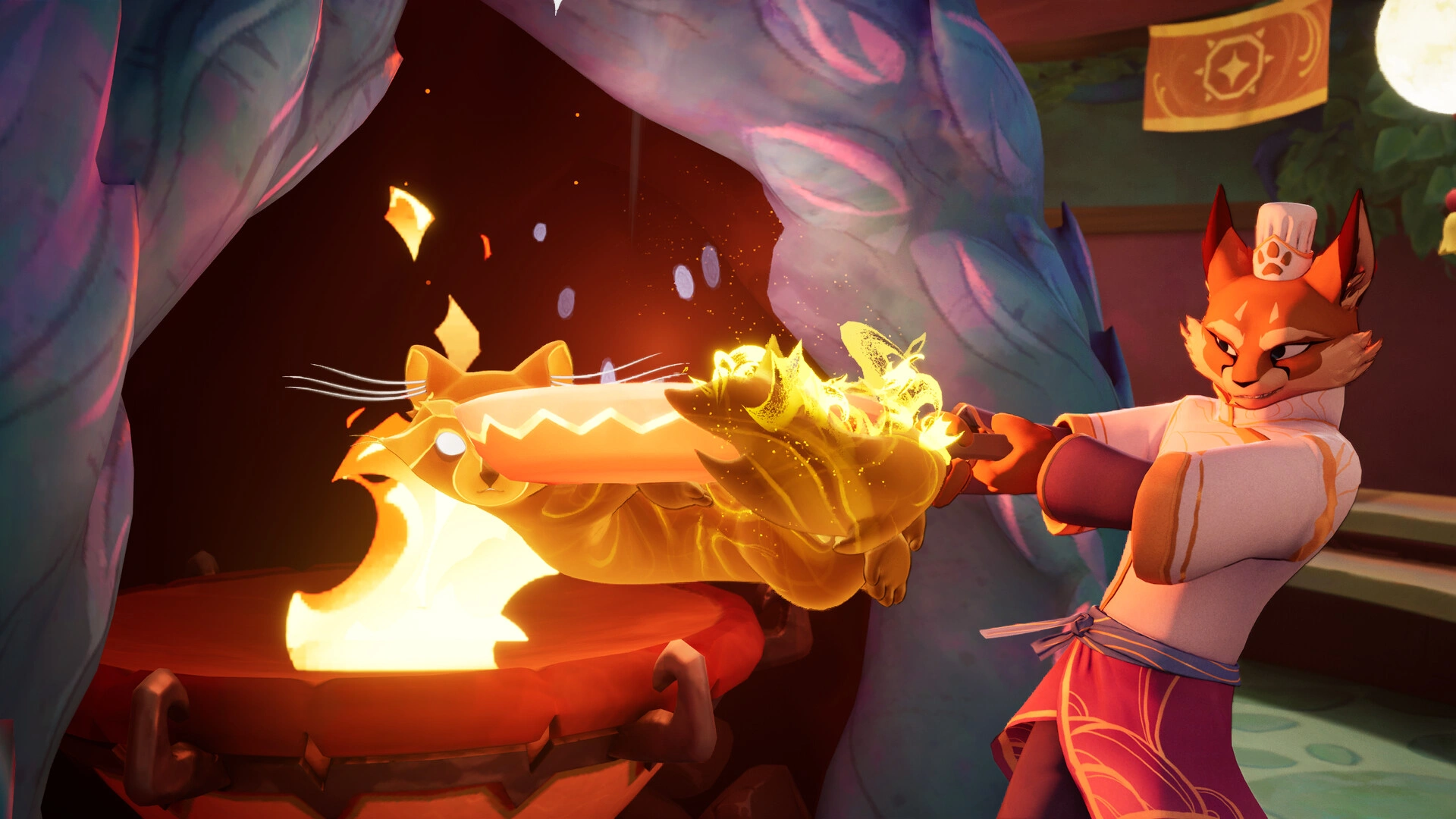

Beastro makes its strangest design choice before the first battle happens: dinner is the deck. Timberline Studio’s cozy roguelite casts players as Panko, an anthropomorphic caracal chef who inherits the Mise en Place restaurant in Palo Pori after his mentor Travers disappears. Monsters threaten the land of Solido, brave Caretakers leave the village to handle that danger, and Panko stays behind to cook.
That separation gives the game its identity. Panko does not swing the sword or cast the spell. He chooses ingredients, prepares meals, and sends someone else into danger with whatever tactical value dinner produced. Most deckbuilders ask players to survive combat so they can earn better cards.
Beastro flips that relationship. The kitchen decides the hand before the fight begins. The premise sounds cute, and it is. It also gives every carrot, fish, berry, and recipe a mechanical job. Cozy chores are rarely this accountable.
Palo Pori Runs on Routine
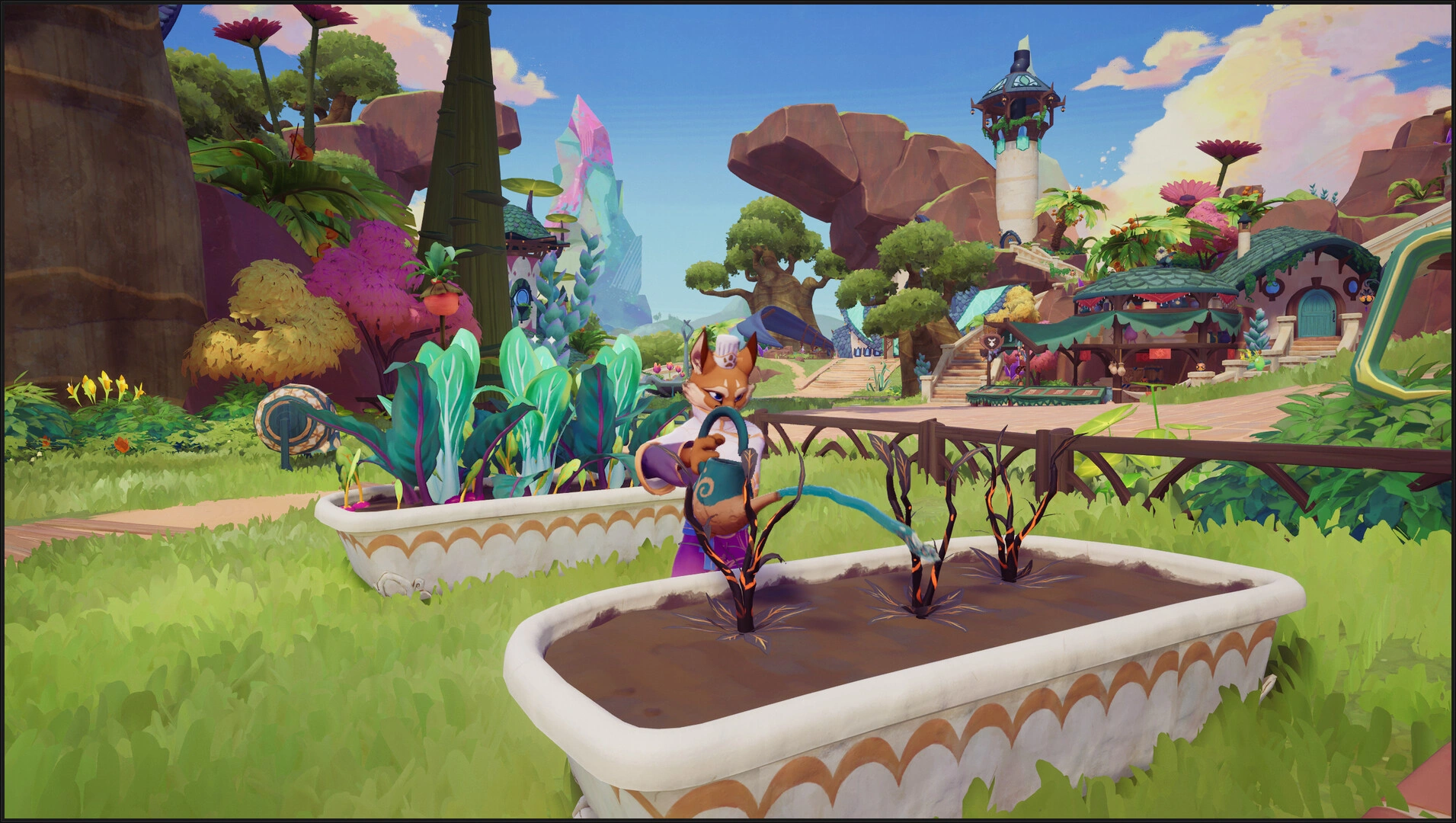
Each day has a clean three-part structure. Morning is for gathering: farming, fishing, tending animals, shopping, and talking to villagers around Palo Pori. The pace is deliberately loose. There is no clock shoving the player toward the next task, so harvesting ingredients or lingering near the market feels relaxed rather than optimized to death.
The afternoon moves into restaurant service. Panko selects dishes, feeds customers, and handles cooking through minigames for chopping, frying, baking, boiling, and tossing ingredients into a pot. The generous control prompts help because Beastro asks the player to remember several small inputs across one service period. Missing a beat does not ruin the dish. It lowers the experience reward, which keeps failure present without turning the restaurant into a punishment box.
Those minigames are also one of the game’s rougher systems. Their tactile idea is sound, yet the actions can feel disconnected from the food being prepared. Repeating carrot-chopping and pan-avoidance tasks for something like Cloud Berry Jam Toast makes the station work feel generic. The system communicates effort, not recipe identity.
The better design choice sits around the minigames. Movement is fast, ingredients do not need fussy bag management, and the game knows what Panko has collected. Those small conveniences matter because Beastro’s loop already has farming, cooking, relationship management, card planning, and combat. Extra inventory friction would have turned a busy design into a clogged one.
Flavor as Strategy
The flavor system is the real ruleset underneath the cozy surface. Sweet, Salty, Sour, Bitter, Umami, and eventually Spicy are not flavor text. They decide how ingredients affect meals, how meals affect Caretakers, and how cards behave in combat. Sweet can neutralize Salty and enhance Spicy. Salty can neutralize Sweet and enhance Sour. The structure is readable enough to grasp as a match-and-counter system, then layered enough to support actual planning.
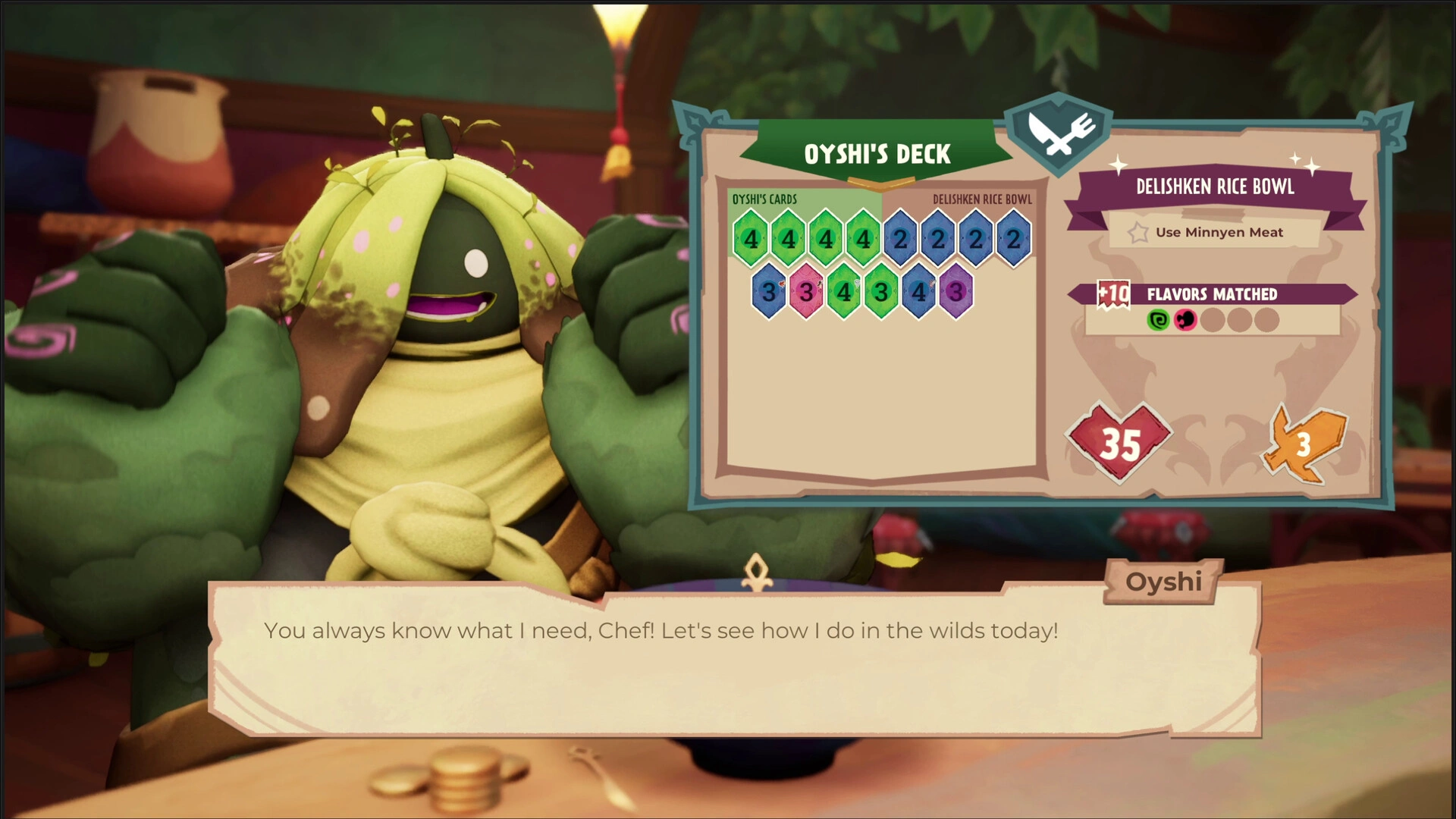
Caretakers arrive with cravings and preferences, so feeding them is a tactical choice disguised as hospitality. The dish Panko serves influences the cards they bring into the night phase. A careless meal can produce a thin deck. A good one can create better flavor coverage, stronger counters, and useful boosts before a monster ever appears.
This is where Beastro earns its genre hybrid label. Farming gives resources. Restaurant service turns resources into recipes. Recipes become cards. Cards shape combat. Combat returns new ingredients and opens future possibilities. Each system hands something forward.
The cost is clarity. Early explanations cover the basic idea, yet meal composition and flavor balancing can feel muddy until the player has failed into understanding. Experimentation is welcome in a forgiving game, but the connection between a specific ingredient choice and a specific deck outcome needs cleaner feedback. A stronger preview screen for the cards a meal will create would make the strategy easier to read without flattening the discovery.
The Puppet Stage Has Teeth
Nighttime combat is presented through a puppet theatre as the Caretakers recount what happened beyond the walls. It is a smart visual solution. Panko remains a cook in the fiction, but the player still controls the tactical drama. The theatre also gives the fights a handmade identity instead of treating them like a separate mode bolted onto a farming sim.
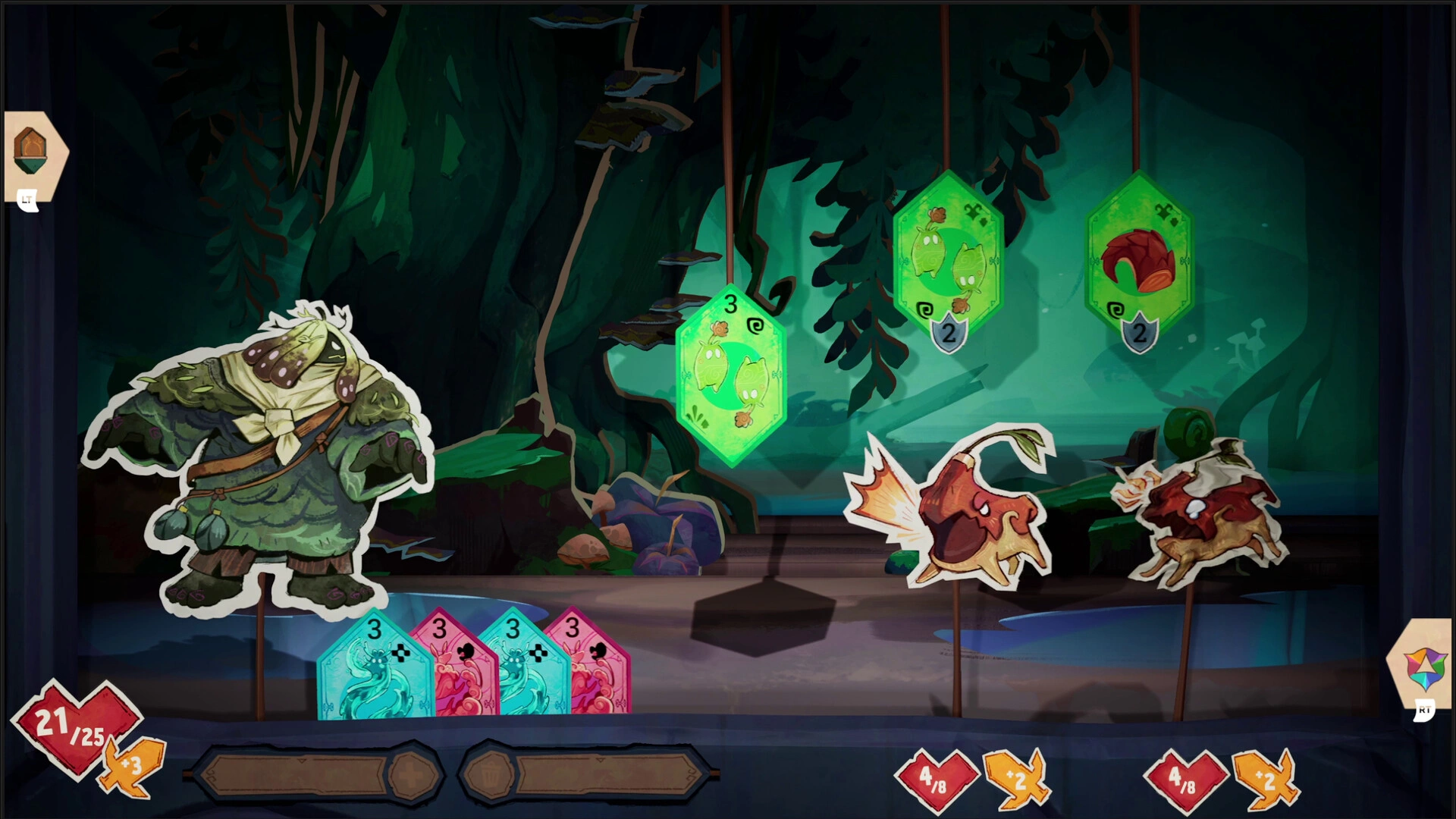
The card battles use flavor matching, neutralizing, value boosting, and route choice. Actions are not locked in until confirmation, and the interface shows which cards can be played, which keeps the system from becoming hostile while the player learns. For players who bounce off harsher roguelites, that forgiveness matters. Failed runs still provide resources and progression, so a bad night rarely feels wasted.
Boss fights strain that contract. Some encounters ask for careful deck preparation and reward it. Others feel like the enemy arrived with numbers the player’s meal could not reasonably answer. When a boss card simply outclasses the available hand, defeat stops feeling like feedback. It starts feeling like the kitchen guessed wrong before the fight began.
The missing quality-of-life feature is saved planning. Once a player finds a strong meal configuration for a Caretaker, recreating it from scratch should not require repeated manual assembly. A recipe or deck preset system would respect the player’s learning and cut down the most tiring part of retrying a boss.
A Warm World With Uneven Pressure
Palo Pori is easy to like. The village has a soft, colorful personality, and the character designs make smart use of flavor-coded palettes. The score supports the daily rhythm without fighting for attention. The puppet theatre sequences are the visual highlight because they make the world feel wider than the restaurant, even when the game keeps Panko rooted in place.
The story has a weaker grip than the systems. Travers’ disappearance gives Panko a personal reason to care, and the Remnant threat gives Solido a fantasy framework, but the game often assumes the player has absorbed terms and stakes before it has properly grounded them. Late developments move too quickly for the mystery or character arcs to carry the same weight as the mechanical loop.
Beastro is strongest when it trusts systems to create attachment. Feeding a Caretaker, seeing that meal become a card set, then watching the puppet theatre turn those choices into survival gives the player a clean emotional line from chore to consequence. The weaker minigames, repetition, boss spikes, and reported save-lock frustration interrupt that line, but they do not erase it. A lot of cozy games make labor pleasant. Beastro makes labor tactical. That is the dish worth ordering.
The Review
Beastro
Beastro turns cooking into deck construction with real design confidence. Its best idea is simple and smart: what Panko serves at the restaurant decides what the Caretakers can do in battle. The cozy village routine, flavor-counter system, and puppet theatre combat form a loop with personality and purpose. The weaker cooking minigames, unclear early teaching, repeated prep work, and late-game save friction keep it from reaching its full shape. Still, this is a warm, clever indie game with systems worth tasting twice.
PROS
- Smart inverted deckbuilding
- Charming puppet theatre battles
- Cozy loop with real strategy
- Forgiving progression
- Strong village presentation
CONS
- Repetitive prep cycle
- Uneven cooking minigames
- Boss balance spikes
- Murky flavor tutorials
- Save-lock frustration