




























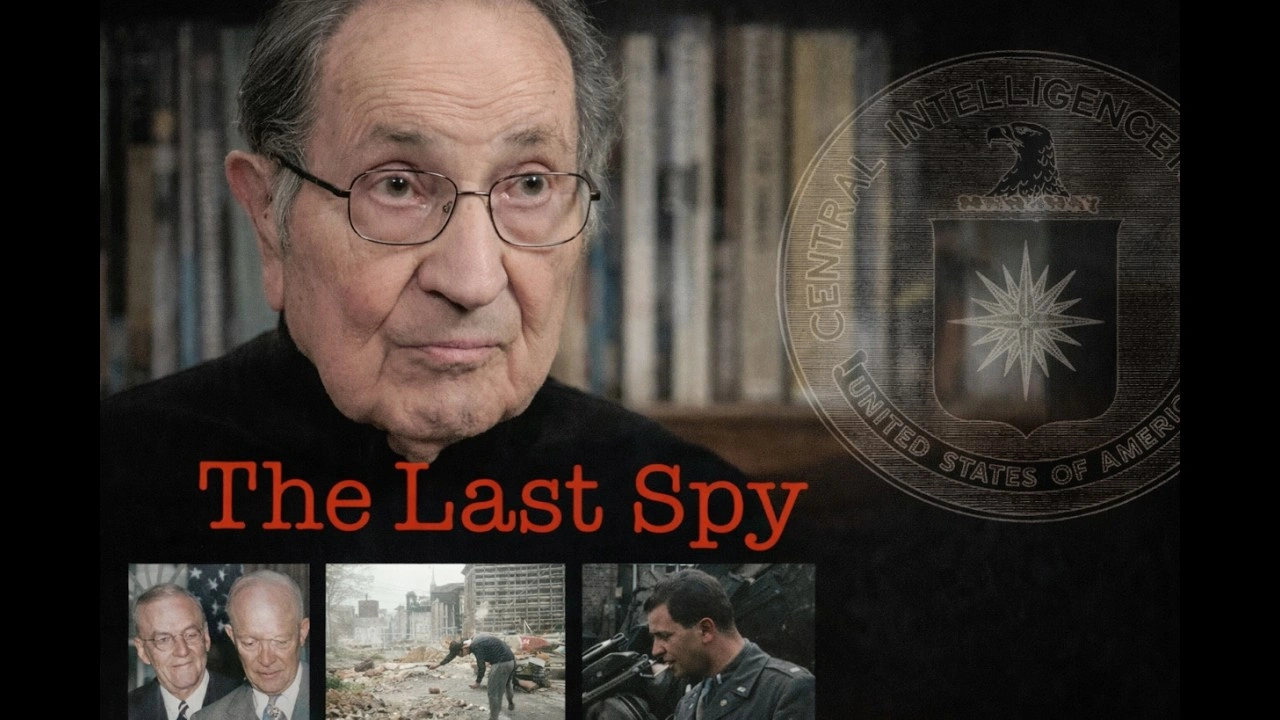

Redaction turns memory into architecture: walls, sealed doors, corridors ending in black ink. Peter Sichel, the German Jewish refugee turned OSS recruit turned CIA station chief, tried to write his life down and found the agency still standing in the doorway. Katharina Otto-Bernstein’s The Last Spy gives him another route: a camera, a chair, a century of recall, and enough historical debris to make silence feel like testimony.
Sichel is around 100 when much of the film catches him, yet the frailty expected from that number rarely arrives. He descends on a stair lift, moves through a comfortable home, cracks dry jokes, and speaks with the careful confidence of someone who spent decades measuring what could be said aloud. The documentary’s strongest visual idea is simple and apt: the old spymaster sits in close-up, softly lit, his face treated like a classified file finally placed under a lamp.
Escape Before Intelligence
Otto-Bernstein’s chaptered structure risks neatness, but it gives shape to a life that could easily burst the frame. The early movement, from Mainz to Bordeaux to New York, carries the film’s most immediate human pressure. Sichel was born in 1922 into a prosperous wine family, and the documentary rightly gives weight to his mother, Franziska, whose political instinct seems sharper than almost every official mind that later enters the story. She reads the enemy press, understands Hitler’s danger early, urges flight, then warns again that France will fall.
The film’s archive material does vital work here. Images of Nazi support, refugee movement, and wartime Europe do not merely decorate Sichel’s account. They darken it. His memory of guiding his shaken father while trying to find his mother and sister turns history from map to body.
Later, the family’s arrival in New York brings its own hard edge, with the German American Bund and Upper East Side antisemitism puncturing any easy fantasy of America as pure rescue. This is where Sichel seems least like an institution and most like a boy learning that geography changes faster than fear.
The Company Man in the Half-Light
The film becomes colder once Sichel enters intelligence work, and that chill suits it. Recruited into the OSS because of his German and French, he interrogates German POWs, recruits assets, and rises through a system inventing itself in real time.
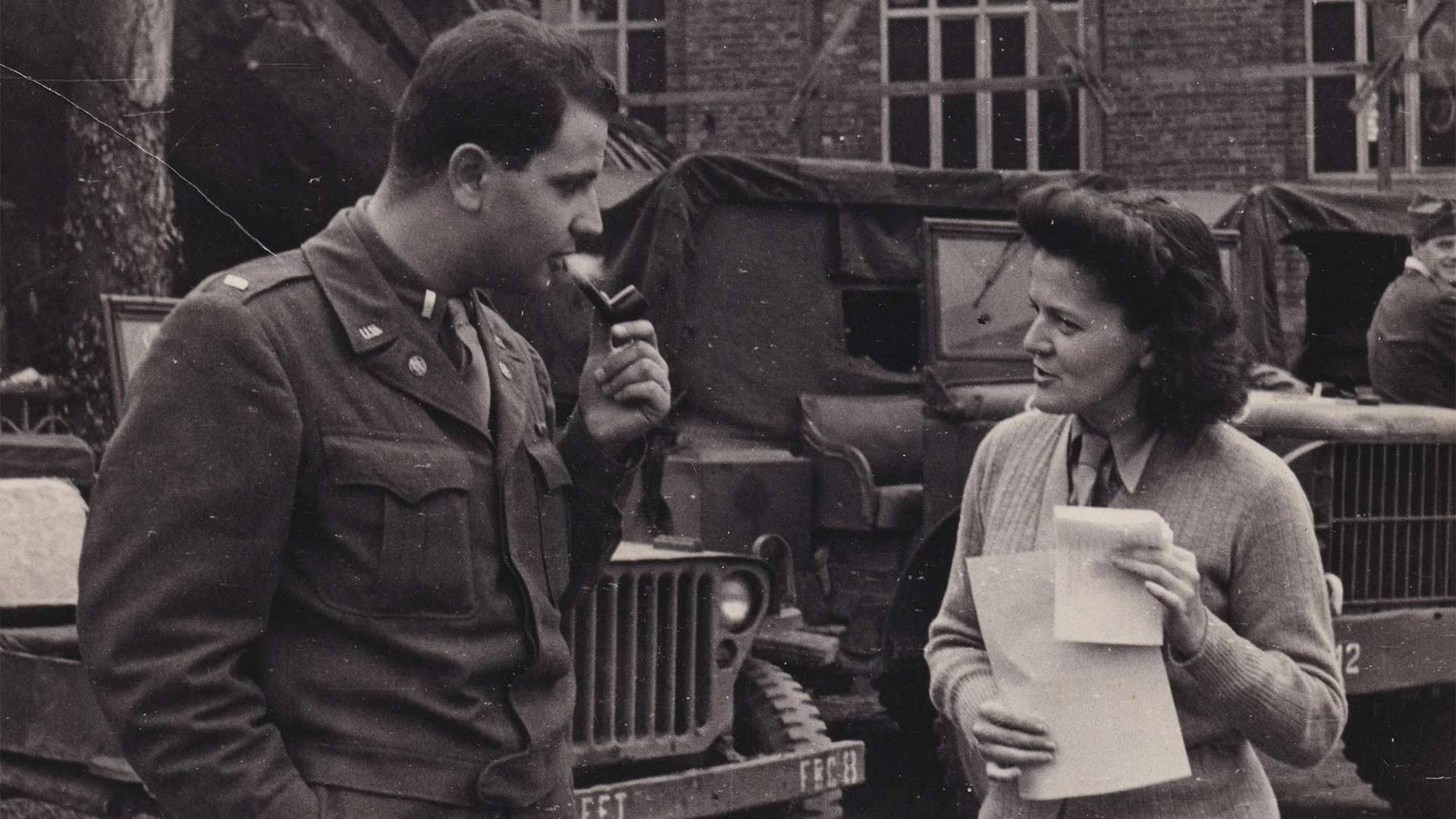
His contempt for General Patton, whom he calls foolish for dismissing intelligence, lands as comic provocation first, then as thesis. Again and again, information is gathered with patience, then ignored by men who prefer ideology with a uniform on.
Postwar Berlin gives The Last Spy its proper noir weather, even if the film itself rarely becomes visually adventurous. A divided city, improvised spy networks, dead agents, compromised loyalties, former Nazis repurposed as anti-Soviet specialists: the material has all the grammar of shadow.
Reinhard Gehlen’s value to American intelligence, built on his knowledge of the Soviet sphere, brings one of the film’s ugliest moral angles into view. The United States, newly styling itself as democracy’s armed conscience, finds practical use for men who had served Hitler.
Otto-Bernstein lets that contradiction sit beside Sichel rather than fully pinning him under it. He speaks calmly about the period, sometimes with startling frankness, sometimes with a smoothness that feels rehearsed by habit. When he says he did not know about the Holocaust’s full machinery until the camps were liberated, the camera stays respectful. Too respectful, maybe. A sharper film would have held the pause longer.
Covert Action, Open Damage
The Last Spy is most valuable when Sichel’s recollections widen into an autopsy of American power. The documentary’s treatment of the Dulles brothers, the Eisenhower administration, and the fever logic of the Red Scare makes clear how easily intelligence became a servant of political appetite. The ethical line is not blurred here. It is moved, then moved again, until the old map becomes useless.
Iran in 1953 is the film’s central wound. Mohammad Mosaddegh’s nationalization of oil triggers the CIA and MI6 operation that restores the Shah, and Sichel calls the coup illegal and ill-advised. That phrasing has the dryness of a memo left near a body. The film links the action to decades of repression, revolution, and anti-American fury, but its power comes from hearing a former insider describe the mistake without ceremony.
Guatemala follows with the same sour pattern. Jacobo Árbenz becomes a communist threat because American policy needs him to be one, while United Fruit’s interests sit behind the curtain like a financier in a crime picture. Indonesia adds the film’s strangest detail: an operation involving an air stewardess gathering Sukarno’s stool sample so the CIA could analyze his health. It sounds absurd until the absurdity turns predatory. The Cold War did not lack imagination. It lacked shame.
The Frame Does Not Always Interrogate
Otto-Bernstein assembles the film with discipline: archive footage, animated maps, photographs, historians, journalists, former intelligence voices, and family interviews all orbit Sichel’s testimony. The audible questions from behind the camera are a wise choice. They remind us this is a conversation under construction, not revelation descending from the mountain.
Still, the film’s loyalty to Sichel becomes its chief weakness. His wife and daughters give glimpses of the domestic cost of secrecy, and there is a fine sting in watching family members learn pieces of his life at the same time the audience does.
Yet the film rarely lets that private damage gather force. Jewish identity also remains oddly underexplored after the first act, especially given the scale of Sichel’s origin story and the later compromises of American intelligence. The camera loves his lucidity. It should distrust it a little more.
That tension gives The Last Spy its charge. Sichel is charming, lucid, historically indispensable, and evasive in the elegant manner of men trained to survive scrutiny. Otto-Bernstein has made a careful, absorbing documentary rather than a ruthless one. Its shadows remain controlled, its lamps politely placed, but now and then the light catches something lethal.
The biographical historical documentary The Last Spy premiered at the Munich Film Festival before expanding to international platforms, including its United States release on January 8, 2026, and a UK theatrical and digital launch via Dogwoof on April 24, 2026. Viewers can watch the documentary on select digital video-on-demand networks such as Amazon Prime Video. The film provides a riveting, unvarnished look into the history of American foreign intelligence by profiling 100-year-old CIA spymaster Peter Sichel, tracking his extraordinary journey from escaping Nazi Germany as a Jewish refugee to becoming the first CIA Station chief in post-war Berlin.
Where to Watch The Last Spy (2025) Online
Full Credits
Title: The Last Spy
Distributor: Dogwoof, Arte
Release date: July 2025 (Munich Film Festival Premiere), November 2025 (First Broadcast), January 8, 2026 (United States), April 24, 2026 (United Kingdom)
Running time: 107 minutes
Director: Katharina Otto-Bernstein
Writers: Katharina Otto-Bernstein, Mark Monroe
Producers and Executive Producers: Federica Belletti, David Dinerstein, Oleg Dubson, Simon Kilmurry, Kathrin Lohmann, Katharina Otto-Bernstein, Sabine Schenk, Stephen Sowers, Frida Torresblanco, Frank Murray
Cast: Peter Sichel, Carl Bernstein, Scott Anderson, Stella Sichel, Sylvia Sichel, Bettina Sichel, Peter Grose, Stephen Kinzer, Adam LeBor, Erick Arbenz
Director of Photography (Cinematographer): Dogwoof Production Crew
Editors: Matthew Cohn
Composer: Dogwoof Sound Design Team
The Review
The Last Spy
The Last Spy gives Peter Sichel the close-up he wanted after the CIA’s red pen failed to bury him. Katharina Otto-Bernstein’s film is most powerful when his polished recollections cast long institutional shadows: Iran, Guatemala, Berlin, Hong Kong. It is less piercing when the camera accepts his silences, especially around guilt, Jewish identity, and family damage. Still, as a portrait of intelligence work curdling into ideology, it has the chill of a lamp left burning in an empty interrogation room.
PROS
- Sichel’s sharp testimony
- Strong Cold War detail
- Rich archive material
- Clear chapter structure
- Moral ambiguity handled well
CONS
- Limited visual invention
- Some silences go untested
- Family material feels thin
- Too loyal to Sichel’s framing







