















![Kingdom Hearts Collection [I-III] Review](https://gazettely.com/wp-content/uploads/2026/10/Kingdom-Hearts-Collection-I-III-1-360x180.webp "Kingdom Hearts Collection [I-III] Review: KHII Holds Steady as Newer Entries Fluctuate 33")






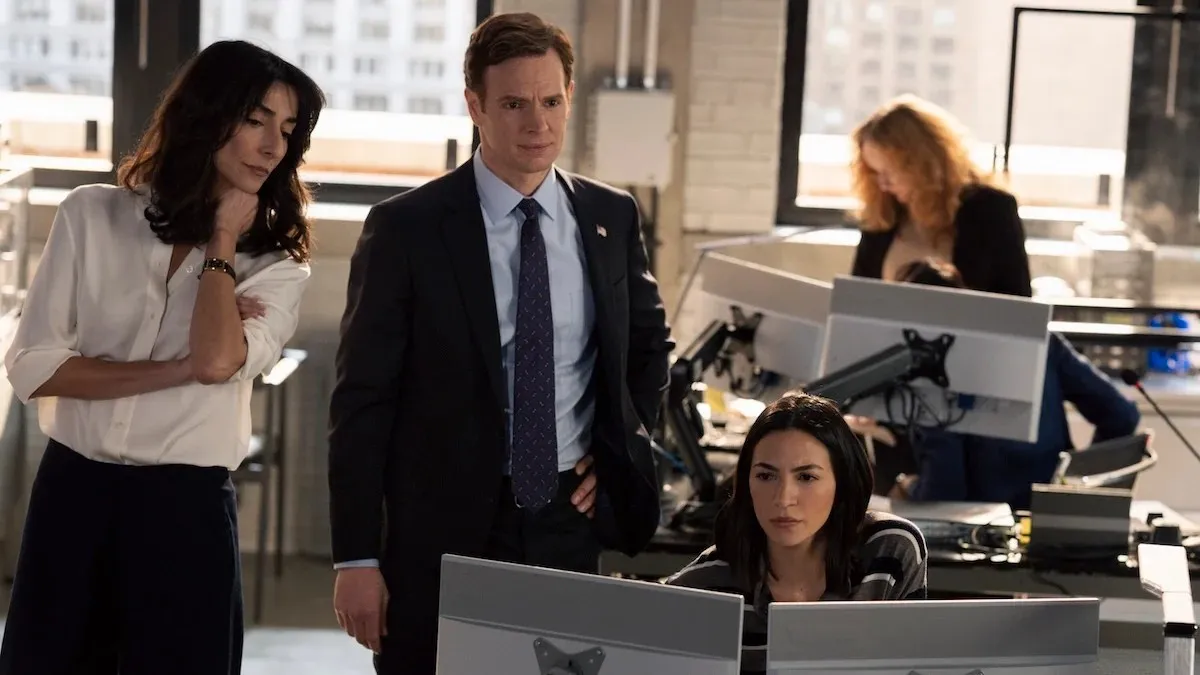

The current TV ecosystem runs on a visible split. On one side, streaming platforms keep testing form, tone, and episode structure. On the other, network television continues to refine the procedural, protecting a format that still delivers consistency, rhythm, and weekly familiarity. CIA arrives squarely from that second tradition, and it does so with full awareness of what viewers expect from a Dick Wolf expansion.
Set in present day New York City, the series builds an elite fusion cell that joins domestic law enforcement with international intelligence. The pilot opens with a high stakes heist tied to a defense contractor and the theft of a supersonic weapon, a setup designed to force institutional cooperation under pressure. The premise is clean and efficient. A joint task force investigates geopolitical threats and terrorist activity on American soil, placing the FBI and CIA in the same operational space while preserving the friction that comes from their different mandates.
That friction gives the pilot its shape. The episode frames national security as a matter of collaboration between men who disagree on legal process, surveillance norms, and mission priorities. One reads the rulebook as a boundary. The other treats it like a negotiable document. The pilot leans hard into that divide, using it as the engine for both conflict and momentum.
As a statement about the state of television, CIA is revealing. The series does not chase formal reinvention. It reaffirms the staying power of structured crime fighting and high stakes institutional drama on broadcast TV. In a moment when streaming series are often praised for ambiguity and narrative drift, this show plants itself in clarity, urgency, and a familiar weekly mechanism. That choice says a lot about audience appetite and about how network brands continue to position themselves in a crowded market.
Stagnant Archetypes and the Illusion of Conflict
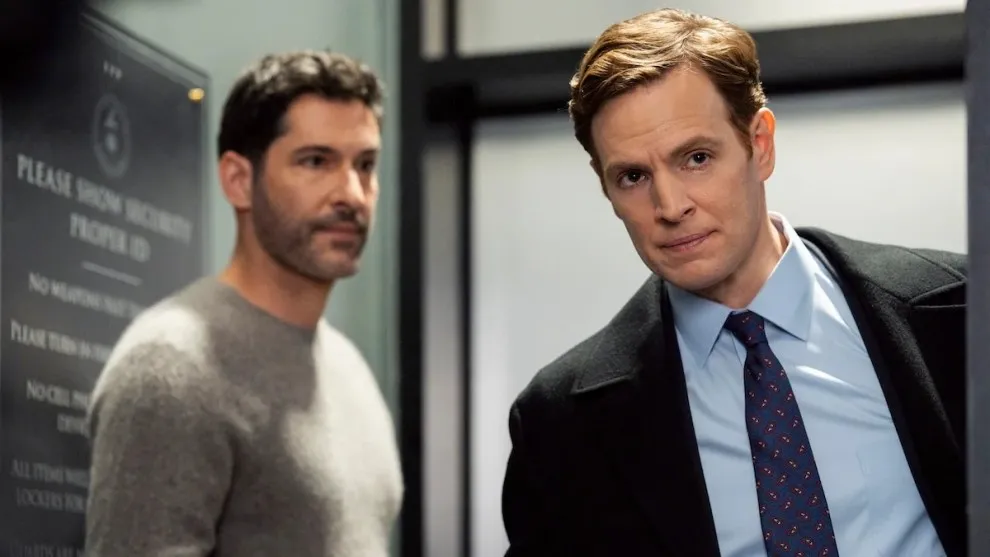
The central partnership is built from recognizable parts. Colin Glass, played by Tom Ellis, is the roguish CIA case officer with a transatlantic background and a visual identity that does a lot of immediate storytelling. Leather jacket, relaxed posture, and a cultivated disregard for institutional decorum mark him as the rule bending operator before he says much at all. He moves through intelligence work as someone comfortable in gray areas, and Ellis plays him with a polished charisma that gives the character energy even when the writing stays close to type.
Across from him is Bill Goodman, played by Nick Gehlfuss, the FBI Special Agent whose suit, posture, and disciplined image establish him as the legal center of the pair. He is defined by his allegiance to constitutional process and a strict relationship to the law. Gehlfuss gives him the steadiness the role requires, and his skepticism toward covert tactics helps maintain the procedural tension that the pilot keeps returning to.
The issue is less performance than design. Their partnership runs along a route television has traveled for decades. Loose cannon versus by the book agent. Charm versus restraint. Asset management versus case closure. The dialogue mines those oppositions in predictable beats, and the writing frequently treats ideological conflict as a genre checklist instead of a living disagreement shaped by history, politics, or institutional trauma.
That choice lands awkwardly in the current cultural moment. Television audiences have seen crime and security dramas grow more psychologically layered, especially on streaming platforms where character construction often leaves room for contradiction, vulnerability, and moral self awareness. CIA reaches for friction, yet the friction often feels prepackaged. The clash is functional. It rarely feels surprising.
Representation is part of that problem. Positioning two white male leads as the emblematic faces of American security reads as a nostalgic throwback at a time when public conversations around power, policing, and state authority have shifted significantly.
The show seems to understand that it should gesture toward ideological disagreement, though it stops short of engaging the broader demographic and political realities that shape who gets to embody institutional legitimacy on screen. The result feels less like tension born from the present and more like a recreation of an older TV template with new branding.
There is a faint irony here. A series built around interagency fusion ends up presenting a narrow image of authority. It asks viewers to accept that the future of domestic security drama still looks like the same buddy framework, polished and reissued, with the same emotional circuitry and the same assumptions about who drives the action.
Power Dynamics and the Franchise Machine
The supporting cast keeps the unit running, and it also reveals where the show is more responsive to contemporary representation pressures than the lead pairing suggests. Necar Zadegan’s Nikki Reynard, the CIA Deputy Chief of Station in New York, serves as the operational bridge between agencies and the managerial force that keeps the task force from fracturing under ego and distrust.
The role carries institutional authority, and the casting places a woman of color in a senior intelligence position with visible command presence. That matters. In a genre long shaped by male hierarchy, even incremental shifts in who occupies leadership can influence how power reads on screen.
At the same time, Nikki’s function in the pilot remains heavily procedural. She stabilizes, redirects, and authorizes. She contains the chaos generated by the central duo. The character adds dimension to the command structure, though the narrative still treats her primarily as a regulator of male conflict rather than a source of competing vision. The show gets credit for the casting decision. It has more work to do with what that decision means in dramatic terms.
Jeremy Sisto’s Jubal Valentine ties CIA to the existing FBI universe and underscores the industrial strategy behind the series. His presence gives franchise viewers a familiar point of entry and makes the crossover architecture explicit. This is contemporary network television in one of its clearest forms, where shared universes function as retention tools and brand continuity becomes part of the storytelling language. Characters circulate across shows, audience loyalty is preserved, and the sense of scale is maintained through recognizability.
There is a practical elegance to that system, and there is a creative cost. Shared universe logic can flatten a new series before it fully develops its own voice. CIA often feels anchored to the needs of the franchise ecosystem, with supporting players delivering exposition and connective tissue instead of introducing deeper disruptions to the narrative status quo. The machine runs smoothly, though smoothness can become a limit.
Natalee Linez’s Gina Gosian represents another contemporary genre marker: the analyst as operational linchpin. Her work in tracking, data interpretation, and technical support reflects a modern intelligence fantasy where field action and screen based analysis carry equal symbolic weight. The show understands this visual language well. Blue light, fast typing, and digital dashboards continue to stand in for state capability, and the New York office itself is framed like a high tech command theater.
That environment says plenty about how network procedurals imagine competence in the digital era. Technology is present, polished, and productive. It is rarely politicized. The infrastructure appears neutral even when the mission raises questions that are anything but neutral. That gap between representation and interrogation becomes one of the series’ defining habits.
Traditional Spycraft in a Digital Age
The pilot episode, “Directed Energy,” uses a stolen sound wave weapon and a former CIA asset as its central case framework. It is a smart choice for a launch episode in strictly functional terms. The plot allows the show to combine detective procedure, intelligence tradecraft, and geopolitical stakes without requiring a major tonal gamble. It gives the writers an excuse to move between field action and command center analysis while introducing the fusion cell’s basic operating logic.
The episode also pulls from familiar spy iconography. Steam room meetings, undercover maneuvers, off the books resources, and tense exchanges with foreign agents, including Russian operatives, place the show in dialogue with an earlier generation of spy thrillers. These beats are staged with confidence, and they give CIA an accessible genre vocabulary for viewers who want intrigue without narrative opacity.
The pacing follows a classic ticking clock pattern. The action is designed for forward motion, with motorcycle chases and broad daylight heists delivering bursts of velocity at regular intervals. The structure is built to sustain weekly viewing habits, and it succeeds on those terms. The mechanics are clear, the stakes are legible, and the pilot never loses sight of where the audience is supposed to be looking.
Yet the show’s relationship to modernity remains selective. A “directed energy” weapon signals contemporary threat language and high tech anxiety, though the surrounding narrative machinery feels inherited from a much older procedural rhythm. The case appears current. The storytelling logic feels comfortably retro. That contrast is not inherently a flaw, though it does shape the series’ cultural footprint. CIA uses present tense fears to power a format designed to avoid deep instability.
This becomes most visible in how the show handles the CIA’s domestic presence. The pilot treats the overlap between intelligence methods and civil space as a practical necessity tied to public safety. Ethical concerns are mostly backgrounded, and the implications for civil liberties pass by with minimal scrutiny. In today’s media environment, where viewers regularly engage with stories about surveillance, state overreach, and institutional accountability, that choice feels conspicuous.
Network television often prioritizes resolution over interrogation, and CIA follows that pattern closely. The result is a serviceable spy procedural with polished momentum and familiar satisfactions, though the pilot sidesteps the harder political questions embedded in its own premise. For some audiences, that restraint will register as discipline. For others, it will read as avoidance dressed up as efficiency.
Production Turmoil and the Durability of the Formula
The series reaches the screen after notable behind the scenes instability, including leadership changes from David Hudgins to Warren Leight and later Mike Weiss, along with a recasting of Nikki Reynard during early filming. Production turbulence of this kind often signals creative uncertainty, or at least a prolonged negotiation over tone, character emphasis, and franchise fit. In many cases, that history leaves visible seams in the final product.
What stands out here is how effectively the show absorbs that turbulence into a familiar procedural finish. CIA emerges closely aligned with the broader CBS crime drama formula and positions itself in a lineage that includes NCIS and the FBI spinoff structure. The franchise heritage works like both safety net and cage. It promises a built in audience and immediate brand recognition, while narrowing the space for formal experimentation or thematic risk.
From an industry perspective, this is one of the more interesting things about the pilot. In the streaming era, production churn is often framed as a crisis of authorship. CIA offers a different lesson. A durable franchise system can withstand showrunner exits and casting adjustments because the format itself is the stabilizing force.
The brand has a narrative grammar. New personnel can enter the process and still deliver a product that feels consistent with audience expectations. That is impressive in one sense and faintly alarming in another, depending on how much creative variance you want from mainstream television.
The pilot also plants a longer arc through a subplot involving a potential mole at the New York station, introduced by Jubal Valentine. This serialized element gives the series a reason to ask for weekly return beyond the case of the day, and it reflects a broader television trend in which procedural shows borrow light serialization techniques from prestige and streaming drama without giving up episodic closure. It is a hybrid model that has become increasingly common as network series compete for attention in a fragmented viewing economy.
That hybrid approach can be productive. It keeps casual viewers onboard while offering continuity hooks for loyal audiences. It can also feel like an industry compromise, a way of signaling narrative sophistication while preserving the structural comfort that makes procedural television so resilient. CIA uses this strategy with discipline, and the expected evolution of Glass and Goodman from hostility toward mutual reliance fits neatly within that design.
The series appears less interested in changing how television is made than in proving how long a proven template can hold. In a media culture that frequently celebrates disruption, there is a blunt honesty in that stance. CIA understands the value of familiarity, packages it with glossy urgency, and counts on the Dick Wolf engine to do what it has done for years. The joke, if there is one, is that television keeps announcing revolutions while the procedural quietly keeps the lights on.
The television series CIA premiered on February 23, 2026, as a high-stakes expansion of the established law enforcement universe. Set in present-day New York City, the show follows the formation of an elite fusion cell that brings together the CIA and the FBI to investigate domestic and international threats. You can watch the series weekly on CBS or stream new episodes the following day on Paramount+.
Where to Watch CIA Online










Full Credits
Title: CIA
Distributor: CBS, Paramount+
Release date: February 23, 2026
Rating: TV-14
Running time: 60 minutes
Director: Eriq La Salle, Ken Girotti, Jon Cassar
Writers: Dick Wolf, David Hudgins, Mike Weiss, Alex Berger
Producers and Executive Producers: Dick Wolf, Peter Jankowski, Nicole Perlman, David Chasteen, Mike Weiss, Warren Leight, David Hudgins, Eriq La Salle, Tom Ellis
Cast: Tom Ellis, Nick Gehlfuss, Natalee Linez, Necar Zadegan, Jeremy Sisto, Alana de la Garza, Pej Vahdat, Shiva Negar, Rose Hemingway, Essam Ferris
Director of Photography (Cinematographer): Mark Schafer, Zach Dilgard
Composer: Atli Örvarsson
The Review
CIA
The series offers a polished, high-stakes expansion of a familiar universe, anchored by the charismatic contrast between Tom Ellis and Nick Gehlfuss. While it delivers the reliable rhythms of a network procedural, it struggles to move beyond stagnant archetypes or engage with the complex ethics of its own premise. It is a series built for comfort and franchise continuity rather than narrative innovation. For viewers seeking a well-executed throwback to the buddy-cop era, it succeeds, though it remains decidedly safe in an era of more daring television.
PROS
- The pairing of Ellis and Gehlfuss provides a solid foundation for future character growth.
- Sleek action sequences and a high-tech aesthetic maintain a professional, engaging pace.
- Seamless integration with the broader "FBI" universe rewards long-time fans.
CONS
- Relies heavily on tired tropes and "loose cannon" vs. "by-the-book" clichés.
- Avoids challenging the social or political implications of domestic CIA operations.
- Offers very little to distinguish itself from the vast sea of existing network procedurals.