





























A regulator wondering aloud if a woman might take flibanserin at night and fall asleep while driving her children to school reveals plenty before the pharmacology has finished speaking. The hypothetical, recalled by psychiatrist Dr. Anita Clayton, places motherhood inside the FDA’s risk calculation and female pleasure somewhere beyond the frame. Aisling Chin-Yee understands the implication. The Pink Pill: Sex, Drugs & Who Has Control spends much of its running time examining who gets lit as a patient and who remains a complication.
The documentary traces the history of flibanserin, sold as Addyi, a treatment for Hypoactive Sexual Desire Disorder. Developed first as an antidepressant, the drug showed an effect on female libido through its interaction with neurotransmitters.
Barbara Gattuso, whose desire had disappeared during her perimenopausal years, appears in clinical-trial footage from 2010 almost startled by her own return. She talks about chasing her husband again. The woman on camera is giddy. The archive needs no dramatic reenactment.
Chin-Yee places this beside the swift cultural acceptance of Viagra in 1998. Male erectile dysfunction became a medical problem worthy of chemistry. Women describing absent desire heard suggestions involving wine, baths, rest, and fewer children underfoot. Medicine, it seems, can be remarkably sophisticated until someone asks it to take female pleasure seriously.
The Pink-Clad Protagonist
Cindy Eckert enters the film dressed in the color scheme of her argument. Pink clothes. Pink offices. Pink branding. Subtlety has missed its appointment. After Boehringer Ingelheim abandoned its effort to win FDA approval for flibanserin,
Eckert bought the drug for $5 million in 2011 and pursued approval through Sprout Pharmaceuticals. Chin-Yee frames her as the primary moving force in the story, and the documentary’s visual grammar follows suit. Interviews, campaign footage, and FDA material repeatedly return to Eckert as the face moving against institutional resistance.
The resistance offers strong material. Addyi works on brain chemistry, yet its review landed in the FDA’s urology division, a bureaucratic placement shaped around the physical mechanism of drugs such as Viagra. Regulators focused on dizziness, nausea, fatigue, low blood pressure, and sedation.
They also questioned efficacy, treating an increase of roughly one successful sexual event per month as negligible. The film answers with the experience of untreated women who might record one or two such events across an entire year.
Chin-Yee is less patient with the counterargument that HSDD risks medicalizing natural changes in desire. Critics ask who defines a normal libido and who profits once that definition acquires a prescription pad. Those are serious questions, especially inside the American pharmaceutical system. The camera hears them, then returns quickly to Eckert.
There is a problem of exposure here. Eckert sold Sprout to Valeant for $1 billion after Addyi’s 2015 approval. That fact changes the moral lighting of her story, or should. Her later effort to regain the drug after Valeant raised its price to around $800 per prescription and shelved it complicates the image again. Chin-Yee prefers the bright key light of feminist advocacy when a little chiaroscuro would have served her subject better.
The Women the Debate Keeps Losing
The documentary becomes harder to dismiss when Barbara Gattuso and other women speak without the pharmaceutical vocabulary surrounding them. One woman explains that she assumed desire simply disappeared after childbirth. Another describes menopause destroying a previously steady libido and leaving her emotionally hollow. These testimonies shift the argument from sexual frequency to absence.
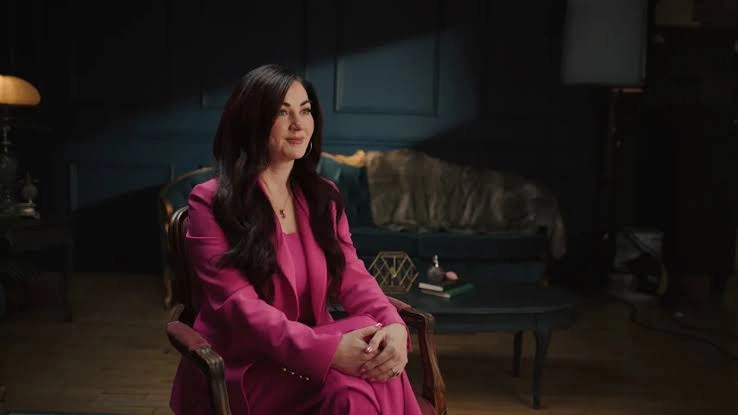
Gattuso and her daughter appear at the FDA’s public hearing, speaking about the strain her vanished desire placed on her marriage and sense of self. Opponents respond with suggestions involving chocolate, pornography, Fifty Shades of Grey, a removable shower head, and switching boyfriends.
Jimmy Fallon jokes that flibanserin’s previous name was wine. The editing does something useful by allowing those remarks to accumulate. One joke is trivial. Several become a pattern. The film’s darkest corridor is built from laughter.
Addyi eventually receives approval with a black box warning. Doctors must complete certification before prescribing it. Pharmacists face their own requirement. Women taking the drug are told to pledge against alcohol consumption.
Chin-Yee cuts this regulatory severity against the comparatively casual guidance surrounding Viagra and alcohol. The juxtaposition is persuasive because it is concrete. It does not require the documentary to announce sexism every thirty seconds, though the documentary occasionally does something close to that anyway.
The Missing Science in the Room
Chin-Yee’s strongest directorial choice is her use of institutional archive. FDA hearings, clinical-trial recordings, television jokes, and advocacy footage create a record of how female sexual desire moved from private distress to public argument. The Peaches track blasting through the opening announces the film’s attitude before the first expert finishes a sentence. This is advocacy with a soundtrack.
That confidence becomes a liability when the film reaches the science of HSDD. Doctors explain the difference between reproductive health and sexual health. Medical professionals admit that their training offered almost nothing on female libido or clitoral anatomy.
Yet the documentary spends surprisingly little time showing how HSDD is clinically diagnosed, how trial outcomes were measured beyond successful sexual events, or why flibanserin’s neurological effects support the claims Eckert makes.
The omission leaves a strange patch of darkness in a film arguing that female sexual medicine deserves serious scientific attention. Chin-Yee can show the FDA asking the wrong questions. She is less rigorous about showing viewers the full set of right ones.
The final political expansion reaches toward the reversal of Roe v. Wade, reproductive restrictions, and attacks on trans healthcare. The connection is clear: bodily autonomy depends heavily on institutions deciding which choices remain available. Yet these subjects arrive late, widening the frame after the Addyi story has occupied most of the picture.
The women describing vanished desire remain the documentary’s sharpest evidence. Their words survive the corporate branding, the FDA bureaucracy, and the film’s occasional impatience with ambiguity. One woman says menopause left her feeling as if someone had slayed her. Chin-Yee holds the testimony long enough for the room to go quiet.
The provocative documentary premiered on March 6, 2026, and is available to stream on Paramount+. The film chronicles the fierce, decade-long battle led by women’s health advocates and entrepreneurs to secure regulatory approval for the first female libido enhancement drug, highlighting deep-seated gender disparities within medical research and institutional health care.
Where to Watch The Pink Pill: Sex Drugs & Who Has Control (2025) Online




Full Credits
Title: The Pink Pill: Sex, Drugs & Who Has Control
Distributor: Paramount+
Release date: March 6, 2026
Running time: 1 hour 28 minutes
Director: Aisling Chin-Yee
Writers: Aisling Chin-Yee, Steve Taylor
Producers and Executive Producers: Julie Bristow, Abby Greensfelder, Vibika Bianchi, Joanna Griffiths, Aisling Chin-Yee
Cast: Cindy Eckert, Josephine Torrente, Irwin Goldstein
Director of Photography (Cinematographer): Nina Djacic
Editors: Steve Taylor
The Review
The Pink Pill: Sex, Drugs & Who Has Control
The Pink Pill: Sex, Drugs & Who Has Control points its harshest light at the institutions deciding which forms of suffering deserve treatment. Aisling Chin-Yee builds a persuasive case from FDA hearings, Barbara Gattuso's testimony, and the restrictions placed on Addyi, though the film leaves too much of the drug's clinical science in shadow. Cindy Eckert's dominance also gives several passages the gloss of advocacy. Still, the women describing vanished desire cut through every corporate and political frame. The system debates risk. They describe absence.
PROS
- Powerful patient testimony
- Sharp examination of medical bias
- Strong FDA hearing material
- Clear political urgency
CONS
- Thin clinical detail
- Eckert dominates the framing
- Advocacy sometimes overtakes inquiry
- Late political expansion feels compressed