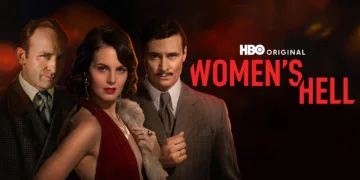























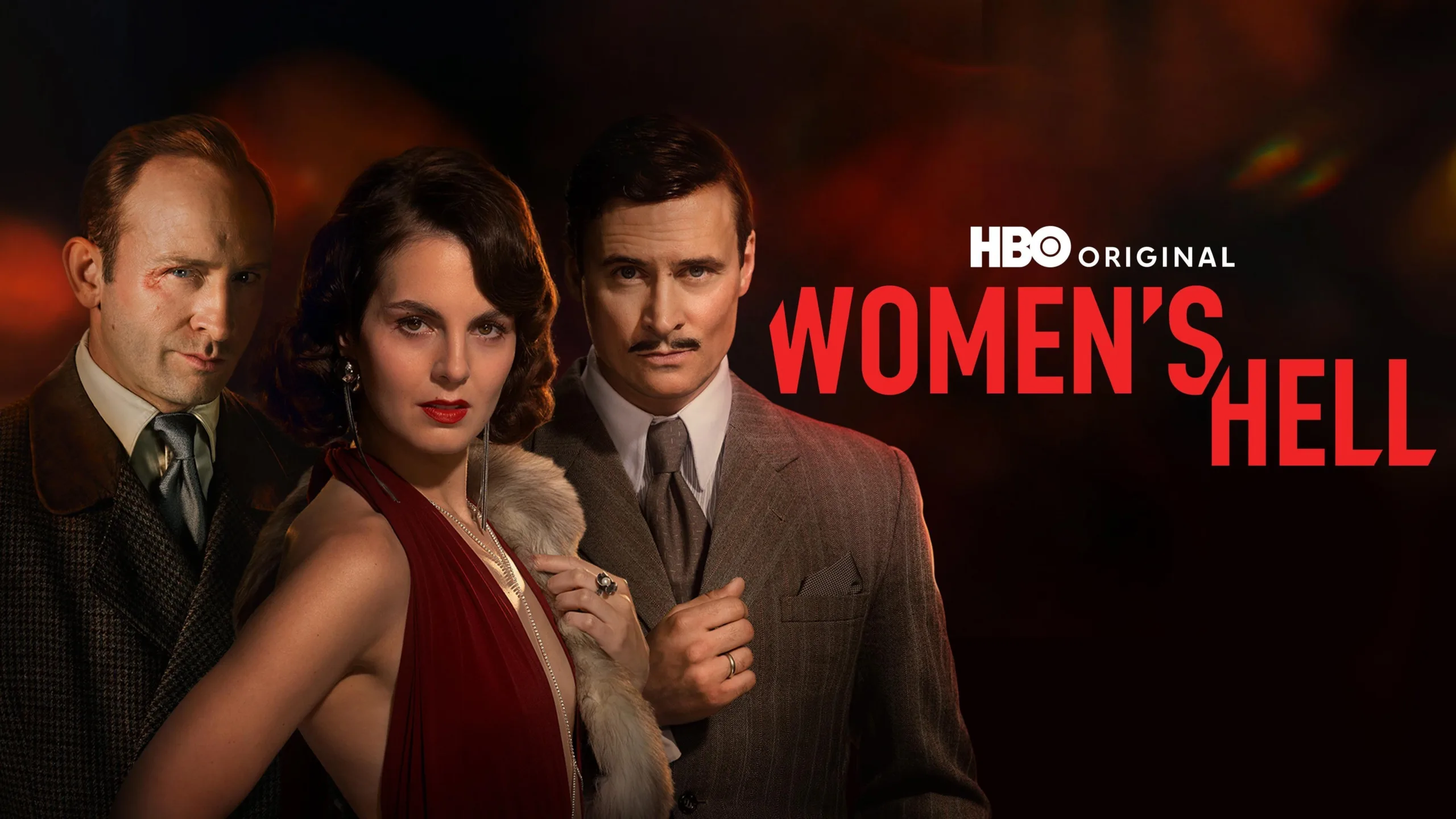

Helena Wróblewska can drive a burgundy roadster through 1930s Warsaw, edit matrimonial advertisements, wear trousers, and disappear into opium-soaked clubs. She cannot tell her husband that she is tired of fertility treatments without being reminded that her independence has terms and conditions.
That contradiction gives Women’s Hell its strongest dramatic spine. Anna Maliszewska’s six-episode Polish series places Agata Turkot’s Helena inside the fashionable offices of Fortuna Amandi, the matchmaking magazine she runs with her husband Maksymilian. Her world looks modern enough to be comfortable. Then the story cuts to Zuza Heckmann biting down while a woman straightens a coat hanger for an illegal abortion in a filthy room.
The transition is deliberately brutal. Helena enjoys privileges unavailable to Zuza, yet the series gradually reveals that both women live under systems controlled by men. The distinction is largely financial. Helena gets doctors offering arsenic treatments and an experimental ovary transplant. Zuza gets a coat hanger. There is very little ambiguity in that comparison. Women’s Hell rarely meets an underline it does not want to underline again.
The Mystery Carries the Argument
Zuza’s death gives the season its crime structure. Her brother Emil, an idealistic medical student played by Hubert Miłkowski, has already challenged senior doctors over their refusal to help poor women facing unwanted pregnancies. He returns home to find his sister dead, then gets arrested for supposedly performing her abortion.
Helena reaches the same case from another direction. Zuza had written to Fortuna Amandi after being raped by a man she met through one of its advertisements, a predator using the name “Honest Jan.” Helena begins tracing the letters, while Emil searches for justice from outside a medical establishment that has made its position quite clear.
This is smart structural engineering. A social drama about abortion law, economic dependence, and sexual violence could easily become six hours of speeches. Giving Helena a predator to find produces forward motion. Cabarets, burlesque dancers, pornographic photographs, opium rooms, and elite social gatherings become stages in an investigation that keeps widening.
The trouble is that the mystery eventually becomes subordinate to the argument. Suspects often enter the story carrying their ideological function in plain view. A populist zealot behaves like a populist zealot. Corrupt men announce their corruption with remarkable efficiency. The search for Honest Jan should tighten the series, yet the script keeps attaching another issue to every clue. Six episodes help. There is simply no time for the show to stop moving and admire its own seriousness for too long.
Helena Loses the Bubble
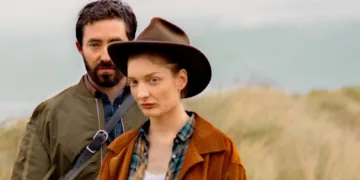
Turkot’s best work comes as Helena learns that Maksymilian’s tolerance of her freedom is conditional. Her early confidence has a physical ease to it. She moves through the magazine office with a playful authority, then returns from fertility appointments increasingly drained.
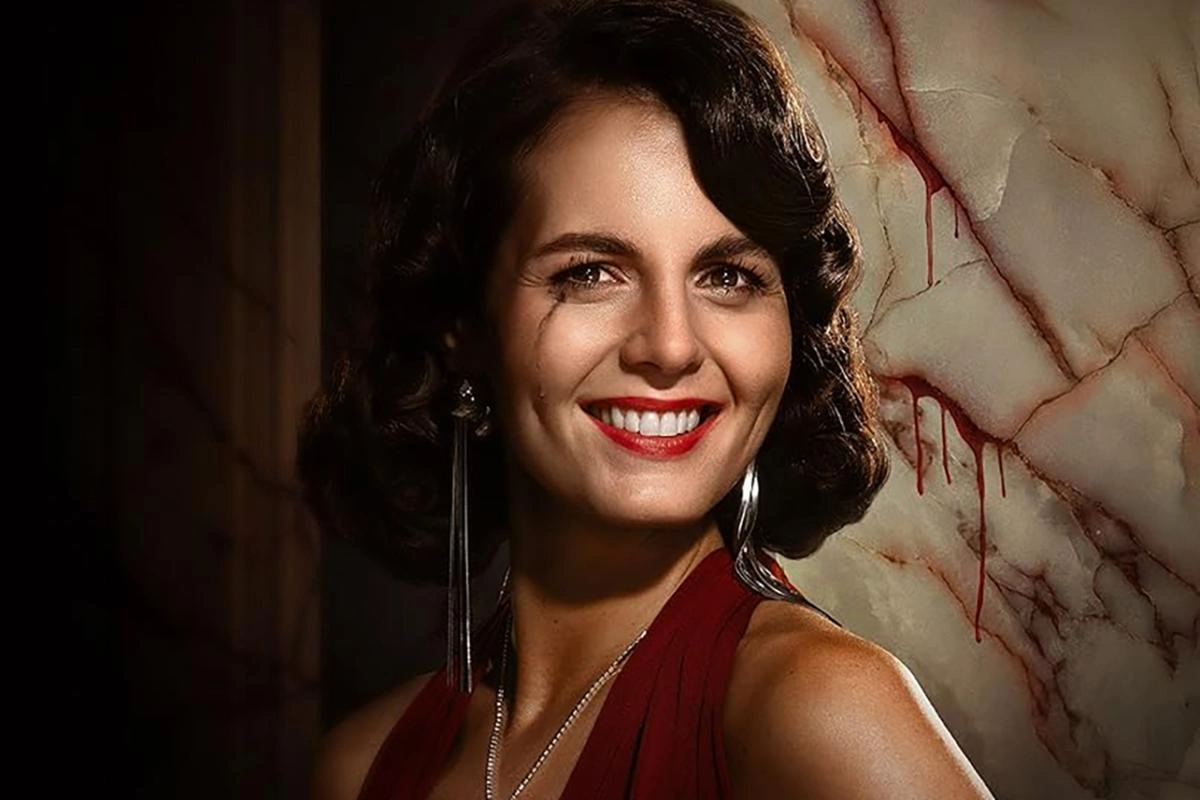
One scene defines the marriage cleanly. Helena explains her exhaustion after months of treatment, including heavy doses of arsenic, and hesitates when doctors suggest implanting tissue from a dead donor. Maksymilian’s response is to tell her to leave her job. He wants a son. If Helena cannot provide one, he can apparently replace the wife and continue the project.
Mateusz Damięcki plays the threat with enough control to make Maksymilian unpleasant before he becomes openly frightening. The script gives him less room. As his manipulation grows, he starts collecting patriarchal villain traits like a man filling out a particularly grim loyalty card.
Ewa’s storyline handles the same ideas with sharper storytelling. Forced into marriage, raped by her husband, and left pregnant, she first throws herself down the stairs. Later, money allows her to approach the same medical establishment that claims abortion is legally impossible. A discreet payment changes the diagnosis. The fetus has died, everyone is told. Place that beside Zuza bleeding to death after the coat-hanger procedure and the series does not need a speech. Sadly, someone usually gives one anyway.
History at Full Volume
The title refers to Tadeusz Boy-Żeleński’s 1930 writings on abortion criminalization and the deaths created by underground procedures. He appears in the series as historical context, while Helena, Zuza, Ewa, and the other women remain the dramatic focus.
Maliszewska frequently uses period design to stage arguments that sound pointedly current. The rape interrogation is the clearest example. A woman reports an assault and finds officers asking about consent and clothing. The scene is built around institutional suspicion rather than the assault itself, with the questions steadily shifting responsibility back onto the victim.
The visual design is far subtler than much of the dialogue. Stylish editorial offices and tailored costumes sit beside dirty medical rooms and dark alleys. Helena’s private nightlife has a sepia haze, filled with bodies, gambling, and opium, while the illegal abortion scenes remove that sensual distance. Nina Simone’s “I Put a Spell on You” creates an intentional temporal fracture, making the 1930s setting feel less safely historical.
The script wants the same immediacy and often forces it. Characters state their positions, explain their intentions, then occasionally clarify what the previous explanation meant. By the fourth social crisis in rapid succession, the series begins to resemble a debate moderator who has lost control of the speaking order.
Yet the episode structure remains frustratingly effective. Helena’s investigation creates clean hooks, Turkot holds the character together as her marriage collapses, and the contrast between expensive medical secrecy and working-class bloodshed gives the story its sharpest scenes. Women’s Hell may explain its ideas far too loudly, but it knows exactly where to place the next complication before the credits roll.
Women’s Hell premiered its six-episode first season on March 6, 2026, and is currently available for streaming on Max. Set against the atmospheric backdrop of 1930s Warsaw in pre-WWII Poland, this gripping historical drama series chronicles a fierce female editor’s dangerous investigation and relentless fight for justice on behalf of sexual assault victims while striving for her own personal autonomy.
Where to Watch Women’s Hell Online


Full Credits
Title: Women’s Hell
Distributor: Max (formerly HBO Max)
Release date: March 6, 2026
Rating: TV-MA
Running time: 47 minutes per episode
Director: Anna Maliszewska
Writers: Magdalena Franczuk, Ewa Popiołek
Producers and Executive Producers: Ewa Puszczyńska, Adrianna Przetacka
Cast: Agata Turkot, Mateusz Damięcki, Hubert Miłkowski, Katarzyna Herman, Maria Kowalska, Bogumiła Bajor, Borys Szyc, Jacek Koman, Piotr Polak, Jacek Poniedziałek, Piotr Trojan, Tomasz Sapryk, Ireneusz Czop
Director of Photography (Cinematographer): Wojciech Zieliński
Editors: Maciej Pawliński
Composer: Wojciech Urbański
The Review
Women's Hell
Women's Hell has a clear structural problem: every idea arrives underlined twice. The crime plot bends suspects around the series' argument, dialogue often explains what a scene has already shown, and several male characters barely survive the trip from thesis to person. Yet Agata Turkot gives Helena a genuine arc, and the class divide between Ewa's paid medical escape and Zuza's coat-hanger abortion supplies the drama with its sharpest storytelling. It is blunt, busy, and frustratingly effective at keeping the next episode playing.
PROS
- Agata Turkot's controlled performance
- Strong class divide in the abortion storylines
- Fast six-episode pacing
- Stylish noir-inflected Warsaw
CONS
- Heavy-handed exposition
- Predictable crime mystery
- Thinly written male characters
- Too many issues compressed together