




























Ola Henningsen calls himself “slow,” a description delivered without embarrassment and with the practical clarity he brings to almost everything. Ragnhild Nøst Bergem takes him at his word, then spends 72 minutes showing how inadequate a single adjective becomes once a person is given enough screen time to escape it.
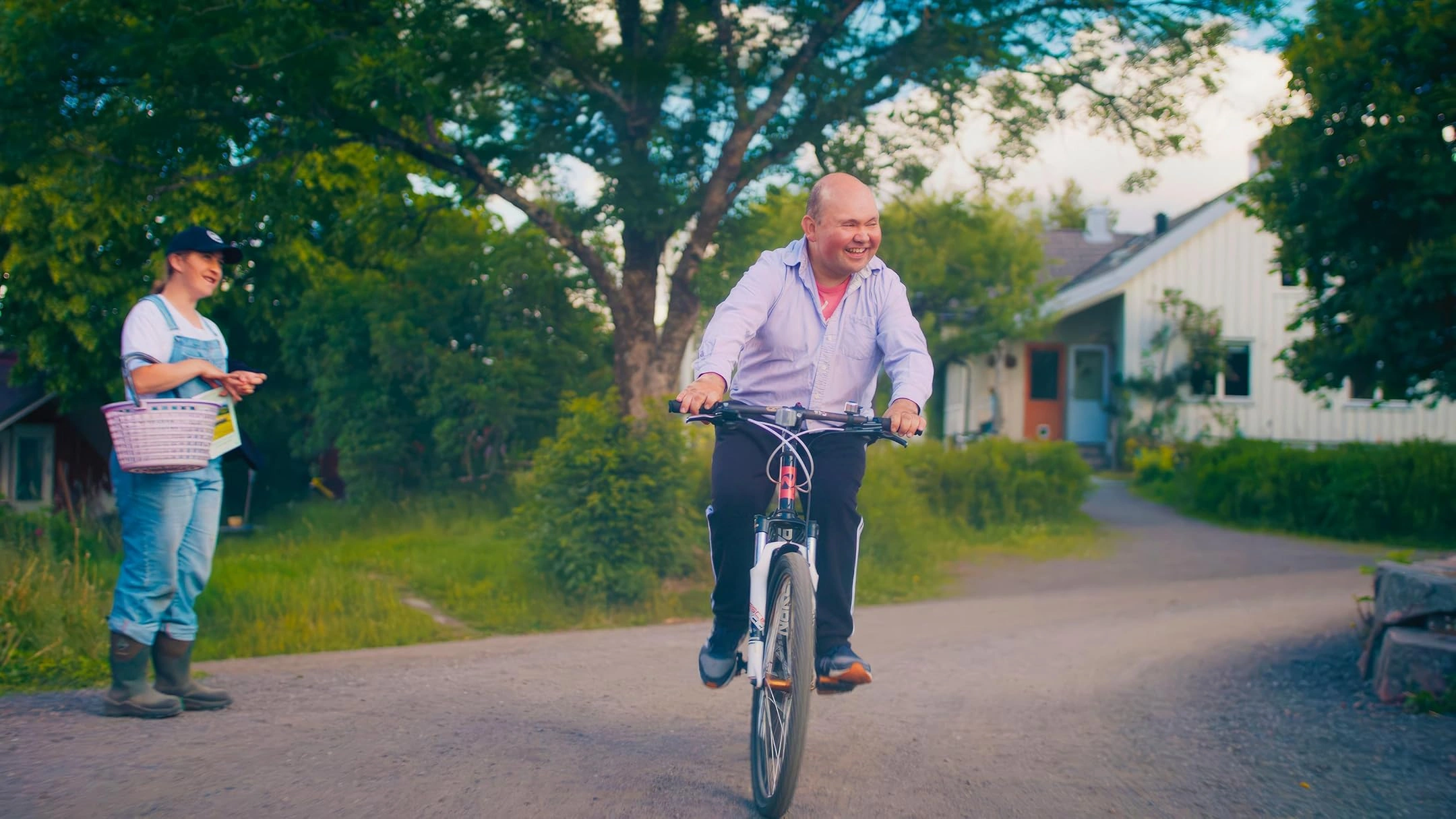
Being Ola observes the thirty-something Henningsen at Vidaråsen, a village community in eastern Norway where people with and without developmental disabilities live and work together. Bergem had known Ola for years before filming him, and the familiarity is evident in the absence of defensive performance.
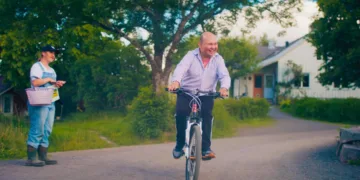
He pulls carrots, works in the herb workshop, chats with other residents, and talks about the pace of his own development. He has reached his fourth year at Vidaråsen by the time the documentary settles into his routine, happy with the community and increasingly curious about what independence might mean. Then Lasse decides to leave.
The Danish care worker has become Ola’s closest friend, or “best friend,” as Ola repeatedly calls him. Lasse is returning to Copenhagen when his period of work ends. Ola understands the explanation. Understanding, the film quietly recognises, is poor protection against abandonment.
No Inspirational Costume Required
Documentaries about disabled subjects still too often arrive with an invisible assignment attached. Someone must overcome. Someone must teach. Someone must convert an audience’s two hours of sympathy into a flattering sense of personal enlightenment. Bergem declines the transaction.
Ola gets to be funny without his humor proving resilience. His wonderfully dry inclusion of “fiascos” alongside sorrow and joy when describing communal life tells us plenty about his character because the film does not circle the line in red ink. Later, his attempt to play “Chopsticks” for a helper’s 70th birthday is allowed its modest scale. The piano performance matters because Ola has chosen to make the gesture, not because Bergem cuts it into a triumph montage.
His writing receives similar treatment. Ola slowly composes a story, eventually reads it aloud, and later visits the Literature House as a host and speaker. Bergem presents these events as steps in a life still taking shape. There is no sudden transformation from dependent resident to confident public intellectual. Ola remains hesitant, methodical, and pleased with what he has managed.
This attention to pace has a cultural significance the film wisely leaves unstated. Modern adulthood is measured through deadlines: education completed by one age, career secured by another, independent housing treated as proof that the administrative project of becoming a person has succeeded.
Ola’s life makes the absurdity of that clock visible. Vidaråsen gives him space to develop through repetition and shared responsibility. Work in the herb workshop or the farm is meaningful partly because it belongs to a social structure where contribution is recognised without demanding identical capacities from everyone.
The camera follows this principle. Conversations are held in close, calm frames, and Bergem rarely uses editing to manufacture a revelation from Ola’s pauses. Eivind Hannisdal’s score remains restrained around moments another documentary might drown in piano chords. Sentimentality is an efficient drug. Being Ola mostly stays sober.
The Trouble With “Best Friend”
The relationship with Lasse is where Bergem’s humane method begins to expose its own limitation. Their affection is visible in ordinary conversation. Lasse listens without patronising Ola, and Ola’s ease around him suggests a bond formed through accumulated daily contact.
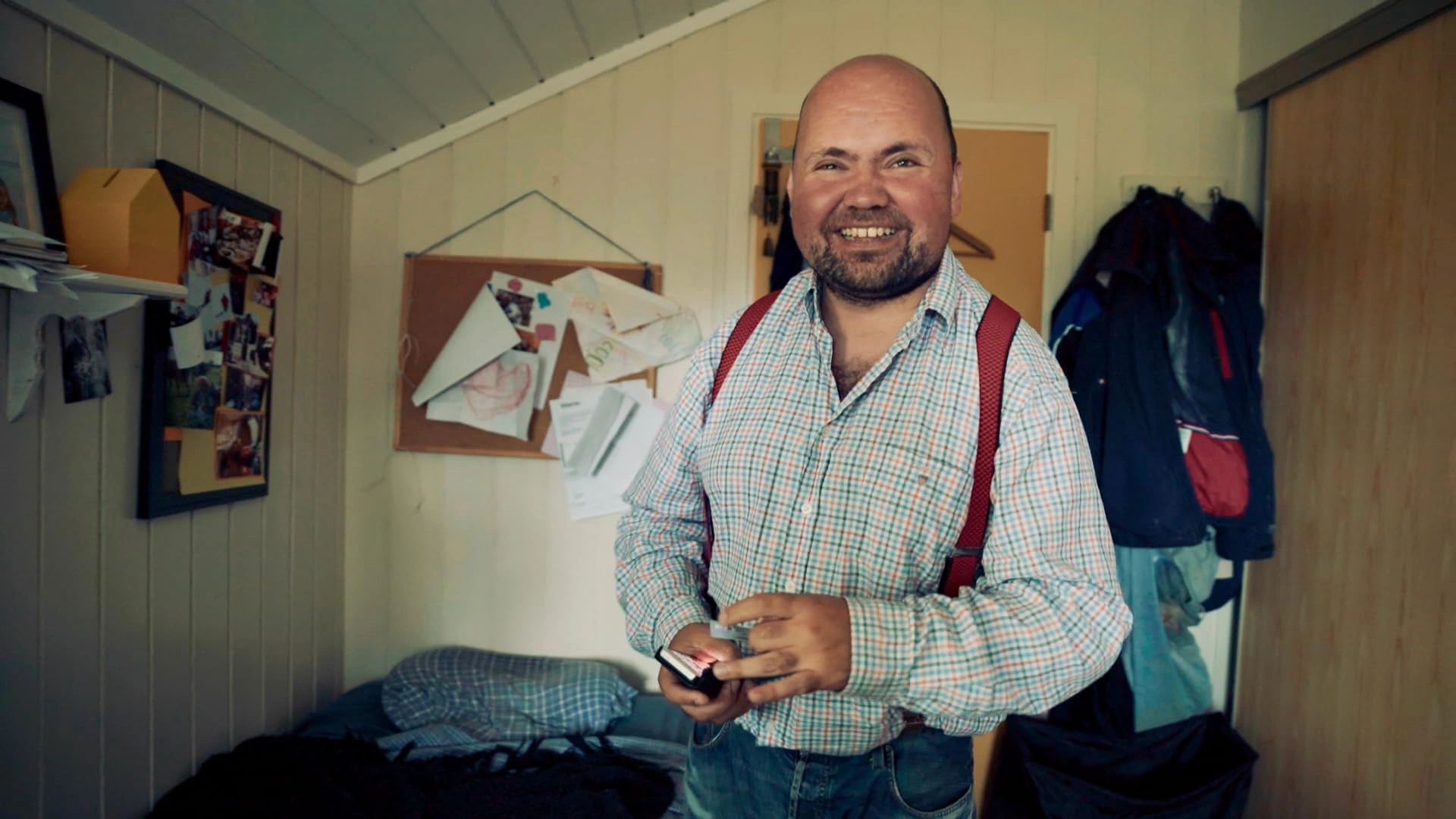
Vidaråsen’s philosophy of shared life complicates familiar distinctions between the person providing care and the person receiving it. Cooking, working, talking, and spending leisure time together create intimacy. Employment contracts remain stubbornly less romantic.
When Lasse returns to Denmark, Ola is hurt. His usual smile does not erase the wound, and Bergem is perceptive enough to let his disappointment linger without demanding a breakdown. The later trip to Copenhagen, with Bergem accompanying him, gives Ola the opportunity to see Lasse again and articulate some of what the departure did to him.
Yet the film grows strangely cautious at the exact point its most difficult idea appears. Lasse is not interviewed alone about his understanding of the friendship. Bergem never seriously tests the possible distance between what “best friend” means to Ola and what it means to a care worker who always had another country, another family, and an employment end date waiting beyond Vidaråsen. The Copenhagen reunion reassures Ola, but reassurance and resolution are different things.
This is not an argument that the friendship is false. The sharper question concerns structures of care that encourage emotional intimacy while retaining an unavoidable imbalance. Ola can experience Lasse’s departure as the loss of his central relationship. Lasse can simply go home. Both men may love each other dearly, and the asymmetry still exists. Bergem can see the pain. She appears less willing to disturb it.
The Safety of Gentleness
Vidaråsen itself receives similarly protective treatment. Its farm, dairy, shop, workshops, cleaning routines, and communal celebrations appear through Ola’s daily movement rather than institutional explanation. This keeps the documentary personal. It also leaves questions about long-term care and independence hovering outside the frame.
Ola speaks about becoming independent, and his public reading at the Literature House provides a concrete sign of growing confidence. Yet leaving Vidaråsen would clearly demand resources and support that the film barely examines. The difference between wanting a larger life and having the social infrastructure required to build one remains unresolved.
Bergem’s restraint is still preferable to turning Ola into a policy case study. His diagnosis is never itemised for viewers like medical evidence. He is permitted privacy around the precise classification of his disability while speaking openly about how it affects him. That choice places authority with Ola rather than doctors, carers, or experts explaining him from a safer intellectual distance.
It also means Being Ola lives and occasionally retreats inside affection. Bergem trusts Ola enough to let his jokes land, his writing take time, and his disappointment remain visible. She trusts the relationship with Lasse less, smoothing its sharpest questions once the two men reunite in Copenhagen. Kindness can reveal a person. It can also become a very soft curtain.
The moving Norwegian biographical documentary Being Ola (originally titled Ola – en helt vanlig uvanlig fyr) originally debuted in Norwegian cinemas in 2023 before making its UK and Irish theatrical premiere on April 3, 2026, via a partnership between Tull Stories and the Oska Bright Film Festival. Cinematic audiences following its current international tour can catch special regional event screenings or watch the film online via independent digital video-on-demand networks. The observational portrait follows Ola, a funny and gracious 30-year-old man living with a mild developmental disability in the inclusive village of Vidaråsen, tracking his emotional path toward independence and personal growth after experiencing a sudden, heartbreaking loss.
Full Credits
Title: Being Ola
Distributor: Oska Bright Film Festival, Tull Stories, Filmweb
Release date: January 19, 2023 (Norway Theater Release), April 3, 2026 (United Kingdom Theater Release)
Running time: 72 minutes
Director: Ragnhild Nøst Bergem
Writers: Ragnhild Nøst Bergem
Producers and Executive Producers: Hans Lukas Hansen, Eirin Høgetveit, Even Vesterhus
Cast: Ola Henningsen, Per Henningsen, Tone Henningsen, Amalie Holtegaard, Lasse Kortegaard Kristensen, Arnkjell Ruud
Director of Photography (Cinematographer): Ragnhild Nøst Bergem
Editors: Ragnhild Nøst Bergem, Helge Billing, Stefan Sundlöf
Composer: Eivind Hannisdal
The Review
Being Ola
Being Ola finds its dignity in refusing to turn Ola Henningsen into a social lesson. Ragnhild Nøst Bergem watches him work, write, joke, perform, and absorb the hurt of Lasse's departure with uncommon patience. That same tenderness sometimes shields the documentary from its hardest questions, especially around care, dependency, and what "best friend" means when one person was employed to live alongside the other. Yet Ola remains vividly himself throughout, which is a rarer documentary achievement than the industry likes to admit.
PROS
- Ola is treated as a full person
- Patient, unobtrusive direction
- Warm humor without sentimentality
- Strong everyday observational detail
- Intimate Ola and Lasse scenes
CONS
- Lasse's perspective remains underexplored
- Avoids harder questions around dependency
- Ola's future independence stays vague