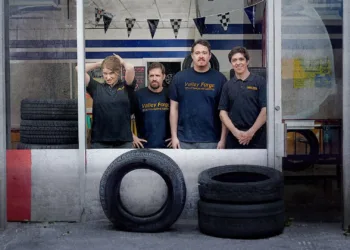


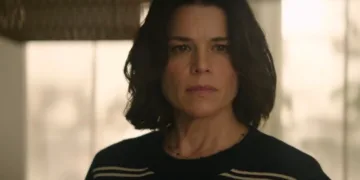
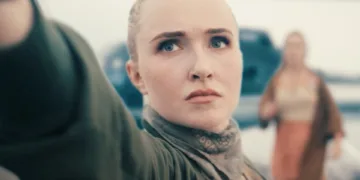

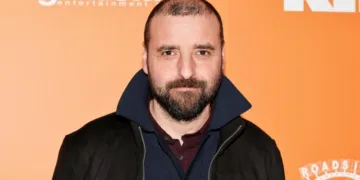



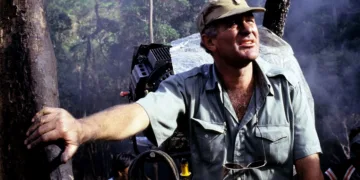
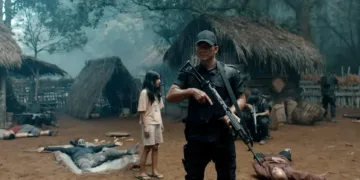













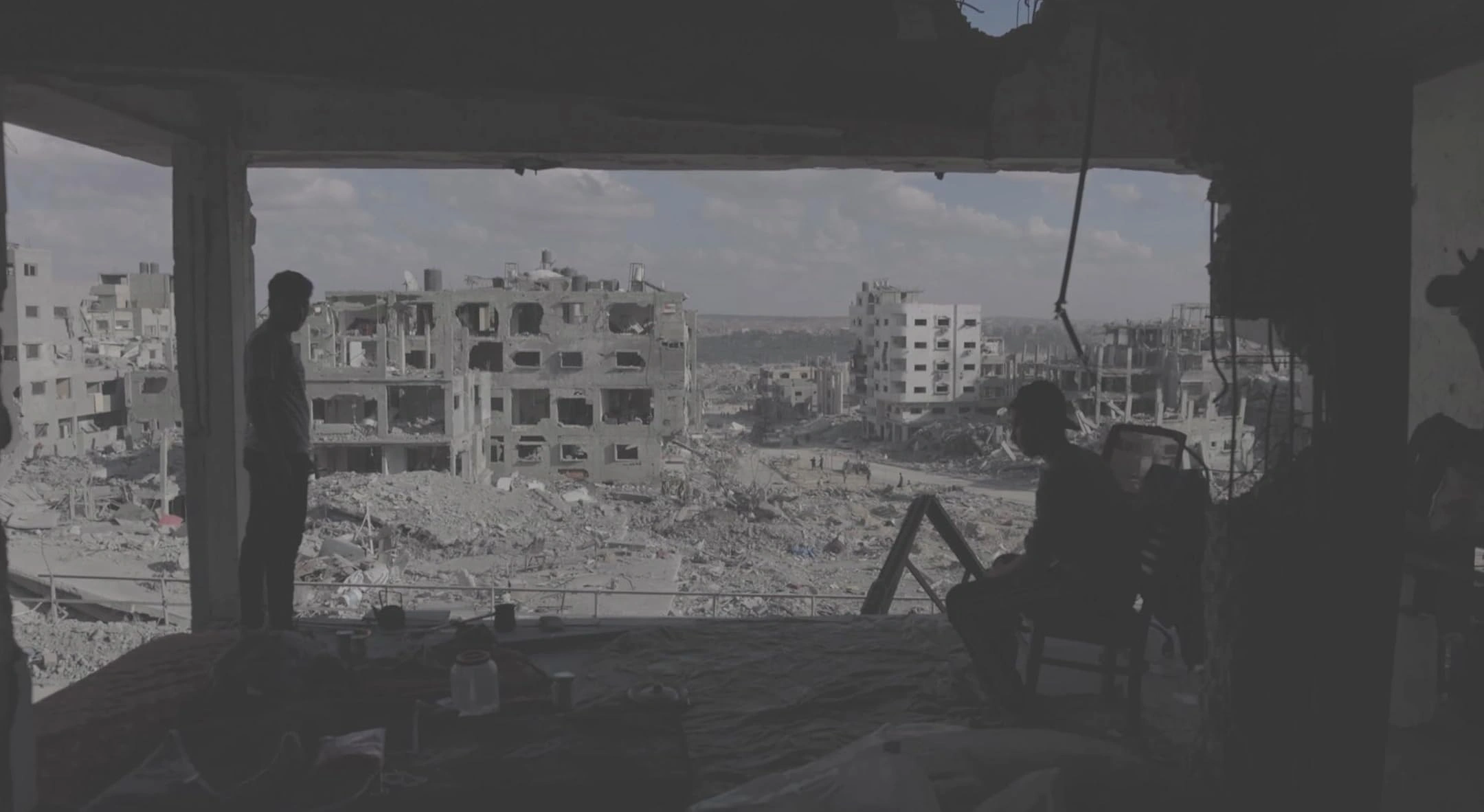

Clinical language has an unusual breaking point. Doctors can describe blood loss, infection, amputation, and organ failure with the calm precision their work requires, yet Life Support keeps watching for the second when vocabulary stops protecting the speaker. Professor Nick Maynard reaches it gradually. Tanya Haj-Hassan reaches it before the camera and wipes away tears. Victoria Rose pauses while recalling a girl whose face had been torn apart by bullets. Daniele Rugo does not cut away from these fractures.
The 93-minute documentary is structured around international doctors who entered Gaza on medical missions between late 2023 and summer 2025. With foreign journalists largely unable to report independently from inside the territory, Maynard, Rose, Haj-Hassan, James Smith, Deborah Harrington, Khaled Dawas, and Ana Jeelani become accidental chroniclers. Their phones record what professional cameras cannot reach.
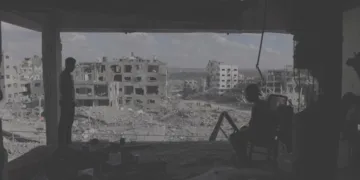
Rugo begins with memories of an earlier Gaza, its shops, universities, markets, and busy streets. The choice matters because the later footage of rubble has an antecedent. Destruction gains moral scale when the frame remembers what occupied the empty space.
A Hospital Without Walls
James Smith recalls trying to count explosions on his first night in Gaza. He stops after several hundred. The statement arrives in a talking-head setup so visually plain that the number initially seems abstract. Then Rugo cuts into handheld hospital footage.
Patients lie on floors. Surgeons step around bodies. Corridors and staircases hold displaced families. The phone cameras shake, lose focus, and occasionally point at spaces no cinematographer would choose as a composition. Their technical inadequacy becomes part of their evidentiary power. These images were recorded while someone was trying to work.
Victoria Rose’s 23 suitcases provide the film with one of its clearest visual measures of collapse. She fills them with surgical equipment donated by British colleagues. On a later trip, she is allowed to enter with one bag and carries a single tray of instruments. Rugo needs no graphic to explain the reduction. Twenty-three becomes one.
Also Read





The shortages grow increasingly specific: antibiotics, blood, gauze, sterile tools, electricity, pain medication, soap, sanitary products, baby formula. Patients survive operations and die from infections days later. A palliative-care doctor describes the absence of pain medication for dying cancer patients as torture.
The Palestinian medical workers occupy a harsher plane of the same crisis. Maynard describes a surgeon sitting during an operation because hunger leaves him close to fainting. Another doctor brings her teenage children into the hospital so the family will remain together if they are killed. The camera offers little relief from such testimony because relief would be a form of editorial dishonesty.
Architecture as a Target
Rugo’s argument changes scale through montage. Hospitals give way to schools, religious buildings, a cancer centre, and an IVF facility containing thousands of embryos. The editing starts to read infrastructure as a body. Remove enough organs and the organism cannot survive.
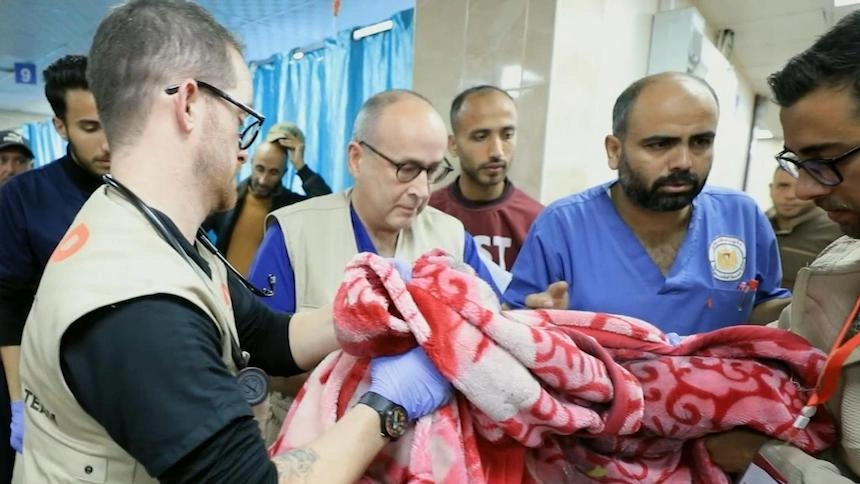
This is where Life Support moves from witness document to political accusation. Israel has said Hamas used hospitals for military purposes. The doctors interviewed state that they saw no evidence of militants in the hospitals where they worked, including facilities they say they could access freely. Rugo places these statements against images of Al-Shifa’s destruction and footage of mass graves after the hospital’s devastation.
Maynard’s shifting language gives the film a moral progression. He says he once resisted the word genocide. His resistance matters. A witness arriving with a conclusion would be easy to dismiss; Rugo instead records the collapse of Maynard’s reluctance. By the final stretch, his calm has hardened into anger directed at governments he believes have tolerated the destruction.
The visual grammar also contracts around children. Haj-Hassan describes wards dominated by young patients and elderly civilians. Doctors report acute malnutrition in 70 to 80 percent of admitted children by May 2025. Premature infants are given sugar water when formula cannot be obtained. A medical designation for a wounded child with no surviving family appears with horrifying frequency. Here, numbers cease behaving like statistics. Hirakubo’s editing keeps fastening them to faces.
Images That Refuse Distance
Rugo largely rejects formal ornament. Interviews are front-facing and conventionally lit. The camera seldom prowls around its subjects or manufactures dramatic geometry. In a documentary built from accusations of immense moral consequence, such restraint functions almost like neutral lighting in an interrogation room. The face is exposed. The viewer decides how long to keep looking.
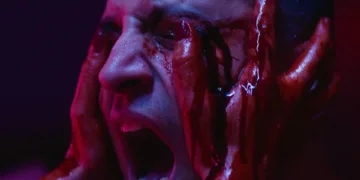
The harsher visual material destroys that neutrality. Handheld clips show amputated bodies, disfigured children, operations conducted on floors, bombed streets, and crowds gathering for food. One explosion tears into a crowd with such suddenness that the image seems to violate the rhythm of the edit itself. There is no elegant visual transition into horror. Horror simply enters the frame.
Masahiro Hirakubo’s editing understands accumulation as pressure. Testimony follows footage, footage returns to testimony, and each repetition makes the doctors’ controlled delivery harder to hear as detached evidence. Their faces become secondary battlefields. Haj-Hassan speaks at the United Nations through tears. Rose’s recollections catch in her throat. Maynard’s measured cadence finally gives way to fury.
The score from Habib Shehada Hanna, Robert Del Naja, and Euan Dickinson mixes Middle Eastern cadences with European instrumentation during montages of damaged buildings and emptied streets. The fusion mirrors the film’s central chain of transmission: Palestinian devastation carried outward through international witnesses.
Occasional sound disconnects and rough edges remain, yet polish would be a strange ethical aspiration here. Life Support keeps returning to broken footage because broken footage is what survived. The camera does not redeem anyone. It records who was still standing when the lights went out.
The harrowing British independent documentary Life Support celebrated its world premiere at Sheffield DocFest on June 13, 2026, before launching its theatrical release in United Kingdom cinemas on July 10, 2026. Audiences can see the feature through Dartmouth Films’ scheduled theatrical screenings or stream the online digital festival platform releases during specific regional broadcast windows. Built from first-hand video diaries, the project documents the urgent humanitarian mission of international healthcare workers who breached the blockade into Gaza to provide emergency medical treatment alongside local Palestinian medics inside overwhelmed hospitals.
Full Credits
Title: Life Support
Distributor: Dartmouth Films
Release date: June 13, 2026 (Sheffield DocFest), July 10, 2026 (United Kingdom Theater Release)
Rating: 15 (BBFC)
Running time: 93 minutes
Director: Daniele Rugo
Writers: Daniele Rugo
Producers and Executive Producers: William Parry, Christopher Hird, Susan Sarandon, Paul Weller, Melissa Barrera, Asif Kapadia
Cast: Dr. Nick Maynard, Dr. Tanya Haj-Hassan, Dr. Victoria Rose, Dr. Khaled Dawas, Dr. Graeme Groom, Dr. James Smith
Director of Photography (Cinematographer): Mahmoud Abou Hamda, Suleiman Hejjy
Editors: Masahiro Hirakubo
Composer: Robert Del Naja, Euan Dickinson, Habib Shehada Hanna
The Review
Life Support
Life Support finds its moral force in restraint. Daniele Rugo lets doctors describe operating on floors, treating starving children, and watching medical infrastructure disappear while handheld footage supplies images their clinical vocabulary can barely contain. The talking-head construction can feel visually austere, and several technical rough edges remain, yet Masahiro Hirakubo's editing turns accumulation into pressure. Each testimony narrows the space for distance. By the time Nick Maynard's composure fractures into anger, the documentary has made spectatorship itself deeply uncomfortable.
PROS
- Devastating eyewitness testimony
- Precise, cumulative editing
- Unfiltered frontline footage
- Measured political argument
- Haunting musical texture
CONS
- Conventional interview structure
- Occasional sound disconnects
- Relentlessly difficult imagery