

























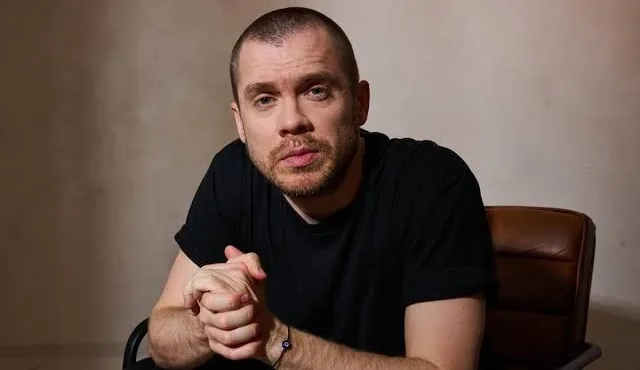

Gary Stevenson built his fortune by expecting Britain to stay miserable. The former Citibank interest-rates trader made millions after betting against a strong economic recovery following the financial crisis, a career move that sounds uncomfortably like the premise of a political parable. He grew up working class in Ilford, studied maths and economics at LSE, became a millionaire at 25, then left banking and turned his attention to the inequality that had made his trades so profitable.
How to Get Filthy Rich With Gary Stevenson gives his campaign an hour of Channel 4 television. His central proposal is attractively easy to repeat: tax wealth above £10 million at 2 per cent annually, potentially raising around £24 billion. Stevenson already explains this argument to over 1.6 million Garys Economics subscribers on YouTube. Television, irritatingly for anyone used to controlling the upload button, brings people who talk back.
The Britain Gary Remembers
Stevenson is most persuasive sitting with his father, a retired Post Office worker who spent 37 years in the job. Their conversation gives the programme something his direct-to-camera speeches often lack: a measure of time. His father could earn a modest wage and still reach financial security. Stevenson looks at young workers following familiar instructions about education and employment and argues that the promised destination has quietly disappeared.
The same point sharpens during his return to his old school. Dan Moynihan, Stevenson’s former head teacher and now the leader of an academy group educating around 44,000 children, says 43 per cent of his pupils receive free school meals. He describes levels of poverty he has never previously seen.
His warning about democracy is even harsher. People need to believe effort has some connection to achievement. Remove that connection for long enough and electoral politics begins to look like a shop selling empty boxes.
The documentary finds equally blunt evidence in Nathaniel, a former ambulance worker living in a van in Bristol because he cannot afford a flat, and in a struggling family in Stockport. Stevenson listens during these encounters. He asks about rent, work and expectations, and the camera gives people room to describe the arithmetic of their lives. It is revealing that a man famous for explaining economics becomes strongest when he stops explaining.
The Rich Answer Back
Francis Fulford has no interest in serving as a convenient aristocratic villain. The Devon landowner laughs at Stevenson’s proposal, calls it “Noddy land” economics and raises the problem of people whose wealth exists largely in assets rather than disposable income. If land valuations determine the tax, Fulford argues, owners may face bills their cash flow cannot meet. Stevenson answers from the moral urgency of inequality. Fulford keeps asking about the mechanism.
The pattern becomes harder to ignore at Bassim Haidar’s One Hyde Park penthouse. Haidar’s objection is simple: wealth moves. Introduce an aggressive tax and rich investors can move themselves, their capital and their businesses. Stevenson pushes his case for redistribution, yet the scene never develops into the detailed examination the premise deserves.
Andrew Henderson of Nomad Capitalist is considerably less polite. He argues that life is unfair and accuses people concerned about inequality of feeling entitled to rich people’s money. The exchange has the unpleasant electricity producers presumably hoped for. Stevenson’s meeting with property investor and finance personality Samuel Leeds follows a similar route, with questions about Leeds’s expensive courses and business model sending the conversation rapidly downhill.
These scenes expose a problem larger than Stevenson’s temperament. Social platforms have created an entire class of political communicator trained to speak vertically: presenter at the top, audience below, comments arriving later. The television interview is horizontal. Someone can interrupt the thesis halfway through and demand an answer to sentence three. Stevenson repeatedly arrives with a powerful speech. His interviewees keep handing him a follow-up question.
The Question Channel 4 Leaves Unanswered
Tax lawyer Dan Neidle finally turns that weakness into the programme’s central event. He calls the wealth-tax pitch “populist claptrap” and tells Stevenson that he cannot separate his emotional reaction to inequality from a rational assessment of the best policy tools available. Stevenson, normally so comfortable with certainty, looks rattled.
Neidle’s accusation is severe because the documentary has already shown why Stevenson is emotional. His father, his old school and Nathaniel’s van are the source of his political energy. The programme then treats emotion and policy expertise as opponents entering a boxing ring, rather than asking how one might discipline the other.
Here lies Channel 4’s missed programme. Stevenson could have spent an hour with tax economists, lawyers and policy specialists stress-testing his 2 per cent proposal. Let Haidar raise capital flight. Let Fulford raise asset liquidity. Let Neidle propose other mechanisms. Then make Stevenson respond, revise, reject or concede on camera. Television has the space for intellectual friction that YouTube often edits into separate camps. Curiously, the documentary keeps fleeing that friction for another location.
Stevenson’s closing monologue returns to his grandmother’s lifetime and the social progress achieved across her generation. He asks what Britain will change for its grandchildren and declares that he knows what he is betting on. The delivery is forceful, familiar and perfectly suited to the campaigner who has built a huge online following. Then the hour ends, just when somebody should ask the next question.
The provocative documentary How to Get Filthy Rich with Gary Stevenson premiered on Channel 4 in the United Kingdom on July 8, 2026. Viewers can watch the film on the Channel 4 streaming service, where it remains available for on-demand viewing following its initial broadcast. The film follows former professional financial trader Gary Stevenson as he travels across the country to investigate the widening wealth gap, interviewing both those severely affected by inequality and the super-wealthy individuals who profit from the current economic landscape.
Full Credits
Title: How to Get Filthy Rich with Gary Stevenson
Distributor: Channel 4
Release date: July 8, 2026
Running time: 90 minutes
Director: Trevor Docksey
Writers: Gary Stevenson
Producers and Executive Producers: Nancy Strang, Mindhouse Productions
Cast: Gary Stevenson, Bassim Haidar
The Review
How to Get Filthy Rich With Gary Stevenson
Gary Stevenson has the anger, biography, and camera-ready certainty for campaigning television. How to Get Filthy Rich With Gary Stevenson discovers the awkward part when its host meets people who can answer back. His conversations with his father and struggling workers give inequality a human scale, while Dan Neidle exposes how little the programme has prepared Stevenson for policy scrutiny. Channel 4 finds a fascinating clash between YouTube persuasion and television interview form, then leaves the sharper programme half-made.
PROS
- Strong personal economic framing
- Revealing generational comparisons
- Lively ideological confrontations
- Dan Neidle exchange cuts deep
CONS
- Sprawling hour-long structure
- Stevenson struggles with follow-ups
- Wealth-tax mechanics stay thin
- Debate repeatedly becomes collision