

























Abashiri Prison has been looming over this story for so long that reaching it should feel like relief. Instead, the frozen compound becomes a pressure chamber where every promise, grudge, and hidden motive starts pressing against the walls.
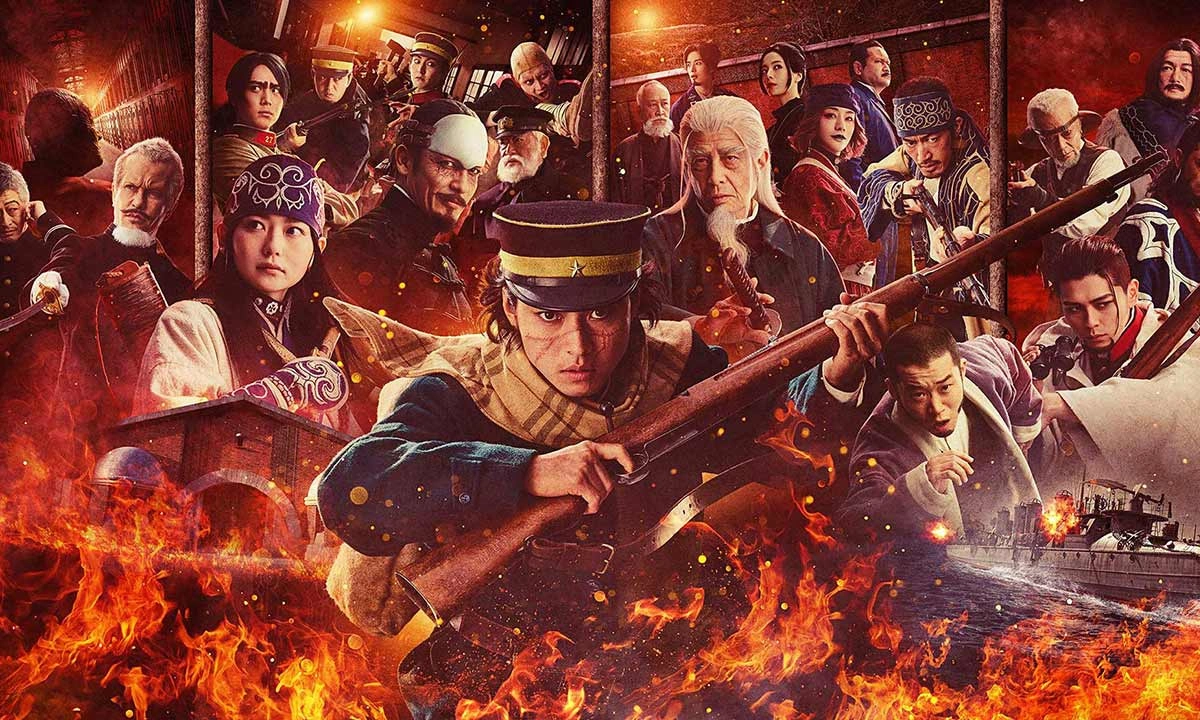
Golden Kamuy: Assault on Abashiri Prison continues Saichi Sugimoto and Asirpa’s search for Noppera-Bo, the faceless prisoner who may be Asirpa’s father and may know where the stolen Ainu gold is buried. They arrive with their own uneasy coalition, while Lieutenant Tsurumi brings the 7th Division and Toshizo Hijikata advances with a group of former convicts. Each faction wants something different from the same man.
That collision gives the film an immediate emotional charge. Sugimoto once needed the treasure to fulfil a promise made after the Russo-Japanese War. Here, the gold matters less whenever Asirpa is threatened. Her need for the truth has become his priority, and the change is visible in where he looks during a crisis. He watches her before he watches the exits.
The film understands that the raid matters because of who has reached it, not because Abashiri contains another clue. Every corridor carries several competing stories into the same space. Getting there, sadly, takes longer than it should.
Comedy at the Wrong Moment
The route to the prison keeps splitting among Sugimoto’s group, Tsurumi’s soldiers, Hijikata’s faction, and the separate troubles facing Tanigaki and Inkarmat. This gives the narrative plenty of motion, yet motion and momentum are different things.
The clearest failure arrives when Asirpa learns something disturbing about her father. Her reaction should be allowed to settle. The scene instead shares its attention with several men wrestling in their underwear after exposure to fish pheromones. The joke belongs to the franchise’s established taste for absurd bodies and frantic masculine posturing, but the placement makes Asirpa’s fear feel like background material.
The issue is not the existence of comedy. Golden Kamuy has always found warmth in strange meals, grotesque personalities, and sudden departures from solemnity. Its tonal jumps can make the characters feel alive inside a violent historical adventure. Here, the editing occasionally treats every mood as equally urgent. A painful revelation and a broad gag crash together, and the gag wins through sheer volume.
Other detours have the same thinness. Tanigaki and Inkarmat spend enough time together for their affection to be understood, but the film lacks a decisive exchange that explains why either would risk death for the other. Tsurumi’s soldiers are so devoted to their commander that their eccentricity starts dissolving his menace. Hiroshi Tamaki keeps Tsurumi controlled, changing plans without betraying panic, while the men around him sometimes resemble an enthusiastic fan club carrying rifles.
The Trust Between Them
Sugimoto and Asirpa remain the reason the story can survive its crowded structure. Their bond grows through practical actions rather than declarations, and that restraint suits both characters.

Kento Yamazaki handles Sugimoto’s violence with sharp physical clarity. His body always seems ready to absorb another blow, which preserves the character’s “Immortal” reputation without making him feel invulnerable. His best work comes during the confrontation connected to Noppera-Bo. Sugimoto has spent years chasing answers, yet his frustration emerges from fear for Asirpa rather than hunger for gold. Yamazaki tightens his expression and keeps the emotion contained, making the scene feel like pressure escaping through a narrow crack.
Anna Yamada gives Asirpa a different kind of strength. She does not command every fight, but she influences nearly every meaningful choice. When the possibility of Noppera-Bo being her father becomes real, Yamada plays the moment through caution. Asirpa studies faces, pauses before accepting an answer, and measures each claim against what Kiroranke and others have told her.
Their affection is strongest when the film leaves it unnamed. Sugimoto protects Asirpa, but he does not reduce her to someone who needs rescue. She trusts him, but she continues questioning the motives of everyone around them. The relationship feels earned because neither character has to become smaller for the other.
Inside Abashiri
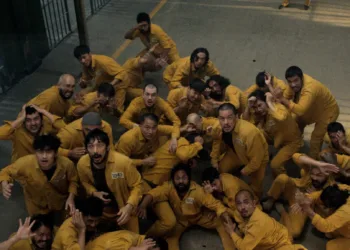
Once the attack begins, the film finally turns its crowded cast into an advantage. Corridors, cell blocks, walls, guard positions, and escape routes divide the raid into clear stages. Each faction enters with a plan, loses control of it, then adapts to the next betrayal or blocked passage.
The action changes emotional temperature depending on who is fighting. Military gunfire creates frantic movement across the compound. Sugimoto’s close combat feels immediate and desperate. Hijikata’s duel with another warrior from the end of the samurai era slows the film into something mournful.
Hiroshi Tachi gives that duel its weight. Hijikata’s posture carries pride, exhaustion, and the knowledge that history has already moved past men like him. The fight requires one combatant to fall before the other can leave, which turns every strike into a choice between survival and an old code that no longer has a country.
The production design supports the raid without burying it. Uniforms identify competing forces at a glance, the prison interiors create tight channels of danger, and the snow outside preserves the harsh beauty that defined the earlier chapters. Even with several groups moving at once, the staging keeps the physical objectives readable.
The mysteries surrounding Noppera-Bo, Kiroranke, and the massacre become less stable as new information arrives. Answers create fresh suspicion rather than closure. The film stops while those consequences are still spreading, leaving the raid suspended between emotional payoff and franchise machinery. Sugimoto and Asirpa leave Abashiri changed. The story barely gives them time to feel it.
This action-packed film serves as the live-action sequel to the Golden Kamuy series, which originally premiered in Japanese theaters on March 13, 2026. The story follows Sugimoto and Asirpa as they infiltrate the impenetrable Abashiri Prison to confront the mysterious Nopperabo and uncover the truth behind the hidden Ainu gold.
Where to Watch Golden Kamuy: Assault on Abashiri Prison (2026) Online


Full Credits
Title: Golden Kamuy: Assault on Abashiri Prison
Distributor: Toho (Theatrical), Netflix
Release date: March 13, 2026 (Japan)
Running time: 122 minutes
Director: Kenji Katagiri
Writers: Tsutomu Kuroiwa, Satoru Noda
Producers and Executive Producers: Credeus, Shueisha, WOWOW
Cast: Kento Yamazaki, Anna Yamada, Gordon Maeda, Yuma Yamoto, Asuka Kudo, Shuntaro Yanagi, Ryohei Ohtani, Taishi Nakagawa
Composer: Yutaka Yamada
The Review
Golden Kamuy: Assault on Abashiri Prison
Golden Kamuy: Assault on Abashiri Prison finds its strongest pulse when Sugimoto and Asirpa move through danger with a trust neither needs to announce. The crowded detours and badly timed comedy sometimes break that connection, especially when Asirpa’s discoveries compete with the pheromone-fuelled wrestling scene. Once the factions enter Abashiri, the film regains control. The shifting escape routes, Hijikata’s mournful duel, and Sugimoto’s restrained fury turn the raid into a thrilling emotional rupture, even as the abrupt ending leaves its impact suspended between chapters.
PROS
- Sugimoto and Asirpa’s quiet bond
- Exciting, readable prison assault
- Hijikata’s weighty final duel
- Strong period production design
- Varied action rhythms
CONS
- Poorly placed comic interruptions
- Too many narrative detours
- Thin Tanigaki and Inkarmat romance
- Tsurumi’s soldiers lose menace
- Abrupt stopping point