

























![Kingdom Hearts Collection [I-III] Review](https://gazettely.com/wp-content/uploads/2026/10/Kingdom-Hearts-Collection-I-III-1-360x180.webp "Kingdom Hearts Collection [I-III] Review: KHII Holds Steady as Newer Entries Fluctuate 37")



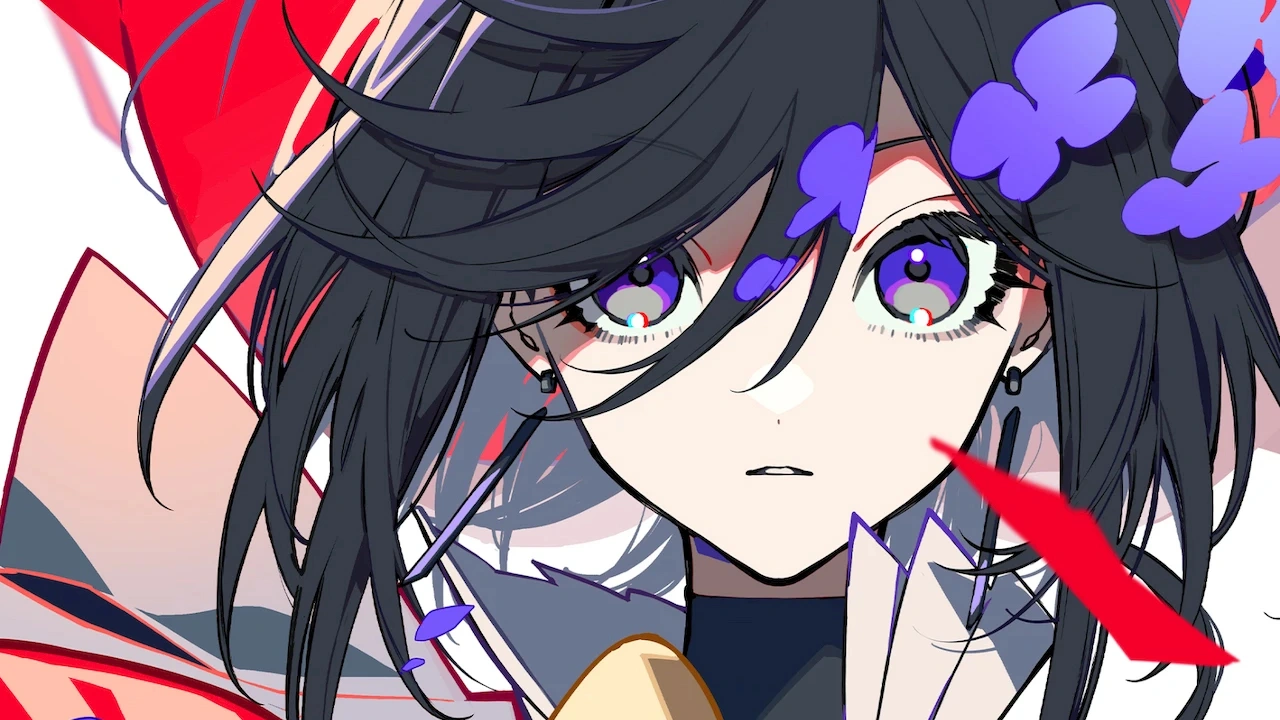

Sapphire is told to survive before she has learned what survival will cost. Her dying mother gives the order as Nergal destroys Silverland, leaving the princess without a family, a kingdom, or any clear place in the world. Yuki Igarashi’s The Ribbon Hero turns Osamu Tezuka’s Princess Knight into a refugee fable shaped by disaster, magical transformation, and the pressure to keep helping people while grief keeps reopening behind you.
That premise carries real emotional force. Saaya gives Sapphire a bruised hesitation that keeps the character from becoming pure cheerfulness, especially when memories of Silverland interrupt her new life in Goldland. The film understands that survival can feel like betrayal when everyone else is gone. It has a harder time making Sapphire’s relationships feel equally lived-in.
A Hero Without Enough Time
Goldland gives Sapphire work in the mines, where crystals are gathered to appease the Nergal. When she falls into a crystal pool, her ribbon activates and transforms her into Princess Knight. The scene should be the point where grief, labor, and resistance lock together. Instead, it mostly launches the expected battle-anime machinery.
The transformation looks graceful, and Sapphire’s impulse to protect people is easy to support. Yet her kindness often functions as a substitute for personality. Zirco remains loyal, Velvet watches from the edges, and Sapphire’s growing group of companions begins echoing her belief in helping others. Their devotion arrives faster than the film earns it. Important changes happen between scenes, so the audience is asked to accept bonds that were never given enough space to form.
The delayed explanations create a similar distance. The main antagonist enters the story properly during the final half-hour, while the Nergal’s purpose becomes clear near the final 20 minutes. Until then, exposition keeps filling the gaps. Sapphire’s story is simple enough to hurt cleanly, but the screenplay keeps wrapping that hurt in mythology it has postponed explaining.
This version also leaves behind much of the gender tension that made Tezuka’s heroine so influential. The original Princess Knight moved between masculine and feminine roles in ways that challenged the limits placed on girls in postwar entertainment. Here, Sapphire is framed as a conventionally feminine savior whose ribbon grants combat power. The change gives younger viewers a direct heroine, yet it also makes this adaptation feel safer than the work it inherits.
Curtains Around the Disaster
The film’s richest choices come from theatre. Its seven acts are divided by rising curtains, intervals, puppet cutouts, shadow play, and scenes arranged with the depth of a stage. That design connects the film to the Takarazuka Revue, whose all-female performances helped shape Tezuka’s original manga. Characters often seem positioned for an audience inside the frame, and emotional peaks arrive with the force of musical cues.
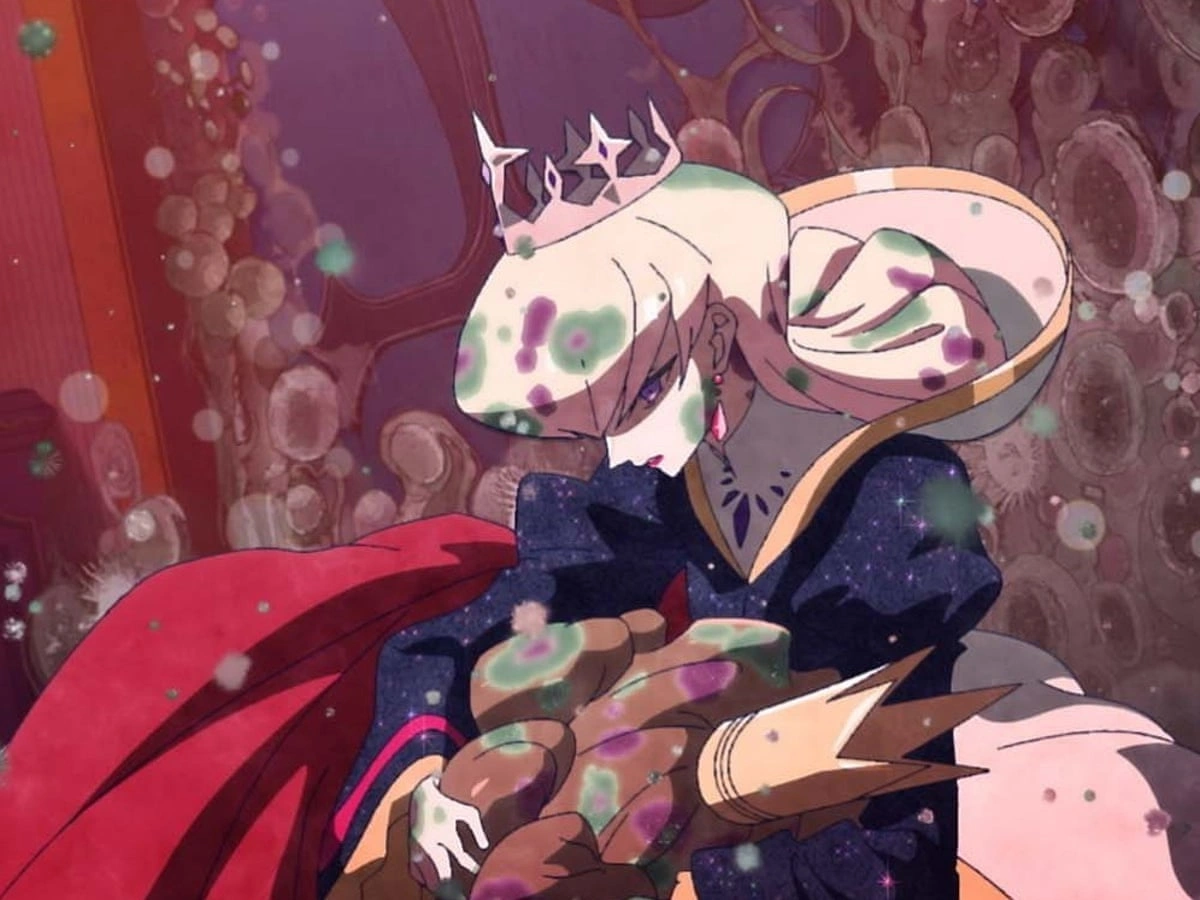
This structure creates beauty and distance at once. Sapphire’s memories appear in black and white, echoing Tezuka’s drawings, and they cut into the present as if Silverland is still collapsing behind her. The repetition makes grief feel continuous. Yet the stage framing can turn suffering into display. Refugees flee by ship, miners sustain Goldland’s bargain with the Nergal, and an end-times religious group prepares to sacrifice immigrants and the poor. These images have weight, but the film rarely stays with the systems producing that suffering.
Souls become bright cartoon hearts that can be held, stolen, and consumed. For younger viewers, that image gives loss a shape they can understand. It also makes the pain easier to look at. The political questions remain visible around the edges while the heart itself becomes a clean symbol, glowing safely in someone’s hand.
The mixed animation follows the same pattern. Collage spaces, chibi breakdowns, black-and-white flashbacks, and Gekidan Inu Curry’s cutout sensibility give the film restless visual energy. The Nergal creatures, rendered in generic 3D CG, feel imported from a different and far less imaginative production.
The Film Breaks Free
Everything becomes looser in the final battle. Classical music crashes into rubber-hose movement, bodies stretch through cartoon physics, and a rabbit-like villain turns combat into slapstick. The sequence feels like the film has kicked open the theatre doors and discovered animation can be funny, unstable, and emotionally alive in the same breath.
That freedom exposes what the earlier fights lacked. Sapphire’s aerial battles offered little tactical surprise or personality, while the climax lets every movement carry a joke, a threat, or a visual idea. For a few minutes, the film stops explaining its world and lets sensation take over. It is the first time Sapphire’s resistance feels as unruly as the grief behind it.
Then the animation disappears. Live-action Kodak footage shows Tezuka’s manga on a table, the Takarazuka Grand Theater, nearby streets, houses, trees, and people moving through the city. Nothing magical happens. The film turns away from idealized kingdoms and looks toward the physical place where this story’s imagination began.
That final gesture stayed with me because it admits something the rest of the film keeps avoiding. Fantasy can make displacement beautiful, and animation can give grief any shape it wants. A printed book, a station, and an ordinary street cannot hide behind metaphor. They simply remain.
The Ribbon Hero premieres worldwide on Netflix on August 8, 2026. Inspired by Osamu Tezuka’s classic manga Princess Knight, the animated feature follows a royal protagonist navigating a post-apocalyptic world to protect her new home from a lingering calamity.
Where to Watch The Ribbon Hero (2026) Online


Full Credits
Title: The Ribbon Hero
Distributor: Netflix
Release date: August 8, 2026
Rating: TV-PG
Running time: 109 minutes
Director: Yuuki Igarashi
Writers: Osamu Tezuka, Junko Kōmura
Producers and Executive Producers: Twin Engine
Cast: Saaya Kadokura, Seiran Kobayashi, Koki Uchiyama, Mayumi Shintani, Yoshimasa Hosoya, Mito Tsukino
Editors: Junichi Uematsu
Composer: Satoru Kosaki, Ryuichi Takada
The Review
The Ribbon Hero
The Ribbon Hero spends much of its runtime keeping Sapphire at an emotional distance. Her exile, friendships, and transformation carry real weight in theory, yet rushed character development and delayed explanations prevent that weight from settling. Then the final battle erupts into rubber-hose chaos, classical music, and live-action streets, revealing the playful, searching film that had been hiding beneath the familiar anime structure. Its best images stay in the mind because they feel liberated from the story around them.
PROS
- Inventive theatrical presentation
- Striking mixed animation styles
- Meaningful refugee imagery
- Delightfully unrestrained climax
- Memorable live-action coda
CONS
- Exposition-heavy dialogue
- Thin supporting characters
- Delayed villain development
- Generic CG monsters
- Underdeveloped political themes








I haven’t seen the film yet, so I can’t judge how well the adaptation works as a whole. However, I’m not sure the original manga’s gender tension should automatically be regarded as more radical.
The “male heart” and “female heart” premise is itself rooted in a fairly rigid gender binary: courage and swordsmanship are coded as male, while Sapphire’s romance with Franz ultimately reassures the reader that she is still “really” a heterosexual woman. In that sense, removing the two-hearts concept could also be understood as discarding some dated gender essentialism, rather than simply making the story safer.