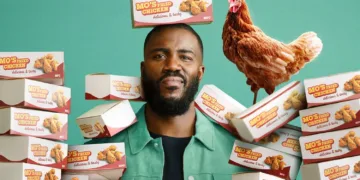
























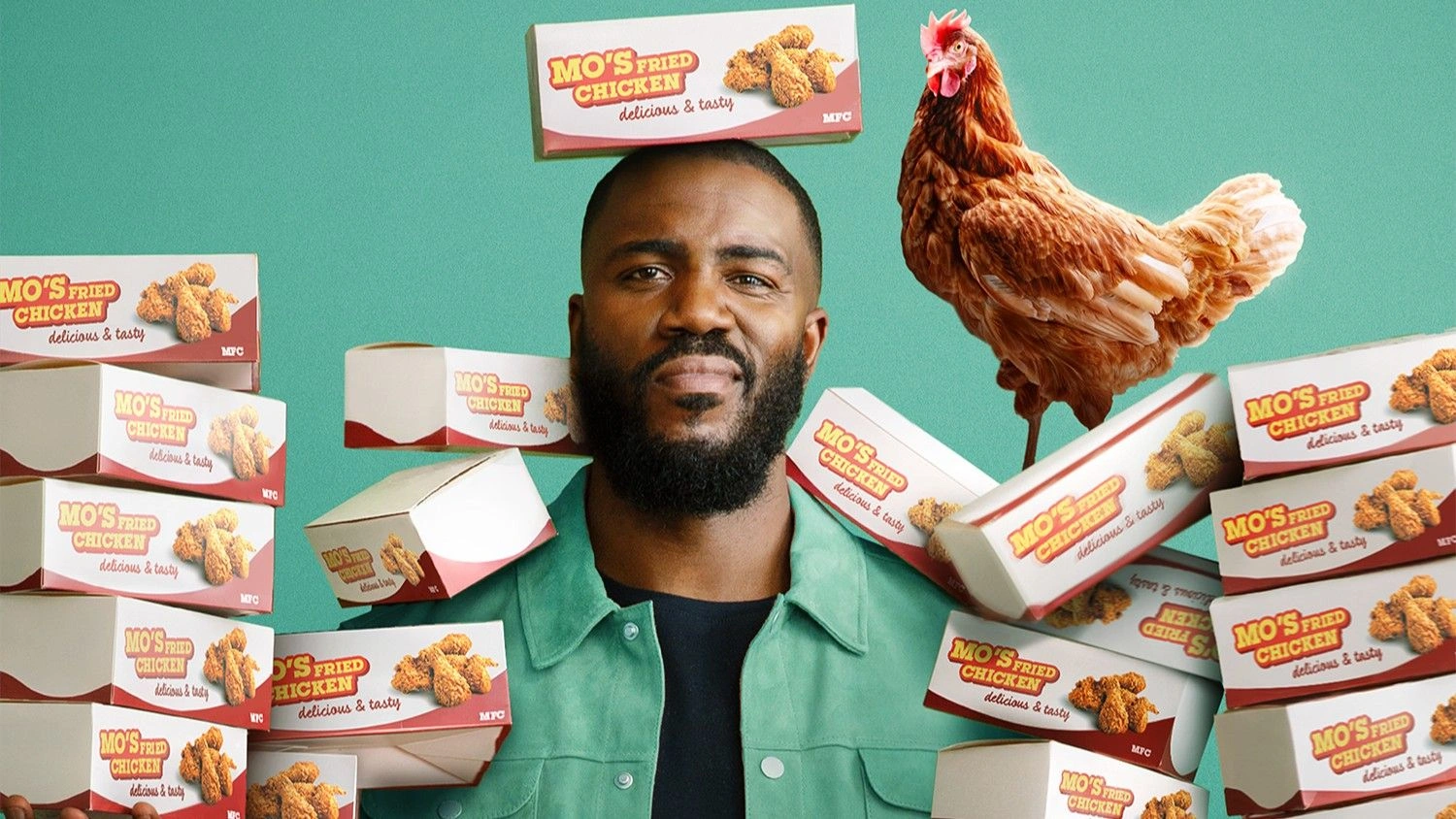

By the eighty-fourth fried chicken meal, the food has stopped resembling food. Liana Stewart’s camera studies battered skin, stripped bones, sauce-smeared boxes, and Mo Gilligan’s increasingly exhausted face until the familiar pleasure of a takeaway acquires the texture of evidence. Repetition does the work. One bucket looks inviting. Dozens resemble debris.
Big Chicken: A Fast Food Conspiracy places the British comedian on a 28-day diet of fried chicken for breakfast, lunch, and dinner, tracking the damage through medical tests and changes in his mood. The setup borrows openly from Super Size Me, though Gilligan arrives with a different relationship to the product.
KFC buckets were rare treats during his working-class London childhood, and a Nando’s voiceover campaign later turned that affection into paid promotion. His participation in chicken culture gives the documentary a useful moral tension. He has benefited from the machine before asking what sits inside it.
Gilligan initially treats the challenge as a fantasy assignment. He orders wings, burgers, nuggets, chips, sauces, and sugary drinks with comic enthusiasm. The obvious flaw arrives with the tray. The experiment cannot isolate fried chicken from the rest of the ultra-processed meal, nor does it prove anything about moderate consumption. It proves that eating badly three times a day makes a person ill. The mystery survives roughly as long as the first box of leftovers.
The Body as Crime Scene
The documentary finds firmer ground once Gilligan’s body stops functioning as a gimmick and begins functioning as a visual record. His weight rises. His energy collapses. Irritation settles into his speech and posture. The film does not need a dramatic medical revelation when his face already carries one.
A hotel-room sequence in America supplies its most exposed image. Gilligan cries alone, overwhelmed by fatigue and a worsening emotional state rather than a single investigative discovery. Stewart holds on the discomfort instead of cutting quickly toward reassurance. The moment connects with a psychologist’s explanation of reward cycles, where ultra-processed food creates a brief surge followed by a crash. Gilligan’s comic instincts usually protect him from silence. Here, the silence wins.
His humour remains a useful entry point, especially when doctors, academics, activists, and workers introduce material that could harden into a lecture. Some jokes feel planted. A visit from a friend conveniently becomes a filmed call to KFC, and a strained Gen Z quip lands with the grace of a dropped bucket. Gilligan remains easy company, yet the editing occasionally makes him look like a host following marks laid down before the investigation began.
Behind the Shopfront
The journey from London chicken counters to American processing plants widens the film’s frame. Statistics establish the scale: thousands of British and American outlets, KFC operations across 149 countries, and roughly one billion chickens raised annually in the United Kingdom. Numbers become architecture. The industry appears less like a collection of restaurants than a supply system designed to remain unseen.
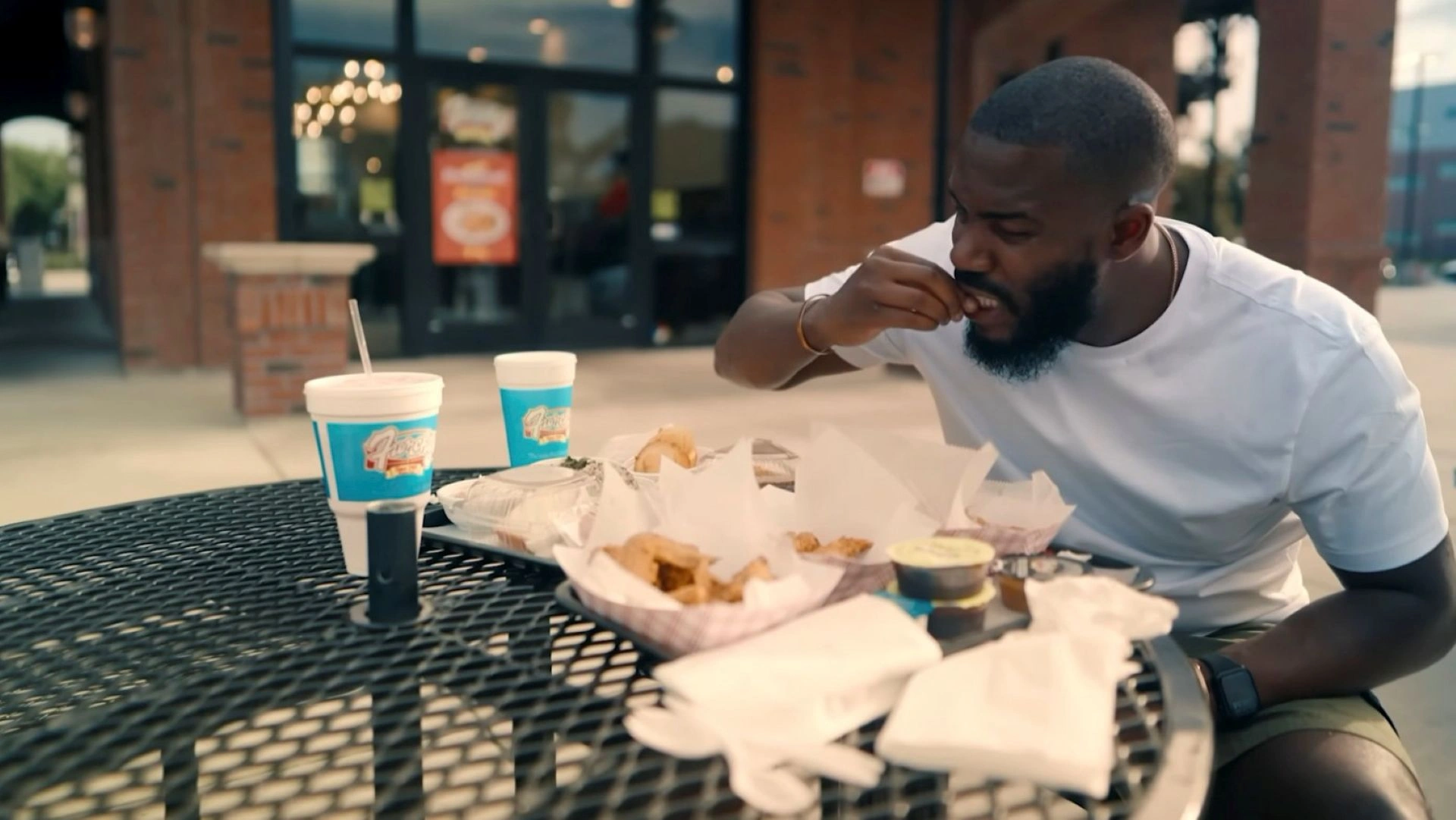
A scientist explains how seasoning, texture, and aroma can make fried chicken “craveable,” encouraging consumption after the body has registered fullness. This scene contains the documentary’s sharpest psychological idea, yet Stewart leaves it too quickly. The film repeatedly finds locked rooms and moves on before testing the doors.
The allegations concerning processing-plant labour carry greater weight. Gilligan hears accounts of undocumented workers facing dangerous conditions, employees denied toilet breaks, reports of nappies worn during shifts, and claims involving child labour. These testimonies shift the moral question away from individual appetite. Cheap chicken has a human cost before it reaches the fryer.
Industrial waste darkens the picture further. Poultry excrement contaminates air and waterways near farming communities, turning the clean branding of fast-food chains into an elaborate act of visual misdirection. The shops glow. The rivers absorb what the menus omit.
A Door That Stays Closed
Gilligan’s examination of racist associations between Black people and fried chicken gives the film cultural specificity. His own affection for the food exists beside caricatures designed to degrade that affection. The documentary connects chicken-shop culture, childhood comfort, advertising, and plantation-era imagery around Colonel Sanders without treating them as interchangeable subjects. Pleasure survives inside a history built to distort it.
The nighttime trip to a Lincolnshire poultry farm offers Stewart her strongest piece of genre filmmaking. Masked animal-welfare activists gather in darkness, security surrounds the warehouses, and Gilligan jokes that the situation resembles Call of Duty. The camera enters thriller territory, where access itself becomes the source of tension.
Then Gilligan stays in the car, citing his girlfriend’s objection, and the activists fail to enter after discovering increased security. The scene fizzles as investigation, yet its failure reveals the documentary’s central limitation. Big Chicken approaches sealed institutions, collects testimony from outside, and rarely penetrates the walls.
The final corporate statements arrive as carefully lawyered title cards. Their sterile language has its own lighting scheme: bright, clean, and designed to cast no shadow at all.
Big Chicken: A Fast Food Conspiracy premiered globally on Netflix on August 5, 2026. The documentary follows comedian Mo Gilligan as he embarks on a 28-day fried chicken diet to uncover the hidden realities and massive corporate industry behind global fast-food cravings.
Where to Watch Big Chicken: A Fast Food Conspiracy (2026) Online


Full Credits
Title: Big Chicken: A Fast Food Conspiracy
Distributor: Netflix
Release date: August 5, 2026
Director: Liana Stewart
Cast: Mo Gilligan, Marcus Collins
The Review
Big Chicken: A Fast Food Conspiracy
Big Chicken: A Fast Food Conspiracy turns greasy comfort into an industrial crime scene, guided by Mo Gilligan’s warmth and visible physical decline. The 28-day diet proves an obvious point, while the factory workers, polluted rivers, engineered cravings, and guarded poultry farms reveal a darker machinery. Liana Stewart raises too many subjects to examine any with sustained force, and the failed nighttime investigation leaves the film without its sharpest possible image. Still, its accessible humour may reach viewers whom sterner documentaries leave outside the door.
PROS
- Gilligan’s accessible presence
- Disturbing labour allegations
- Strong cultural perspective
- Effective physical transformation
- Tense nighttime investigation
CONS
- Familiar central experiment
- Limited investigative depth
- Scattered thematic focus
- Occasionally staged humour
- Weak final payoff