




























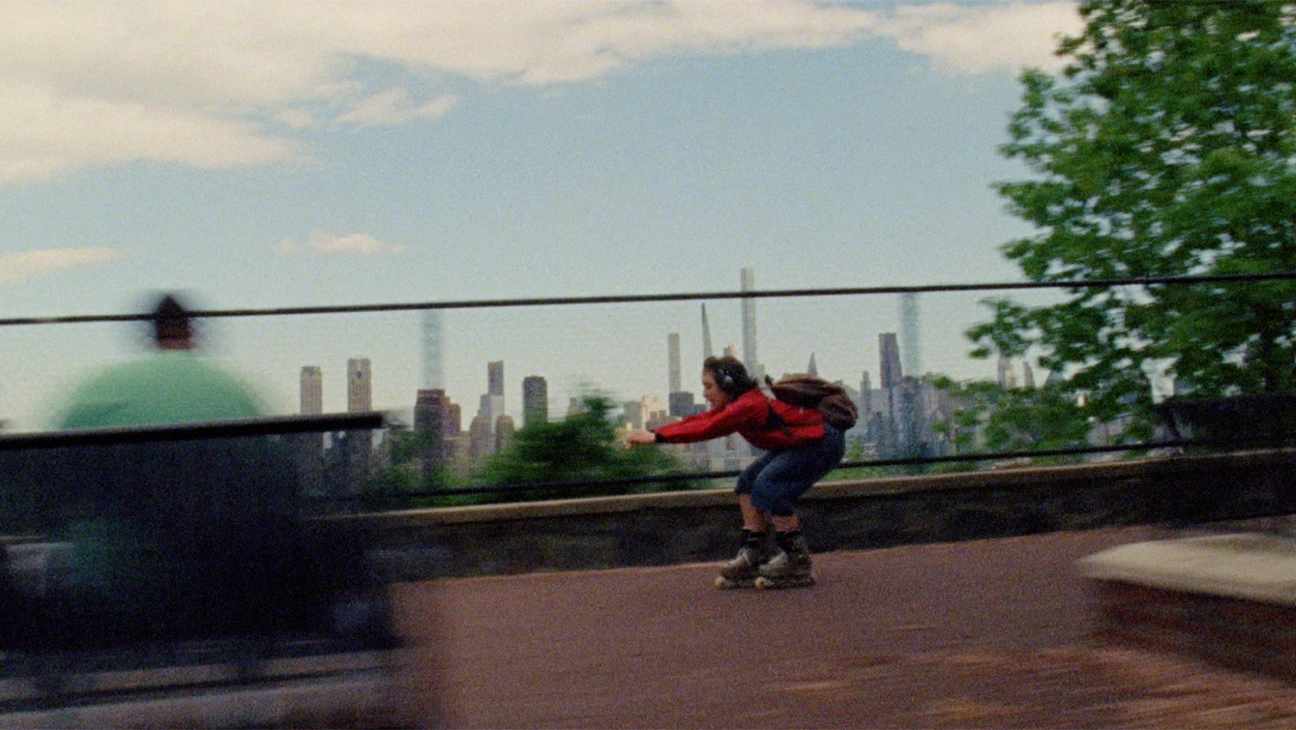

Alex keeps a camera between herself and the skaters because watching people move is easier than deciding where she should go. Erin Vassilopoulos’ Destroy All Girls understands the emotional appeal of that distance. Alex, played with quiet precision by co-writer Ani Mesa-Perez, works at a New Jersey bodega, clashes with her mother, and spends much of her time caring for Gabriel, her older brother, who was paralyzed after a car accident.
Skating once belonged to both siblings. Gabriel gave Alex hand-me-down blades, and she filmed him doing tricks before the crash rearranged their lives. Now the camera carries those memories while offering Alex a way out. Meeting Cameron and his nomadic crew, the Prospers, gives her somewhere to point it. They have a bus, a vague plan to reach California, plenty of weed, and very little interest in tomorrow. For Alex, that sounds close enough to freedom.
The Life She Leaves Behind
The strongest scenes are often the quietest ones inside Alex’s family life. Her mother calling her “Alexa,” ignoring the name she prefers, lands as one small example of how little room Alex feels she has to define herself. Gabriel depends on her physically, yet he also understands that staying home has stalled her future. Their affection is tangled up with guilt in a way the film wisely refuses to simplify.
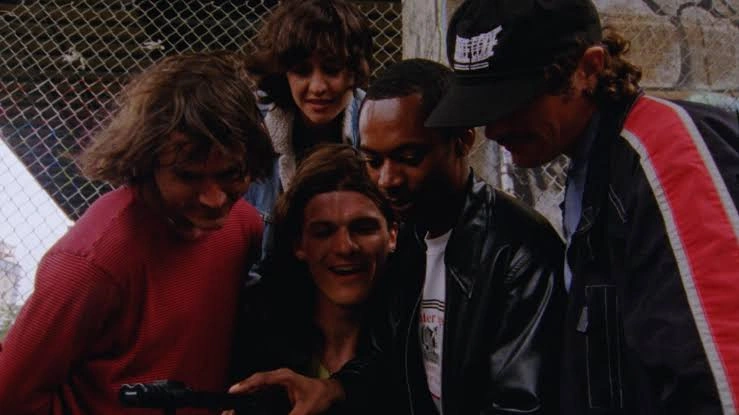
That makes Alex’s escape feel messy rather than triumphant. She does not pack for some grand act of rebellion. She simply stays out after meeting the Prospers and later has to stop at a drugstore for underwear because she never expected to be gone this long. It is a funny detail until you realize how impulsive her disappearance really is.
Vassilopoulos keeps Alex’s family alive through voicemail. Messages arrive while she travels farther from New Jersey, turning a tiny phone speaker into the film’s emotional tether. Geography becomes almost irrelevant. Alex can cross into Manhattan, sleep inside a converted school bus, and vanish into parties, yet Gabriel’s voice can still place her back inside that apartment in seconds.
Also Read






Mesa-Perez makes those moments hurt without announcing the pain. A crooked smile appears whenever Alex seems uncertain, usually giving someone else the impression that she is fine. Watch how often that smile arrives before she looks away. The performance keeps revealing feelings Alex refuses to name.
Skating Without a Map
Cameron first catches Alex’s attention through movement. Dominic Bruce gives him the loose confidence of someone used to being watched, throwing himself across ramps while Alex records him. Soon she is filming B-roll for Cole’s documentary and riding with the Prospers from skate park to skate park.
The film changes once she joins them. Plot loosens. Days become skating sessions, bus rides, weed, beer, arguments, and half-serious talk about sponsorship. That drifting rhythm could frustrate anyone waiting for a major dramatic turn, yet it creates something harder to fake: the sensation of temporarily belonging to a group whose entire philosophy is built around the next place to skate.
Vassilopoulos shoots much of this with handheld immediacy, then folds Alex’s DV footage into the movie itself. Grain, unstable framing, and shifting formats make certain stretches feel like footage discovered on an old skate tape. The camera sometimes struggles to keep up with bodies flying past it. That instability becomes part of the pleasure. You feel Alex learning the group by trying to frame them.
The dialogue carries the same looseness. Conversations overlap, jokes die halfway through, and the skaters sound comfortable enough to be boring around each other. Their casual authenticity also exposes the male culture surrounding Alex. Sexist attitudes surface without turning the Prospers into cartoon villains. The phrase that gives the film its title, printed as a joke on a skatewear label, captures that contradiction neatly: cruelty can survive perfectly well inside something everyone insists is harmless.
No Fixed Direction
Alex’s relationship with Cameron gives her escape a temporary emotional shape. He teaches her tricks, invites her deeper into the group, and admits that he already has a child with another woman. Their connection feels sincere, yet Cameron remains absorbed in his own momentum. Alex has entered his life without becoming its priority.
Their mushroom-fueled motel night pushes the film into its most feverish register. Sex, hallucination, and intoxication turn freedom into sensory overload. One detail lingers afterward: Alex’s red nails, resembling her mother’s. She has traveled away from home only to reproduce one of its images on her own body. The film lets the resemblance sit there without explaining it.
Silvia creates a different charge. She appears briefly, yet Alex’s attention toward her feels distinct from the energy she shares with Cameron. Vassilopoulos leaves that attraction unresolved, just as the film avoids assigning Alex a fixed sexual or gender identity. Her clothes, body language, relationships, and preferred name all suggest a person trying possibilities rather than choosing a label.
That openness suits a story built around wheels. Every trick depends on movement, balance, and correction. Alex spends much of the film believing movement itself might be enough. The family messages, Cameron’s self-absorption, her curiosity toward Silvia, and the memories stored inside her camera slowly complicate that idea. She can keep rolling. The harder question is what she wants to carry with her.
Destroy All Girls premiered at the Locarno Film Festival on August 1, 2026. The drama follows a young woman who bolts from her stifling home to join a band of street skaters in New York City, only to realize she cannot outride her own personal conflicts.
Full Credits
Title: Destroy All Girls
Distributor: Locarno Film Festival
Release date: August 1, 2026
Running time: 87 minutes
Director: Erin Vassilopoulos
Writers: Ani Mesa, Gil Perez-Abraham, Flo Linus Baumann, Erin Vassilopoulos
Producers and Executive Producers: Benjamin Cohen, Christopher Dagostino, Joy Jorgensen, Daniel O’Neill
Cast: Ani Mesa, Gil Perez-Abraham, Dominic Bruce, Florencia Lozano, Alfredo Narciso, Bobby Daniel Rodriguez
Director of Photography (Cinematographer): Hunter Zimny
Editors: Olivia Neergaard-Holm
The Review
Destroy All Girls
Destroy All Girls finds its emotional charge in the gap between movement and escape. Alex can cross the bridge into New York, sleep on the Prospers’ bus, film Cameron’s tricks, and disappear into a mushroom-soaked motel night, yet Gabriel’s voicemails keep pulling at the life she left behind. Ani Mesa-Perez makes that conflict readable through guarded smiles and small hesitations, while Erin Vassilopoulos’ handheld DV textures give the skating scenes a lived-in pulse. The loose plotting occasionally drifts, but that looseness fits a young woman still deciding where she belongs.
PROS
- Mesa-Perez’s restrained performance
- Tactile handheld and DV photography
- Convincing skater-group chemistry
- Strong sibling emotional thread
- Thoughtful identity ambiguity
CONS
- Narrative can drift
- Cameron remains thinly developed
- Silvia receives limited screen time