



























Chemi accepts temporary control of Torregrosa Funeral Home with the sort of confidence usually associated with people who have misunderstood the word “temporary.” He is supposed to occupy Nieves’ position, steady the business, then hand the chair to Dámaso. The chair proves comfortable.
That small betrayal of expectations gives the fourth and final season of Death Inc. (Muertos S.L.) its cleanest comic engine. Six episodes return to the funeral home where Gonzalo Torregrosa’s death set off a succession battle that has consumed relatives and employees for years. Nobody has learned enough to stop fighting. Several have learned enough to fight with better vocabulary.
The writers resist turning the last season into an extended farewell ceremony. Torregrosa remains a workplace where employees argue over promotions, romances, grudges and management strategy while bereaved families pass through the building. The corpses continue to be the least demanding people on payroll.
That tonal discipline matters. There is no sudden attempt to make every disagreement profound because the cancellation clock is ticking. The season is dedicated to Ascen López, whose Nieves remains central to the company’s fate, giving the episodes an unavoidable sadness outside the fiction.
Inside it, the series keeps working in the register it knows: quick escalation, shameless selfishness and people saying deeply inappropriate things several feet from a coffin. For a show facing its own burial, Death Inc. arrives remarkably uninterested in lying down.
Management, According to Chemi
Chemi approaches funeral-home management as though somebody has handed him a subscription to a business podcast and unlimited stationery. Mandatory naps become a productivity strategy. A basketball team might generate commercial “synergies.”
Also Read






Corporate social responsibility enters conversations where everybody would benefit from first mastering regular responsibility. Cryogenics floats into consideration because apparently traditional burial and cremation lack disruption potential.
Diego Martín makes these scenes work by refusing to signal the joke too loudly. Chemi believes his managerial language. When English business jargon tumbles from his mouth, Martín delivers it with the earnest concentration of a man presenting quarterly growth projections rather than proposing another baffling idea to people who handle dead bodies for a living.
That sincerity keeps Chemi from becoming a one-note idiot. He really does want Torregrosa to improve. His failure lies in mistaking movement for progress. Every initiative has the shape of innovation without much understanding of the business it is supposed to improve. Then there is Dámaso.
Carlos Areces has spent four seasons refining Dámaso into a magnificent instrument of wounded ego. His central conviction remains simple: any organization that has not promoted him has clearly suffered an administrative error. Chemi getting the director’s chair forces him into an especially funny strategic crisis. Should he sabotage Chemi and prove himself superior? Certainly. Should he flatter Chemi so aggressively that he can remain close to power? Also certainly.
The scripts regularly let Dámaso switch between those impulses with barely enough time for anyone else to notice. He whispers against the boss, detects danger, pivots, then appears beside him wearing the expression of a man who has always supported this inspiring new era of leadership. Morales is frequently dragged into the machinery, trying to accommodate ambitions that become less defensible with each new plan.
Areces’ best weapon is the fraction of a second after something goes wrong. Dámaso rarely looks embarrassed. He looks offended that reality has violated the agreed procedure. Chemi thinks management means generating ideas. Dámaso thinks management means possessing the office. Neither conception requires much actual management, which is unfortunate news for the funeral home and excellent news for six episodes of television.
Business Is Dead, Comedy Is Fine
Setting a sitcom inside a funeral home gives the writers one permanent structural advantage: customers arrive carrying situations that cannot be treated casually, while the employees treating them are frequently incapable of behaving like adults.
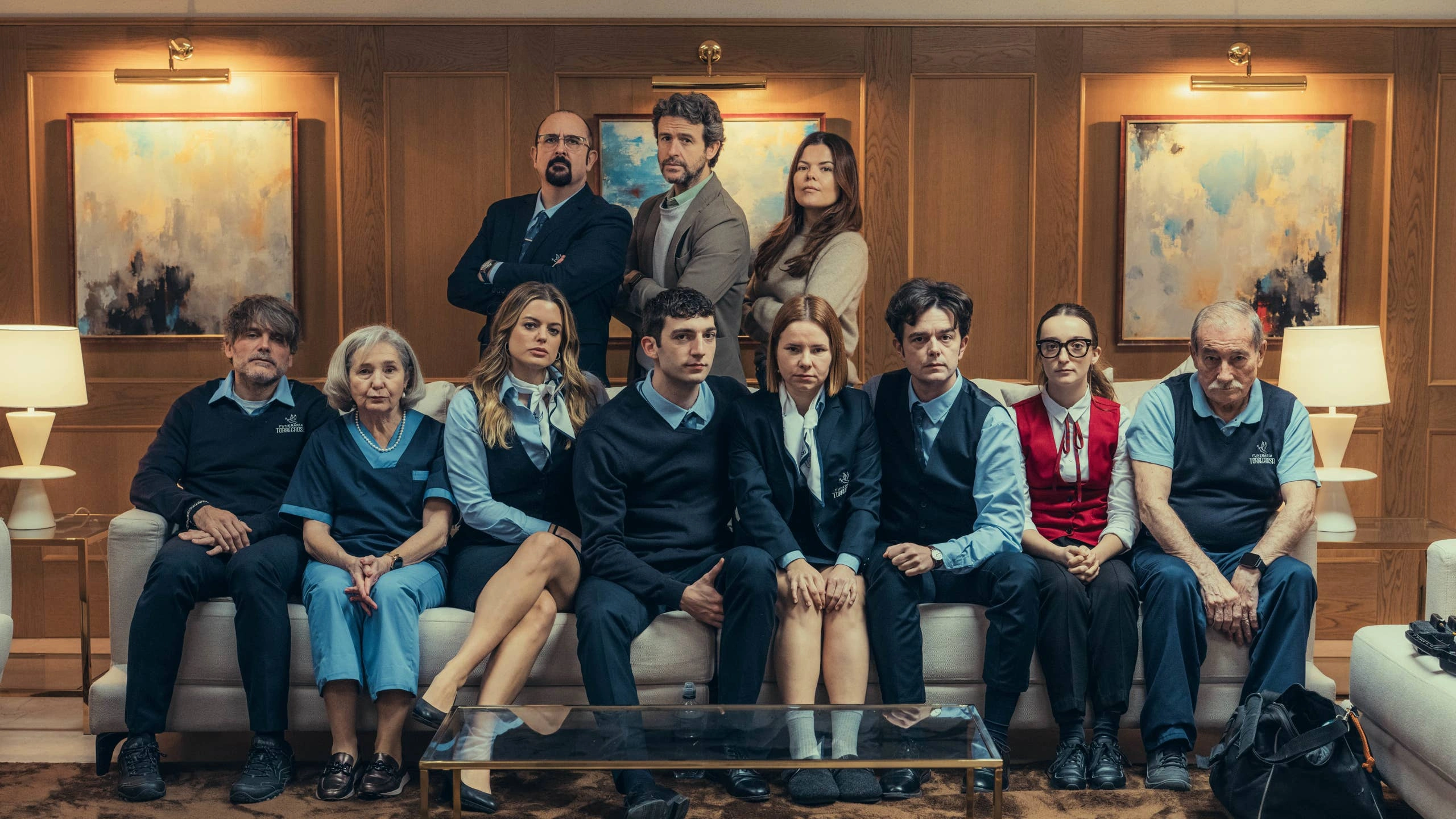
Season 4 keeps finding new variations. Limb burials, pet funerals and seizenso, ceremonies staged for people who are still alive, give individual episodes specific problems rather than reducing Torregrosa to interchangeable office farce. Chemi’s flirtation with cryogenics extends the joke from funeral customs into his obsession with selling the future to people currently planning for eternity.
The distinction in where the comedy lands remains important. Bereaved customers are rarely the targets. The employees make fools of themselves around grief; grief itself is allowed to retain dignity. That choice has protected the series from becoming unpleasant across four seasons.
It also allows the supporting stories to get stranger without poisoning the tone. Manuela attempts to understand the apparent curse hanging over her since the accident that left her dead for several minutes. Olivia and Abel bring their romantic complications into an environment already packed with family tension. Nieves stays near the business, observing people compete over Gonzalo’s legacy while demonstrating considerably better judgment than the candidates volunteering to protect it.
The comic construction works best when these strands collide. A funeral problem starts with its own logic. A workplace scheme interrupts it. A personal dispute arrives at exactly the wrong moment. Someone improvises. Improvisation proves to be a terrible idea. Cut to Dámaso looking personally betrayed by cause and effect.
Petra Martínez’s fifth-episode appearance gives the late run another sharp burst of comic energy, while smaller recurring material such as the mysterious “potuga” business between Dámaso and Morales rewards viewers who have learned to enjoy the show’s private vocabulary without demanding that every joke become plot. Four seasons inside one funeral home should have made the building predictable. Instead, the safest assumption remains that somebody will soon suggest something catastrophically inappropriate.
Six Episodes, No Loitering
The final season moves quickly enough that jokes sometimes appear to be chasing each other down a corridor. That pace suits the series. Chemi launches an initiative, Dámaso begins plotting against it, somebody else’s private crisis interferes, and the episode can reach full disaster before a slower sitcom would finish arranging the pieces. The editing rarely leaves a comic beat unattended for long. Scenes tend to exit after the punch line rather than waiting for reassurance that everyone heard it.
Familiarity does creep into the formula. After several seasons, an argument beginning innocently at Torregrosa carries roughly the same suspense as watching somebody place a glass near the edge of a table. You know where this is going. The pleasure depends on how creatively it falls.
The cast provides much of that variation. Martín makes Chemi’s optimism elastic enough to survive repeated proof that he should stop. Areces can turn a change of allegiance into a physical gag before Dámaso has finished the sentence. López gives Nieves quieter timing. She often gets laughs by declining to match the frantic energy around her, which makes her later decisions feel like the product of somebody who has spent years taking notes while everyone else rehearsed speeches.
The ensemble around them keeps Torregrosa busy, yet six episodes create an unavoidable problem. Olivia, Abel, Manuela and several peripheral players reach their stopping points faster than their stories can comfortably accommodate. Some farewells resemble resolutions; others resemble the writers remembering the building is closing in ten minutes. A longer season might have given those exits room. Then again, giving this staff extra time has rarely improved any situation.
Everybody Loses the Promotion
The succession fight eventually reaches the only destination appropriate for a series this skeptical about workplace ambition: neither contender gets what he wants. Chemi’s managerial experiments leave Torregrosa wobbling rather than transformed. Dámaso reads the instability as opportunity and keeps positioning himself for control, convinced the long campaign that began after Gonzalo’s death must finally reward persistence.
Nieves refuses the choice. Selling Torregrosa Funeral Home to a large corporation removes the business from the contest entirely. Chemi loses his laboratory for managerial reinvention. Dámaso loses the office he has spent years mentally decorating. The family loses control of the institution everyone claimed to be fighting to preserve.
The decision is funny because it is brutally practical. Chemi and Dámaso have treated leadership as proof of personal worth. Nieves treats the company as something that actually has to survive these people. Then comes the closing corporate orientation.
The employees who once turned every minor disagreement into a miniature civil war sit through standardized procedures under anonymous management. The chaotic family business still exists legally, yet the strange workplace culture that defined Torregrosa has been flattened into policy.
It is a wonderfully nasty sitcom ending. Everyone spent years fighting over the steering wheel, then somebody sold the car. The scene also gives the season its sharpest piece of television form. No sentimental montage is required. No parade of flashbacks needs to explain what has disappeared. Put these characters in a sterile orientation session, reduce the noise, remove their authority, and the absence becomes visible by itself.
The rushed supporting exits still sting, especially for a series whose creators apparently had enough comic material to continue. Yet the central power struggle receives a finale shaped by the exact joke Death Inc. has been telling from the beginning: people obsess over office hierarchy while mortality sits quietly in the next room, unimpressed. Torregrosa Funeral Home survives its founders, its managers and several terrible ideas. Surviving human resources may prove harder.
Death Inc. released its fourth season on Netflix on August 7, 2026. The workplace black comedy follows the eccentric staff of a Spanish funeral home as they navigate intense power struggles and absurd daily challenges following the founder’s death.
Where to Watch Death Inc. Season 4 Online


Full Credits
Title: Death Inc.
Distributor: Netflix
Release date: August 7, 2026
Rating: TV-MA
Running time: 30 minutes
Director: Laura Caballero
Writers: Laura Caballero, Alberto Caballero, Daniel Deorador, Julián Sastre, Nando Abad, Araceli Álvarez de Sotomayor
Producers and Executive Producers: Alberto Caballero, Susana Herreras
Cast: Carlos Areces, Ascen López, Diego Martín, Amaia Salamanca, Salva Reina, Adriana Torrebejano, Gerald B. Fillmore, Aitziber Garmendia
The Review
Death Inc. Season 4
Death Inc. Season 4 keeps Torregrosa Funeral Home wonderfully dysfunctional until somebody finally does the sensible thing and sells it. Chemi’s corporate experiments and Dámaso’s increasingly desperate power plays give the six episodes their fastest laughs, while Nieves quietly proves she understands the business better than either would-be director. Some supporting stories get hustled toward the exit, yet the sterile corporate onboarding scene is a beautifully mean final gag. The funeral home survives. Everyone’s dignity is another matter.
PROS
- Chemi and Dámaso’s rivalry
- Carlos Areces’ comic timing
- Absurd management experiments
- Strong ensemble chemistry
- Excellent final corporate joke
CONS
- Rushed supporting resolutions
- Some familiar sitcom rhythms
- Six episodes feel restrictive