















Stephen de Villiers gives The Run a wonderfully efficient dramatic problem: in an Australia where births have nearly disappeared, one crying baby becomes valuable enough to get people killed. The screenplay then spends much of its first half finding less efficient ways to move that problem forward.
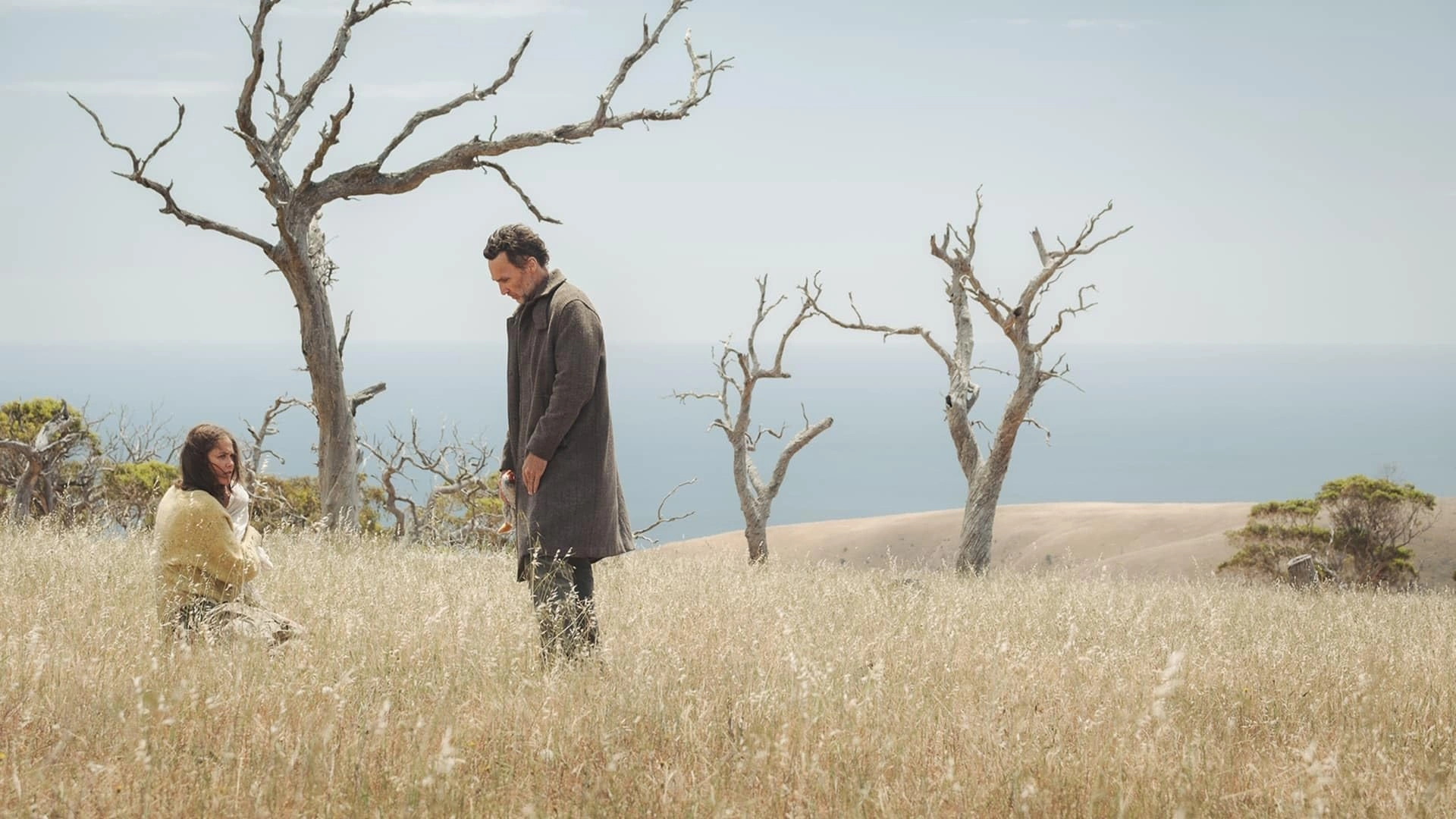
Set around 2036, the film places ageing smuggler Mac (Callan Mulvey) inside a country fractured by lockdowns, quarantine zones, abandoned settlements, and a fertility crisis. He survives by moving contraband through remote territory and keeping other people’s problems at a safe distance. That arrangement collapses when he encounters Aliah (Charlotte Maggi), a young mother fleeing captors with an infant believed to be Australia’s first newborn in years.
The premise places Mac inside familiar reluctant-protector territory. De Villiers understands the shape. His trouble comes from deciding which parts deserve pressure. Too often, the film has a character make a major choice, reverse it moments later, then carry on before the consequence has time to settle. A decision with a lifespan of thirty seconds is less an act break than administrative paperwork.
Decisions Without Consequences
Mac and Aliah become far stronger characters once the screenplay stops treating revelation as movement. Early scenes frequently introduce new information about their histories, fears, or intentions without allowing those discoveries to alter the direction of the escape. Someone commits to a course of action, uncertainty arrives, and the decision is withdrawn. Each reversal drains force from the previous beat. The first half can feel like several potentially important scenes waiting for a stronger connective spine.
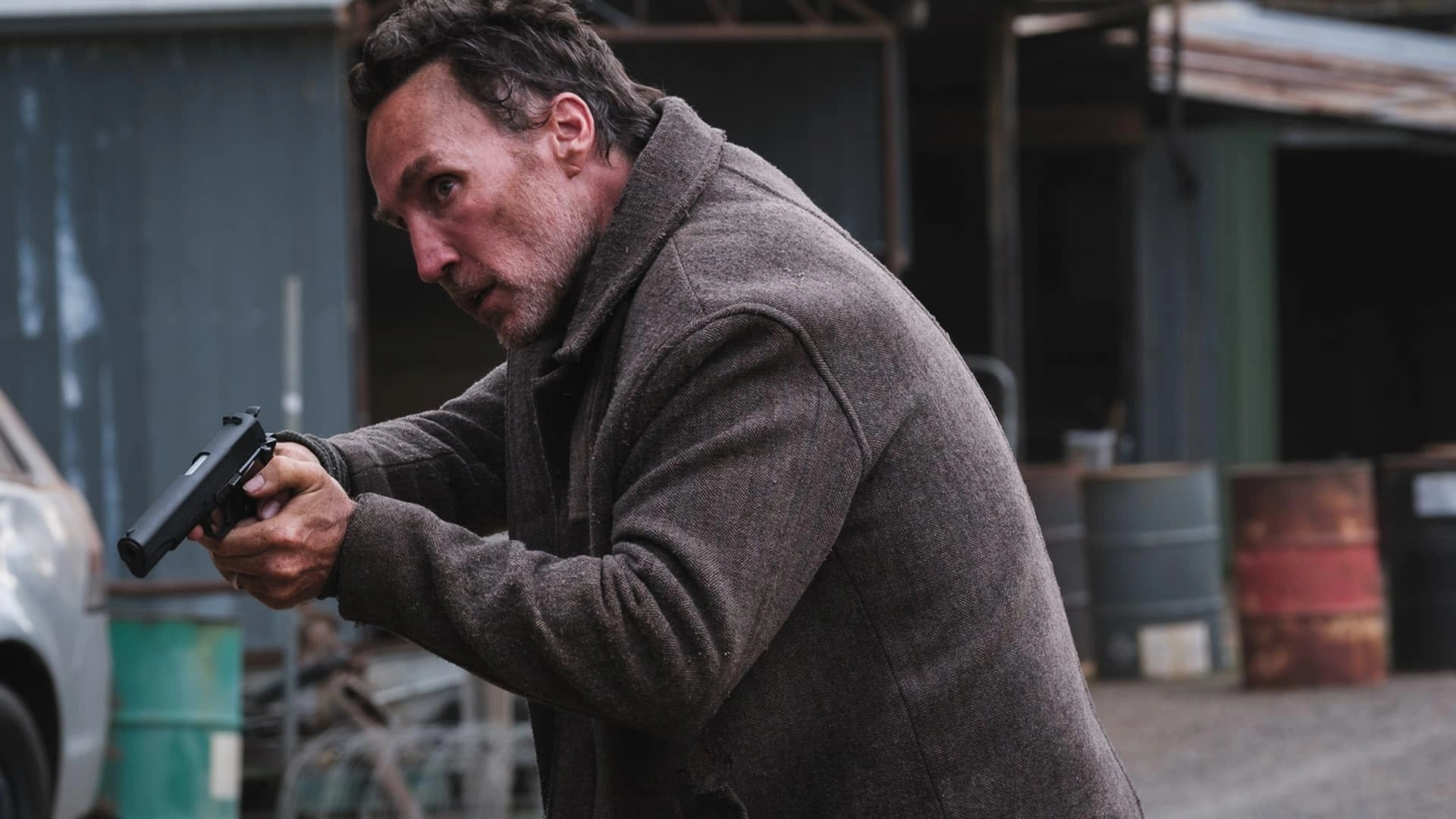
Mulvey helps enormously. Mac is built around withholding, and the actor rarely confuses silence with blankness. Watch the way he stays physically controlled around danger, even after Aliah and the baby turn his routine into something far less manageable. The script eventually asks him to confront responsibility rather than simply survive, and Mulvey has been laying the groundwork through posture and hesitation long before the dialogue catches up.
Maggi gives Aliah a different nervous rhythm. She spends much of the film exhausted, frightened, and alert to threats around her child. Her panic never erases her capacity to think. Scenes involving the baby gain tension because Maggi plays protection as constant calculation rather than generic maternal distress.
The pairing works because neither performer chases the movie’s stakes. Their restraint leaves space for other characters to disturb the atmosphere. Nicholas Hope’s Jimmy, a grimy service-station owner with bed hair and a stained singlet, briefly gives the wasteland the personality it otherwise lacks. Damien and the other pursuers receive harsher visual identifiers, including tattoos and brightly styled hair, though the screenplay rarely moves past those signals. The villains arrive already labelled. Convenient, perhaps, if hardly rich characterization.
Felix Cameron brings quiet focus to Tom during the later passages, yet his limited material points toward the same structural issue: The Run keeps introducing people who seem capable of changing its shape, then gives them just enough room to suggest the film they might have occupied.
Roads, Smoke and Crying
Michael Tessari’s cinematography does far better at explaining this Australia than much of the exposition.
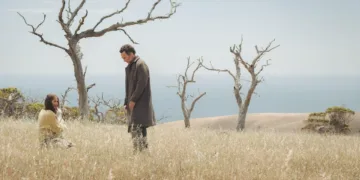
The coastal spaces are wide and exposed, with roads cutting through terrain that feels emptied rather than spectacular. Wind farms, deteriorating buildings, rough vehicles, quarantine remnants, and familiar rural architecture keep the future close to the present. The production design does not need elaborate technology to announce social collapse. A neglected petrol station can do plenty of talking.
De Villiers and Tessari also give the physical action welcome weight. Cars bounce across uneven roads while the camera absorbs the vibration. Fires produce visible smoke and texture instead of looking pasted into the frame. After long stretches on the road, dirt and fatigue accumulate on faces. These details make the setting persuasive precisely because nobody seems to have polished the apocalypse for company.
Sound supplies another layer of pressure. The baby cries repeatedly, sometimes for uncomfortable stretches, and the effect is intentionally abrasive. In a world organized around the absence of children, that sound becomes alarm, burden, hope, and locator beacon at once. Every cry announces something precious to the worst possible audience.
The quieter sequences are stronger still. One late scene leaves the camera fixed around a closed front door while car doors slam outside and footsteps approach across gravel. The film delays identifying who has arrived. Mac could be coming to help. Aliah’s pursuers could be closing in. The shot works because De Villiers finally allows uncertainty to remain unresolved long enough to hurt.
The Ideas Left Behind
The fertility crisis gives The Run a sharper dramatic foundation than its pursuit plot initially suggests. Aliah is hunted partly because a society facing extinction has started treating reproductive life as property. Her baby carries emotional meaning for her and economic or political meaning for everyone circling her. The distinction is where the film’s most disturbing idea lives.
Mac presents the parallel problem. His survival depends upon detachment. Aliah forces him to decide how long neutrality can remain morally neutral once another person’s suffering has climbed into his vehicle.
The later stretch becomes tighter once those two pressures finally intersect. Mac’s buried losses begin informing present choices, while Aliah’s determination gives the escape a clearer emotional line. The ending permits hope inside a world that has offered very little evidence for it.
De Villiers reaches that territory later than he should. Several earlier revelations could have forced Mac and Aliah into harder decisions, yet the screenplay repeatedly moves toward the next pursuit before fully exploiting them. The strange frustration of The Run is that its world keeps presenting the story with excellent questions, while the story occasionally seems in a hurry to get back in the car.
The Run premiered at the Obscura Film Festival on October 17, 2025, and was released on digital platforms in the United States on November 14, 2025. Set against the backdrop of Europe’s migrant crisis, the thriller explores a tense struggle for survival where the lives of migrants, smugglers, and locals collide in dangerous, unpredictable ways.
Where to Watch The Run (2026) Online





Full Credits
Title: The Run
Distributor: Quiver Distribution
Release date: November 14, 2025
Running time: 97 minutes
Director: Uwe Boll
Writers: Uwe Boll
Producers and Executive Producers: Uwe Boll, Boris Velican, Michael Roesch, Hrvoje Habeković
Cast: Amanda Plummer, James Russo, Ulrich Thomsen, Barkhad Abdi, Daniel Sauli, Kristen Renton, Costas Mandylor, Mohammed Qissi
Director of Photography (Cinematographer): Mathias Neumann
Editors: Ethan Maniquis
Composer: Maarten Buning, Stan Koch
The Review
The Run
The Run has the physical confidence of a stronger film than its screenplay can consistently support. Stephen de Villiers makes the roads, quarantine zones, fires, and exhausted bodies feel convincingly lived in, while Callan Mulvey and Charlotte Maggi keep Mac and Aliah grounded through restrained performances. The trouble lies in the story’s habit of introducing consequential choices and revelations without letting them reshape what follows. Its fertility crisis contains sharper ideas about control, responsibility, and survival than the narrative fully develops. Still, the later stretch finds genuine tension once character finally catches up with atmosphere.
PROS
- Mulvey and Maggi’s restrained performances
- Convincing Australian dystopian setting
- Strong cinematography and practical texture
- Effective sound design
- Tense late-film staging
CONS
- Repeatedly reversed character decisions
- Underdeveloped antagonists
- Emotional revelations lack consequences
- Uneven first-half structure
- Themes receive limited development