

















Rose picks the worst possible moment to finally become honest. Ryan is only hours away from marrying Julia when his estranged college friend appears at the wedding uninvited, carrying a confession she has apparently kept buried for years. She loves him. The complication is that Ryan once loved her too, and those feelings never received a clean ending.
Reed Arnold, making his feature directing debut while playing Ryan’s best man Mark, builds Do Us Part around the emotional danger of an unanswered question. Ryan, played by Travis Laughlin, has a future waiting for him at the altar. Rose, played by Kelly Russo, represents a past that never developed far enough to prove what it actually was.
That distinction gives the familiar wedding-crasher premise some genuine feeling. Rose has not returned simply because Ryan is unavailable. She has returned because his marriage will turn possibility into permanence. Once the ceremony happens, “maybe someday” finally expires.
What They Never Said
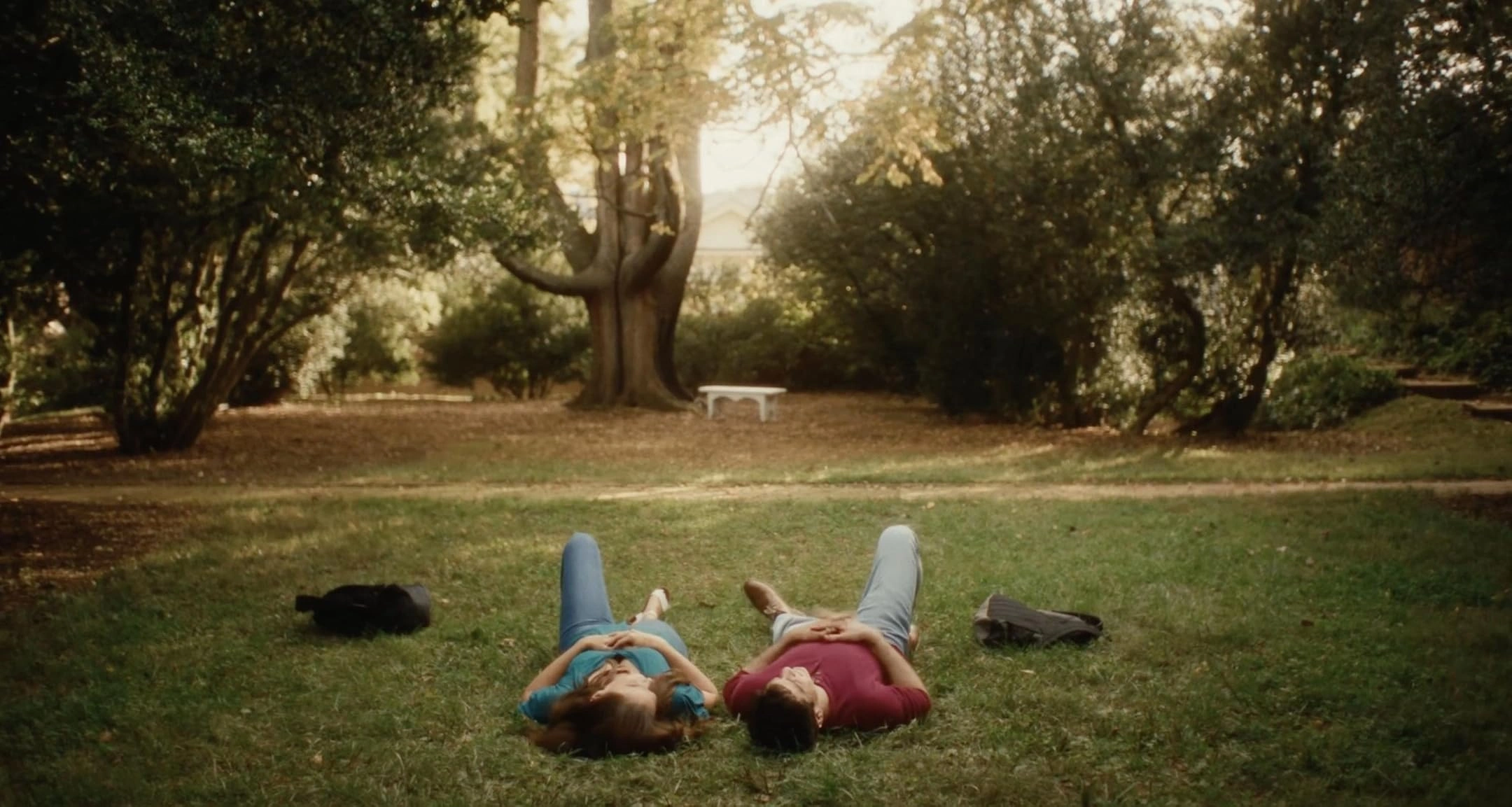
The flashbacks initially make Rose’s intrusion easier to understand. Ryan meets her while she is working a Pancakes for Parkinson’s fundraiser during their university years, and their connection develops through friendship rather than instant romantic fireworks. Mark completes the trio, giving their younger selves the loose, slightly reckless energy that tends to make college friendships feel permanent while you are inside them. Then adulthood happens.
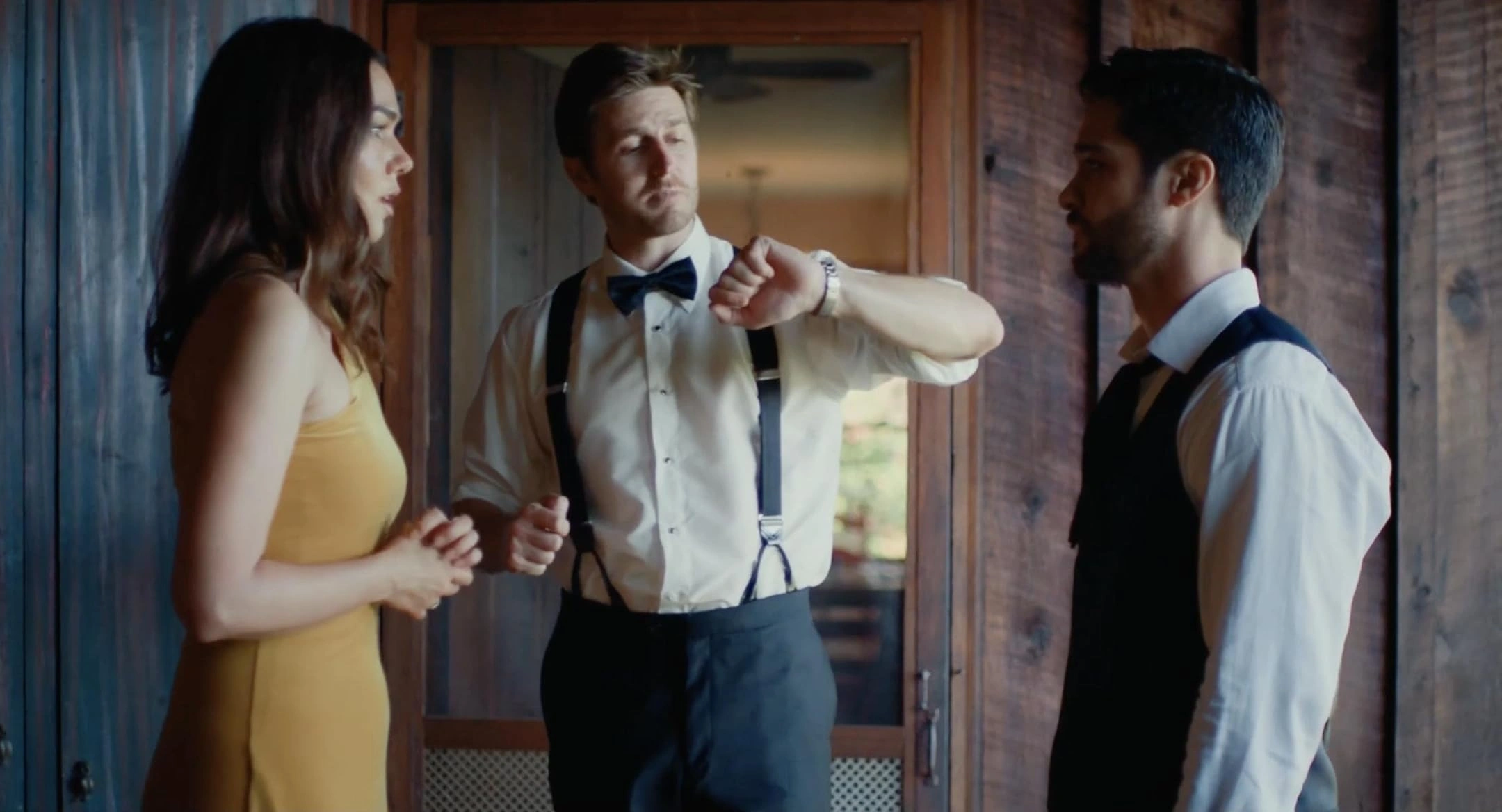
Rose moves to New York, careers pull people in separate directions, and the feelings between Ryan and Rose remain unspoken. The film understands something painful about friendships that fade this way: distance can preserve an idealized version of another person.
Also Read




Ryan never had to discover what daily life with Rose would look like. Rose never had to learn which parts of Ryan might annoy her after five years together. Their imaginary relationship has been protected from reality. The wedding forces that fantasy into the present.
Arnold’s screenplay sometimes trusts dialogue too much. Ryan, Rose, and Mark explain years of history with a directness that can make intimate revelations sound like information being delivered to the audience. Each new secret produces another confrontation, and eventually those confrontations turn verbally cruel and physically aggressive.
The escalation gives the day momentum, yet some revelations would hurt deeper if the characters were allowed to sit with them before the next one arrived. Still, the accumulated confessions change the emotional meaning of the college scenes. Memories that seemed warm become evidence in an argument none of these friends realized they were having.
Mark Runs Interference
Mark has been assigned one practical responsibility: get Ryan married. Naturally, he is spectacularly ill-equipped for it. Arnold plays him as an aggressively inappropriate womanizer whose attention keeps drifting toward bridesmaids, sex, and whatever terrible comment happens to enter his brain next. His attempts to manage Rose are funny because Mark has almost no capacity for emotional subtlety. Asking him to contain a romantic crisis is like hiring a firework to supervise a petrol station.
Some of the broad comedy lands well, particularly when Mark talks himself into situations he then has to escape. The stranger material, including a glory-hole gag, belongs to a rowdier movie than several of Ryan and Rose’s later conversations. Wedding-day slapstick occasionally arrives at the exact moment the central conflict begins developing emotional pressure, releasing tension that might have benefited from staying uncomfortable.
Mark works because his loyalty survives the stupidity. He can behave selfishly, speak thoughtlessly, and treat sex like an extracurricular activity, yet his concern for Ryan feels sincere. The friendship among Mark, Ryan, and Rose has enough looseness that their insults and frustrations rarely feel manufactured. The movie becomes considerably warmer whenever it stops generating wedding complications and simply leaves those three people in a room together.
The Life Outside the Memory
Kelly Russo faces the film’s hardest emotional task. Rose could easily become unbearable. Turning up uninvited to confess love to someone on his wedding day is an extraordinary act of selfish timing, regardless of how romantic movies have trained us to interpret grand gestures.
Russo keeps Rose emotionally accessible by letting desperation show beneath the confidence. Her strongest scene comes after Rose has been drinking, when she and Ryan sit together on a sofa and the movie finally lowers its voice. There is no elaborate comic interruption and no ceremonial spectacle to hide behind. Two people who once mattered enormously to each other are left examining the years they lost.
Laughlin’s quieter performance helps that scene. Ryan spends much of the film absorbing emotional blows rather than generating them, and his relative restraint makes his confusion believable. Rose’s confession does not instantly transform him into a romantic hero sprinting from one woman to another. It destabilizes the story he has been telling himself about his own life.
Julia matters for the same reason. Laura Elizabeth Delhauer’s bride could have been written as a final obstacle, the person standing between Ryan and the college romance the audience has been invited to revisit. Her significant late interaction refuses that easy arrangement. Julia has invested in a real relationship with Ryan, one formed outside the flattering haze of college memory, and her presence gives every choice immediate human cost.
That is where Do Us Part finds its most affecting tension. Ryan is not choosing between two interchangeable romantic partners. He is being asked to compare a relationship that exists with one that survived partly because it never had the chance to fail. For all the noisy wedding antics, that quiet distinction is what lingers.
Do Us Part premiered in select theaters on August 7, 2026, with a digital release following on August 14, 2026. The comedy film follows a chaotic wedding day that spirals out of control when the groom’s unrequited college best friend crashes the ceremony to confess her lingering feelings.
Where to Watch Do Us Part (2026) Online
Full Credits
Title: Do Us Part
Distributor: Level 33 Entertainment
Release date: August 7, 2026 (Theaters), August 14, 2026 (Digital)
Running time: 93 minutes
Director: Reed Arnold
Writers: Reed Arnold
Producers and Executive Producers: Reed Arnold, Nic Vannatta, Xander Black
Cast: Kelly Russo, Travis Laughlin, Reed Arnold, Ashley Renee Scott, Seth Andrew Miller, Laura Elizabeth Delhauer, Crystal Day
Director of Photography (Cinematographer): Nic Vannatta
Editors: Yu Jung Hou
Composer: Josh Tackett, Stephen Tackett, Chas Tackett
The Review
Do Us Part
Do Us Part finds its strongest emotional current once the wedding chaos quiets down and Ryan and Rose are forced to confront the life they never built together. Their drunken sofa conversation carries the ache the broader comedy sometimes interrupts, while Julia’s late involvement gives the romantic dilemma consequences beyond nostalgic longing. Reed Arnold occasionally lets exposition and slapstick crowd the intimacy, and some performances strain during the bigger confrontations. Still, the friendships feel lived-in enough for the confessions to hurt, leaving a modest romantic comedy with a surprisingly tender bruise.
PROS
- Strong Ryan and Rose chemistry
- Tender sofa conversation
- Mark’s chaotic comic timing
- Thoughtful treatment of romantic nostalgia
- Julia receives meaningful agency
CONS
- Overexplains emotional history
- Slapstick occasionally breaks the mood
- Uneven heightened performances