



























Ahsen Nadeem announces himself as “a fantastic liar,” and the confession lands with the peculiar lightness of someone who has rehearsed guilt until it became a joke. He was raised in a strict Muslim Pakistani household in Saudi Arabia, moved with his family to Ireland during the Gulf War, then gradually abandoned the religious life his parents still believed he practiced. Years later, another secret has accumulated around him: Dawn, the non-Muslim woman he loves, has been hidden from his family.
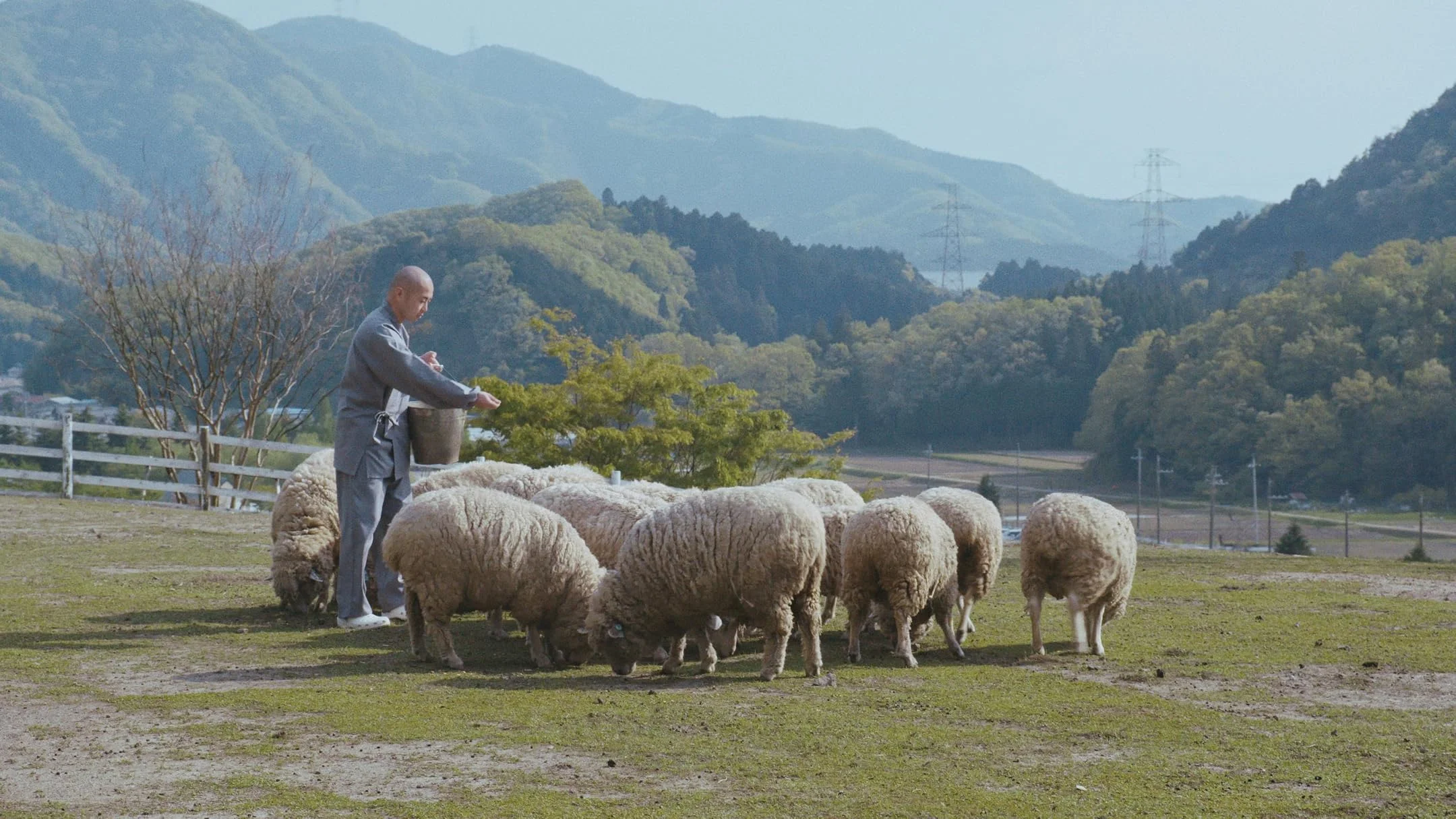
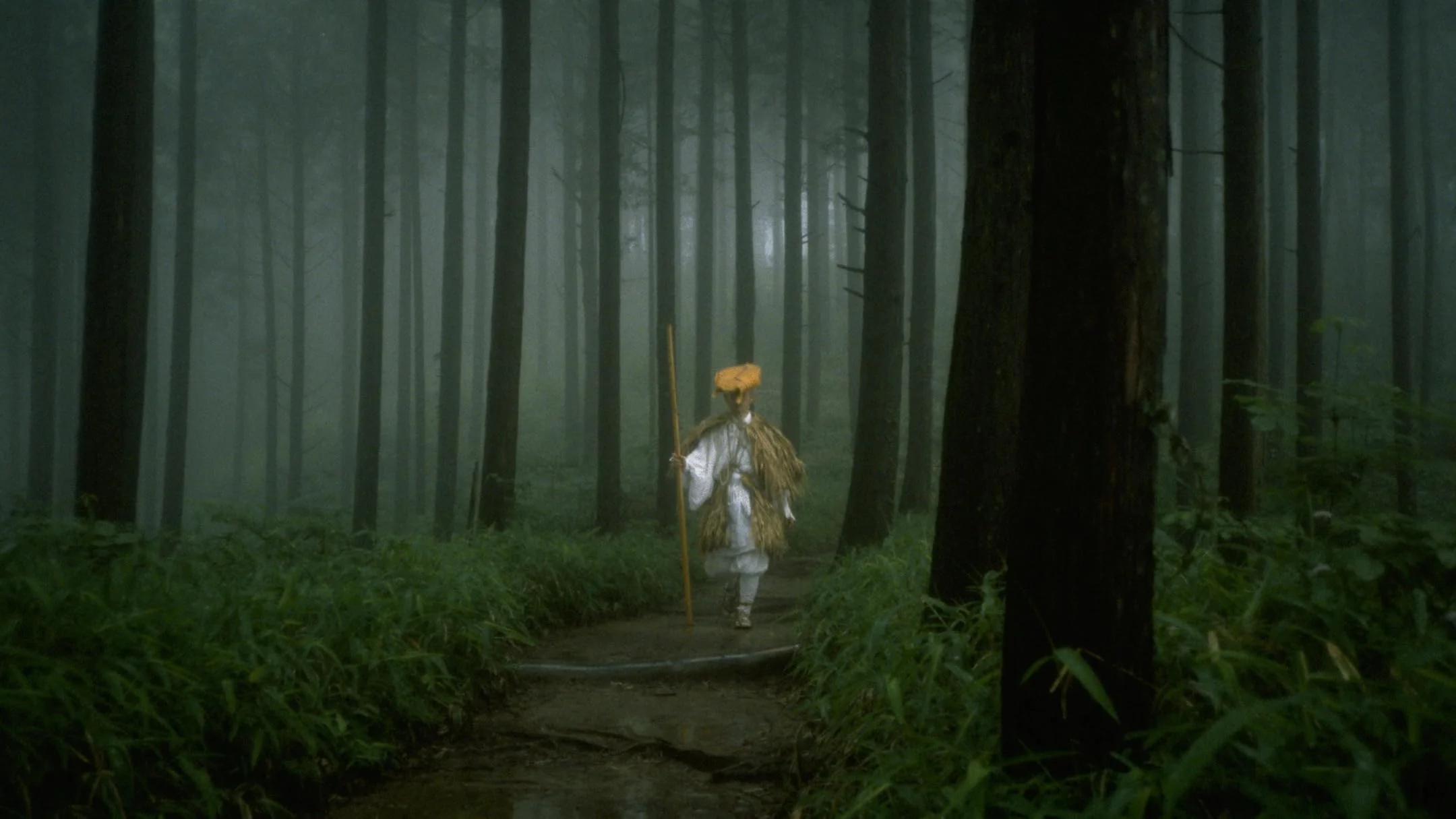
Crows Are White begins from that fracture. Nadeem travels to Mount Hiei near Kyoto, where Tendai Buddhist monks pursue enlightenment through rituals so severe that ordinary ideas of devotion start to look almost weightless beside them. His intention is ostensibly anthropological. He wants to understand what faith looks like when surrender becomes physical.
Yet Nadeem carries his own monastery wherever he goes. His rules are parental expectations, inherited belief, fear, and the exhausting labor of maintaining two versions of himself. There is something quietly cruel about living inside a lie long enough that honesty begins to resemble violence.
The Body Pays for Belief
The monastery footage contains the documentary’s strangest and most unsettling images. Nadeem spent roughly two years securing permission to film there, entering a religious world largely sealed from outsiders. Kamahori, the monk Nadeem initially hopes to follow, is undertaking the kaihōgyō, a years-long discipline built around enormous distances walked through the mountains. His feet become bruised and bloodied.
The ritual carries an old expectation that failure should be answered with suicide. Other monks describe practices involving prolonged chanting, little or no sleep, and a refusal to lie down. One recounts a practitioner whose legs deteriorated so severely that he died. The camera does not need to editorialize. Bodies make the argument.
When Nadeem asks monks about romantic love or regret, conversation collapses. Some appear confused by the questions. Others refuse them. Their language becomes abstract: desire, truth, sacrifice, obedience. One teaching insists that a disciple should accept a master’s statement even when it appears plainly false.
Also Read






The title emerges from this territory, from the possibility that belief may require calling a black crow white because authority demands it. Nadeem cannot quite surrender to such certainty. Nor can he behave like a disciplined documentarian. During meditation, his phone rings. After years of trying to gain access, he is thrown out. The moment is painfully funny, then immediately sad. Human weakness rarely arrives dressed for philosophy.
Ice Cream, Slayer, and Ryushin
Ryushin alters the temperature of the film simply by admitting that he wants things. He is a low-ranking monk who speaks English, loves heavy metal, eats ice cream, and talks about monastery life with a candor absent from many of the senior figures. The ascetic world surrounding him treats desire as something to conquer. Ryushin still wants pleasure, music, companionship, movement. At times, he describes his religious life as a cage.
His friendship with Nadeem grows from that shared discomfort with identities imposed from outside. Nadeem has spent years pretending to be the son his parents expect. Ryushin occupies the robes of a monk while listening to music that seems to contain every sound the monastery has tried to suppress.
Their trip to a Slayer concert is funny because the visual mismatch is irresistible, yet the sequence carries tenderness too. Ryushin is briefly allowed to inhabit both parts of himself without apology. This relationship gives Crows Are White a different vocabulary for spirituality. The senior monks offer discipline. Ryushin offers contradiction. He seems happier admitting that the crow may be black.
The Camera Goes Home
The documentary gradually abandons the clean shape Nadeem originally imagined. Mount Hiei recedes. Dawn, his parents, his marriage, and his fear begin taking up greater space. The film becomes less controlled at exactly the point when its filmmaker loses control of his own compartmentalized life.
Dawn has waited years to be acknowledged. In one conversation, she questions how completely she can build a future with a man who remains uncertain about the person he is willing to present to his family. Later, her nervous pacing gives the coming confrontation a physical tension that no monastic ritual can rival. Nadeem may have traveled across continents looking for courage, yet the hardest distance is measured between a phone and his parents.
There is discomfort in watching these moments. Family calls appear on screen. Private fear becomes footage. When Nadeem finally reveals the life he has hidden, the camera remains present for pain that was never designed for an audience. That ethical unease matters. Honesty inside documentary filmmaking can become another appetite, one capable of consuming people around the filmmaker while calling the act disclosure.
Nadeem himself seems aware of the mess he has created. He abandons the film for a period, returns years later, reconnects with Ryushin, and revisits Mount Hiei. By then, Crows Are White has become visibly scarred by time: a film assembled from mist-covered mountains, Zoom windows, bloodied feet, marriage anxiety, chanting monks, headphones, sweets, and one badly timed phone call. Enlightenment remains distant. Honesty, at least, has finally become possible.
Crows Are White premiered at the SXSW Film Festival on March 11, 2022, and is available to stream on digital platforms. A filmmaker facing a personal crisis travels to a remote Japanese monastery for guidance, only to form an unlikely bond with a misfit monk who loves heavy metal and heavy desserts.
Where to Watch Crows Are White (2026) Online
Full Credits
Title: Crows Are White
Distributor: Memory
Release date: March 11, 2022 (SXSW)
Running time: 1 hour 37 minutes
Director: Ahsen Nadeem
Writers: Ahsen Nadeem, Matt H. Mayes, Dawn Light Blackman
Producers and Executive Producers: Jill Ahrens, Ryan Ahrens, Ahsen Nadeem, Sebastian Pardo, Ben Renzo, Riel Roch Decter
Cast: Ahsen Nadeem, Ryushin
Director of Photography (Cinematographer): Matthew Nauser
Editors: Weston Currie, Kimberley Hassett, Matt H. Mayes
Composer: Logan Nelson
The Review
Crows Are White
Crows Are White finds its strongest truth in contradiction: monks pursuing freedom through punishing discipline, Ryushin finding relief in Slayer and ice cream, and Ahsen Nadeem seeking honesty after years spent hiding his life from his parents. The documentary occasionally turns so inward that its original study of Mount Hiei recedes, and filming intimate family confrontations raises uncomfortable ethical questions. Yet its messiness feels inseparable from its subject. Faith here offers discipline, fear, belonging, and cages that people may eventually choose to unlock.
PROS
- Extraordinary Mount Hiei access
- Ryushin and Nadeem’s friendship
- Beautiful, atmospheric photography
- Sharp examination of religious contradiction
- Genuine humor amid painful material
CONS
- Personal story overwhelms monastery study
- Troubling documentary ethics
- Some structural unevenness