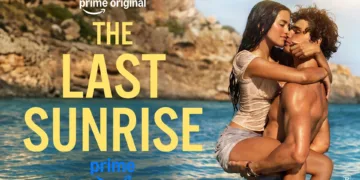


























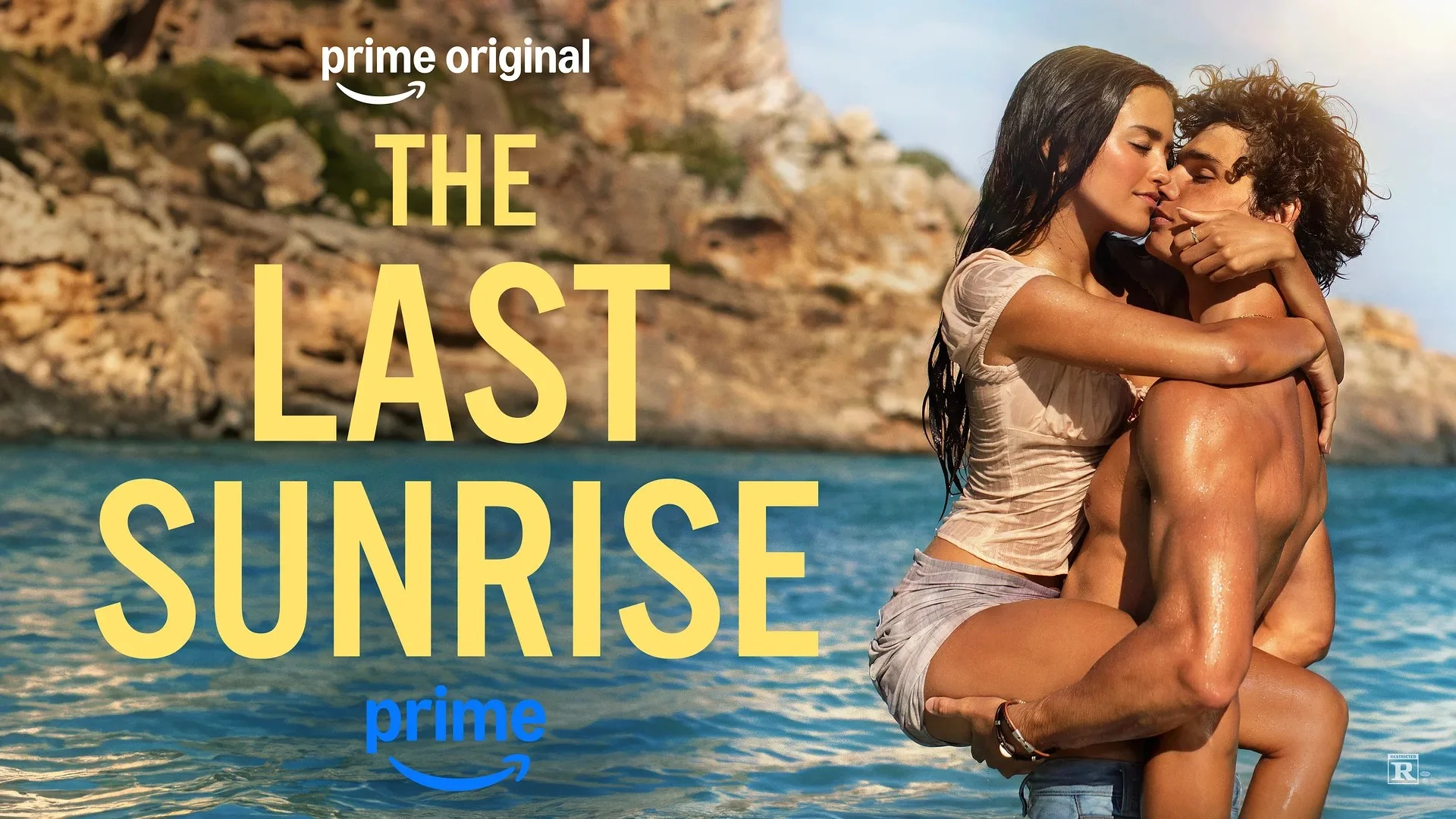

Ry Pera’s medical dilemma gives this glossy Mallorca romance a harder question than its screenplay seems prepared to answer. After a seizure during a dance performance, Ry, played by Maia Reficco, is given two choices: stronger medication that she says dulls her emotions, or brain surgery that could damage her memory. Neither option feels much like control.
That tension is where The Last Sunrise, Carlson Young’s adaptation of Anna Todd’s 2025 novel, finds its strongest material. Ry has spent years living according to appointments, pill schedules, medical warnings, and the watchful attention of her mother, Isolde. Eva Longoria plays Isolde with enough worry behind her firmness that her supervision never reads as simple parental tyranny. She is scared because there is something worth being scared about.
Their summer trip to Mallorca changes Ry’s sense of what her life could contain. Isolde is there partly for Redwyn, the company preparing a luxury development on the island. Ry soon meets Julián García, played by Fernando Lindez, a local fisherman whose days appear wonderfully unstructured next to hers. The setup resembles countless sun-drenched young-adult romances. The difference is that Ry’s rebellion has a genuine cost attached to it, and the film keeps wavering over how seriously it wants to take that cost.
Freedom, Risk, and the Body
Ry does not rebel because she suddenly discovers parties and an attractive guy. Her frustration is established before Mallorca. She fears surgery because her memories could disappear, while the medication she chooses instead supposedly leaves her unable to experience life fully. That creates a fascinating trap: preserve the body and potentially sacrifice part of the self, or risk the body to protect the person she recognizes as Ry.
I wish the film spent longer inside that trap. Once Julián introduces Ry to parties, nights with friends, sex, spontaneous outings, and sunrise watching, her medical problem begins behaving like an obstacle the romance can temporarily switch off. Ry secretly stops taking her medication because she wants to feel everything. That decision should completely alter the mood of every scene that follows.
It rarely does. The problem is partly one of cinematic evidence. Ry tells us the pills make her numb, yet Young gives us little sense of that numbness beforehand. We do not see a clear shift in her physical behavior, emotional responsiveness, dancing, or relationships after she abandons them. Film has a wonderful ability to make an internal change visible through performance, editing, sound, or even the rhythm of a scene. Here, the screenplay mostly asks dialogue to carry the idea.
Reficco does better when Ry is confronting Isolde. Her frustration comes through in the way she rejects being spoken to like a permanent patient, especially once her mother discovers the abandoned medication and decides they are returning to Texas. Ry refuses.
That is one of the movie’s most important decisions because neither character can easily be dismissed. Isolde knows another seizure could be dangerous. Ry knows that survival under constant supervision has started to feel like another form of disappearance.
Where the writing stumbles is in treating independence and recklessness as neighbors for so long that they occasionally become indistinguishable. Ry has every right to demand authority over her body. Secretly stopping treatment without confronting the consequences is something else. There is a terrific coming-of-age drama hiding in that distinction.
Love, Land, and a Convenient Romeo
Lindez understands what Julián needs to be during the first half. He has an easy physical confidence around Ry, and their beach scenes work because Reficco visibly loosens around him. At parties she moves through spaces without Isolde checking the clock. During their intimate encounters, the attraction feels credible. When they watch the sunrise together, the symbolism may be obvious, yet the actors sell Ry’s delight in doing something because she wants to do it rather than because a doctor recommended it.
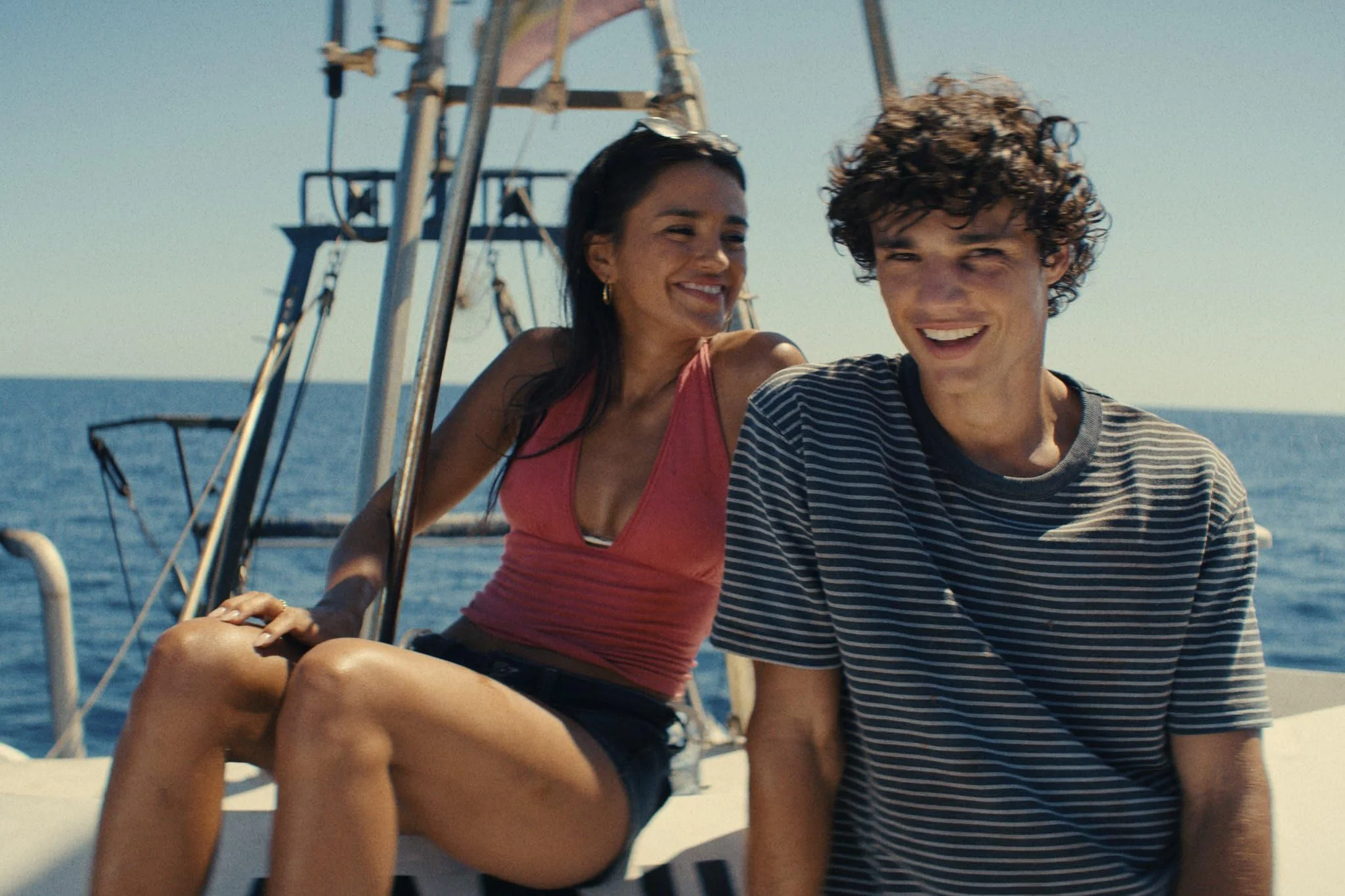
Their chemistry keeps the romance pleasant. Characterization gives it less help. Once Julián has introduced Ry to spontaneous living, the screenplay struggles to define him outside that function. We hear about his attachment to his family’s fishing business and his desire to preserve their place on Mallorca. Those should give him a life with pressures completely separate from Ry. Then Redwyn enters the relationship.
Isolde’s development plans threaten land connected to the García family’s livelihood, putting Ry and Julián on opposite sides of a dispute neither created. Ry even describes their situation as “Romeo-and-Juliet-serious,” which is a funny line largely because the movie has not built anything remotely that operatic.
Much of the land conflict exists on paper. Documents are discussed and waved around. Julián’s financial trouble, including his dealings with a threatening lender while trying to protect the family business, receives little dramatic space. Most damagingly, we never develop a vivid relationship with the place he is supposedly fighting to save.
This is where visual storytelling matters. If Julián loves these docks, show us why. Let us see him repairing equipment with his family, returning to the same weathered stretch of harbor each morning, or recognizing every person working along it. Give the threatened land history through images before asking us to mourn its possible destruction. Instead, the business conflict mostly functions as another complication between two attractive people who already have a considerably stronger problem to deal with.
A Mother’s Fear Disguised as Control
The relationship between Ry and Isolde repeatedly comes closer to becoming the movie’s emotional center than the romance does. Longoria helps. Watch the difference between Isolde trying to manage Ry’s medication and Isolde reacting after learning that Ry has stopped taking it.
The first can look invasive. The second carries panic. Longoria plays that panic without turning Isolde into a melodramatic villain, which matters because the screenplay could easily have reduced her to the standard parent standing between young lovers. She has reasons for hovering.
Ry’s illness means Isolde has spent years treating vigilance as an expression of love. If medication must be taken at a particular time, she checks it. If doctors recommend caution, she becomes caution personified. From Ry’s perspective, this means her mother can look at her and see a seizure before seeing a daughter. That is painful on both sides.
Their confrontation over returning to Texas works because each woman is defending a different definition of care. Isolde believes protecting Ry requires intervention when she makes a dangerous choice. Ry believes protection has consumed so much of her life that she needs the right to make choices Isolde hates.
Mallorca could have deepened Isolde further. Her history with the island, her connection to Mateo, and the development project all suggest that returning home is exposing parts of her own past. The script touches those elements without giving them the same attention it gives Ry and Julián’s romance.
There is a version of this story where mother and daughter are parallel characters, each returning to Mallorca carrying a past they have tried to manage. Longoria gives us glimpses of that richer film whenever Isolde’s business confidence slips and the frightened mother underneath becomes visible.
The Sunrise Means Something Else
Mallorca is photographed to be desired. Beaches glow. The sea catches the light. Young people drift between parties, boats, streets, and romantic encounters with the ease of people in a tourism campaign who apparently never need to find parking. It is pretty. Sometimes very pretty.
Young repeatedly returns to sunrise imagery as Ry changes her relationship with time. She has spent years thinking about future seizures, future treatments, and the possibility of losing future memories. Watching the sun come up with Julián gives her something immediate. I understand why the image keeps returning. What I missed was Mallorca itself.
For a story that eventually depends on Julián’s attachment to local land, the island often feels geographically anonymous. We see attractive coastlines, yet rarely the social texture of the fishing community Redwyn’s development threatens. Compare that with romances where location becomes inseparable from character, where kitchens, streets, businesses, and neighborhoods gradually teach us how people live. The Last Sunrise gives Mallorca beauty without enough personality.
That weakness connects directly to the film’s tendency to tell rather than dramatize. The medication’s emotional effects are explained. The land negotiations are explained. Julián’s financial trouble is explained. Isolde’s history is explained in fragments. The camera keeps receiving opportunities to carry part of the storytelling load and politely hands them back to the screenplay.
The final health crisis forces Ry to confront what the summer fantasy has postponed. Stopping her medication has not liberated her from illness. Julián cannot love the condition away. Isolde cannot protect her by controlling every hour. Ry has to reconsider the surgery and the future she has spent treating as something already lost.
The film makes a smart choice by refusing the obvious terminal-romance ending. Ry survives. That changes the title from a prediction into an expression of how she has been thinking.
Her “last sunrise” was never necessarily the final morning of her life. It was the kind of morning someone watches when she has convinced herself there may be no point planning for the next one.
Ry’s change is small enough to feel believable. She does not receive certainty. Her medical problems remain. Julián remains part of her life, yet he is not presented as a cure. What changes is her willingness to accept that choosing life can include treatment, responsibility, fear, and plans extending beyond tonight’s party.
That idea deserved a sharper film around it. Still, when Reficco is facing the possibility of losing memories she has only recently begun making for herself, The Last Sunrise briefly becomes the complicated romance it has been chasing all along.
The Last Sunrise premiered on Prime Video on August 26, 2026. A college student dealing with a chronic illness spends her summer in Mallorca with her mother and unexpectedly falls for a charismatic local.
Where to Watch The Last Sunrise (2026) Online


Full Credits
Title: The Last Sunrise
Distributor: Amazon MGM Studios, Prime Video
Release date: August 26, 2026
Rating: PG-13
Running time: 1 hour 46 minutes
Director: Carlson Young
Writers: Anna Klassen, Anna Todd
Producers and Executive Producers: Jennifer Gibgot, Andrew Panay, Brian Pitt, Lena Roklin, Anna Todd
Cast: Maia Reficco, Fernando Lindez, Eva Longoria, Andrés Velencoso, Chloé Sweetlove, Sabrina Bartlett
Director of Photography (Cinematographer): Rob Givens
Composer: Isom Innis
The Review
The Last Sunrise
The Last Sunrise has a promising conflict buried inside its glossy summer-romance machinery. Ry’s struggle between medical safety and personal agency gives Maia Reficco something real to play, while Eva Longoria brings fear and tenderness to Isolde’s controlling instincts. I liked the idea behind the repeated sunrise imagery, yet Carlson Young rarely gives Mallorca, Julián’s family business, or Ry’s treatment dilemma enough visual or dramatic texture. The film reaches for emotional complexity, then repeatedly chooses the easiest version of it.
PROS
- Reficco and Lindez share easy chemistry
- Strong mother-daughter conflict
- Attractive Mallorca photography
- Ry’s medical dilemma has genuine dramatic potential
CONS
- Julián remains thinly developed
- Medical choices receive shallow treatment
- Land dispute lacks physical stakes
- Mallorca often feels like vacation imagery
- Major developments rely heavily on dialogue