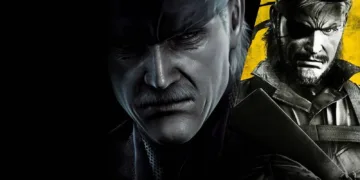


























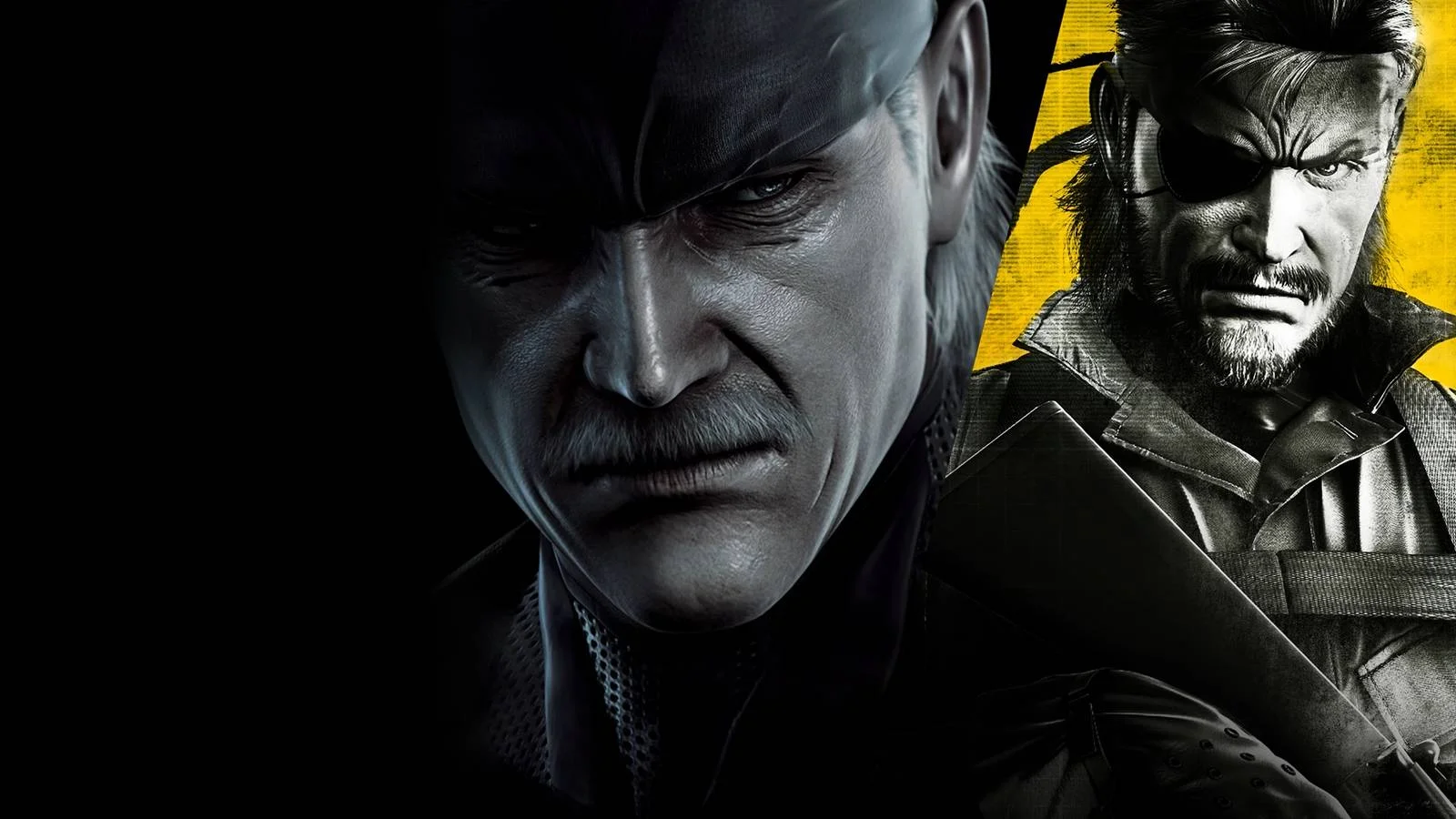

OctoCamo still solves stealth with one wonderfully simple input: press Snake against a surface, let his suit copy its texture, then watch his camouflage percentage climb. Eighteen years after Metal Gear Solid 4: Guns of the Patriots first used that system, it remains a clean example of mechanical feedback telling the player exactly how safe they are without breaking the fiction.
That matters because Metal Gear Solid: Master Collection Vol. 2 is largely a preservation project. Its headline games are Metal Gear Solid 4 and Metal Gear Solid: Peace Walker, joined by the Game Boy Color title Metal Gear: Ghost Babel. The package is smaller than 2023’s first Master Collection, yet it contains the one game that fans have struggled to access for nearly two decades.
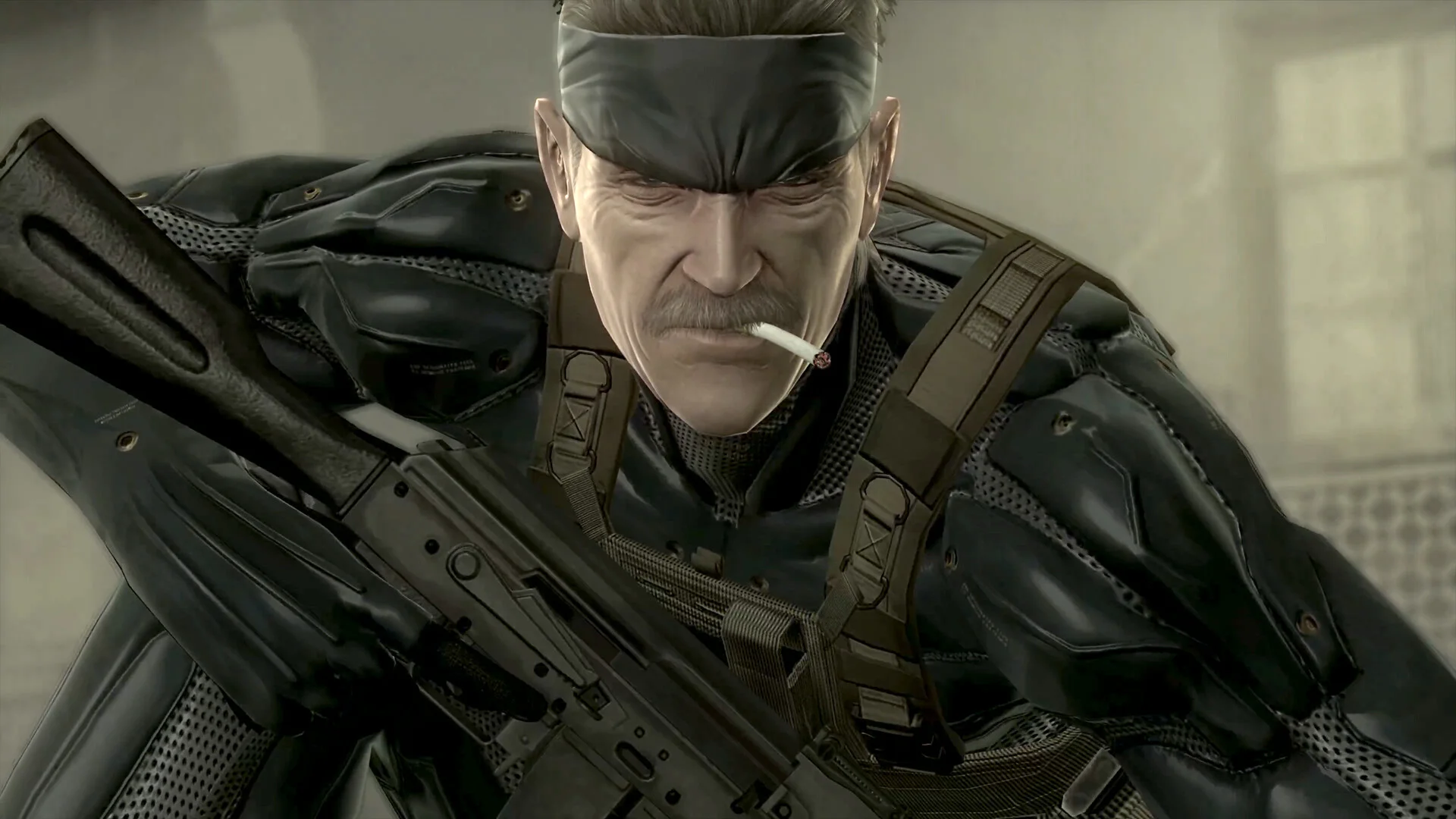
MGS4 finally leaving PlayStation 3 is the event here. Konami has kept its mechanics, strange platform-specific jokes, enormous cutscenes, and idiosyncratic structure intact while presenting the game at a far cleaner resolution and stable 60 FPS. It feels less like modernization and closer to removing eighteen years of hardware friction.
War as a System
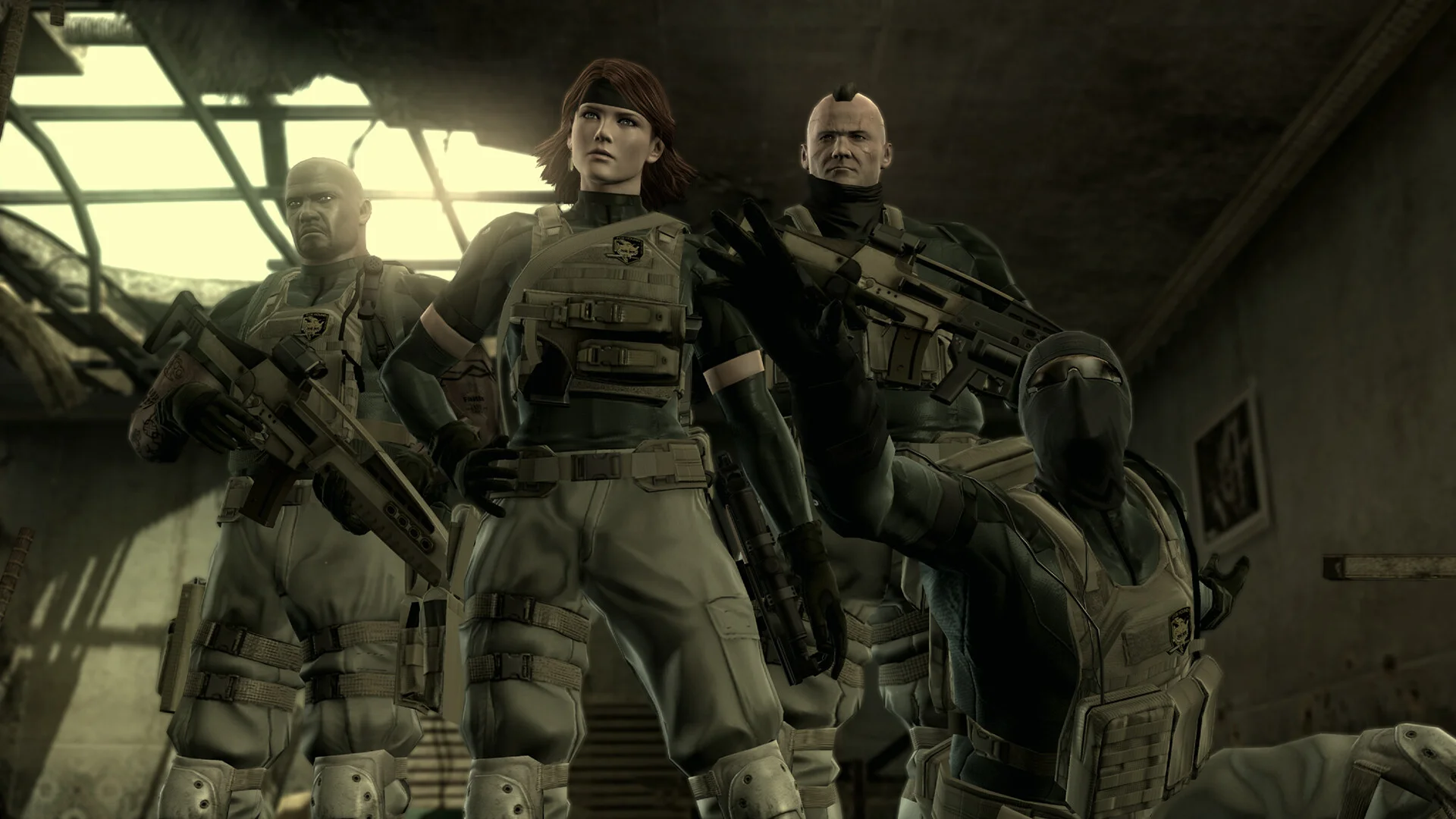
MGS4 remains fascinating because almost every system reflects the world Snake is moving through. Its battlefields are active conflicts rather than isolated infiltration spaces. Soldiers exchange fire while Snake crawls through rubble, circles around them, helps one side, or decides that subtlety has had a good run and starts shooting.
The over-the-shoulder aiming makes that flexibility possible. Snake can move and fire comfortably, switch into first-person aiming for precision, or rely on non-lethal equipment when avoiding kills. Boss encounters accommodate the same choice, which keeps pacifist play from feeling like a rule the game forgets whenever someone important arrives.
Drebin’s weapon economy changes the resource tension established by earlier entries. Snake Eater makes suppressors valuable because they wear down and cannot simply be replaced whenever convenient. MGS4 lets Snake convert battlefield pickups into Drebin Points, then buy guns, ammunition, attachments, and spare suppressors from a menu. That abundance initially seems to weaken stealth’s pressure, yet it fits a story obsessed with warfare becoming commercial infrastructure. Snake is sneaking through a world where violence has become an online shop.
The five-act structure keeps changing the conditions around those mechanics. Traditional battlefield infiltration gives way to Eastern European surveillance and eventually the enormous battleship sequence. Mission briefings even let players control Metal Gear Mk. II around the aircraft while characters talk, turning exposition into a small exploration space.
The weak point remains pacing. The third act slows dramatically, and the latter half increasingly prioritizes spectacle and lengthy cinematics over the freer stealth encounters that make the early hours so strong. The remaster preserves that imbalance with the same care it preserves everything else.
Peace Walker’s Blueprint
Peace Walker reveals its PSP origins within minutes. Areas are short, exits divide environments into obvious chunks, and missions are built around stopping points that made sense for portable sessions. Next to MGS4’s larger battlefields, the segmentation can feel restrictive. Its systems have aged far better.
Mother Base turns completed missions into long-term progression. Personnel, equipment, and resources feed back into the base, which then produces stronger weapons and tools for later operations. Extra Ops encourage repeating that cycle outside the main campaign. Anyone coming backward from Metal Gear Solid V will immediately recognize the blueprint, only compressed into the limitations of a handheld game.
Co-op leaves a less graceful legacy. Some late bosses carry health pools clearly balanced around multiple players, making solo attempts longer than their mechanics can support. The fights expose the danger of preserving multiplayer-oriented numbers without reconsidering how modern players may approach the game.
Ashley Wood’s illustrated cutscenes are another visible compromise that became an identity of its own. Comic panels replace MGS4’s elaborate staging, occasionally letting the player aim or interact during key moments. Full 3D cinematics would be technically possible now, yet replacing these sequences would erase one of the clearest ways Peace Walker distinguishes itself from its console siblings.
Preservation’s Limits
The collection handles the games themselves with considerable care. MGS4’s strange television clips, PS3 references, product placements, and MGS4 Database survive. Peace Walker’s multiplayer returns. Ghost Babel provides an accessible version of a Game Boy Color game that has become expensive on the secondhand market.
The archival material feels less ambitious. Scripts, Master Books, images, and written material offer plenty to read, but there is little development footage or documentary material explaining how these unusual games were made. A collection preserving something as technically peculiar as MGS4 could have told a fascinating story about getting it off PS3 hardware.
PC players face smaller irritations. Multiple launcher layers separate the collection menu, language selection, and the games themselves, while graphical settings are basic and ultrawide displays receive no proper support. None of those problems damages the underlying games, but they make the surrounding software feel less considered than the preservation work inside it.
Metal Gear Solid: Master Collection Vol. 2 works best when it behaves like an archive with a controller attached. MGS4’s OctoCamo, battlefield systems, and Drebin economy still show how aggressively Kojima was redesigning stealth around a changing fictional world, while Peace Walker’s Mother Base loop exposes the foundation that the series would build on next. The collection does not reinvent either game. It finally gives their systems somewhere current to live.
The Review
Metal Gear Solid: Master Collection Vol. 2
Metal Gear Solid: Master Collection Vol. 2 succeeds because its preservation work leaves the games themselves largely untouched where it matters. Metal Gear Solid 4 benefits enormously from sharper presentation and stable 60 FPS performance, while OctoCamo, flexible combat, and Drebin’s weapon economy still feel surprisingly modern. Peace Walker carries clearer PSP-era compromises, especially in its segmented missions and spongey solo bosses, yet Mother Base remains an important blueprint for Metal Gear Solid V. The thin game count and limited archival extras keep the package from feeling definitive.
PROS
- Excellent MGS4 preservation
- Stable 60 FPS performance
- OctoCamo still works brilliantly
- Strong Mother Base progression
- Ghost Babel finally accessible
CONS
- Only three included games
- Peace Walker shows its age
- Sparse behind-the-scenes material
- Weak PC display options