

























![Kingdom Hearts Collection [I-III] Review](https://gazettely.com/wp-content/uploads/2026/10/Kingdom-Hearts-Collection-I-III-1-360x180.webp "Kingdom Hearts Collection [I-III] Review: KHII Holds Steady as Newer Entries Fluctuate 37")





Managing three armies before a single attack happens is where Brigandine Abyss reveals its priorities. The game is less interested in rushing players from one fight to another and more focused on the preparation that makes those fights possible. Assigning leaders, evolving monsters, upgrading bases, and deciding which resources matter creates a strategy layer that feels like a campaign map rather than a series of disconnected battles.
That structure places Brigandine Abyss in a different space from many tactical RPGs. It shares the turn-based combat foundation of games like Fire Emblem, but its identity comes from territory control and long-term planning. Every captured base changes the shape of the war, giving players more options for recruitment, quests, and expansion. The result is a game built around decisions that accumulate over time. The problem is that some of those decisions become harder to manage as the empire grows.
Building the Army
The Organization Phase is where most of the strategic thinking happens. Each season gives players time to prepare their forces before launching invasions. Leaders can be assigned to bases, sent on quests, equipped with new gear, or placed into armies alongside monster units.
The base upgrade system gives this preparation real purpose. Different locations provide different bonuses after investment, creating reasons to specialize. Gran Dragnica, for example, can develop bonuses that strengthen dragon-focused armies, encouraging players to build around that faction’s identity instead of simply collecting the strongest units available.
The quest system also improves the series formula. Leaders no longer have to leave active armies to search for every useful item. Mercenaries can handle many resource-gathering tasks, allowing players to maintain offensive momentum. Equipment can be purchased after being discovered, reducing some of the frustration caused by random rewards. The problem appears when the number of bases increases. A small kingdom is easy to understand. A continent requires paperwork.
Players constantly move between menus to check materials, available quests, equipment needs, and idle units. The systems themselves are meaningful, but the interface struggles to keep up with the scale of the empire being built.
Tactical Systems That Reward Experimentation
Combat uses a hex-based battlefield where leaders command groups of monsters. The most important rule is simple: defeat the enemy leader and the rest of that leader’s army disappears. This creates a constant risk-reward calculation. Protecting your own leaders becomes essential, while targeting enemy commanders can turn a difficult battle into a quick victory.
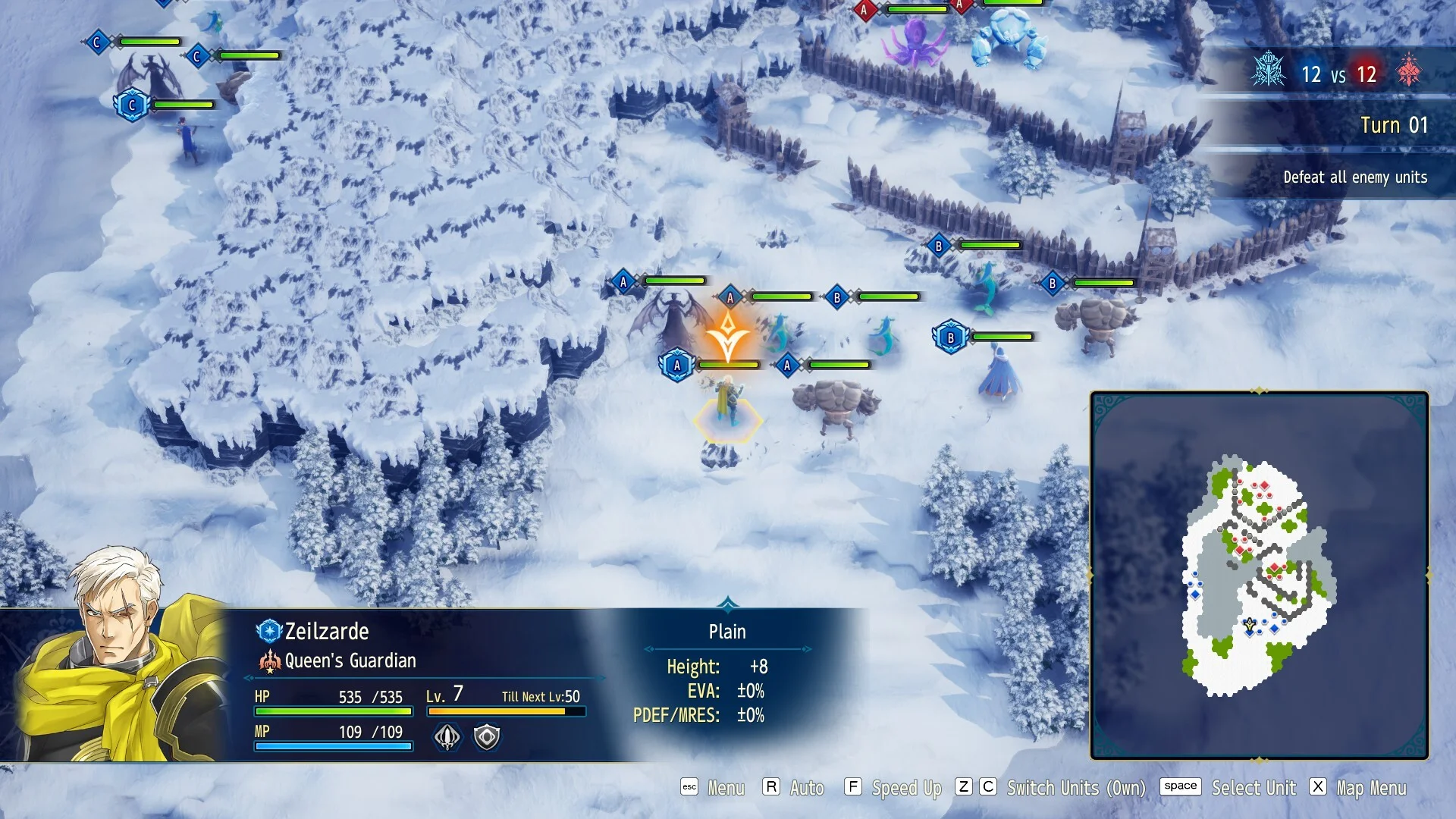
The Rally system is the strongest new addition. Leaders can absorb a monster unit during battle, gaining passive traits from that creature. A monster that seems weak in direct combat can become valuable because its ability improves a leader’s movement, defenses, or offensive options. This mechanic changes how players view their armies. A creature is no longer useful only for damage output. Its value can come from the trait it provides and how that trait fits into a larger strategy.
The same philosophy appears in unit customization. Leaders have individual traits, monsters can evolve, and equipment choices influence how armies function. Building a force becomes a process of finding combinations rather than simply replacing weaker units with stronger ones.
A Battlefield That Needs More Resistance
The tactical foundation is strong, but the enemy AI limits how much the systems are tested. Many enemy armies remain stationary until a player unit enters their attack range. Once that pattern becomes clear, battles often follow the same formula: place durable units ahead, keep support units behind them, and wait for the enemy to approach.
The game offers terrain changes, elevation advantages, and special battlefield objects such as barricades and watchtowers. These ideas add texture to fights, but the AI rarely forces players to engage with them deeply.
Difficulty options increase the challenge, yet they do not appear to transform enemy behavior. Harder battles often feel like opponents with improved statistics rather than smarter plans. The tactical possibilities are there. The opposition simply does not always demand them.
A Strong Foundation With Limited Longevity
Story Mode gives players six factions with different leaders and motivations. The added character scenes and faction perspectives give the campaign more personality than previous entries. The gameplay remains the main attraction, though, with narrative serving as a reason to keep expanding rather than the primary reward.

Mission Mode provides 24 factions with different objectives, creating scenarios that encourage alternative approaches. One faction may focus on earning money, another may prioritize development goals, and another may push toward conquest. These variations create new starting points, but many paths still return to the same cycle of building armies and capturing territory.
Brigandine Abyss succeeds because its systems understand why strategy RPG players enjoy planning. Watching a carefully prepared army grow, finding useful monster traits, and developing a territory creates a satisfying rhythm. Its strongest ideas come from the connection between preparation and consequence.
The game struggles when that rhythm stretches across repeated campaigns. The first empire feels exciting because every system is new. Later runs rely heavily on the same battles, maps, and routines.
For players who enjoy managing every piece of an army, Brigandine Abyss offers a rewarding strategy sandbox. For those searching for constant tactical surprises, the battlefield may eventually feel like a solved equation.
The Review
Brigandine Abyss
Brigandine Abyss builds a satisfying strategy loop around army management, base growth, and the Rally system, giving players plenty of mechanical decisions to explore. Its tactical foundation is strong, but weak AI and repetitive campaigns limit how far those systems can carry the experience. Fans of detailed SRPG management will find a rewarding battlefield to command.
PROS
- Deep army management
- Excellent Rally system
- Base upgrade mechanics
- Strong faction variety
CONS
- Passive enemy AI
- Repetitive campaigns
- Cluttered organization menus
- Low battle pressure







