
























![Kingdom Hearts Collection [I-III] Review](https://gazettely.com/wp-content/uploads/2026/10/Kingdom-Hearts-Collection-I-III-1-360x180.webp "Kingdom Hearts Collection [I-III] Review: KHII Holds Steady as Newer Entries Fluctuate 37")




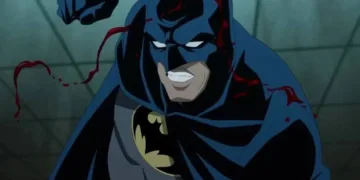
Bruce Wayne has spent years turning exhaustion into a weapon, but every weapon eventually wears down its owner. Batman: Knightfall – Part 1 – Knightfall understands that the Dark Knight’s greatest enemy is not simply a stronger opponent. It is the impossible demand Bruce places on himself.
Jeff Wamester and Jeremy Adams’ animated adaptation takes one of Batman’s most famous comic storylines and builds the first chapter around a slow collapse. The film does not rush toward the iconic confrontation with Bane. Instead, it spends time showing why Bruce believes he can survive anything. He studies criminals, plans for disasters, trains beyond human limits, and refuses to let anyone share the burden. Watching that mindset become the reason for his downfall gives the story its emotional weight.
The challenge of adapting Knightfall has always been its size. The original comic saga contains years of material, dozens of characters, and several major shifts in Batman’s identity. This film wisely focuses on the essential conflict between Batman, Bane, and Jean-Paul Valley while leaving room for the next chapters to expand the story.
Bane Becomes Batman’s Perfect Opponent
The smartest choice in Knightfall is giving Bane the attention needed to make him feel like a complete character. Too often, Bane has been reduced to a simple physical threat. Here, the film spends time exploring his childhood in Peña Duro prison and the experiences that shaped his belief in strength and domination.
Michael Mando’s voice performance captures the different sides of Bane. He is intimidating because of his physical power, but his intelligence makes him dangerous long before the Venom-enhanced transformation. The film understands that Batman cannot simply punch his way out of this conflict. Bane studies him, understands his habits, and attacks the foundations of his life.
The Venom sequence is one of the film’s strongest visual moments because it turns Bane’s philosophy into something physical. The transformation is horrifying, yet it also reveals the tragic person underneath the monster. The animation gives the scene a sense of consequence instead of treating it as a simple power upgrade.
Gotham, Robin, and the People Batman Pushes Away
Gotham City feels appropriately broken in this adaptation. The escape of Batman’s enemies from Arkham Asylum creates a constant pressure that prevents Bruce from recovering. Villains such as Scarecrow, Riddler, Victor Zsasz, and Mad Hatter fill the city with chaos, forcing Batman into an endless cycle of violence and exhaustion.
The film also gives Tim Drake a stronger role than many recent Batman adaptations. Jack Giffin’s Robin feels like a capable detective rather than a sidekick waiting for instructions. His relationship with Bruce reveals a painful contradiction: Batman wants to protect his allies, but his refusal to trust them creates distance.
Jean-Paul Valley adds another important conflict. Pablo Schreiber brings a fragile intensity to a character struggling against the violent programming created by the Order of St. Dumas. His introduction works because Bruce sees a person in need of guidance, while the audience can see the danger hiding beneath that potential.
Animation That Understands Batman’s Darkness
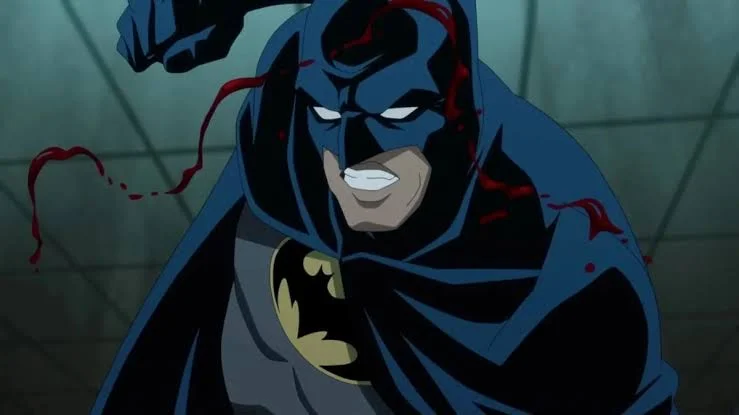
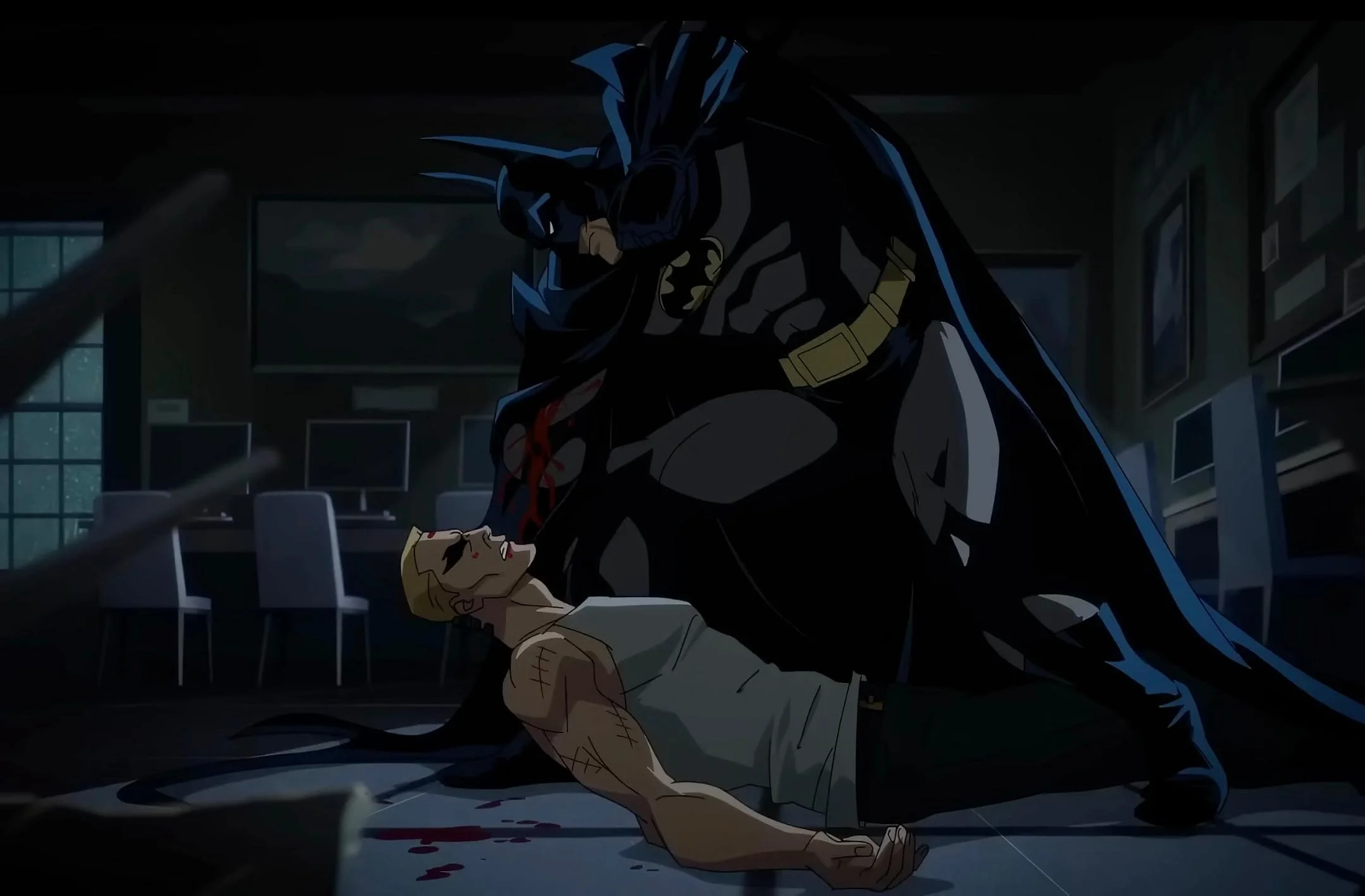
The visual style captures the heavy atmosphere associated with Batman’s darker comic eras. Studio Mir’s animation gives Gotham a gothic personality, with sharp shadows, imposing character designs, and action scenes that feel brutal without losing their sense of purpose.
The sound design and music also help create the film’s tension. The score from John Jennings Boyd and Eric V. Hachikian shifts between suspense, sadness, and explosive action, matching the emotional changes happening around Bruce. The film understands that Batman stories are built on mood as much as movement.
Anson Mount’s performance carries the exhaustion beneath Bruce’s confidence. His Batman voice has the expected strength, yet his quieter moments as Bruce reveal someone slowly reaching his limit. The difference between the public hero and the damaged person underneath becomes clearer as the film progresses.
A Strong First Step Into Batman’s Fall
The first part of Knightfall succeeds because it treats Batman’s defeat as a character story rather than a simple event. The film spends its runtime building the person who will eventually break, making Bane’s victory feel earned. Some elements move quickly because the story has a large amount of material to cover, especially Jean-Paul Valley’s background.
Still, the film creates a strong foundation for the trilogy and leaves Bruce Wayne facing the kind of failure he has spent his life trying to prevent. Batman has always been defined by his ability to keep going. This time, the question is what happens when going forward becomes the thing destroying him.
Batman: Knightfall – Part 1: Knightfall made its digital debut via Warner Bros. Home Entertainment on August 25, 2026, following its premiere at the Annecy International Animation Film Festival. As the first installment of an ambitious animated trilogy, the film follows the Dark Knight as he pushes himself to absolute exhaustion attempting to recapture Gotham City’s most dangerous criminals after Bane shatters Arkham Asylum.
Where to Watch Batman: Knightfall – Part 1: Knightfall (2026) Online






Full Credits
Title: Batman: Knightfall – Part 1: Knightfall
Distributor: Warner Bros. Home Entertainment
Release date: June 23, 2026 (Annecy), August 25, 2026 (Digital)
Rating: PG-13
Running time: 1 hour 18 minutes
Director: Jeff Wamester
Writers: Jeremy Adams
Producers and Executive Producers: Rick Morales, Jim Krieg, Kimberly S. Moreau, Sam Register, Michael Uslan
Cast: Anson Mount, Michael Mando, Pablo Schreiber, Jack Giffin, Bruce Boxleitner, David Dastmalchian, Simon Templeman
Composer: John Jennings Boyd, Eric V. Hachikian
The Review
Batman: Knightfall - Part 1: Knightfall
Batman: Knightfall - Part 1 - Knightfall understands that adapting a legendary comic arc requires more than recreating famous moments. The film builds its emotional impact through Bruce Wayne’s gradual collapse, Bane’s carefully developed threat, and animation that captures Gotham’s brutal atmosphere. Some supporting elements feel compressed, but the foundation for the trilogy is strong and the final act delivers a devastating turning point.
PROS
- Faithful comic adaptation
- Powerful Bane origin
- Strong voice performances
- Stylish animation
- Effective emotional build
CONS
- Some rushed character development
- Limited runtime constraints
- Part 1 structure feels incomplete







