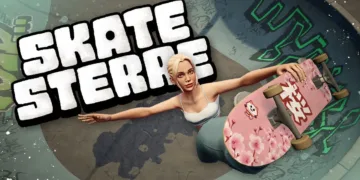

























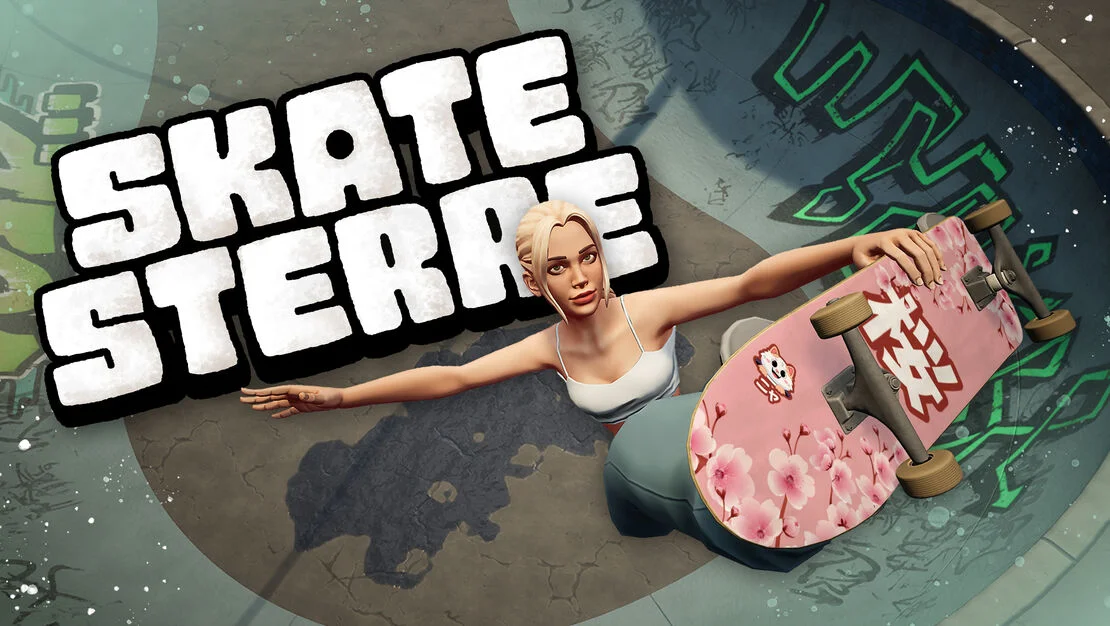

Every successful arcade skateboarding game depends on a simple contract: the player gives precise inputs, and the game rewards that control with momentum, creativity, and flow. Skatesterre builds its entire structure around that contract, borrowing the familiar two-minute challenge format from the genre’s classic era while putting Dutch skater Sterre Meijer at the front. The result is a game with a clear mechanical foundation, but several systems struggle to deliver the consistency needed for satisfying runs.
Career Mode provides the main progression path through seven stages: Factory, Spillway, Mall, Skyscraper, Waterpark, Island, and Arena. Each location contains a set of objectives that ask players to reach scores, build combos, collect items, or perform specific tricks in certain areas. Completing enough objectives unlocks new stages and opens them for Free Skate and Single Session modes.
This structure works because it understands the replay loop behind arcade skating. A level is not simply a place to move through. It becomes a puzzle where players learn routes, identify useful rails, and discover ways to extend combos. The problem is that the systems controlling those moments do not always provide the accuracy the design demands.
A Trick System Without Enough Precision
Skatesterre gives players the expected arcade toolkit. Flips, grabs, grinds, and manuals all exist, allowing players to build longer combinations across ramps, rails, and gaps. The design encourages experimentation, especially when linking smaller obstacles into a single run.
The issue comes from how those mechanics behave. Manuals and grinds are essential parts of the scoring system, yet the balance mechanics often feel unpredictable. Instead of creating a clear skill challenge where players improve through practice, the system can feel like it is fighting against them. A grind or manual may immediately push the balance meter toward failure, leaving little room for correction.
Movement has similar problems. Speed is handled in a straightforward way, but controlling jumps and landings lacks the reliability expected from a game focused on trick execution. A slightly imperfect landing can instantly destroy a combo, and some jumps are difficult to judge because the physics do not always behave consistently.
The result is a strange disconnect between the game’s objectives and its mechanics. Skatesterre constantly asks players to create impressive sequences, yet the systems behind those sequences can interrupt them before they develop. The player understands what the game wants, but the controls do not always cooperate.
Progression Built Around Practice
The progression structure is one of the stronger parts of the design. Career Mode gives players multiple ways to advance, so success does not depend entirely on mastering enormous score runs. Some objectives focus on collecting objects, while others ask for specific tricks or routes. This gives less experienced players a way forward while still offering challenges for players who enjoy chasing high scores.
Free Skate strengthens that loop by letting players return to unlocked levels without the pressure of objectives. A player can explore the Factory, test different routes, and practice difficult sections before attempting a Career challenge again. This separation between learning and completing works well.
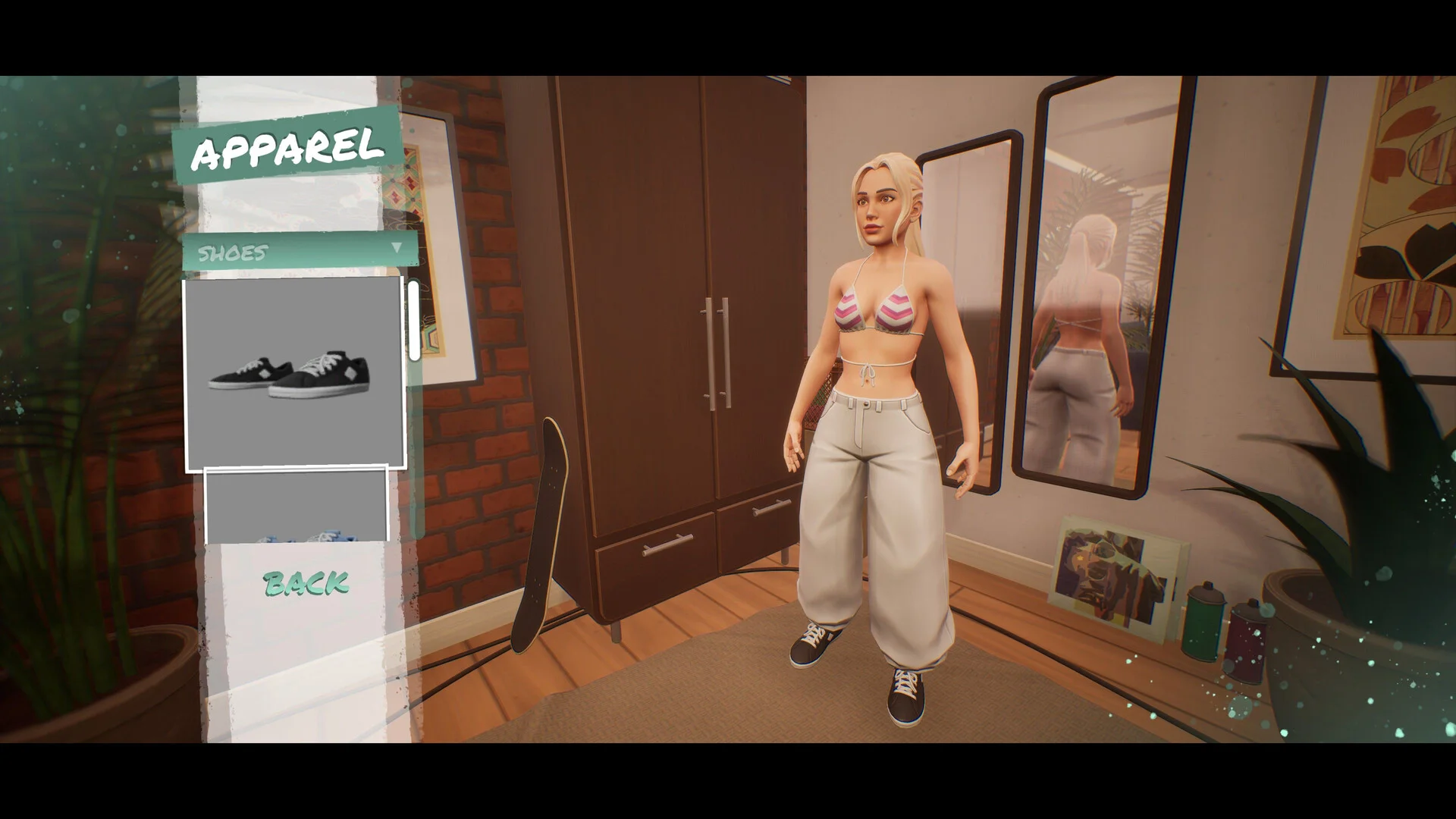
Customization is less successful as a progression reward. Players unlock outfits, boards, grip tapes, colors, and other cosmetic options, but the selection feels limited. Sterre has a small range of clothing choices, and the system does little to communicate her personality beyond appearance.
The game includes a real skater as its central character, yet the customization system treats that identity as a collection of unlockable items rather than something connected to gameplay. Additional unlocks like Big Head, Tiny Skater, Giant Board, and other cheats provide some fun after completion, but they arrive after the main systems have already shown their limitations.
Levels That Understand Movement
The strongest mechanical achievement in Skatesterre is its level design. The stages understand that arcade skating depends on creating spaces players want to revisit.
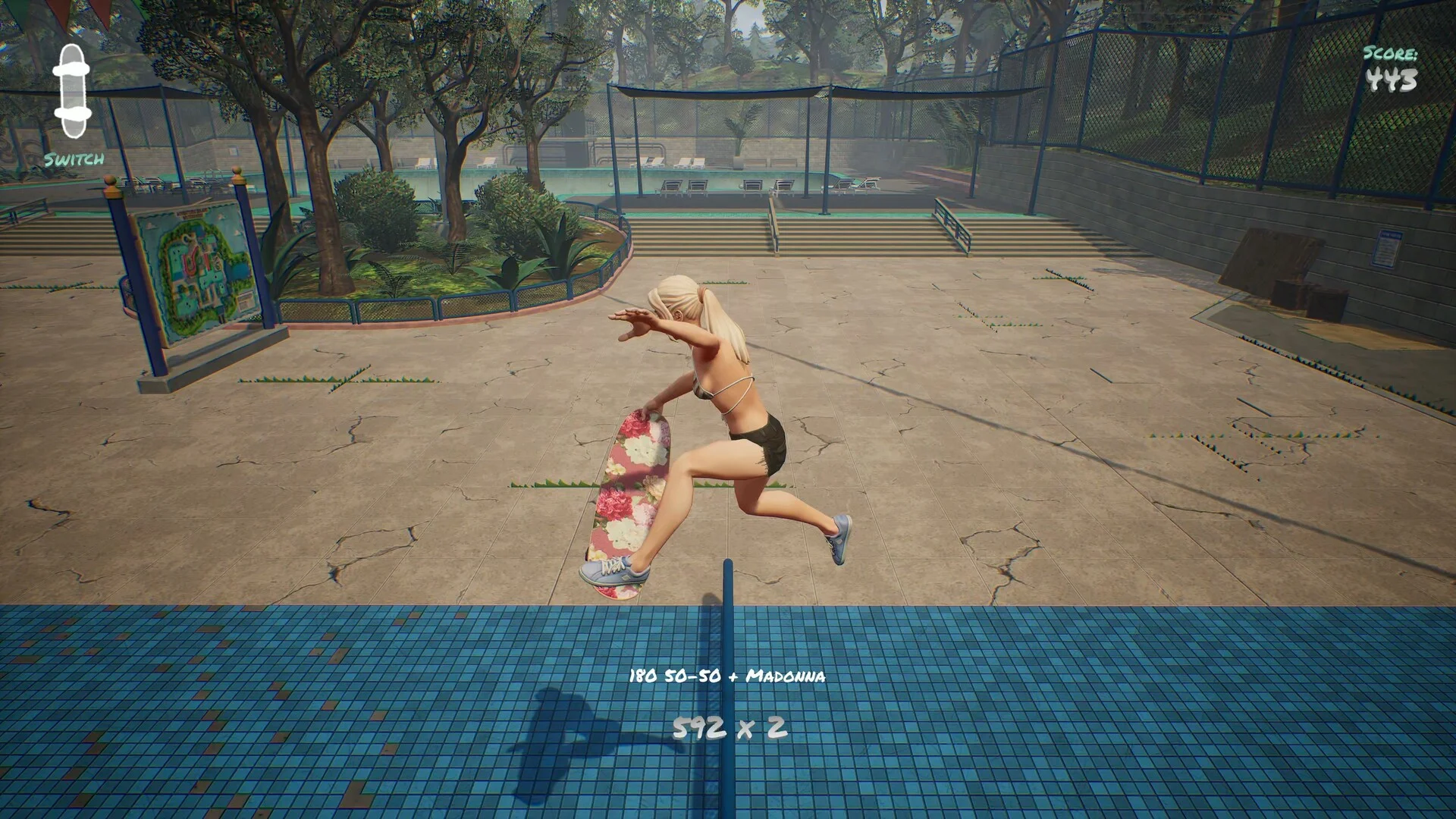
The Factory uses pipes, rails, and concrete surfaces to create a traditional skating playground. The Mall introduces stairs, ramps, and different routes that encourage exploration. The Waterpark adds a brighter environment with unusual obstacles and a layout that supports experimentation. Each location provides enough structure for players to search for better lines.
These environments succeed because they support the basic gameplay loop even when the controls struggle. Finding a new route or extending a combo still creates moments of satisfaction. The levels provide the kind of playground that arcade skating games need.
A Small System With Big Ambitions
Skatesterre has a clear understanding of the genre it wants to join. Its timed challenges, level-based progression, and focus on replay all come from a proven formula. The soundtrack, colorful environments, and simple presentation support that arcade identity.
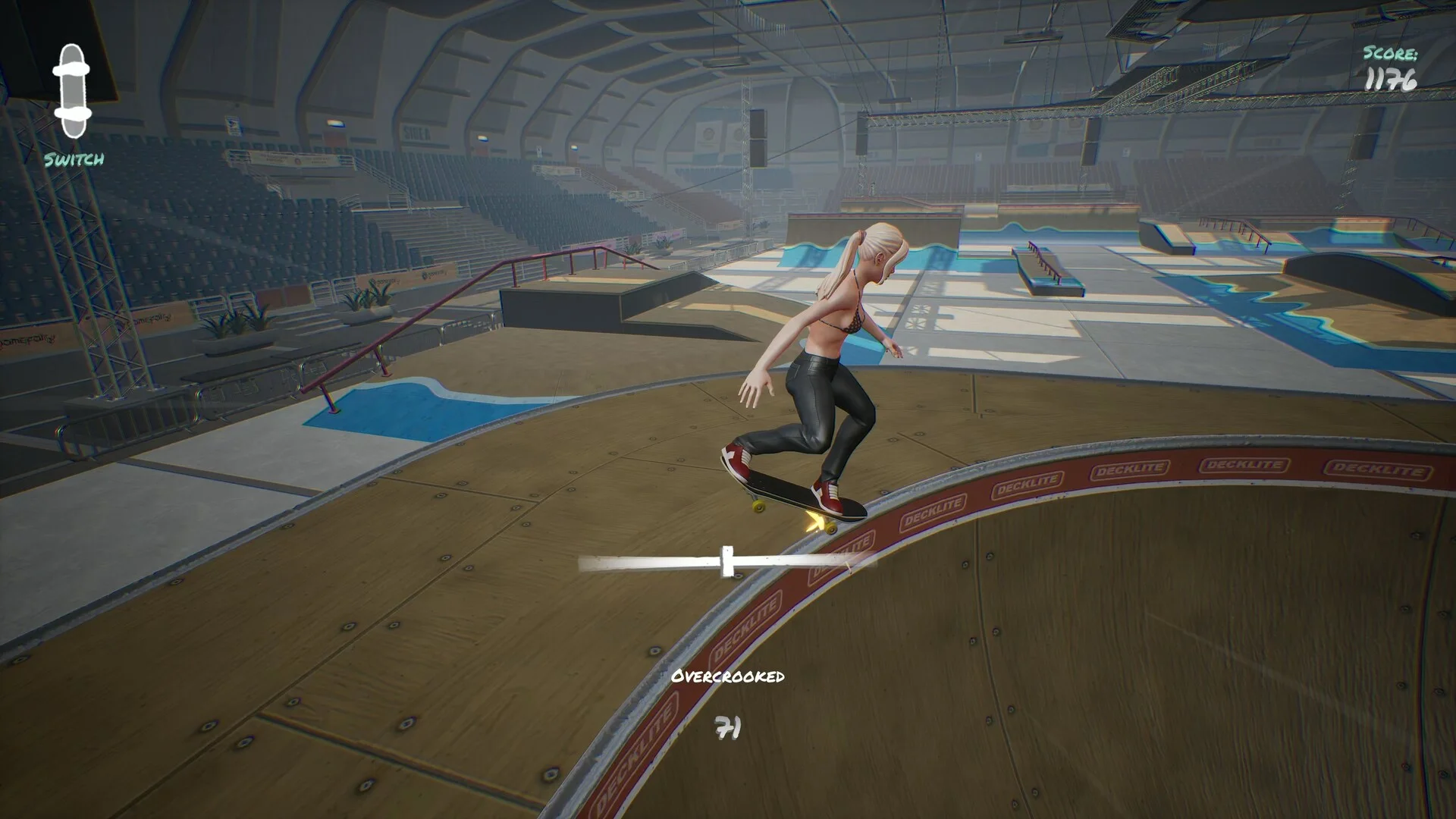
The difficulty comes from the gap between the idea and the execution. A skateboarding game built around control needs dependable physics, responsive movement, and mechanics that reward improvement.
Skatesterre has the structure for that experience, yet several of its systems prevent the player from reaching the flow they are designed to create. It feels like a good skatepark built with uneven pavement. The layout works. The ride needs work.
The Review
Skatesterre
Skatesterre understands the arcade skating loop, with compact stages, trick systems, and objectives built around replay. Its progression structure gives players reasons to return, yet the mechanics struggle to support that loop. Unreliable physics, awkward balance systems, and limited customization weaken the feeling of control that defines great skateboarding games. There is a solid framework here, but the systems need more precision to reach the genre’s best examples.
PROS
- Creative stage layouts
- Accessible objective structure
- Fun trick combinations
- Strong punk soundtrack
CONS
- Unstable physics
- Inconsistent controls
- Limited customization
- Weak progression systems