
























Move one sword two squares to the left and an ordinary run can suddenly look survivable. That small act captures why Lootbound works. ArtDock has built a dark-fantasy roguelite where the most absorbing tactical decisions often happen after combat, when the party stops fighting and you begin rearranging its possessions like an anxious quartermaster with a Tetris problem.
Each expedition begins with one of four heroes: Warrior, Witch, Paladin, or Bard. You travel across branching nodes, collect companions, gamble for equipment, and prepare for the Sentinel waiting beyond the third biome. The tabletop influence is obvious in the dice rolls and fantasy archetypes, yet the grid-based inventory owes an equally clear debt to Resident Evil 4. Lootbound turns that familiar briefcase puzzle into the emotional rhythm of an entire run. The combat can be satisfying, but the backpack is where attachment forms. Every new weapon creates a small crisis.
Tetris With Swords
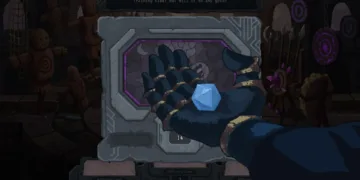
Equipment occupies physical space inside each character’s limited inventory, so finding a stronger sword never guarantees that you should take it. A bulky weapon might force you to remove two smaller pieces that work beautifully together. Rotate a hammer, move an amulet into a corner, shuffle a piece of armor, and suddenly the same collection of gear produces a completely different character.
Aura effects make these arrangements especially satisfying. Certain swords gain slashing damage from nearby swords. Other items care about adjacency, orientation, or contact with part of the inventory grid. I love how quickly this changes the emotional value of loot. A mediocre item can become difficult to discard because it completes an efficient cluster, while some gorgeous high-tier weapon arrives and causes nothing except logistical misery.
One encounter can make that planning feel brilliant. A small amulet positioned correctly can rescue a party that appeared doomed because its aura strengthens the pieces surrounding it. Victory then feels connected to something you personally solved several minutes earlier.
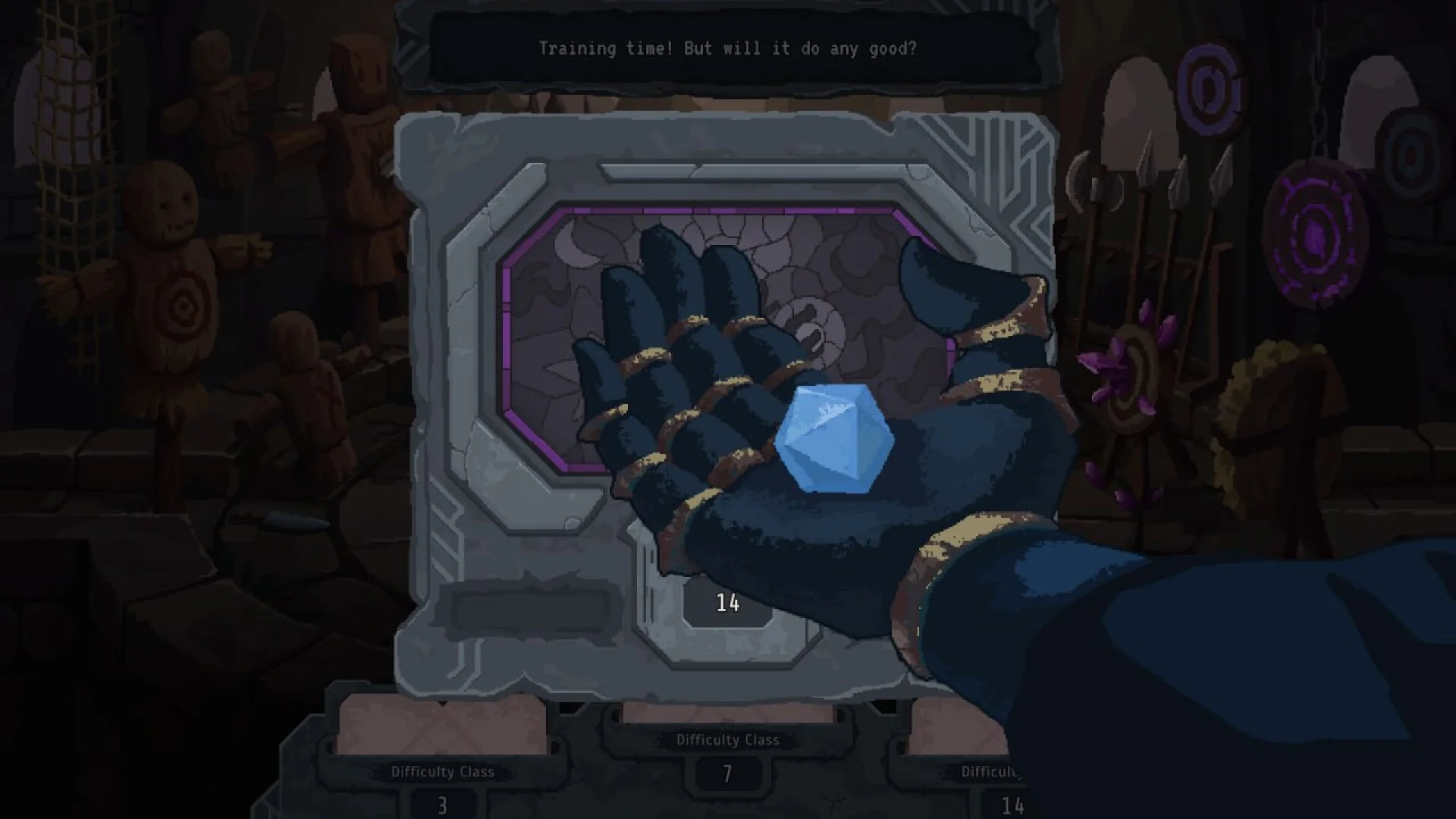
Lootbound complicates that pleasure through dice-based rewards. Blacksmiths, chests, training nodes, and other encounters frequently ask you to beat a target number before receiving the prize. Limited rerolls and unlockable dice offer some control, yet high-end equipment can demand brutal numbers. A promising build can stall because several bad rolls refuse to provide the weapon or armor it needs.
The uncertainty produces excitement when a risky throw succeeds. Repeated failures feel different. At that point, the game stops asking how cleverly you can adapt and starts asking how politely you can lose an argument with mathematics.
Temporary legendary equipment creates a similar frustration. Fitting one of these pieces into a carefully tuned grid feels wonderful until its limited lifespan expires and the whole arrangement needs rebuilding.
Build Your Party, Build Your Boss
Turn-based battles place an unusual restriction on the player: you directly control only your chosen hero. Companions act through preset behaviors, though you can influence their available abilities as the run develops. That gives preparation unusual weight. You are thinking about what the Witch will debuff, when the Bard might heal, and how your own action can support something another character will perform automatically.
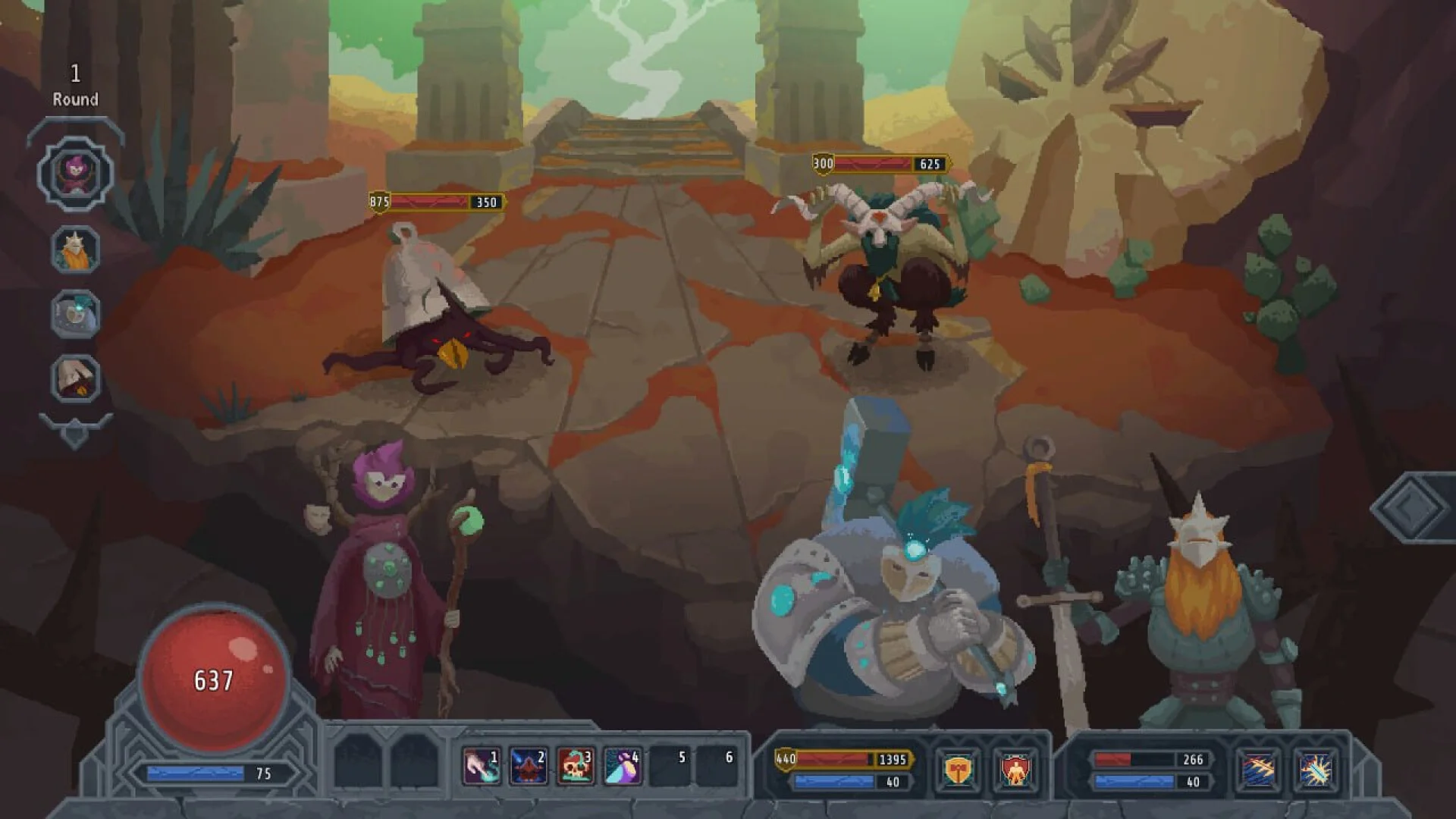
The classes are distinct enough to change the mood of a run. Warrior can become brutally simple, with basic attacks sometimes erasing enemies before much tactical thinking develops. Bard creates richer tension because support skills can push a party toward defense, speed, healing, or aggression depending on the equipment you find. One expedition might develop around acid damage; another can become a wall of shields and defensive bonuses.
The trouble is repetition. Enemy types, attacks, consumables, buffs, and debuffs begin cycling quickly, while elite opponents and bosses can become heavy pools of health before permanent upgrades soften the curve. Four classes also leave the party system feeling smaller than its mechanics deserve. Once familiar combinations begin appearing again, recruitment loses some of its suspense.
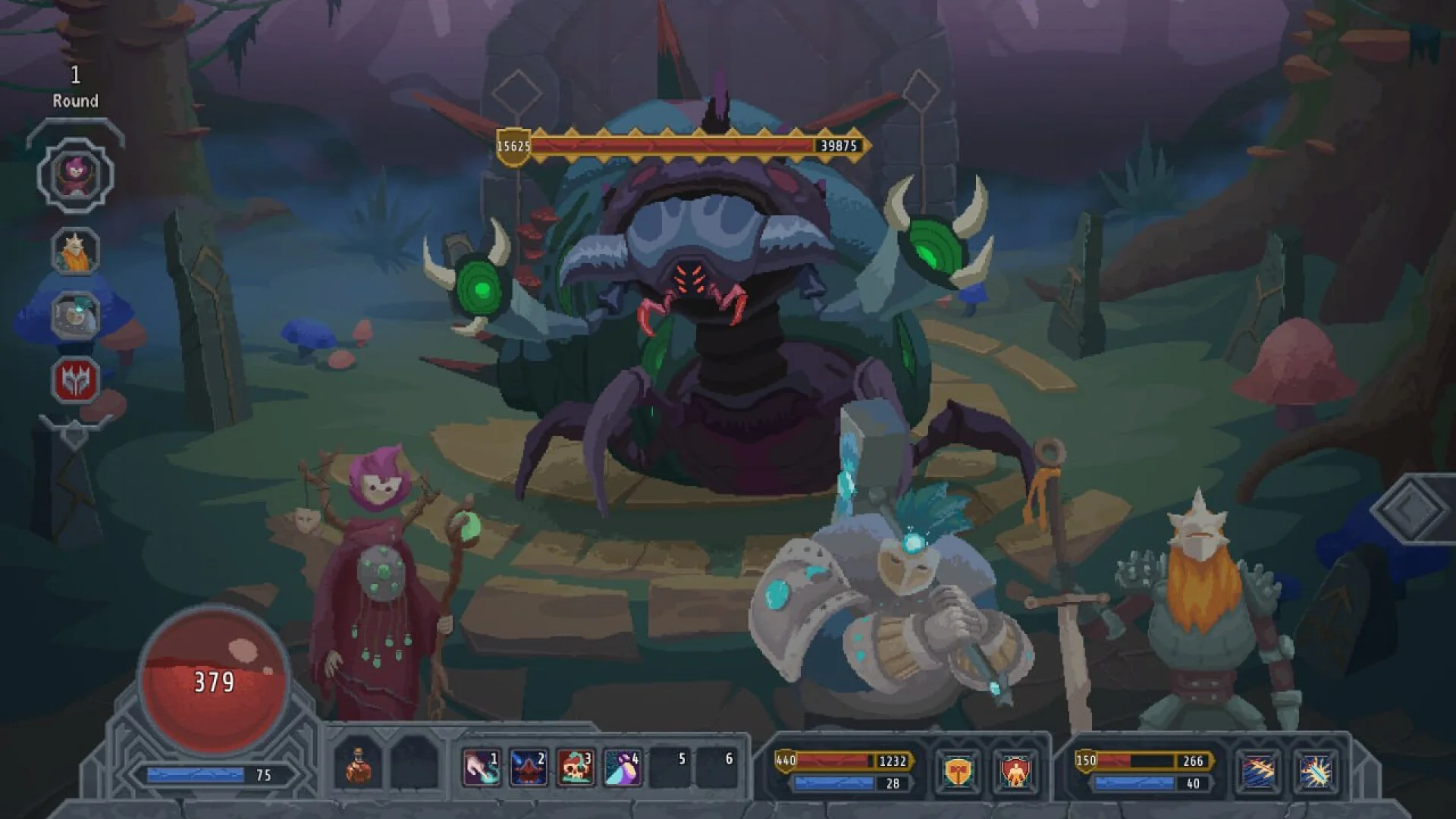
The Sentinel partly fixes that problem by making the final boss a consequence of your earlier decisions. At the end of each major area, you select components that alter its abilities, damage, durability, or other traits. You are effectively assembling the creature that will try to end your run.
That idea gives failure a sting I actually appreciate. If an ability you knowingly attached to the Sentinel destroys your party, the defeat contains information. You remember the choice. You remember ignoring the warning. The next run begins with a little scar tissue.
Campfires, Memory, and Pixel Art
Between expeditions, Gems feed permanent upgrades while the Library, Bestiary, and Dice Shop gradually expand what you know and what you can manipulate. That steady progression makes failed runs easier to accept because some part of them survives.
The story unfolds quietly around the same repetition. The Warrior has lost his memories and carries guilt over soldiers who died under his command. Camp conversations gradually bring the Witch, Paladin, and Bard into sharper focus. The Paladin’s discussions of justice and faith give him texture beyond his enormous hammer, while the Bard’s exchanges with the Witch are stranger and more playful, hinting that his awareness of Lootbound’s cyclical world may run deeper than anyone else’s.
Those conversations can be worth seeking out, yet character histories arrive slowly across repeated runs and sometimes offer little payoff after the grind required to uncover them. The game creates people I want to know better, then asks me to earn fragments of them through repetition.
Its pixel art carries some of that missing personality. The Warrior’s red hair against heavy armor, the Witch’s pink cloak and wooden staff, the Paladin’s gem-studded hammer, and the Bard’s sun-shaped mask give the party immediate visual character. Ornate swords, jeweled scepters, battered tunics, and crude wooden weapons make inventory screens surprisingly expressive.
Combat animation is much thinner. Heroes repeat the same basic motions, enemies rely on familiar fantasy shapes, and the forest and desert biomes lose freshness after several runs. Yet there is still something lovely about returning to the backpack after a difficult fight, watching a pile of awkward weapons become a functioning build, and realizing that two empty squares might be the most valuable reward on the screen.
The Review
Lootbound
Lootbound is at its best when the backpack becomes a battlefield of its own. Repositioning a sword to trigger an aura, sacrificing raw stats to preserve a stronger layout, or realizing that the Sentinel you assembled can dismantle your party gives each run a satisfying sense of consequence. The combat and enemy variety rarely match that ingenuity, while unlucky dice streaks can turn planning into frustration. Still, ArtDock has built a roguelite whose smartest systems regularly create that dangerous thought: one more run.
PROS
- Excellent grid-based inventory system
- Rewarding equipment synergies
- Clever player-built Sentinel bosses
- Flexible class builds
- Strong pixel-art character designs
CONS
- Heavy dependence on RNG
- Repetitive combat encounters
- Small four-class roster
- Thin narrative payoff