

























Orbitals makes friendship feel mechanical in the best possible sense. One player is pulling a platform into place with the Scrap Hook while the other waits for the opening to dash across. Minutes later, one is steering a ship through incoming fire while the other swivels the turret toward whatever is trying to kill them. Shapefarm keeps returning to this simple idea: two people paying attention to each other can make ordinary actions feel exciting.
That philosophy places Orbitals squarely beside It Takes Two and Split Fiction, which makes sense given director Jakob Lundgren’s work on both. Yet its emotional temperature is different. Maki and Omura already like each other. They tease, sing, race around their ship, and occasionally say goodbye to temporary gadgets before leaving them behind. Their affection turns cooperation into companionship rather than conflict management.
The pair survived a childhood disaster through I.M. machines that preserve consciousness and recreate bodies after death. Fifteen years later, their damaged colony needs Cassettes to survive, sending them beyond its borders in search of equipment and answers. The setup carries enormous existential weight. The game usually prefers wonder.
Visually, that preference is irresistible. Stylized menus, expressive run cycles, huge episode-like location cards, and Studio Massket’s animated cinematics make Orbitals resemble a forgotten science-fiction anime someone somehow turned into a controller-ready world.
Pass Me the Grappling Gun
The smartest mechanical choice is keeping abilities attached to tools rather than characters. Picking Maki or Omura does not sentence either player to one role for the campaign. Before missions, both can choose from equipment such as the Scrap Hook, Liquid Launcher, and Beam Cannon, then swap responsibilities later.
That freedom changes the emotional rhythm of co-op. Nobody becomes “the platform person” for eight hours. In one room, I might grapple a yellow lever so my partner can cross a gap. Later, I could be the one jumping while they manipulate the environment.
The mining operation shows Orbitals at its liveliest. Drums have to be struck with the rhythm, platforms sway with the beat, and even alien wildlife seems caught in the music. Here, puzzle design and setting speak the same language. The place would lose something if those mechanics were transplanted into another level.
A later challenge involving a small platform twisting through narrow corners demands tighter coordination. Both players shift their weight while using the grapple to sling the platform through turns. The solution itself is easy to understand. Executing it together is the fun part, because every correction requires somebody else to react.
Orbitals struggles when cooperation becomes routine. The three principal tools arrive early, and later areas remix them rather than steadily introducing new systems. Planting seeds before watering them into platforms is pleasant enough, but anyone familiar with Hazelight’s catalog will recognize the design grammar immediately.
Temporary gadgets promise stranger possibilities. A steerable microwave device creates one of the game’s oddest interactions, then disappears before Shapefarm finds enough uses for it. Some rooms also suffer from weak visual feedback, leaving both players unsure why a solution suddenly worked.
Home Between Missions
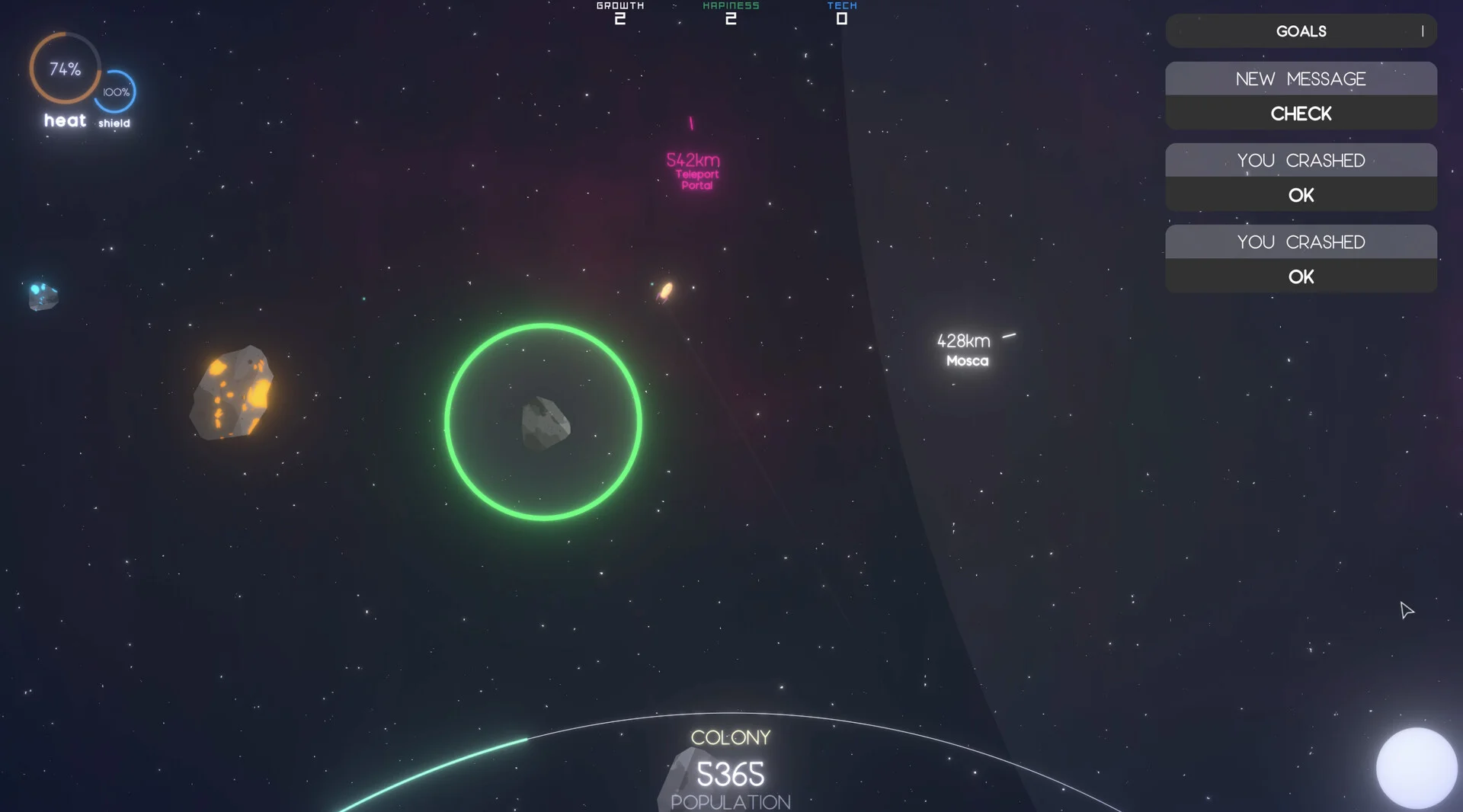
The spaceship should feel like transportation. Instead, it becomes one of Orbitals’ most affectionate ideas. Its combat sections divide control between pilot and gunner. One player threads the vessel through asteroid fields and enemy fire while the other handles the turret, and either can leave their station or trade jobs. The top-down shooting sequences use this division particularly well, turning two players into something close to the two halves of a single controller.
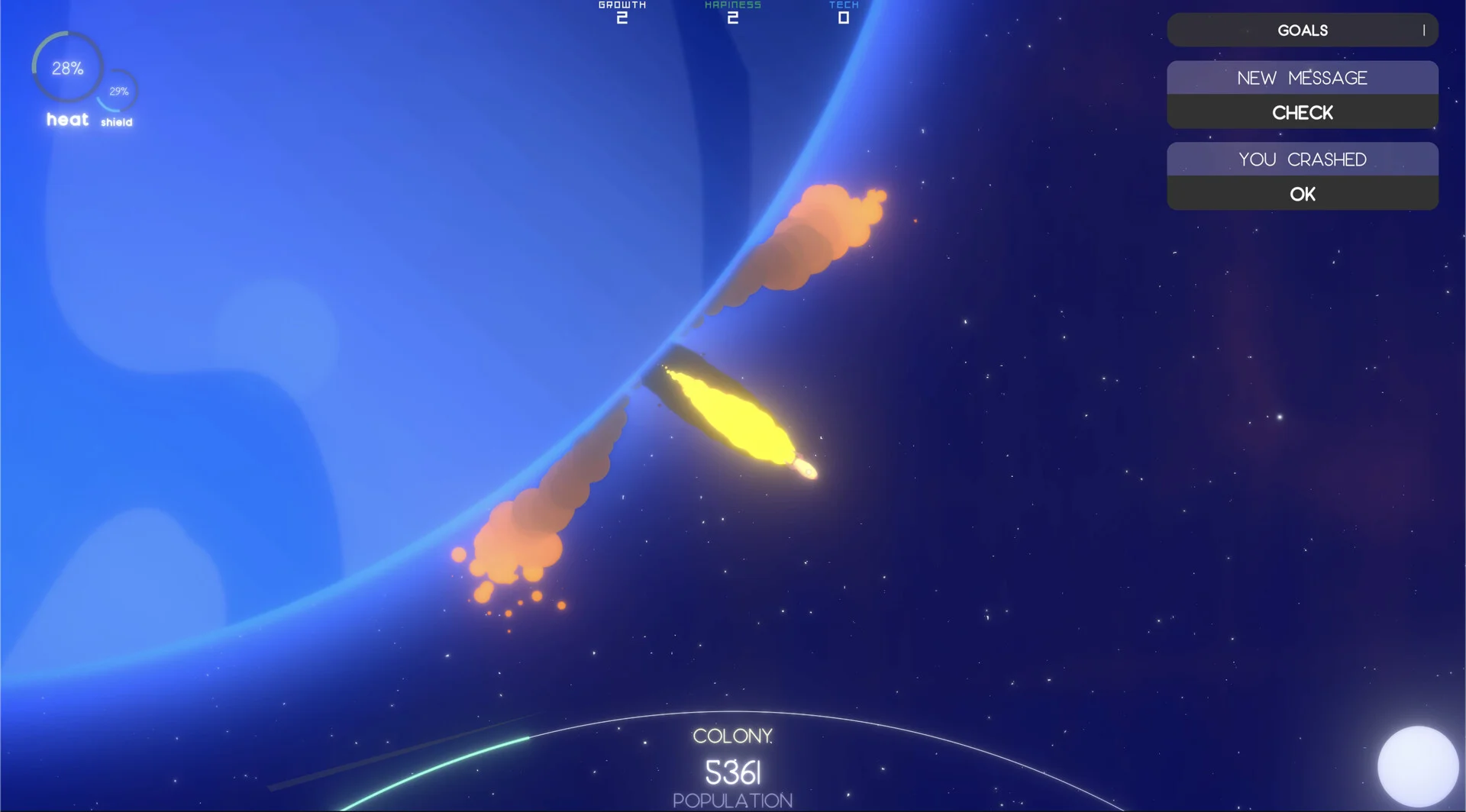
Standard flight is less successful. Restricted movement often means the pilot and gunner are watching near-identical action from slightly different perspectives. The ship contains enough interactive machinery to suggest frantic station-swapping or richer asymmetric emergencies, yet the campaign rarely capitalizes on that possibility.
Walking around the vessel between missions does. New passengers and distractions gradually occupy its cold corridors: capybaras, high-fiving robots, an electric jump rope, rhythm games, laser tag, and a ship-combat simulator. None is essential. That is why they matter.
Maki’s cluttered bedroom, complete with drum kit, sits against Omura’s immaculate room and piano. Their personalities emerge through furniture before dialogue has to explain anything. Even their goofy stair-running animations help. Orbitals understands that hanging out can be a game mechanic too.
Reprinted, Repeated
The I.M. system gives death an unusually eerie explanation. Maki and Omura can be reconstructed after dying because their minds persist inside machines, and Omura occasionally wonders what repeated reconstruction does to the idea of a continuous self.
Those questions never receive enough room. The colony faces permanent extinction if its I.M.s are destroyed, yet scenes touching mortality and identity quickly give way to another mission. Orbitals gestures toward something unsettling, then hustles everybody back onto the ship.
Maki and Omura fare better because their personalities are expressed constantly. Maki rushes forward with chaotic enthusiasm. Omura tends to assess the situation first. They bicker lightly, encourage each other, and retain a childlike curiosity that makes unfamiliar planets feel inviting.
Their harmony does limit the story. Communication is treated as a theme, but these two rarely experience enough friction for that idea to be tested dramatically. The approaching storm, ideological disagreements around the colony, and a handful of late revelations build stakes without giving their relationship a comparable strain.
The final hours expose a similar problem mechanically. By then, the Scrap Hook, Beam Cannon, Liquid Launcher, and ship sequences have revealed most of their tricks. Major boss encounters are scarce, and some locations finish without the punctuation their ideas deserve.
Yet the game keeps finding small ways to make returning to its universe pleasant. Music shifts with each region, animated cutscenes preserve the handmade anime illusion, and Maki and Omura continue poking at whatever strange object happens to be nearby. Orbitals may run short on mechanical surprise, but it rarely runs short on reasons to smile at the person sharing the screen.
The Review
Orbitals
Orbitals is at its best when two players stop thinking about progression and start treating its spaceship, gadgets, and strange little worlds as a shared playground. Maki and Omura bring warmth to every lever pull, turret burst, and ridiculous detour, while Shapefarm’s retro-anime presentation gives even familiar co-op ideas a distinct emotional texture. The puzzles lose surprise once the core tools settle into place, and the story barely touches the identity questions raised by its I.M. system. Still, few co-op games make simple time spent together feel this pleasant.
PROS
- Wonderful retro-anime presentation
- Maki and Omura’s affectionate chemistry
- Flexible co-op role swapping
- Charming shipboard discoveries
- Excellent dynamic soundtrack
CONS
- Core gadgets become predictable
- Uneven puzzle feedback
- Ship mechanics feel underused
- Identity themes lack development