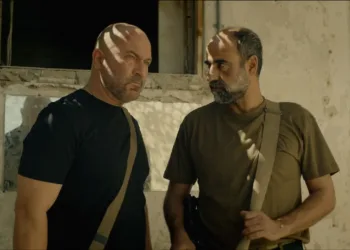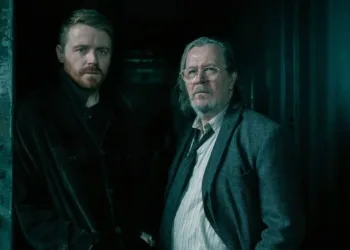


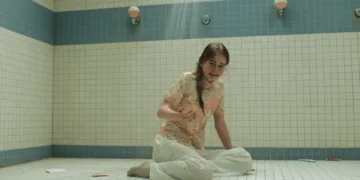







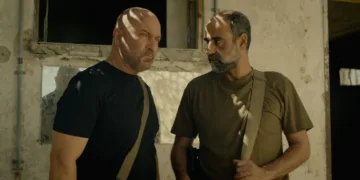
















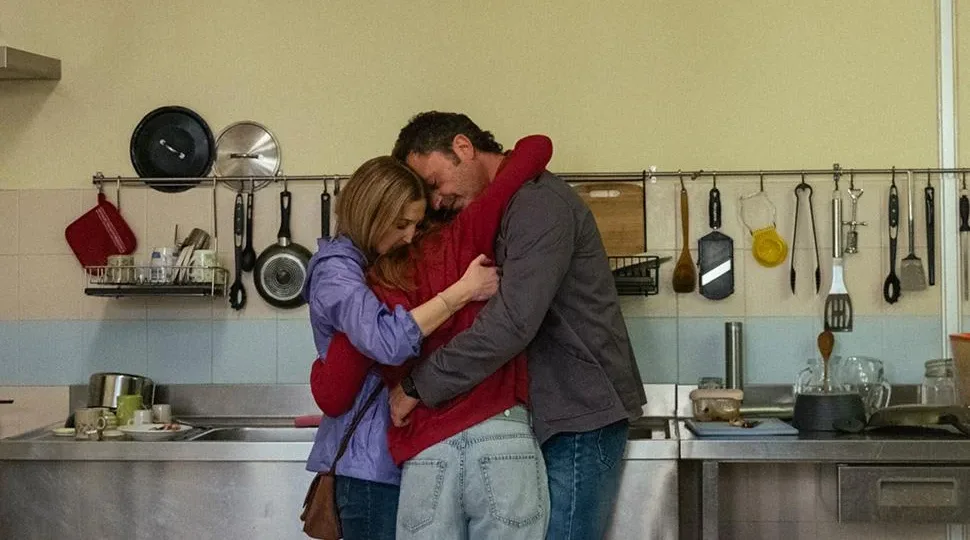

Erika has spent so many years making herself useful that freedom arrives looking suspiciously like unemployment. When she and Mauro drop their daughter Irene at university, Mauro immediately starts asking questions about roommates and where they come from. Erika disappears into the dorm kitchen and begins inspecting the pans. Irene is mortified. Erika barely seems to notice.
Anna Foglietta builds her feature directing debut around that gesture. Erika, played by Alba Rohrwacher, works as a supermarket cashier, cooks for her family, keeps the house running, and delivers groceries to her widowed mother Altea. Mauro, played by Guido Caprino, works in construction with his father Marcello and coaches local boys in football. Their daughter leaving home removes one responsibility from both parents, yet Erika experiences the vacancy far differently.
For a while, the change even looks pleasant. Dinner plans become spontaneous. Sex no longer has to fit around Irene’s presence. Mauro settles easily into football practice and work. Erika soon discovers that having time and knowing what to do with it are separate problems.
The Work of Being Needed
Foglietta tracks Erika’s collapse through broken routines rather than a stack of explanatory speeches. Food sits cold. Shifts at work slip her mind. Tasks that once gave the day a shape lose their urgency. When Erika brings unsolicited groceries to Altea, her mother simply asks why she has come back. One sentence removes another job Erika assumed was still hers.
The face-cream phone call sharpens the point. Erika responds to an infomercial and speaks with a saleswoman who asks basic questions about her skin. Erika cannot answer them. She has spent decades studying everyone else’s needs and has somehow neglected the person living inside her own face. Rohrwacher plays the conversation with a small burst of excitement followed by quiet embarrassment, turning a cheap cosmetic pitch into one of the film’s saddest scenes.
Mauro is losing structure too. Marcello sells the family construction business without giving his son meaningful control over the decision, leaving Mauro scrambling for work and absorbing another dose of his father’s contempt. His response is predictable because Foglietta has established the pattern carefully: find another task, coach another practice, repair something.
That instinct becomes useless once Erika finally says what is frightening her. At a family gathering, accumulated humiliation and frustration break through, and she voices the thought she has been circling for months: what if she wakes each morning and thinks, “This is all there is?” Mauro reacts with anger because anger is at least a problem he understands.
Rooms That Keep People Apart
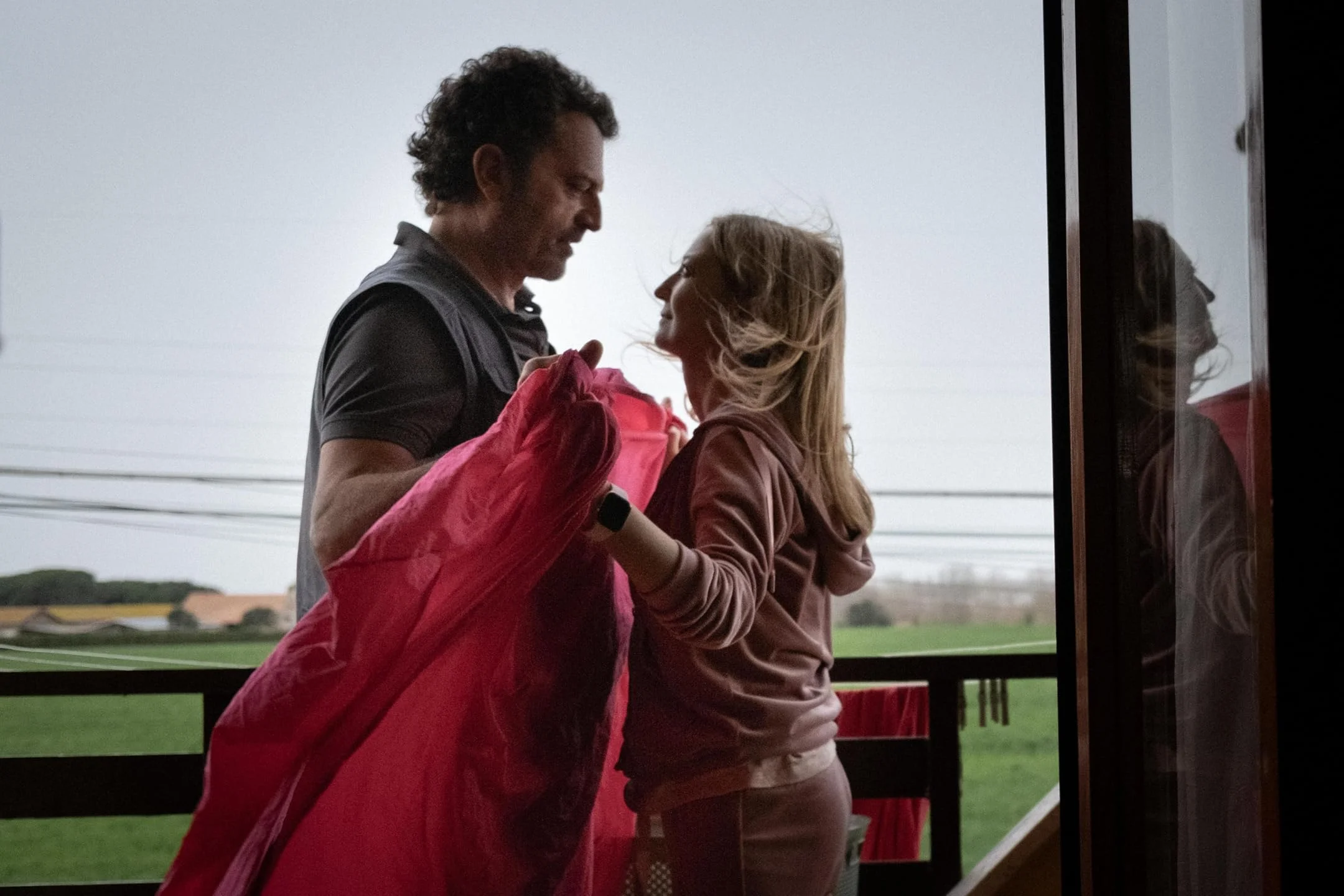
Andrea Benjamin Manenti’s cinematography refuses to give this marriage clean visual access. Vintage anamorphic lenses stretch domestic spaces into compositions filled with barriers. Furniture interrupts sightlines. Reflections split faces. Windows turn conversations into observations from somewhere else.
The opening images of empty university rooms establish the method before Erika can describe what she feels. Later, after a humiliating family encounter, Erika and Mauro argue inside their parked car while Foglietta initially keeps the camera outside. Their bodies are contained behind glass, still trapped inside the usual architecture of restraint. As Erika’s control breaks, the camera changes position and closes the distance.
It is one of the few scenes where voices rise, which gives the confrontation force. Plenty of relationship dramas start shouting early and then spend two hours trying to shout louder. Foglietta keeps that particular volume knob untouched until she has earned it.
Rodrigo D’Erasmo’s music carries similar structural weight. A long piano-and-strings passage accompanies Irene’s departure for university, giving an ordinary family milestone an uneasy sense of suspension. Later, Mauro attacks a karaoke number with beer-assisted confidence. Erika watches from the audience as his enthusiasm begins to drain. His voice weakens, his posture shrinks, and a cheerful performance turns into public exposure. Foglietta never has to announce what is happening to the marriage. Mauro sings it badly enough.
Two People, Separate Crises
Rohrwacher’s performance works through subtraction. Erika cleans fewer things, remembers fewer obligations, and gradually loses the nervous momentum that once carried her from one responsibility to the next. Her eventual eruption works because the earlier scenes have shown every small support being removed first.
Caprino plays Mauro with a different rhythm. He remains active, protective, and busy, yet those behaviors begin to resemble evasions. His father’s treatment of him exposes how deeply Mauro’s idea of adulthood depends on usefulness and control. The construction worker who can repair a house has no tool for a wife who cannot explain why the house suddenly feels unbearable.
The film’s four seasonal chapters occasionally linger after a dramatic point has already registered. Some of the gender dynamics feel familiar too, especially Mauro’s expectation that domestic life will keep functioning while Erika quietly maintains it. Foglietta avoids turning either character into a case study by staying close to behavior.
When Erika and Mauro finally manage a direct conversation, the framing changes with them. Close-ups and split composition give each face equal space instead of hiding one behind a window, doorway, or foreground obstruction. Earlier scenes kept asking them to speak across rooms. Here, for once, the film lets them look directly at what has been sitting between them.
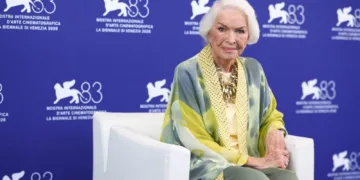
A Common Story had its world premiere in the Orizzonti section of the 83rd Venice International Film Festival on September 8, 2026, ahead of its Italian theatrical release by BiM Distribuzione. The romantic drama follows a middle-aged couple whose quiet routine is upended when their daughter leaves home to study abroad, forcing them to confront buried marital tensions.
Full Credits
Title: A Common Story
Distributor: BiM Distribuzione
Release date: September 8, 2026 (Venice International Film Festival)
Running time: 1 hour 47 minutes
Director: Anna Foglietta
Writers: Anna Foglietta, Tania Pedroni, Matteo Ferri
Cast: Alba Rohrwacher, Guido Caprino, Caterina Casini, Elio De Capitani, Giuseppe Pestillo
Editors: Riccardo Giannetti
Composer: Rodrigo D’Erasmo
The Review
A Common Story
A Common Story takes a familiar marital crisis and earns its emotional weight through accumulation rather than spectacle. Anna Foglietta lets Erika and Mauro drift apart through cold dinners, unfinished conversations, family humiliations, and routines that stop doing their old work. Alba Rohrwacher is exceptional at showing Erika lose her footing by degrees, while Guido Caprino makes Mauro’s bafflement painfully credible. The seasonal structure occasionally lingers past its strongest beats, and some gender dynamics feel overly familiar, yet the precision of the performances and framing keeps the drama alive.
PROS
- Remarkably precise lead performances
- Patient, believable marital deterioration
- Expressive framing and visual obstructions
- Excellent use of silence
- Strong karaoke and car-argument sequences
CONS
- Deliberate pacing can drag
- Familiar domestic gender dynamics
- Some seasonal passages overstay their purpose