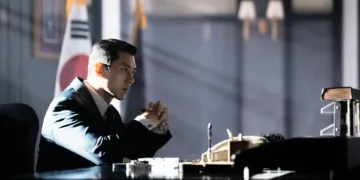
















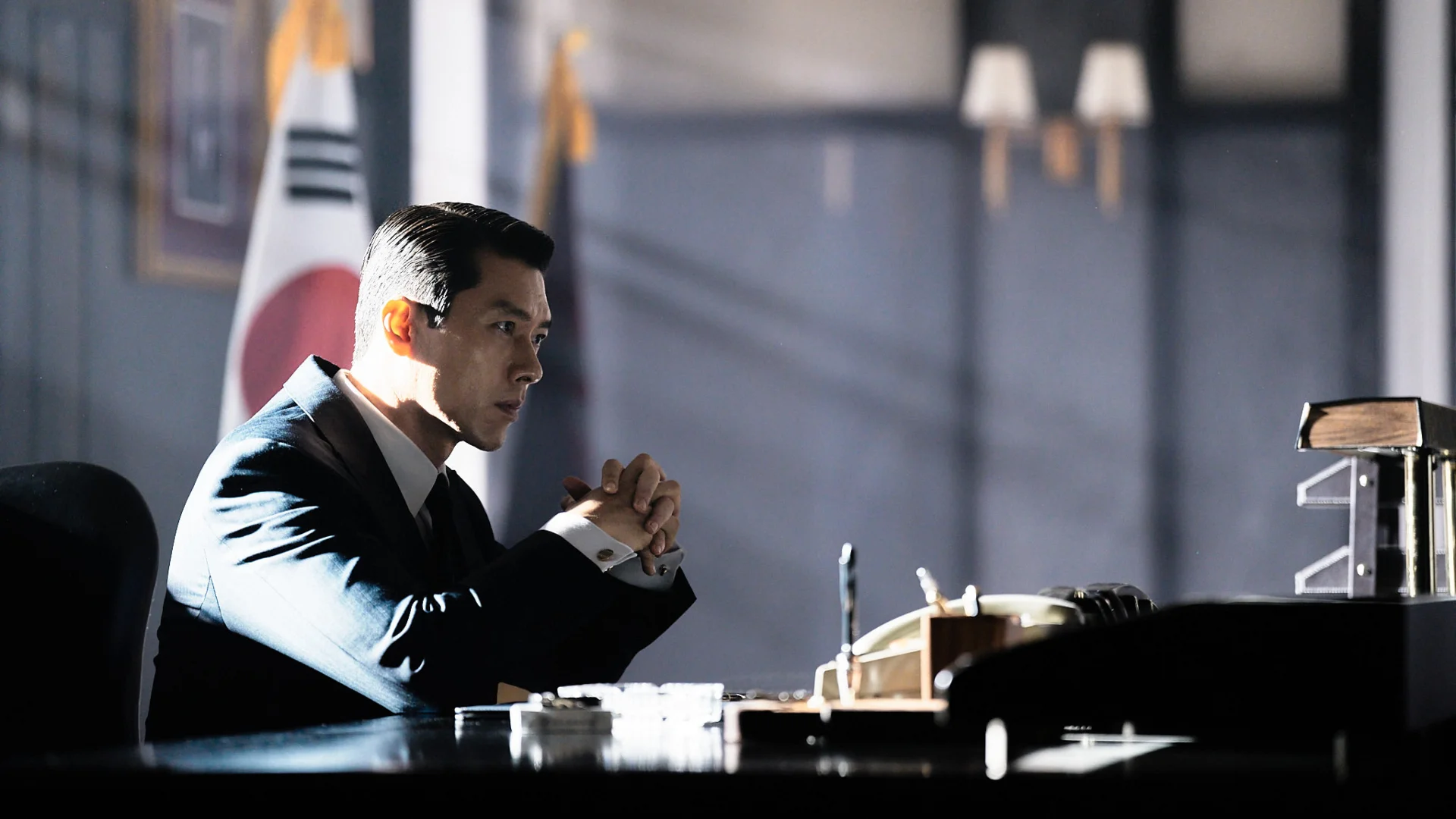

Nine years have transformed Baek Ki-tae from an ambitious intelligence operative into exactly the kind of man authoritarian systems are designed to reward. By 1979, he is deputy director of the KCIA, running a meth operation on the side and still maintaining the wonderfully deranged conviction that refusing to sell drugs inside South Korea qualifies as patriotism.
That contradiction gives Season 2 its sharpest political idea. Ki-tae does not regard himself as someone exploiting the state. He sees himself as one of its competent servants, which makes Hyun Bin’s restraint especially effective. When Chang-bae steals from him, Ki-tae settles the problem with Russian roulette and barely alters his composure. When President Park is assassinated on October 26, Ki-tae moves almost immediately from confusion to calculation, helping arrange Director Cho’s arrest and earning the KCIA directorship from General Jang Mu-jin.
The nine-year jump is a smart piece of television engineering. Streaming dramas frequently confuse additional runtime with additional depth. Here, six episodes force the series to let changed jobs, damaged relationships, and altered loyalties account for the missing decade. So-yeong supervising a drug operation tells us plenty about those years without requiring a prestige-drama montage to explain them.
The State Eats Its Own
The assassination tears away the illusion that these officials serve a stable political order. Major General Hwang wants the Blue House. Chief of Staff Cheon considers the presidency. Pyo manufactures communist spies because arrests produce money, privileges, and presidential favor. General Jang backs Ki-tae because useful men remain useful until they become inconvenient.
Episode 2 is packed with meetings, appointments, investigations, and alliances, yet the accumulation has purpose. Hwang places Ki-hyun on cases involving his own brother. Cheon prepares a slush fund to buy loyalty inside the Joint Investigation Headquarters. Ki-tae encourages Cheon’s presidential ambitions while trying to bring the military under their control. Everybody speaks the language of duty while calculating personal survival.
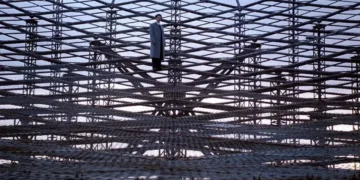
Woo Min-ho repeatedly turns bureaucracy into menace through staging. Large rooms leave officials separated inside wide compositions, while darker interiors make private negotiations feel sealed away from public life. The sudden gunfire surrounding Park’s death then breaks through all that controlled conversation. Political violence has been sitting beside these men the whole time. It finally interrupts dinner.
This is where the series’ historical setting earns its place. The Busan and Masan protests, the Yushin regime, and Park’s assassination directly alter what characters can do next. History is not décor behind fictional gangsters. It changes who gets promoted, who gets investigated, and who suddenly discovers that yesterday’s patron can no longer answer the telephone.
Family as Political Currency
Ki-hyun creates the season’s most effective challenge to Ki-tae because their conflict cannot be separated from affection. Now a lieutenant colonel praised for his ethics, he secretly warns his brother about Hwang’s moves, then refuses Ki-tae’s request to spy inside the JIH.
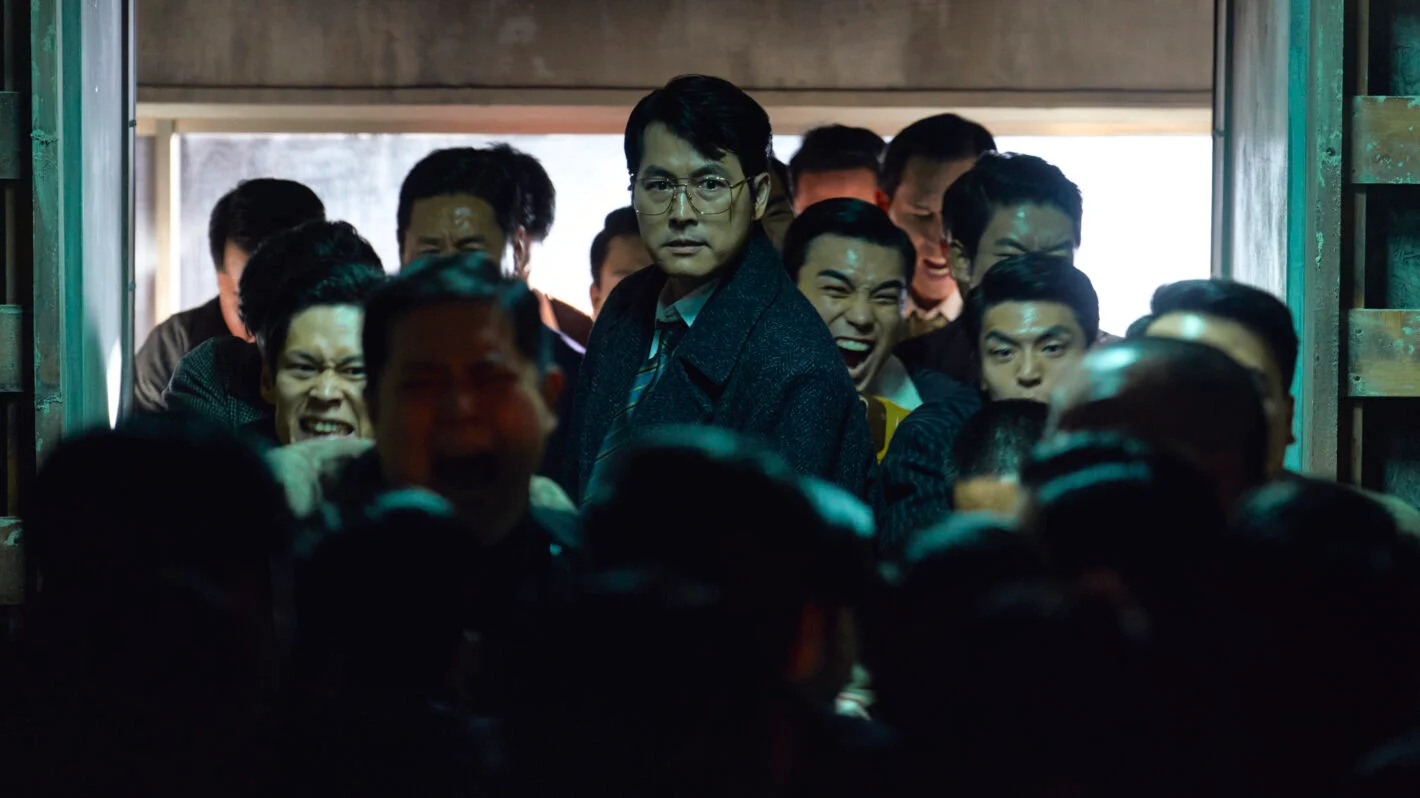
Ki-tae responds by reaching for the oldest authoritarian tool available: collective punishment. A flashback shows him warning Ki-hyun that attacking him could destroy So-yeong and the rest of the family. Years later, he repeats the same argument. Family becomes another institution Ki-tae can weaponize.
Woo Do-hwan gives those scenes their tension through hesitation rather than grand rebellion. Ki-hyun’s false smile when his brother is mentioned and his controlled refusal to become an informant suggest a man trying to locate an ethical boundary after spending years inside systems that keep moving it.
Jang Geon-young’s delayed return sharpens that pressure. Episode 2 spends considerable time referring to Hwang’s mysterious adviser before revealing the former prosecutor at the JIH. His appearance during the ambush of Ki-tae and Yuji restores the rivalry from Season 1 without pretending nine years have erased its damage.
Women Taking the Room
The season gives its women far greater control over events, though the routes they take say something less comfortable than simple empowerment. Yuji understands that the yakuza succession process has already been arranged against her. She kills Ikeda after he refuses to name her successor, then faces a vote in which Harimoto betrays their deal and supports Kimura. After Ki-tae eliminates the guards, Yuji kills Kimura and Harimoto herself and claims the Kumicho position.
Her ascent mirrors Ki-tae’s. Both encounter institutions that restrict their access to power, and both respond by mastering the violence those institutions already practice. The series does not turn Yuji into a tidy symbol of female progress. Her victory is real, and so is the blood on the floor.
So-yeong has undergone an equally striking shift. Once dependent on her older brother, she now oversees meth shipments while raising a daughter, carrying herself with the theatrical confidence of someone who has learned how much protection the Baek name provides.
Oh Ye-jin represents another variation. Now a prosecutor, she goes undercover, beats information out of a dealer, tracks So-yeong’s operation, and joins the renewed investigation into Ki-tae. Her methods resemble those of her mentor Geon-young, suggesting that institutional survival has changed the supposedly righteous side too.
There is something telling about a Disney+ Korean drama giving these women increased authority while refusing to make authority itself virtuous. Yuji commands gangsters. Ye-jin commands an investigation. So-yeong commands a criminal supply chain. The promotion is real. So is the system they inherited.
Made in Korea Season 2 premiered on Disney+ and Hulu on September 9, 2026. Set in the turbulent 1970s, the political crime-thriller series follows an ambitious man chasing wealth and power who faces off against a fiercely determined prosecutor.
Where to Watch Made in Korea Season 2 Online


Full Credits
Title: Made in Korea Season 2
Distributor: Disney+, Hulu
Release date: September 9, 2026
Rating: TV-MA
Running time: 50–60 minutes per episode
Director: Woo Min-ho
Writers: Park Eun-kyo
Producers and Executive Producers: Hive Media Corp
Cast: Hyun Bin, Jung Woo-sung, Woo Do-hwan, Seo Eun-su, Cho Yeo-jeong, Won Ji-an, Jung Sung-il, Park Yong-woo
Director of Photography (Cinematographer): Lee Mo-gae
Editors: Yang Jin-mo
Composer: Jo Yeong-wook
The Review
Made in Korea Season 2
Made in Korea Season 2 turns political history into institutional horror, with President Park’s assassination exposing a state where every official treats national crisis as a promotion opportunity. The six-episode format gives the power struggle welcome discipline, while Ki-hyun, Yuji, So-yeong, and Ye-jin gain sharper agency inside spaces built to contain them. Some early maneuvering grows dense, and the series expects close attention to names, ranks, and alliances. Yet that density suits a drama examining how authoritarian systems teach people to survive through compromise, coercion, and violence.
PROS
- Focused six-episode structure
- Hyun Bin’s controlled menace
- Stronger roles for Yuji and So-yeong
- Political history shapes the drama
- Effective institutional tension
CONS
- Dense opening episodes
- Heavy dependence on political exposition
- Numerous shifting alliances demand concentration