












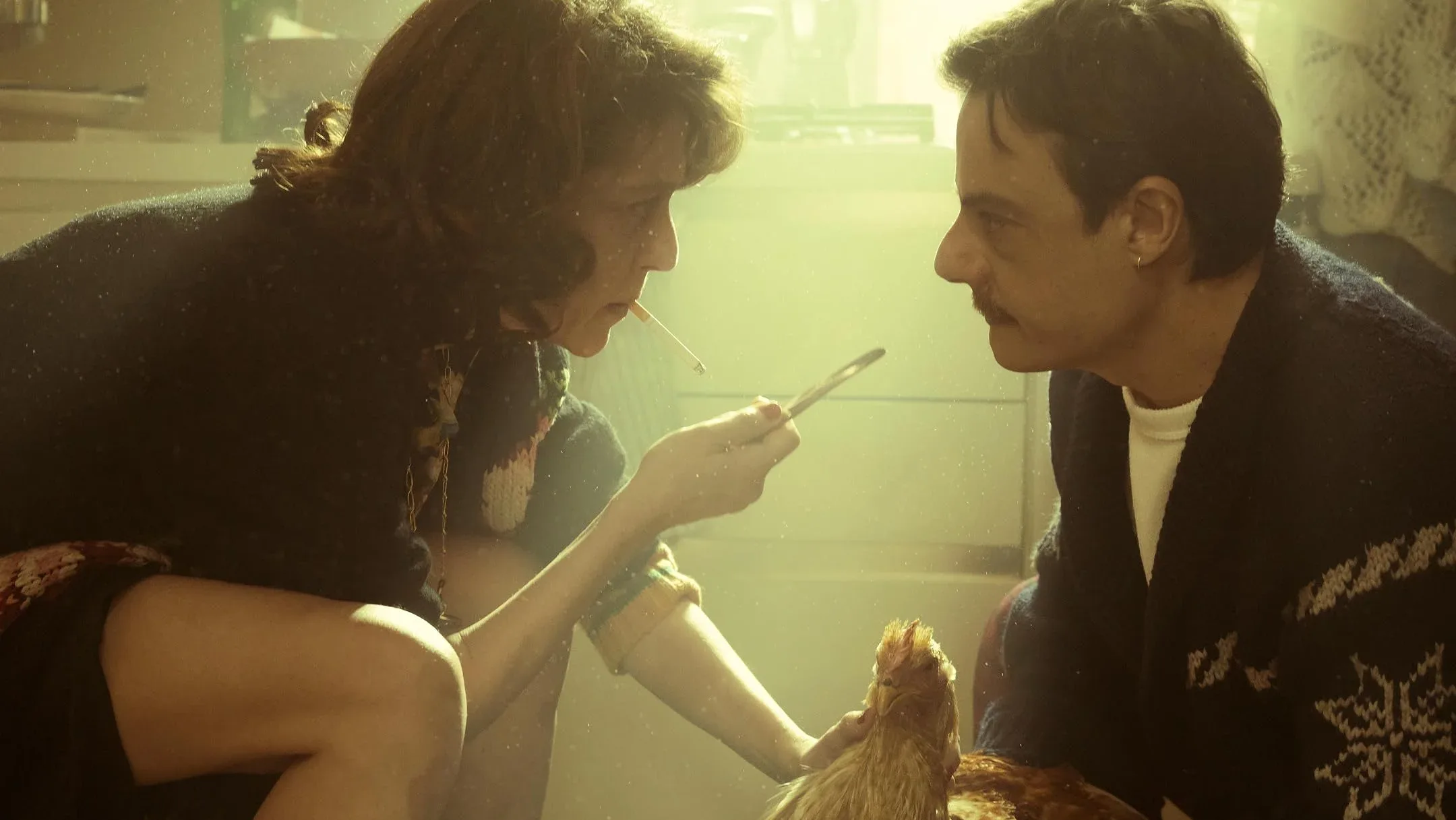

Antonio has spent years turning the distance between Naples and Milan into emotional architecture. His literary career, cultivated apartment, wife, and children all seem arranged around one simple fact: Angela is elsewhere. Then his mother arrives for Christmas Eve carrying food, cigarettes, grievances, and a live capon meant for dinner. The apartment immediately feels smaller.
Adapted from Antonio Franchini’s autobiographical novel, The Fire Within You compresses years of family damage into one evening. Edoardo De Angelis gives that compression a nervous pulse. Angela attacks Antonio’s work, Benedetta’s cooking, Andrea’s gender identity and ballet, Valentina’s vegetarianism, Paola’s choices, absent Enrica, even the neighbors outside the window. Every room becomes a place where someone remembers an old wound. The Christmas table never has a chance.
A Mother Built for Combat
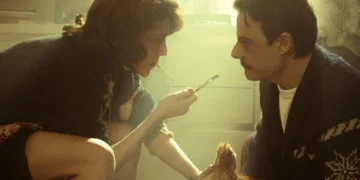
Vanessa Scalera plays Angela as if silence itself might erase her. She moves through the kitchen with a cigarette near her mouth, attacking cod, eggplant, and relatives with almost the same rhythm. The performance is deliberately excessive, sometimes frighteningly funny. When Angela tells Benedetta she is “as pretty as an ornament,” the insult arrives disguised as affection. When she tells Antonio he should never have been born, disguise disappears.
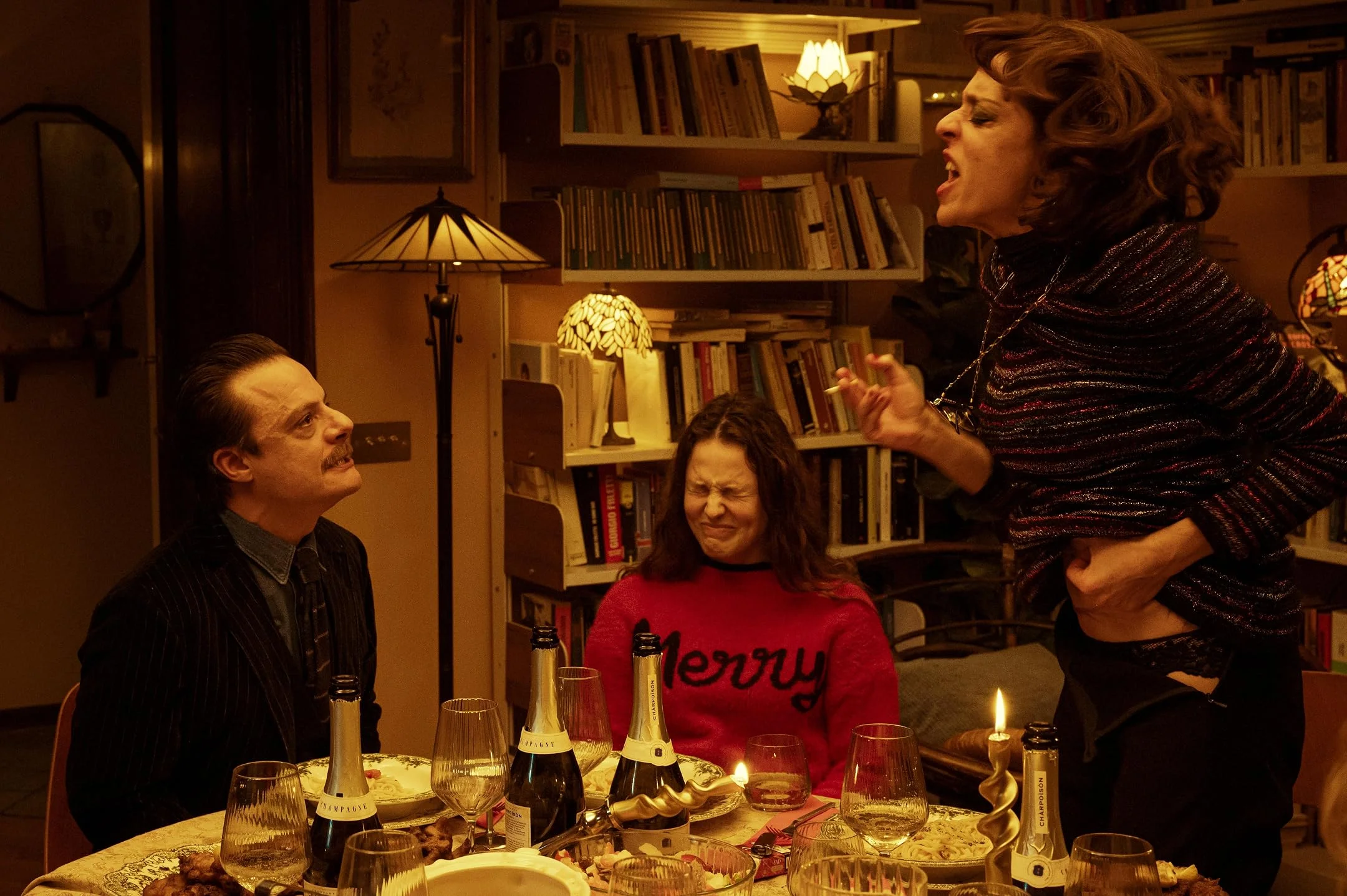
The family has learned different forms of survival. Benedetta answers with politeness so tight it almost becomes violence. Andrea winds Angela up instead of absorbing the abuse. Valentina withdraws to her room and talks to the capon, eventually giving the bird a tarot reading as if it were the only creature in the apartment whose fate can still be discussed calmly. Paola fights back. Antonio does something harder to watch: he keeps responding.
Lino Musella makes that repetition painful. Antonio insists that he escaped his mother, yet every provocation pulls him back into the old pattern. His eventual explosion, marked by shattered glass, feels less like a rupture than recognition. The fire he fears in Angela has been waiting inside him too.
No Room to Retreat
De Angelis shoots the apartment at close range, using handheld movement and tight close-ups until faces begin to feel trapped by the frame. The kitchen becomes a machine for producing pressure. Oil spits. Pans crowd the stove. Bodies cross behind one another. The capon escapes again. The camera rarely grants the family enough distance to pretend they are composed.
Vladan Radovic’s warm lighting makes the space look inviting at first, which gives the hostility a strange domestic cruelty. Yellow walls, food on the table, and Christmas music should promise shelter. Instead they become part of the enclosure. La Niña’s score pushes drums, bagpipes, and shawms into the arguments, turning familiar seasonal sounds into something almost martial.
The method has a cost. De Angelis brings the evening close to fever pitch early and stays there. Angela occupies so much dramatic space that Benedetta and Antonio’s marriage, Paola’s resentment, and the siblings’ history are often reduced to flashes around her. Tommaso Ragno’s Giulio briefly changes the rhythm when he arrives for dinner. Angela suddenly becomes flirtatious, almost charming, and Scalera lets us see how selective her cruelty can be. It is one of the film’s sharpest choices because it denies her the excuse of helplessness.
The Fire Changes Temperature
Late in the film, the shouting gives way to crisis. Antonio, who has spent the evening treating Angela as a force to survive, is pulled toward her again by fear and obligation. The shift should feel like the moment all that noise finally breaks open. Instead, it arrives with the strange speed of a door slammed after hours of screaming.
There is truth in the change. Families can carry hatred and attachment in the same body for decades. The person one most wants to escape can still exert the strongest gravitational pull. Musella understands this in the quieter beats after Antonio’s rage, when his face seems emptied rather than relieved. Scalera finds something similar beneath Angela’s aggression during the speech about the fire burning inside her. For a moment, the hostility looks less like strength than a form of panic.
Yet the film gives that sorrow too little room. Revelations arrive quickly, old conflicts are forced into proximity by emergency, and emotional movement that needed time is compressed after an entire evening devoted to escalation. The strangest image remains the capon, repeatedly escaping the hands that intend to kill it. Everyone else keeps returning to the table.
The Fire Within You had its world premiere in the main competition at the 83rd Venice International Film Festival on September 9, 2026. The Italian drama follows a man living in Milan whose Christmas Eve dinner with his overbearing mother turns into a savage and comical emotional battlefield.
Full Credits
Title: The Fire Within You
Distributor: Rai Cinema International Distribution
Release date: September 9, 2026 (Venice International Film Festival)
Running time: 1 hour 34 minutes
Director: Edoardo De Angelis
Writers: Francesco Piccolo, Edoardo De Angelis, Ilaria Macchia
Producers and Executive Producers: Not publicly specified
Cast: Vanessa Scalera, Lino Musella, Elena Radonicich, Ivana Lotito, Tommaso Ragno, Nicole Malaj, Samuele Mazza, Tony Laudadio
Director of Photography (Cinematographer): Vladan Radovic
Composer: La Niña
The Review
The Fire Within You
The Fire Within You understands the terrible intimacy of families who know exactly where to wound each other. Its cramped apartment, feverish cooking and Vanessa Scalera’s volcanic Angela make Christmas Eve feel like a room slowly running out of air. Yet the film burns so fiercely from the start that its late tragedy has little temperature left to claim. Lino Musella finds something sadder beneath Antonio’s fury: the recognition that escape has never really freed him. The pain is credible. The catharsis arrives before it has earned enough silence.
PROS
- Vanessa Scalera’s ferocious performance
- Musella’s restrained counterweight
- Oppressive close-range camerawork
- Sharp flashes of black comedy
- Strong mother-son tension
CONS
- Angela overwhelms the ensemble
- Emotional climax feels compressed
- Relentless intensity becomes exhausting
- Supporting conflicts lack development