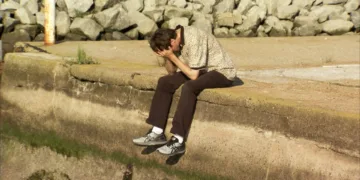








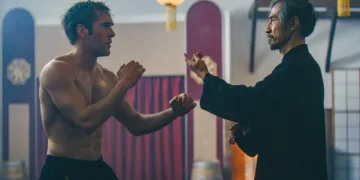
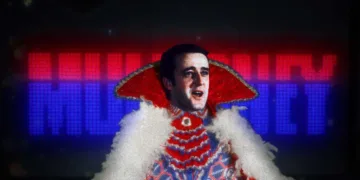
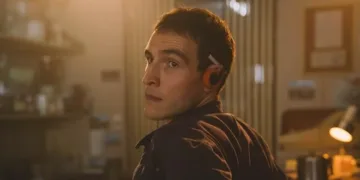











An old recording catches Matt Barats’s unnamed artist trying to explain his opposition to the Bush administration. He stumbles through the thought, unable to say much beyond his dislike of the people running the country. Watching it years later, he can hear how little he knew. The trouble is that recognizing the embarrassment comes easily to him. Understanding what he still does to other people requires a different kind of attention, and the camera remains pointed in the wrong direction.
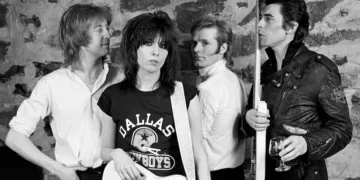
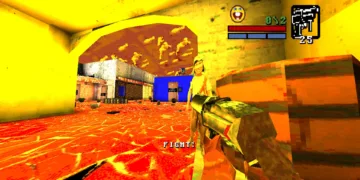
Barats builds Anchors Aweigh from that distance. His character searches through MiniDV tapes while filming new monologues, hoping the accumulated footage will become a portrait of a life. The old clips carry the markers of a particular millennial adolescence, from Bush-era politics to early internet shock videos. Their grain and visual noise give the past an appealing texture, even when its contents make him wince. Recording everything has left him with an archive. It has given him little practice at looking beyond himself.
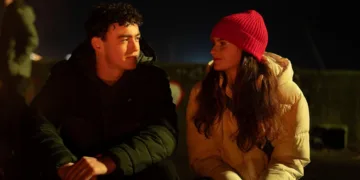
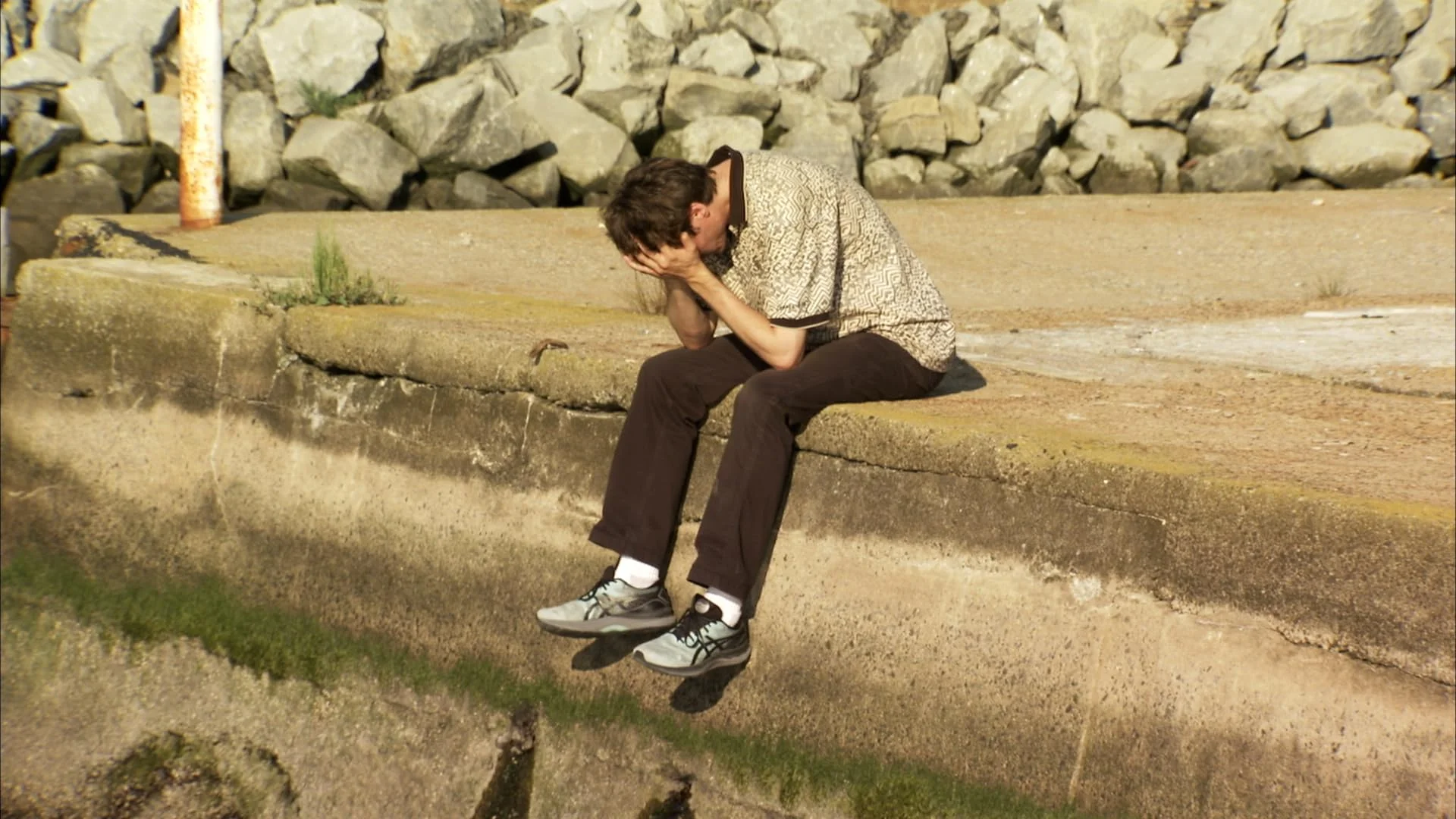
The project begins after his younger girlfriend, Megan (Serena Profaci), rejects his marriage proposal. He moves onto a cheaply rented sailboat near a New York airport, takes up his camera and tries to turn the disruption into material. His pride in having a 25-year-old girlfriend has already told us something about how he sees the relationship. Once she refuses him, her decision becomes the first event in his account of personal crisis. Megan’s awkward response is allowed to register, but his narration is quick to reclaim the story.
Barats gives that narration a documentary voice of practiced curiosity. His character speaks to the camera around the city, holds a conspicuous microphone and gathers encounters he calls “vignettes.” The form recalls the wandering personal documentaries of Ross McElwee, with one damaging adjustment: this filmmaker is so eager to discover significance that he supplies it before an encounter has had time to mean anything. A passing anecdote can prompt a declaration about the stories in the streets. Barats’s deadpan delivery lets the character sound certain while exposing how hard he is working to fill the silence.
The older footage makes that effort funnier and sadder. Watching his younger self behave foolishly, he briefly confronts the possibility that age has changed less than he hoped. The film then returns him to present-day footage made with similarly modest cameras, where he is still collecting gestures and observations that might flatter him as an artist. Barats uses the shared look of past and present to make the gap between them less reassuring. Nostalgia offers his character an explanation for his old habits; the new recordings show those habits continuing in front of him.
This is where the comedy gains its cultural bite. The ability to retrieve an earlier self can feel like evidence of progress. He can identify his dated references, hear the weakness in an old opinion and recoil at his own behavior. Each response is sincere enough in the moment. He also knows the responses will play well in the film he is making. Barats catches the ease with which public self-criticism can become another appealing way to present oneself.
The conceit is sharp, though its 71 minutes strain it at times. The wandering monologues and repeated attempts to make slight material sound profound do not always produce a fresh turn; a joke can lose force before the character has finished explaining it. The marina encounters offer chances for other people to disturb his account, but they pass quickly and his voice takes possession of the film again. That imbalance serves the portrait of a man who cannot listen for long. It can also leave the comedy circling a point it has already made.
A late exchange with Ana Fabrega briefly changes the terms. Her expression falls as he speaks, and her challenge gives his self-description an audience unwilling to accept it. The pleasure of the scene lies in watching his practiced account fail in another person’s presence. Even then, confrontation does not guarantee a breakthrough. He can return to his vignettes, taking the encounter that might have changed his behavior and finding a place for it in the film. Barats’s most uncomfortable joke is that the camera is still rolling.
Anchors Aweigh premiered in September 2026. The comedy feature follows a well-meaning man who rents a small sailboat near an airport to reflect deeply after being rejected by his much younger girlfriend.
Full Credits
Title: Anchors Aweigh
Distributor: Independent
Release date: September 2026
Running time: 1 hour 11 minutes (71 minutes)
Director: Matt Barats
Writers: Matt Barats
Producers and Executive Producers: Allie Viti, Whit Conway
Cast: Matt Barats, Serena Profaci, Mike Holt, Felipe Di Poi Tamargo, Ana Fabrega, Elizabeth Cappuccino
Director of Photography (Cinematographer): Alex Bliss
The Review
Anchors Aweigh
Anchors Aweigh turns a failed proposal and a box of old tapes into a sharp comedy about the difference between documenting a life and understanding it. Matt Barats’s deadpan performance makes his character’s search for meaning both funny and uncomfortable. The repeated monologues sometimes stretch the film’s narrow conceit, but a late confrontation gives its central joke real force: even criticism can become footage if its subject refuses to listen.
PROS
- Sharp comedy about self-documentation
- Barats’s controlled deadpan performance
- A telling late confrontation
CONS
- Repeated jokes lose some force
- Passing encounters leave little room for other perspectives
- The conceit feels stretched at times