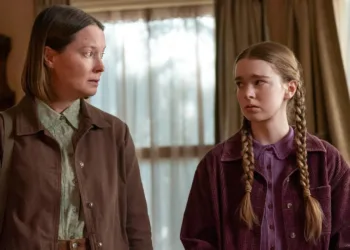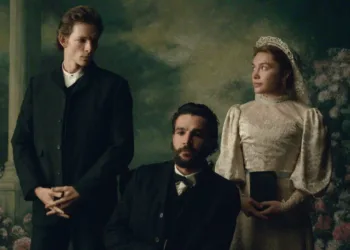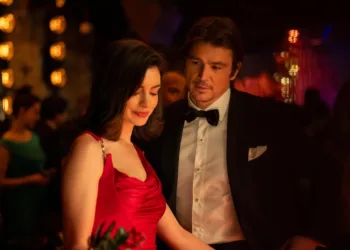









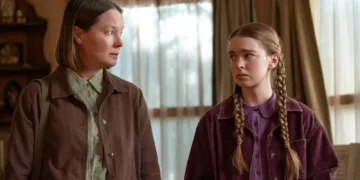










Cathy Ames gets to speak the words that once classified her. The description of monsters born to human parents, used by John Steinbeck to introduce her, becomes Florence Pugh’s opening narration in Zoe Kazan’s East of Eden. It is a small change with a substantial effect. Narrative perspective means deciding whose understanding of events reaches us, and here the woman under examination helps conduct the examination herself. Before we know what Cathy has done, we hear her participating in the argument about what she is.
The series then moves back 25 years, into the childhood of the brothers whose home Cathy will enter. This rewind prevents her arrival from becoming a convenient explanation for everything wrong with the Trasks. Their father, Cyrus, has already made affection a source of competition.
He sends the reluctant Adam into military service and keeps Charles, who wants to follow his example, working the farm. Charles’s resentment grows violent enough that he nearly kills his brother. Cathy enters a household with a history of damage, and the chronology makes us understand that history before following the damage she causes.
Kazan and co-showrunner Jeb Stuart build their seven-episode Netflix adaptation around such changes of emphasis. Much of the family saga remains recognizable, stretching from the brothers’ upbringing to Adam’s troubled parenting in California. The fresh pressure comes from spending time inside lives that might otherwise serve the Trasks’ moral education.
Cathy’s past receives sustained attention; Lee, the Chinese American servant who raises Adam’s children, gets an existence beyond the family’s immediate needs. These expansions produce some of the series’ richest drama, though the space they require leaves other relationships hurried.
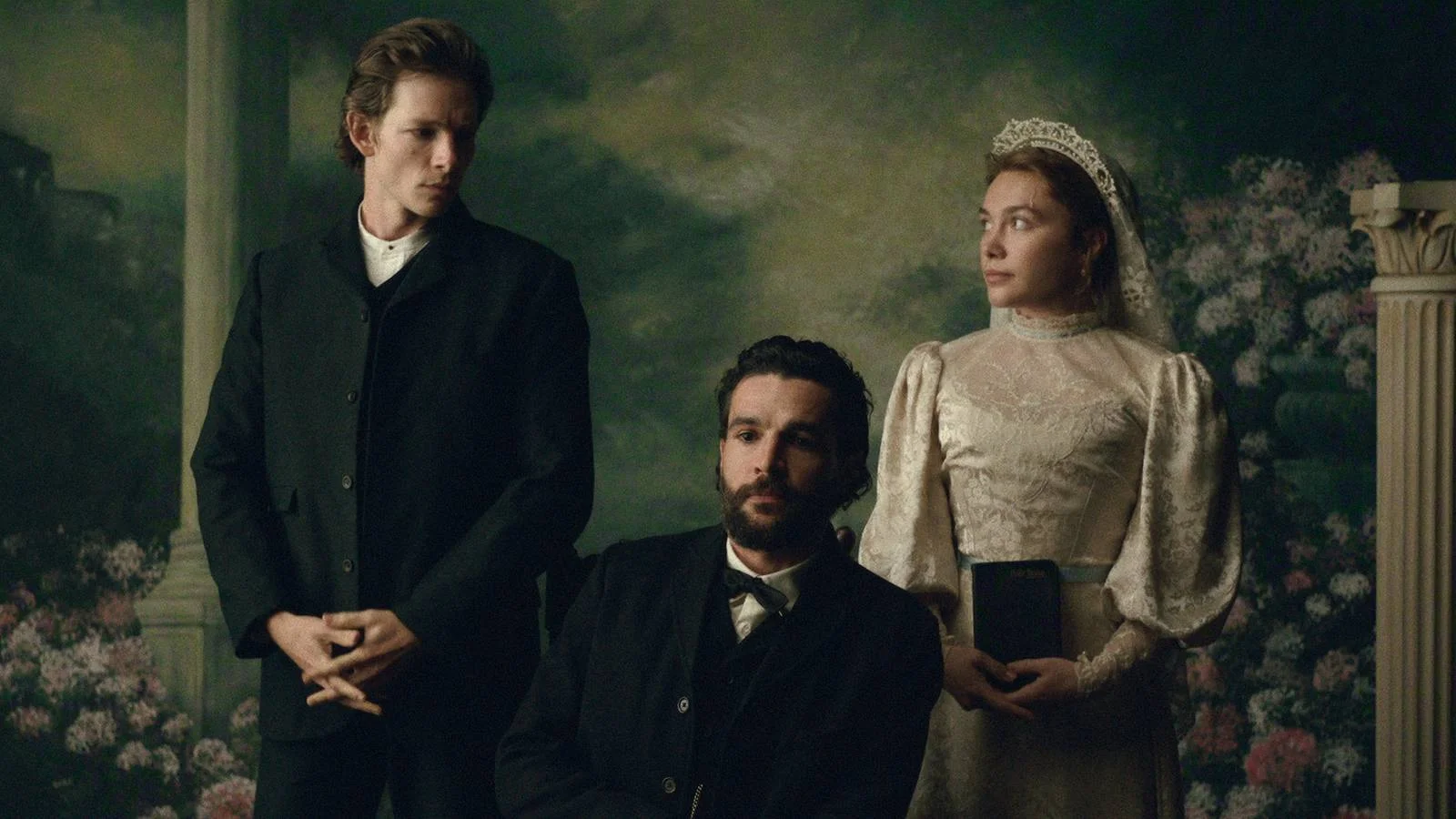
Pugh makes Cathy’s intelligence visible through her ability to adjust to the person before her. Apparent helplessness can invite protection; competence can return when she needs control. Her performance keeps those states connected, so vulnerability never guarantees that we understand her intentions. Adam, played by Christopher Abbott, believes care will secure her affection. Charles, played by Mike Faist, recognizes a capacity for calculation that resembles his own. Their different responses make watching Cathy a tense exercise in reading someone who is already reading everyone else.
The attention paid to her childhood changes the terms of that exercise. An adult tutor’s romantic pursuit of a teenage student becomes disturbing evidence about the world teaching Cathy how desire operates. Her later objections to moving to California receive a similarly revealing response: Adam dismisses them.
Abbott’s gentleness makes this failure particularly uncomfortable. Adam can imagine himself offering a better life while refusing to listen to the person expected to inhabit it. The adaptation’s contemporary sensibility takes shape through that specific contradiction, without needing to relocate the story or rewrite its central events.
Cathy’s pursuit of freedom also harms people whose vulnerability deserves equal attention. Her abandonment of the newborn twins cannot be contained within an argument about escaping an unwanted marriage. The episode devoted to her relationship with brothel owner Faye provides an especially useful test. Martha Plimpton gives Faye an openness that Cathy can exploit as she works toward taking control of the establishment.
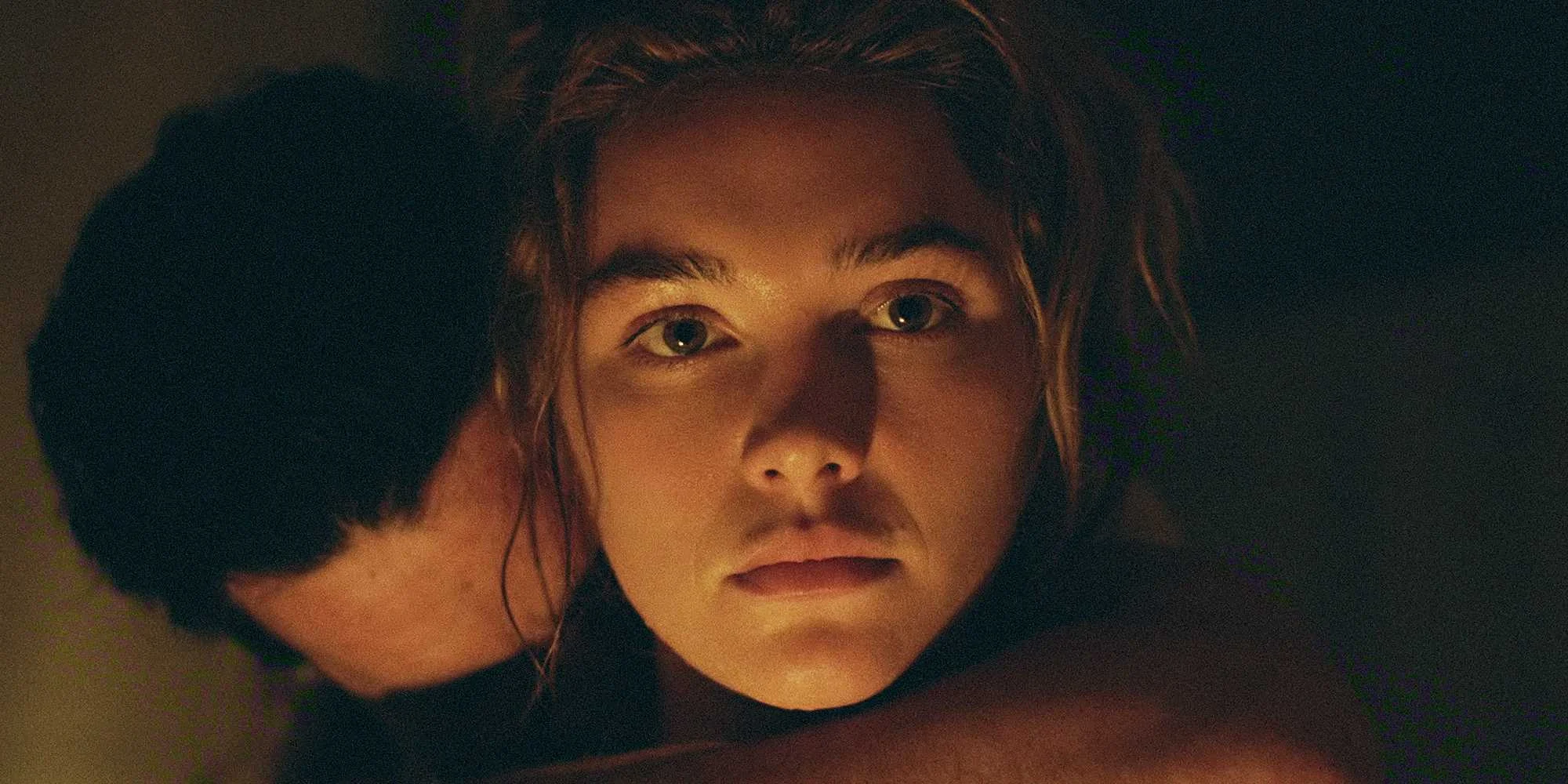
Understanding Cathy’s need for security makes this behavior intelligible; Faye’s affection preserves its cruelty. I find Pugh most absorbing when both remain present. The increasing explanatory weight placed on childhood injury makes her later isolation easier to understand, but sometimes reduces the uncertainty that gives her earlier behavior its disturbing force.
Lee’s expanded story offers a quieter, more satisfying treatment of self-determination. Hoon Lee changes his speech around strangers who expect a Chinese servant to sound a particular way. With Samuel Hamilton, Adam’s Irish immigrant neighbor, his language becomes assured and intellectually curious. This is code-switching, the adjustment of speech to different social situations. Here it tells us something immediate about trust: Lee judges how much of himself a listener is prepared to recognize. The audience gains access to his intelligence while seeing the work required to conceal it.
His episode, which develops his family history and takes him into San Francisco’s Chinatown, also changes the scale of his character. There are people, places, and decisions that belong to him independently of Adam. That matters because the Trask household can absorb nearly everything he has to give. Cooking, gardening, bookkeeping, and raising the twins make him indispensable. Hoon Lee’s warmth carries the loneliness within that arrangement, while Ciarán Hinds’s generous Samuel supplies companionship in which Lee can speak freely. Their philosophical conversations feel welcome because the series has established the personal value of being heard.
Their discussion of timshel, understood within the story as “thou mayest,” gives language to the possibility of choosing differently. Lee’s life has already made that possibility concrete. He adjusts to prejudice, makes decisions beyond his employers’ world, and asserts autonomy within their home. His kindness has practical demands and personal costs. Placing those demands beside the scriptural discussion helps the series avoid treating free will as a reassuring phrase that floats above everyone’s circumstances.
The Trasks’ repeated brother rivalry makes that reassurance difficult to sustain. Adam favors Aron over Cal, reproducing the inequality that shaped his relationship with Charles. Abbott’s subdued melancholy gives Adam’s withdrawal after Cathy’s departure emotional credibility, but sympathy cannot erase the responsibilities he leaves to Lee. This repetition is a structural echo: an earlier relationship supplies a pattern through which we recognize a later one. Its power depends on the younger brothers acquiring enough individual life to make the recurrence hurt.
That is where the series’ compression becomes costly. Faist gives Charles’s hunger for affection force, yet Charles recedes sharply once Adam and Cathy leave for California. The teenage twins receive too little sustained development to make their rivalry as emotionally particular as the inherited pattern demands.
The landscape photography supplies another measure of change, with mountainside sunsets and green homesteads giving the move west room and promise. Against those expansive settings, the family keeps recreating familiar injuries. The contrast is effective, though visual breadth cannot replace the time needed to deepen the younger generation.
Lee’s caregiving supplies the most persuasive alternative to that repetition. Adam’s authority remains intact while Lee does the daily work of parenting, making responsibility visible through an unequal arrangement the household has learned to accept. Lee’s own assertion of autonomy complicates the comfort of his presence. The family needs his care, and he needs a life that their dependence cannot fully define. Holding those needs together gives the series’ argument about choice a difficulty that its grander declarations sometimes lack.
East of Eden premiered on Netflix on October 1, 2026. The seven-episode limited series adapts John Steinbeck’s classic novel, focusing closely on the complex anti-heroine Cathy Ames and the generational entanglements of the Trask family in early 20th-century California.
Where to Watch East of Eden Online


Full Credits
Title: East of Eden
Distributor: Netflix
Release date: October 1, 2026
Rating: TV-MA
Running time: 60 minutes per episode
Director: Garth Davis, Laure de Clermont-Tonnerre
Writers: Zoe Kazan
Producers and Executive Producers: Zoe Kazan, Florence Pugh, Anonymous Content, Wiip
Cast: Florence Pugh, Christopher Abbott, Mike Faist, Hoon Lee, Ciarán Hinds, Joe Anders, Joseph Zada
Director of Photography (Cinematographer): Adam Arkapaw
Composer: Danny Bensi, Saunder Jurriaans
The Review
East of Eden
Zoe Kazan’s East of Eden shows how changing a story’s perspective can change our understanding of its familiar events. Florence Pugh makes Cathy’s calculations absorbing, while Hoon Lee gives the question of personal choice a moving, practical foundation. Cathy’s explanatory backstory sometimes narrows her ambiguity, and the younger Trasks need space to become distinct people. Still, the performances and thoughtful adaptation make this family saga rewarding.
PROS
- Pugh’s finely judged shifts between vulnerability and control.
- Hoon Lee’s warmth and quietly expressed independence.
- Changes in perspective deepen familiar moral questions.
- Expansive landscapes sharpen the tension within the household.
CONS
- Childhood explanations sometimes simplify Cathy’s ambiguity.
- Compressed family development limits Charles and the teenage twins.