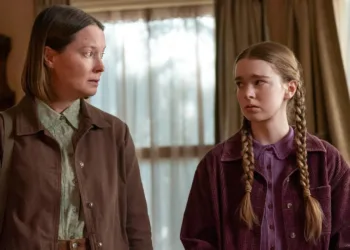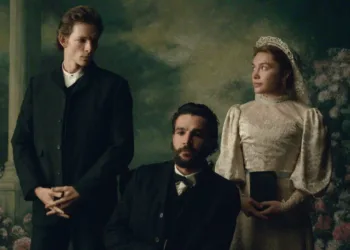











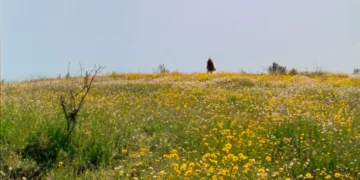










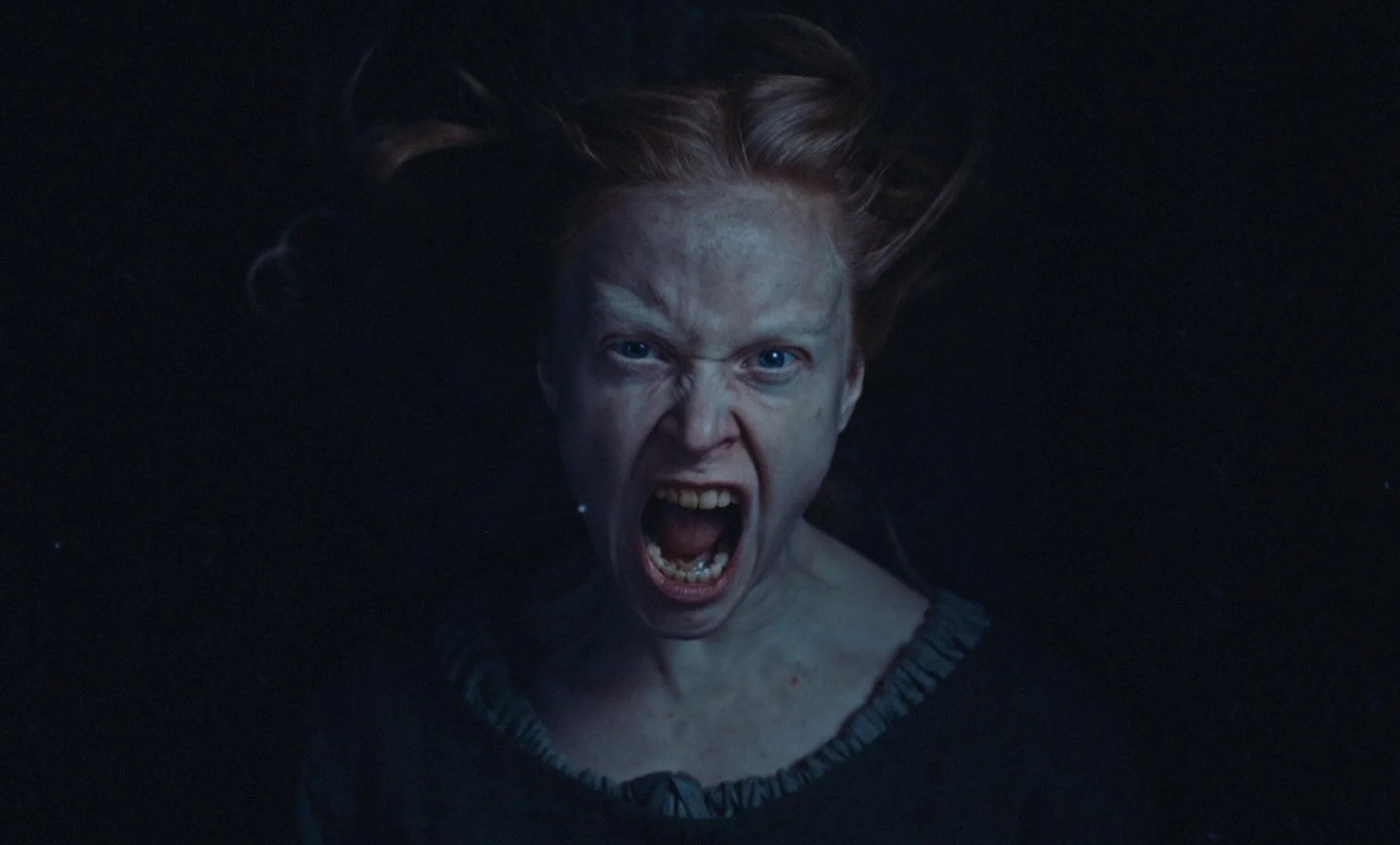

Dim light and a drained palette give Frieda’s medieval Dutch village a grim permanence. Its inhabitants seem to have mistaken endurance for righteousness. In Didier Konings’s Heresy, originally titled Witte Wieven, the restricted setting makes a woman’s private suffering impossible to keep private: Frieda cannot conceive, and her husband Hikko treats that difficulty as her failure. The photography gives this judgment an oppressive physical setting. There is little visual relief from the world that judges her, and little social distance between marital accusation and religious authority. Even the shadows seem thoroughly domesticated.
The forest disrupts that visual discipline. When the butcher Gelo attempts to rape Frieda, her escape takes her into territory the village has declared forbidden. Konings moves from cold, desaturated realism toward mist-covered, psychedelic imagery, changing the terms on which we understand her surroundings.
The encounter offers protection, but its altered textures resist easy comprehension. Frieda has escaped an intelligible threat into an experience she cannot explain through the beliefs that raised her. This shift gives the folk tale the perceptual instability of a psychological thriller: the familiar environment has become intolerable, while the unfamiliar one begins to command trust.
Anneke Sluiters makes that transfer of allegiance matter because Frieda initially believes in the village’s promises. She prays, participates in its rituals, and wants the motherhood that would secure her place within it. Her submission carries conviction rather than the convenient impatience of a contemporary heroine waiting to expose medieval stupidity.
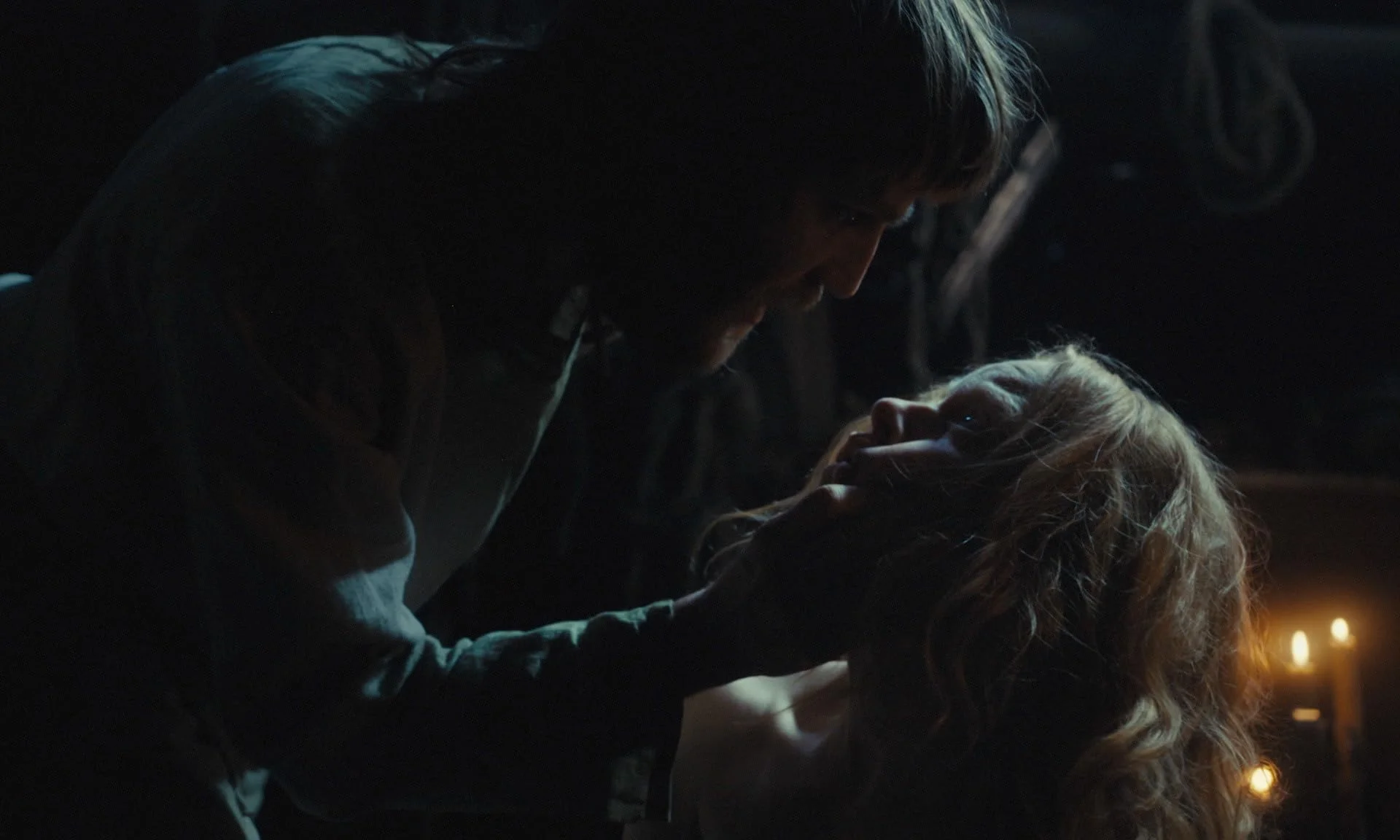
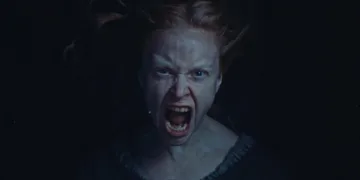
The performance holds fear and attachment together. To question the priest’s account of the world is to risk losing the framework through which she understands herself. Sluiters’s progression from wounded compliance toward anger makes the forest encounter a crisis of identity, with release arriving through the collapse of something she genuinely valued.
The village’s moral authority also fails a practical test. Hikko, played by Len Leo Vincent, directs blame at Frieda, while Gelo’s predation turns the supposed safety of the settlement into a lethal fiction. Léon van Waas gives the butcher’s appetite an especially repellent expression: his consumption of a pig foetus links his treatment of flesh to his preference for defenseless victims.
It is a blunt association, suited to a film with little patience for euphemism. Religious explanations offer Frieda no protection from either man. The forest intervenes where her community does not, and that action supplies firmer grounds for her changing belief than any argument about competing gods could provide.
Konings handles the forest presence through graduated visibility. Shadow and indistinct form precede a fuller appearance, allowing apprehension to accumulate before the creature becomes legible. Sound participates in this delay, making us register a presence before we can confidently identify its source.
The effect is a temporary imbalance between hearing and sight, two senses that usually reassure each other. Selected confrontations and creature forms also remain partly outside the frame. This use of offscreen space keeps the encounter tied to Frieda’s limited access to what surrounds her, rather than giving the audience an immediately superior understanding of the danger.
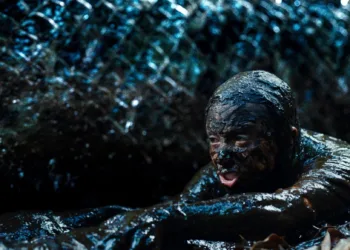
Then the film makes its violence horribly explicit. Gelo’s dismembered body, still conscious, gives supernatural protection a consequence that cannot be absorbed into a soothing fantasy of woodland sanctuary. The practical gore supplies damaged flesh; the otherworldly imagery supplies a force capable of violating ordinary bodily limits.
Together they make the forest’s intervention feel punitive and alien. We can recognize why Frieda might welcome such power without treating its methods as ethically settled. The spectacle briefly interrupts the satisfaction of seeing a predator punished, obliging us to remain with the punishment after its narrative justification is clear.
That interruption is valuable because the film’s larger alignment is so decisive. The village offers humiliation and danger, while the woods answer Frieda’s immediate need for survival. Konings’s visual distinction reinforces the choice: the settlement constricts her experience, and the forest permits an altered relationship with her body and surroundings. Yet Sluiters must carry much of the complexity within that arrangement.
Frieda sometimes approaches the dimensions of a figure in a fable, bearing persecution and transformation with limited space for an individual life beyond them. Her sincere religious attachment prevents the symbolism from swallowing her completely, but the story’s speed keeps narrowing the room available to her.
At roughly an hour, Heresy gains force from reaching its supernatural premise early. Konings avoids a prolonged sequence of warnings followed by a last-minute creature reveal. The forest has time to become an active presence, and the film does not suspend its momentum for an explanatory lecture on the Witte Wieven.
Still, the tormented bodies in the woods and Frieda’s altered condition could use stronger connective development. Their mystery is effective at the level of sensation; their relationship to her new allegiance is less fully explored. A few additional dramatic links would let the transformation retain its strangeness while giving its consequences greater weight.
Frieda’s swollen abdomen on returning to the village brings that limitation into focus. The community reads the change as evidence of evil, repeating its earlier claim to interpret her body for her. Konings has prepared us to reject that judgment through the village’s constricted images and the forest’s intervention.
He has given us less time to understand what Frieda herself can know about the change. Her survival makes acceptance credible, but survival and informed choice remain different conditions. The film leaves her with power whose consequences she has had scarcely any opportunity to examine.
Heresy initially premiered in January 2024 and expanded to wider digital and streaming platforms through distributors like GrimmVision. The folk horror film follows a young woman in a medieval Dutch village caught between her religious faith, fanatical townspeople, and ominous supernatural forces lurking in the surrounding woods.
Where to Watch Heresy (2024) Online








Full Credits
Title: Heresy
Distributor: GrimmVision, Trinity Content Partners
Release date: January 25, 2024 (Netherlands)
Running time: 1 hour 1 minute (61 minutes)
Director: Didier Konings
Writers: Didier Konings, Jasper ten Hoor
Producers and Executive Producers: Didier Konings, Nick Jongerius
Cast: Anneke Sluiters, Len Leo Vincent, Reinout Bussemaker, Nola Elvis Kemper, Marc Eikelenboom, Nina Fokker, Sam Post, Vincent van den Broek
Director of Photography (Cinematographer): Ginio Spaepen
Editors: Didier Konings
Composer: Joris Hermsen
The Review
Heresy
Heresy directs our allegiance through desaturated confinement, hallucinatory forest imagery, and creatures whose protection carries a grotesque price. Anneke Sluiters gives Frieda’s broken faith personal weight, while Konings’s controlled revelations make the supernatural physically persuasive. The compact runtime keeps the terror concentrated, though Frieda sometimes approaches a symbolic figure, and her transformation needs stronger connective development. Its images persuade us to accept her escape before we fully understand what she has accepted.
PROS
- Lighting and visual texture give persecution physical weight.
- Sluiters makes Frieda’s changing faith credible.
- Staged creature revelations balance concealment with visceral gore.
- Compact pacing sustains concentrated tension.
CONS
- Frieda’s symbolic role sometimes restricts her individuality.
- Supernatural developments need stronger dramatic connections.