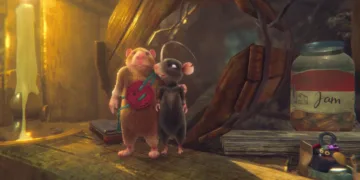


















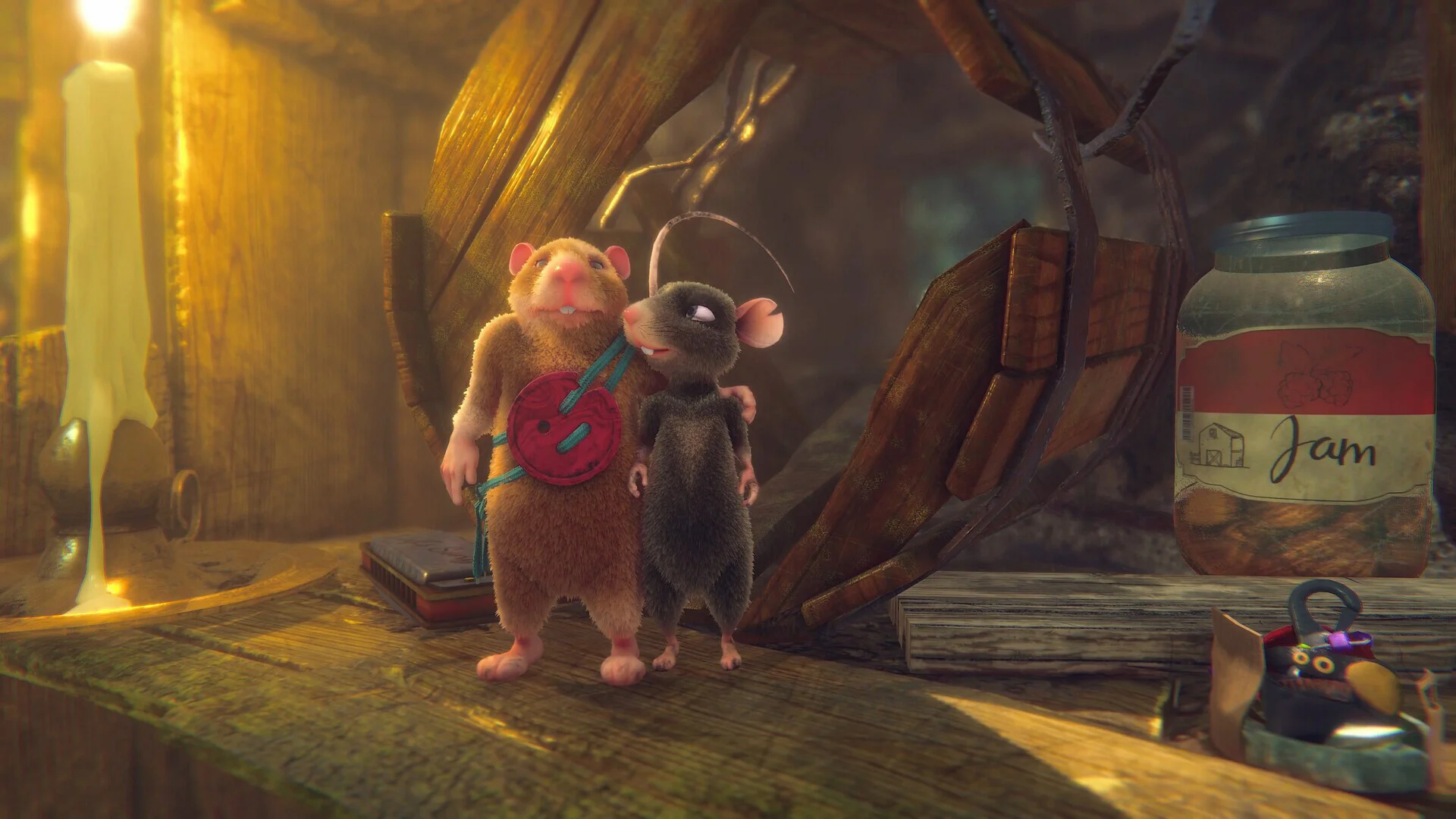

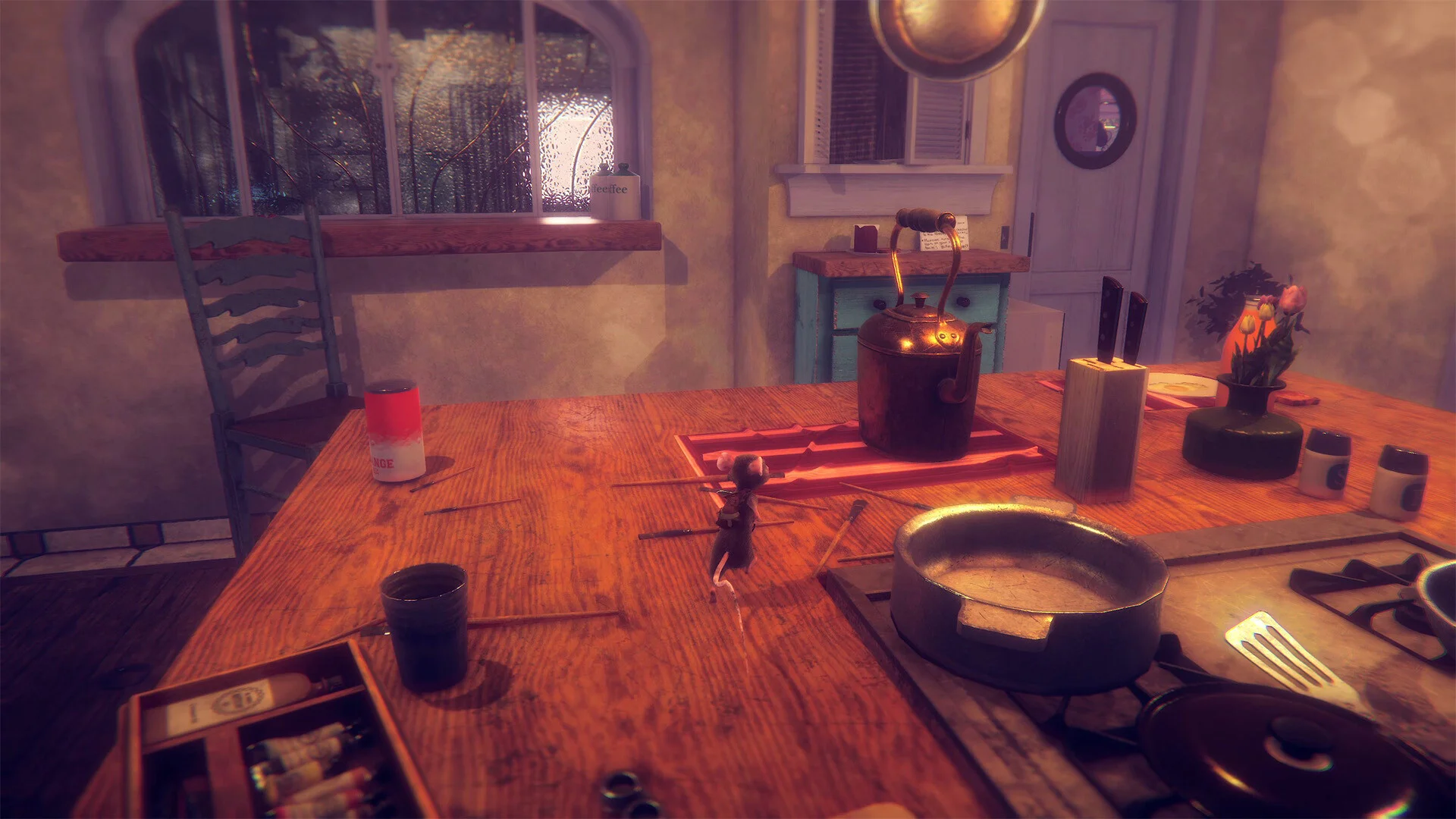
Mexico’s The Dreamerians gives its rat hero a predicament familiar from American animated adventures: a private longing that requires passage through an entire social order. In A Rat’s Quest: The Way Back Home – Season 1, Mat wants to reunite with Nat, a pet mouse living upstairs, and becoming a scavenger offers access to her part of the house. Their separation has a useful material basis. He belongs to a community surviving beneath human domestic life; she occupies a place within it. Before the conspiracy develops, the house has already made proximity unequal.
The resemblance to Pixar is clearest in this conversion of small creatures into societies with recognizable arrangements of power. Toy Story supplies a useful comparison for domestic space experienced below human scale; A Bug’s Life offers one for animal communities organized around authority and dependence. The rat commune’s turn toward military rule after a catastrophe gives Mat’s romantic objective another obstruction.
These comparisons help locate the game’s storytelling language without establishing a direct debt. The Mexican studio works within an internationally familiar American form, while the requirement to earn access makes the lovers’ separation something the player must work through.
The game becomes especially persuasive when the humans alter that work without noticing it. On repeated visits to Nat, a hole in a damaged door supplies an entrance. Then the door is repaired. Mat must find a key and arrange a new way through, turning an established route into another problem.
For the household, this is maintenance; for the rat, it is a substantial change in circumstances. Familiarity cannot guarantee access because the occupants who control the environment have their own routines. Returning to the same corridor now involves revising knowledge rather than simply retracing steps.
Moved ladders and newly placed traps extend this principle. The setting has continuity, yet its inhabitants cannot rely on it remaining hospitable. Climbing textiles and balancing along pipes make furniture useful according to a different scale of need.
The most effective translation from animated film to game occurs here: the player has to recognize an opening or a usable surface where a human would see an insignificant household detail. Fixed side-view passages compress that search into mazes, movable objects, and electrical hazards. The change of perspective gives spatial relationships a different clarity, allowing the same small body to confront a more tightly arranged problem.
This environmental intelligence makes inconsistencies in traversal permissions particularly damaging. The discrepancy between a climbable pipe and an apparently accessible table leg that cannot be climbed weakens the invitation to reason through the house as a rat.
Limited routes are perfectly compatible with the setting’s dangers, but their limits need a legible basis. Otherwise the player studies objects for physical possibilities that the game has silently excluded. The repaired door supplies an understandable obstruction with a cause inside the fiction. An apparently usable surface that refuses interaction has a different effect: it makes the environment answer to permissions the player must discover through failure.
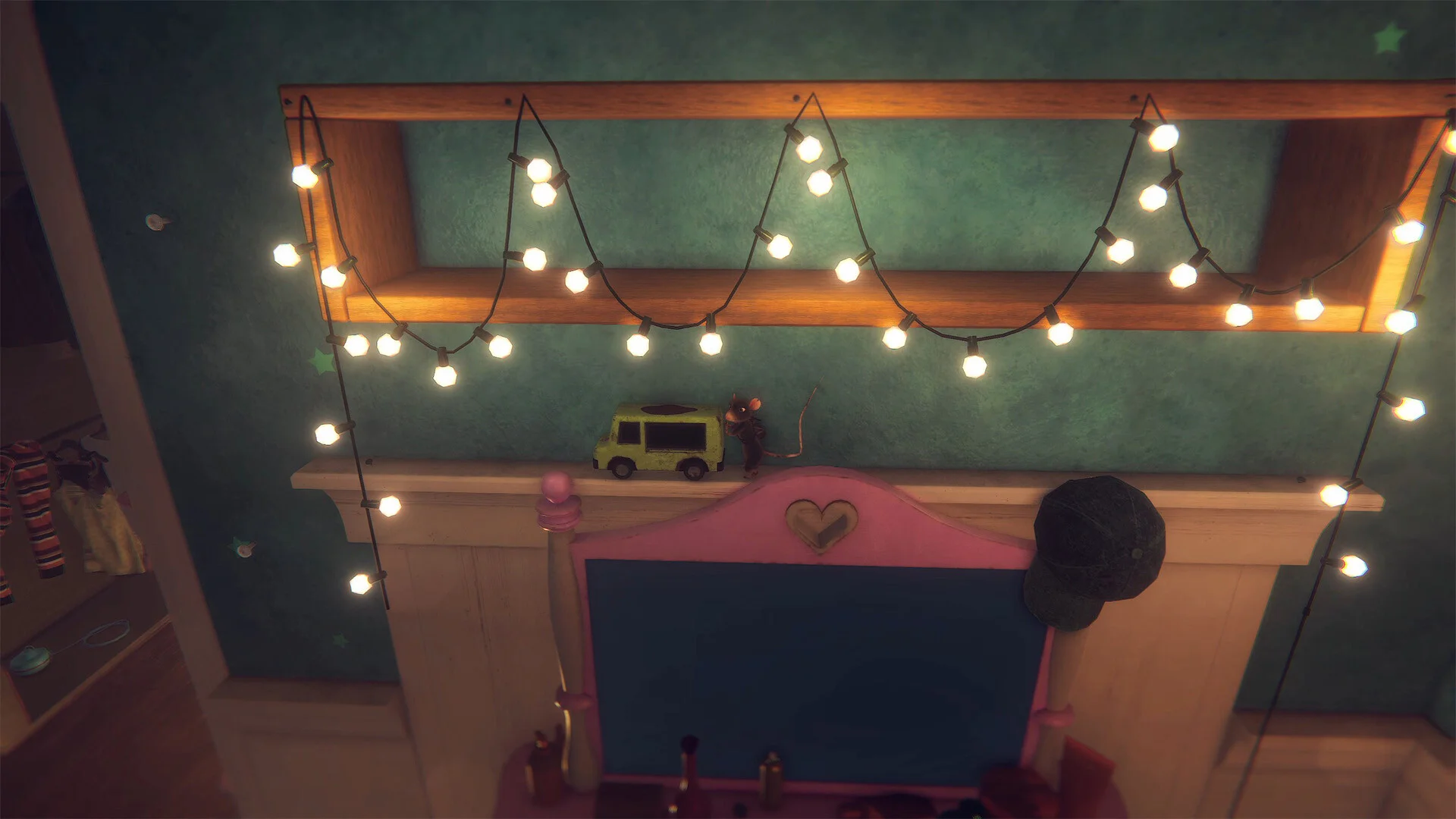
The camera can make that discovery needlessly difficult. Confined spaces and climbs sometimes produce obstructed views, including wall textures where the route should be visible. Early timed or precise jumps compound the problem by demanding confidence before Mat’s movement has become familiar.
His vulnerability makes precarious routes dramatically appropriate; losing the view needed to judge a jump introduces uncertainty into the controls themselves. The traversal has enough purposeful spatial design to resist dismissal as uniformly unsuccessful. Even so, its strongest ideas depend on a steadiness of execution that the camera does not consistently provide.
Sound achieves a firmer relationship between the fiction and the player’s task during the search for a key. Dissonant spikes in the music interrupt the act of looking, suggesting discovery might be imminent without identifying a pursuer. The household becomes threatening through anticipation. This joins storytelling to activity economically. The player can keep working out where to go while the music complicates the feeling of being there.
The pre-rendered cinematics create a less productive interruption. Visible compression and low resolution weaken the transition from the real-time household to scenes carrying important story developments. The issue matters because the game invites comparison with polished animated features, whose expressive continuity makes changes between action and dialogue feel natural.
Here, shifting into a cinematic can expose a drop in image quality just when attention should settle on the characters. The visual appeal of exploring the oversized interiors survives, but the presentation makes the handover from playable space to dramatic scene conspicuous for the wrong reason.
Season 1 also places limits on the exploratory habits it encourages. Butterfly collectibles offer reasons to look beyond the immediate route, yet their locations receive little guidance, and a completed save provides no return to earlier levels.
Missing one can therefore turn curiosity into a requirement to replay rather than an opportunity to revisit. This sits awkwardly beside the changing household, whose repeated visits otherwise reward growing familiarity. A world designed to make return interesting closes off return once the narrative has finished with it.
The ending leaves a separate kind of return pending. Platforming, stealth, and puzzles establish how Mat survives for much of the season, before dodging and projectile attacks bring combat into greater prominence late on. These additions have little room to acquire the environmental logic that gives earlier passages their character. The continuation hook suspends a question about play alongside the unresolved story: how much will fighting change the creature whose resourcefulness has depended on finding a passage through other beings’ arrangements?
The Review
A Rat's Quest The Way Back Home - Season 1
The Dreamerians brings a Mexican perspective to the familiar American animated fable, finding its strongest expression in a household that changes beyond its rat inhabitants’ control. Repaired doors and altered routes turn vulnerability into inventive play. Camera problems, inconsistent climbability, and compressed cinematics weaken that connection, while late combat leaves the season’s mechanical development unfinished. An appealing adventure whose environmental imagination exceeds the reliability of its execution.
PROS
- Changing household routes make revisiting areas meaningful.
- Rat-scale exploration connects setting and storytelling.
- Dissonant music gives searching a sense of exposure.
CONS
- Camera obstruction complicates precise platforming.
- Inconsistent climbability undermines environmental reasoning.
- Compressed cinematics disrupt visual continuity.
- Missed collectibles cannot be revisited after completion.
- Late combat receives little development before the ending.