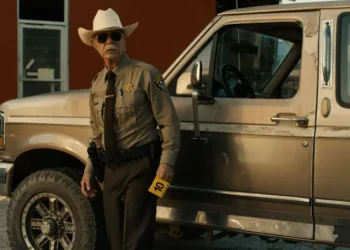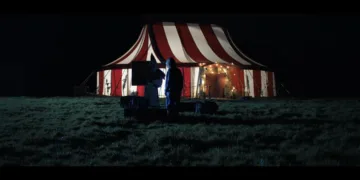




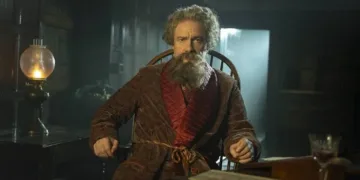
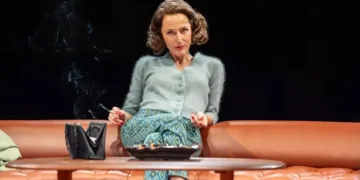




















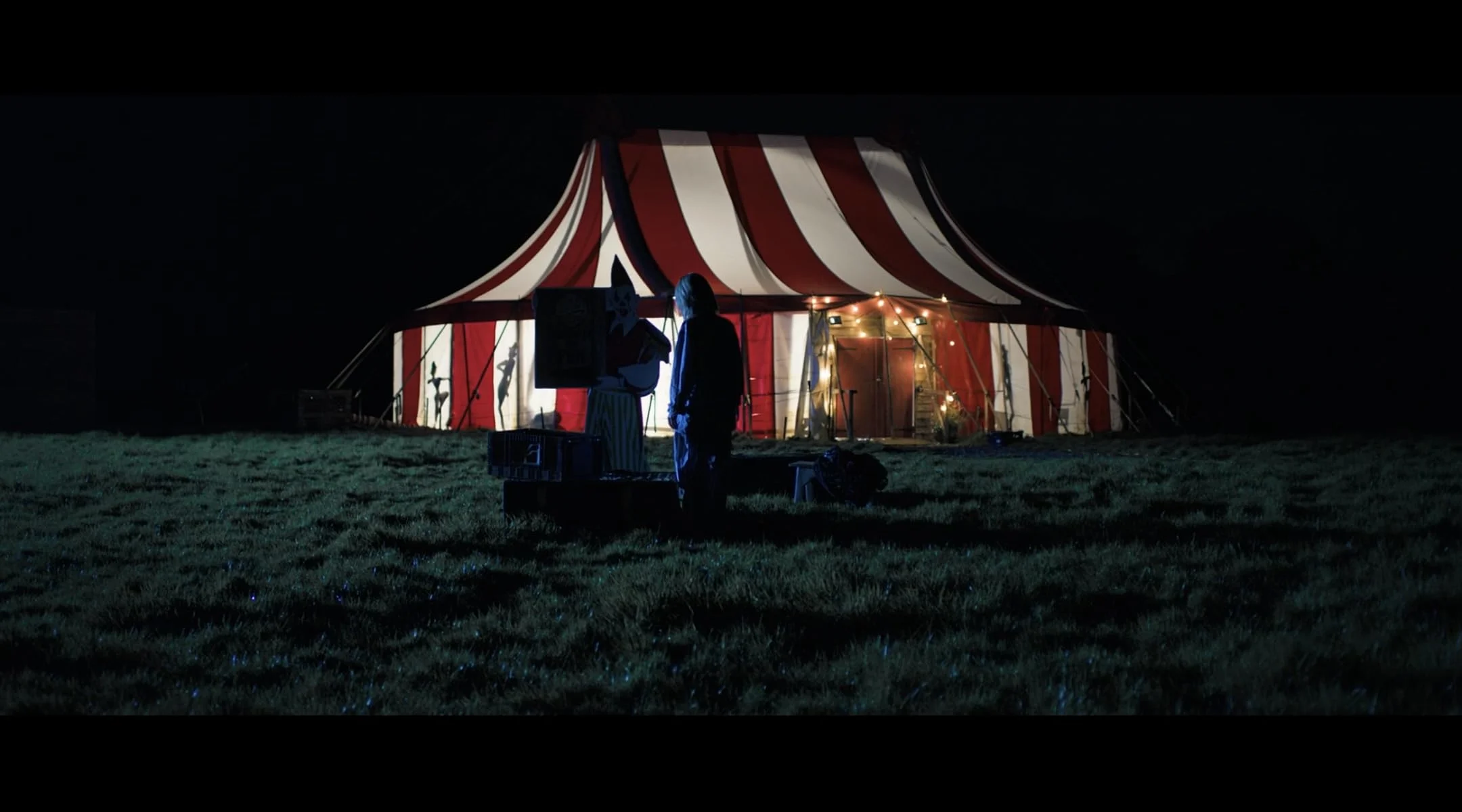

The performers rehearsing in Charlie Shaw’s Revenge are preparing for paying customers, under a manager who needs a failing adventure park ready to reopen. Their routines belong to a working day before they belong to a horror film. That distinction gives John Langridge’s British slasher a useful starting point within a genre whose isolated locations often seem to exist expressly for murder. Here, maintenance and rehearsal explain why this assortment of people has assembled, and why their first disagreements concern the person running the place.
The circus element also changes the function of the threatening costume. Otto the Clown belongs to an environment where exaggerated movement and manufactured amusement are professional skills. His appearance need not announce an outsider.
James Payton’s largely silent performance exploits that proximity, allowing playfulness and aggression to occupy the same figure. The unsettling possibility is that the staff’s ordinary familiarity with theatrical behavior could make danger harder to distinguish from another performance. Langridge has a setting in which the slasher’s disguise can interact with the victims’ occupation, rather than simply conceal a face.
The arrangement remains recognisable from American camp horror, particularly Friday the 13th: a group cut off from assistance, a killer, and a location that becomes difficult to leave. Moving that structure into a British entertainment workplace supplies a different social texture.
These people have come to repair things, practise acts, and meet an opening deadline. Their frustrations precede the violence. The real locations and animals help give the park a life beyond its narrative usefulness, though physical substance alone cannot make the danger persuasive. The film is often better at establishing a place where entertainment happens than at controlling the audience’s apprehension within it.
Marion, the newly appointed manager played by Cerys Knighton, is the point at which those ambitions become difficult to reconcile. Her severity has a practical basis: the park needs discipline before it can welcome visitors. There is no obligation for her to be agreeable, and a slasher can profit from asking its audience to care about someone whose conduct causes friction.
The difficulty is repetition. Café arguments and recurring complaints about Marion keep confirming her abrasiveness without sufficiently developing the relationships around it. The staff acquire reasons to dislike their manager faster than they acquire dramatic connections capable of carrying fear.
The rehearsal sequences encounter a related problem. Showing performers at work gives them an identity beyond their eventual place in the body count, and their theatricality suits this particular location. But repeated practice does little for psychological depth unless it changes our understanding of the people practising.
Too much of the middle stretch leaves the ensemble suspended between occupational detail and familiar victim preparation. The distinction matters because Langridge’s attention to the group invites a degree of investment that the scenes do not consistently earn. Time spent with characters becomes useful through what happens between them.
Russ, the repairman played by Bill Fellows, offers a firmer connection. His tentative rapport with Marion gives her severity something to push against besides resentment. She becomes a person capable of a relationship, with an abrasive manner that another worker can see past.
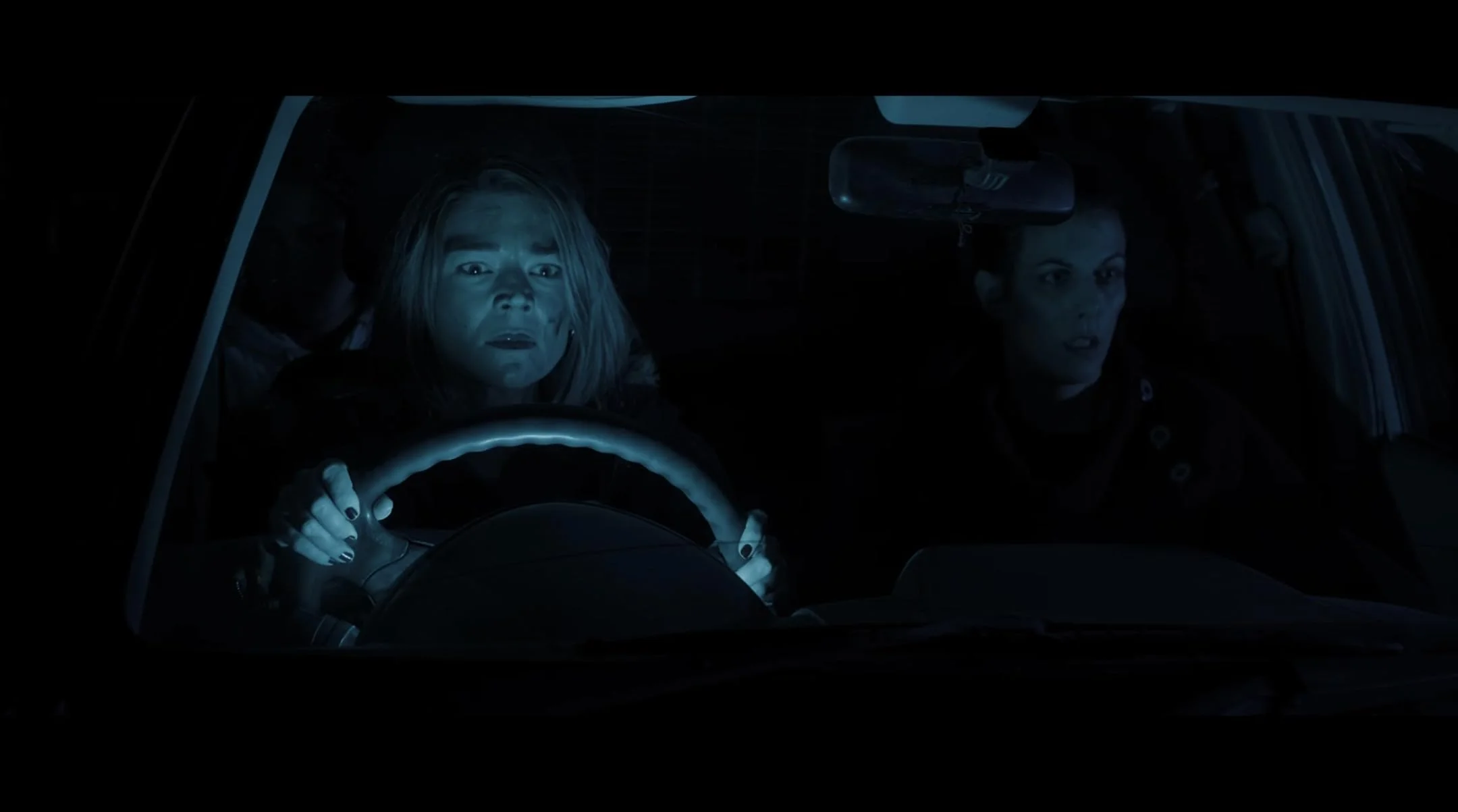
That modest exchange does useful work because it alters the terms on which we encounter her. It also makes the surrounding repetition harder to excuse. The film possesses a way to develop Marion through contact with someone else, yet repeatedly returns to disputes that leave her in essentially the same position.
Otto supplies a different kind of disruption. His attacks can occur in view of others, dispensing with the slasher’s usual convenience of separating every victim before the violence begins. This makes his behavior feel recklessly indifferent to the group he is terrorising.
It also changes the dramatic task: once murder becomes visible, concealment has less work to do, and the survivors’ relationships should acquire immediate urgency. The bluntness is welcome, but it cannot generate sustained fear by itself. Payton’s unpredictable movement gives Otto a presence that the surrounding dramatic construction does not always support.
The prologue exposes that gap early. An entertainer arrives for a job, finds that his station pickup has failed to materialise, and accepts a car ride before being killed. His complaining manner gives him an identifiable trait, but little emotional weight. The blood arrives before much attachment has formed. A disposable opening victim is familiar slasher practice; the problem here is that the killing establishes the availability of violence without making its approach especially disturbing. The makeup and effects remain a relative strength, giving the bodily damage a tangible quality, while the sequence leaves the film’s capacity for suspense largely unproven.
The late psychological turn shifts the film toward another strand of international slasher cinema, closer to the French tradition of reversals that make preceding violence available for reinterpretation. Its interest lies in changing the significance of what has happened, rather than simply increasing the number of deaths.
That shift gives the final stretch an energy the workplace disputes often lacked. Yet revelation and preparation remain separate achievements. Explanatory material arriving late can redirect attention without making every earlier delay necessary, and the thin groundwork limits how fully the surprise reorganises the film.
Knighton benefits most from the change. The final act gives Marion a darker presence and releases the performance from its repetitive managerial function. Her earlier exchanges with Russ had briefly allowed another way of encountering her; now the psychological material makes her severity less easy to classify. The transformation has force even where the script has inadequately prepared it. Knighton makes Marion’s insistence on control newly troubling, leaving those earlier demands for order open to a less comfortable reading.
Charlie Shaw’s Revenge became available to stream on Amazon Prime Video on October 2, 2026, following its world premiere in London. The independent horror-thriller follows a group of workers who face a terrifying fight for survival while preparing an isolated adventure park for reopening.
Where to Watch Charlie Shaw’s Revenge (2026) Online



Full Credits
Title: Charlie Shaw’s Revenge
Distributor: Amazon Prime Video
Release date: October 2, 2026
Running time: 1 hour 29 minutes (89 minutes)
Director: John Langridge
Writers: John Langridge
Producers and Executive Producers: John Langridge, Renato Pires, Justin Hayward
Cast: Shahla Ayamah, Mark Benton, Neil Burgess, Bill Fellows
The Review
Charlie Shaw's Revenge
Charlie Shaw’s Revenge gives familiar American slasher machinery a distinctive British entertainment workplace. Its physical setting, Otto’s unpredictable presence, and practical effects supply texture that the repetitive rehearsals and staff disputes struggle to turn into fear. The late psychological reversal sharpens the film and gives Cerys Knighton room to unsettle, but its thin preparation prevents that final intensity from fully transforming what precedes it.
PROS
- Real locations give the park physical credibility.
- James Payton’s playful menace suits the circus setting.
- Effective practical makeup and gore.
- - Knighton brings disturbing intensity to the final act.
CONS
- Repeated rehearsals and disputes stall character development.
- Bloody killings generate limited sustained suspense.
- - The psychological revelation lacks sufficient groundwork.