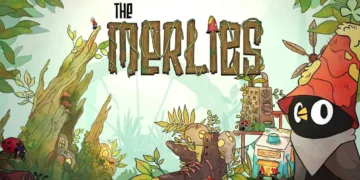























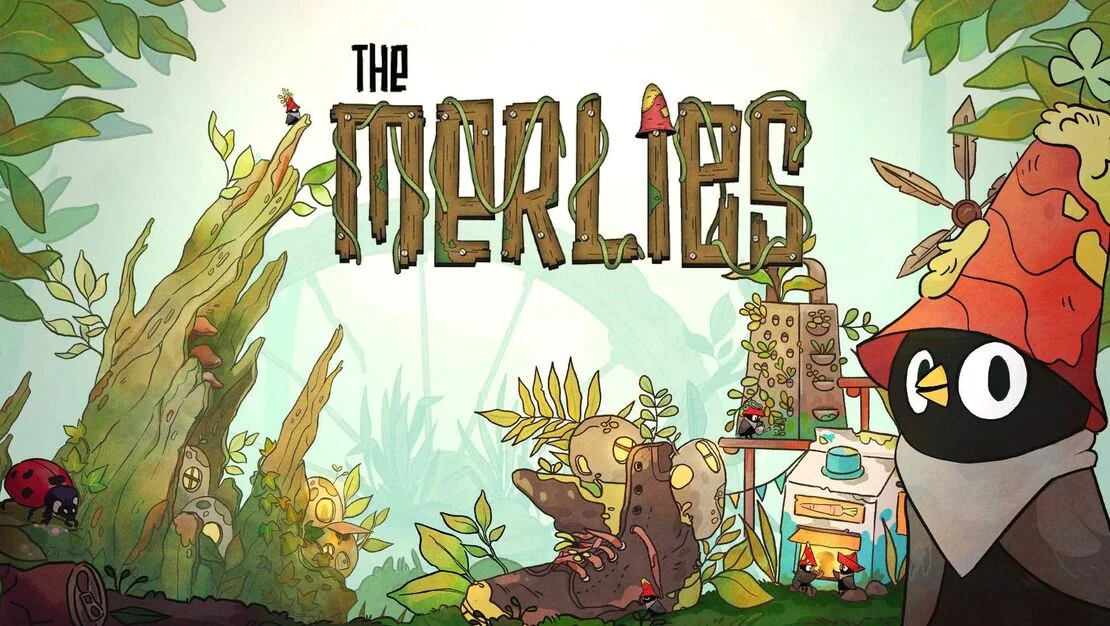

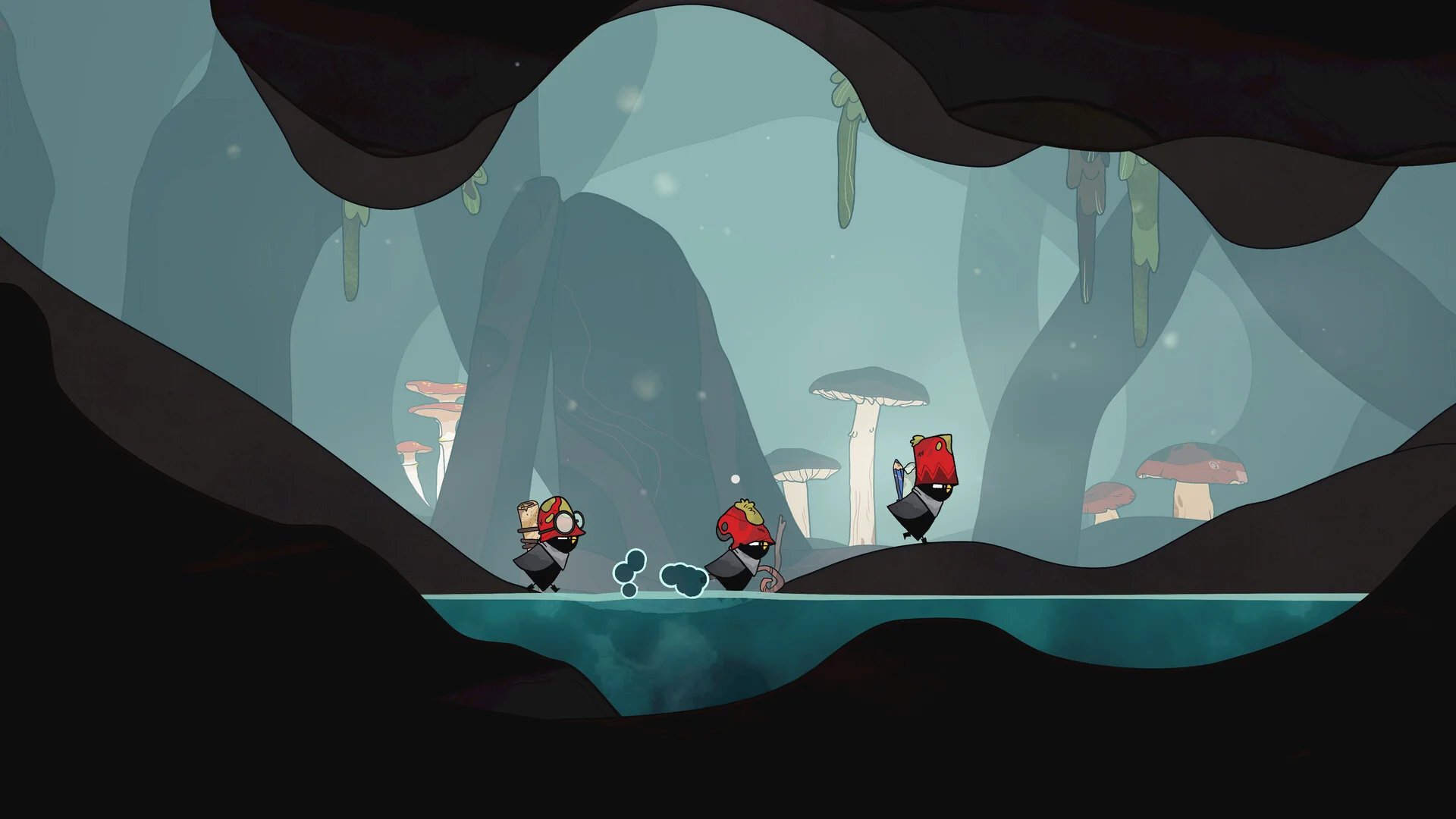
The graphic-novel and picture-book sensibility of The Merlies survives its move into a game because the illustrations become usable space. Conceived by Cosmografik and produced by ARTE France, Darjeeling, and Blue Ramen, the project brings its illustrated world into contact with the familiar grammar of exploration and environmental puzzles. Its tiny birds climb electrical cables, cross fallen signs, and encounter abandoned household objects as substantial structures. Scale gives the artwork a practical function: recognizing an object is only the beginning of understanding what it might let the flock do. www.arte.tv
Wishfully’s Swedish-made Planet of Lana offers a useful comparison. Both games place small, expressive figures within illustrated landscapes and make companionship relevant to solving environmental problems. Planet of Lana brings machines and pursuit into that relationship; The Merlies gives its flock room to explore without an enemy approaching. The difference changes how the scenery is read. A cable or an oversized mushroom can hold the player’s attention as a possible route, with time available to investigate its relationship to surrounding ledges. Illustrated beauty becomes something to examine at leisure rather than scenery glimpsed while escaping. www.mynewsdesk.com
A storm has scattered the Merlies, leaving the player to recover the missing birds and establish a new Nest. Human civilization has already disappeared, and its remnants supply both obstacles and building materials. The game keeps these two scales of disaster distinct. Humanity’s absence is registered through abandoned objects and encroaching vegetation, while the birds’ immediate losses create tasks the player can address. Finding a stranded companion or gathering provisions gives this immense, unexplained history a manageable present tense. The creatures need somewhere to live before they need an account of everything that happened here.
That modest social scale gives ability-gated exploration an appealing emphasis. Finding another Merly can expand the flock’s movement options, increase its capacity to reach a route, or contribute to life at the Nest. Progress belongs to an accumulating community. The stacking mechanic makes this especially clear: lower birds support and launch the upper bird toward a high ledge, after which the player must consider how to bring the others along. Reaching somewhere with one body does not finish the problem. The rest of the flock still occupies the space below.
Splitting and regrouping the birds develops that idea through positioning. Some remain in place while others move, making the group’s arrangement part of the solution. This is cooperation directed by a single player, and its pleasure comes from discovering how several vulnerable creatures can act together.
Small recruitment situations give that arrangement a social texture. A bird caught around an old toaster needs assistance; another requires provisions before settling into the Nest. These encounters prevent reunion from becoming an entirely abstract accumulation of movement tools. A useful new companion has also had a particular problem.
The handling can make this collective action less satisfying than its design suggests. Basic keyboard movement is approachable, and forgiving jumps help players who find platforming demanding. Arranging a stack, however, can be awkward, while claiming a discovered relic can feel unnecessarily fiddly.
The distinction matters. A game can be easy to understand while remaining inconsistent in the execution of particular commands. Here, that inconsistency affects the activity carrying the strongest thematic weight. When assembling the flock becomes troublesome, the player’s attention shifts from how the birds might help one another to getting the intended arrangement to work.
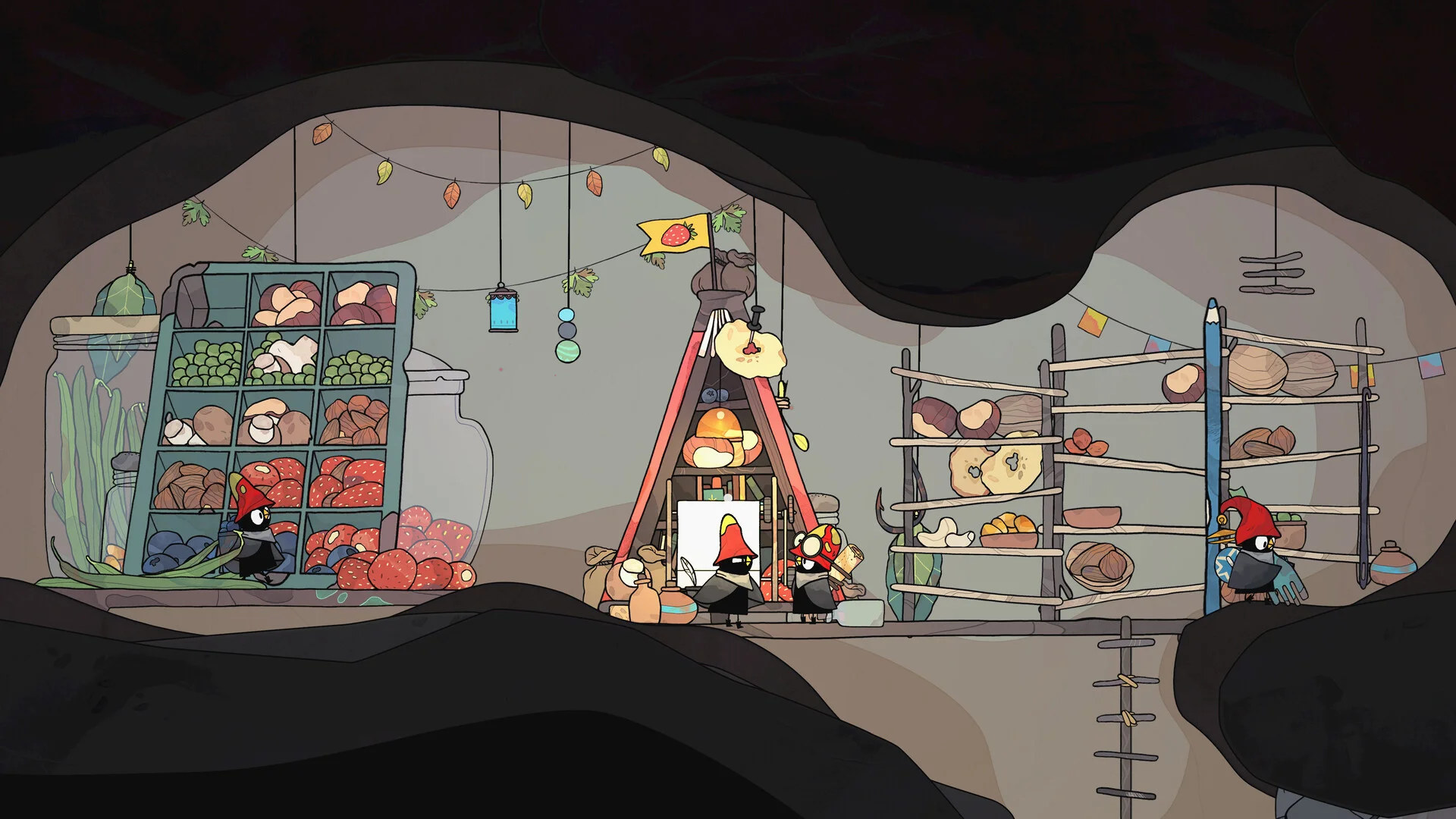
Back at the Nest, abandoned technology undergoes another change of scale and purpose. A lamp can provide housing; an ice-cube tray can become storage. The birds inherit objects made for bodies and routines entirely unlike their own, then adapt them to immediate communal needs. Reuse becomes visible through habitation. The lantern-launching structure is an especially apt construction because it helps missing Merlies locate the settlement. Building makes the community easier to find, connecting the comfort of those already home with the recovery of those still outside.
The glider sequence connects settlement development to exploration with similar economy. An inventor’s broken glider leads back to the Nest, where constructing the Wind Awakener unlocks an umbrella-like gliding ability. A short tutorial lets the player learn the movement before applying it to newly reachable space. Invention, construction, and traversal occupy the same chain of activity.
The Nest supports the adventure without requiring a demanding management simulation, and ecological hope takes a tangible form through recovered materials acquiring useful functions. The evidence for that hope is in what gets built and how it is used.
The birds’ voices help preserve their scale within this world. Chirps and expressive squeaks give them an audible presence, subtitles carry their meaning, and a fully voiced narrator provides a different register of storytelling. Calling the flock together produces a response that belongs to these creatures rather than turning them into miniature human conversationalists.
The peaceful soundtrack also suits the available time. With no combat or countdown imposing urgency, the player can attend to those calls while experimenting with a route. Environmental hazards still carry consequences, including lost birds and a campsite return if the whole group falls, but recovery keeps experimentation affordable.
The map is less accommodating of that patient exploration. It updates as areas are discovered, and cartography improves the player’s knowledge, yet there is no provision for custom markers. Fast travel reduces distance while leaving some walking, so remembering an inaccessible passage has a practical cost.
Revisiting with a newly capable flock can make familiar terrain interesting again: a ledge once out of reach becomes usable through a different ability or arrangement. Finding that ledge again is a separate task. Without a marker, the player must remember both where the unfinished route lies and what prevented the birds from using it during the earlier visit.
The Review
The Merlies
The Merlies gives its illustrated world a persuasive playable logic: companions open routes, discarded objects become shelter, and rebuilding equips the flock to explore again. Its hopeful treatment of human ruins gains substance through these acts of reuse. Awkward stacking and fiddly relic collection interrupt the cooperative pleasure, while missing map markers burden return trips. The connection between scale, community, and invention still makes this a thoughtful, welcoming adventure.
PROS
- Illustrated environments turn familiar objects into inventive terrain.
- Flock abilities make cooperation essential to exploration.
- Nest construction connects reuse, reunion, and new movement options.
- Forgiving platforming encourages experimentation.
- Expressive chirps preserve the birds’ distinct character.
CONS
- Awkward stacking and fiddly relic collection disrupt flock management.
- Missing custom map markers make unfinished routes harder to revisit.